

It has become a strategic industry.
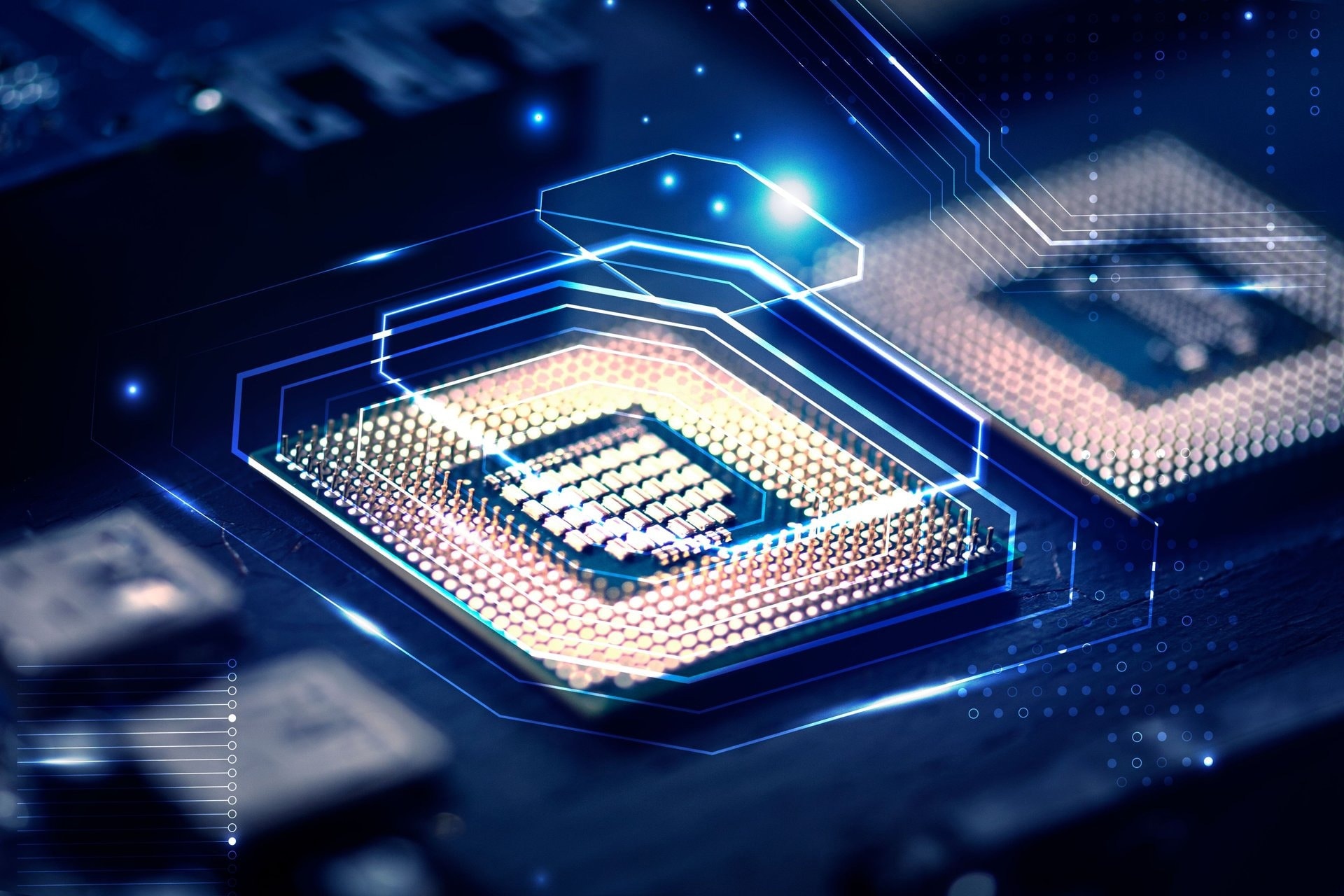
Quantum technology is an advanced field that exploits the strange phenomena of quantum physics (at the atomic/subatomic level) to create practical applications.
It transcends the limitations of traditional technology thanks to core principles including superposition (particles can be in multiple states at the same time) and quantum entanglement (particles are tightly bound together despite being far apart in space)...
These phenomena enable quantum systems to process information in ways entirely different from classical computers, and computing power is one of the many strategic implications of quantum technology.
World powers such as the United States, Russia, China, and the European Union (EU) have invested billions of dollars in mastering quantum technology and post-quantum cryptography (PQC) standards. In 2024, the US National Institute of Standards and Technology (NIST) issued the first PQC standards...
Notably, the latest figures from McKinsey show that global investment in quantum technology has surged from $2 billion in 2024 to $12.6 billion in 2025; more than 300 companies worldwide have already begun deploying these technologies, generating revenues exceeding $1 billion.
According to experts, quantum technology is no longer a distant concept in research, but has become a multi-billion dollar industry. In the future, quantum computers could solve problems that current supercomputers cannot handle. For example, in the field of materials science, quantum technology allows for the precise simulation of the electronic structure of materials to design new materials for the semiconductor, renewable energy, and aerospace industries.
When quantum computers reach a sufficiently large scale, many current encryption algorithms could be broken in a very short time. The development of quantum computers along with artificial intelligence (AI) poses a serious threat to critical national infrastructure that currently uses public-key cryptography algorithms. The greatest risk is not just instantaneous decryption, but the "collect first, decrypt later" approach of intelligence agencies and cybercrime organizations.
This poses a significant challenge to cybersecurity and data sovereignty , and necessitates the immediate deployment of quantum-resistant security solutions. Consequently, many countries have considered quantum technology as part of their national security strategy.
Challenges for the national cryptographic infrastructure
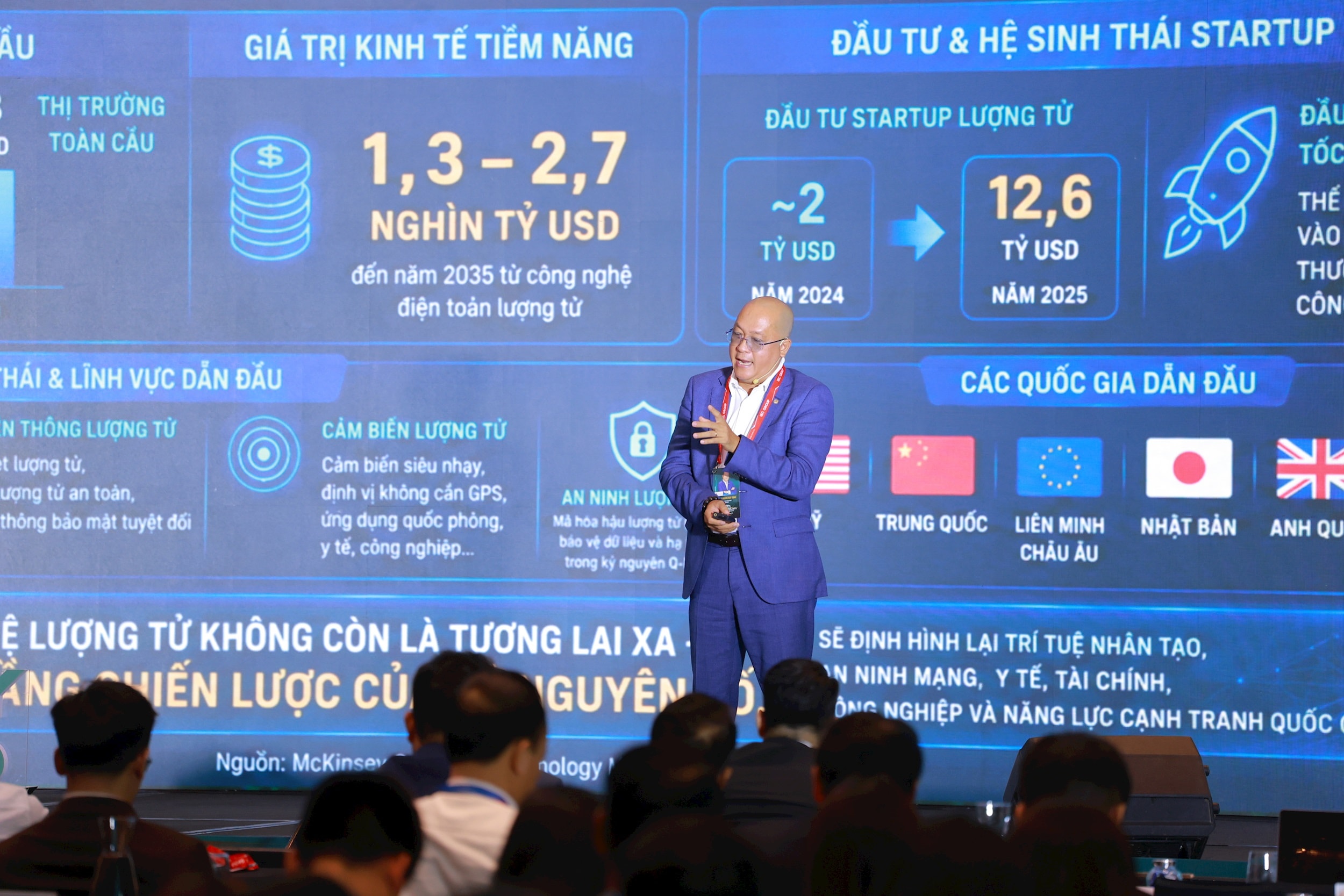
According to Mr. Do Ngoc Duy Trac, CEO and founder of VinCSS, the world has now entered the third wave, the era of synthetic intelligence and quantum technology. Computational power is capable of reshaping the entire foundation of humanity. Current cryptographic systems, considered impenetrable to traditional computers, will become useless against the computing power of the next generation of quantum computers.
According to Do Ngoc Duy Trac's analysis, the US and China, the two leading nations in the quantum technology race, have invested heavily and have comprehensive, long-term development strategies encompassing infrastructure, human resources, and ecosystems. This quantum race is not simply about science, but is a battle to reshape geopolitical positions and technological sovereignty in the 21st century.
Therefore, without prior preparation, the global financial system, cryptocurrency networks, and especially the data systems and critical infrastructure of nations will be at risk.
Given this volatile situation, the CEO of VinCSS proposed that the government, agencies, and organizations must act immediately, transitioning to a "quantum-resistant encryption" system, while simultaneously focusing on developing specialized human resources and upgrading technological infrastructure.
Sharing the same view, Mr. Ho Van Huong, Deputy Head of the Government Cipher Committee, stated that critical information systems of the Party, State, armed forces, diplomacy, telecommunications, finance and banking, healthcare, etc., are using numerous security solutions. Protecting these systems from quantum challenges must be identified as the highest priority in the national cryptographic infrastructure.
According to Major General Ho Van Huong, as the national cryptography agency, the Government Cipher Committee has proactively researched quantum technology and AI from an early stage.
To date, Vietnam has researched and developed post-quantum digital signature algorithms and is building a post-quantum cryptographic system to protect critical information systems. In addition, the Government Cipher Committee has been tasked with developing a plan for the development of Vietnam's quantum-resistant cryptographic system for the period 2026-2030.
In the coming period, relevant agencies must continue to conduct more in-depth, systematic, and strategic research to develop and refine a plan for the development of quantum technology in Vietnam, serving national development with the requirement of strategic autonomy.
Source: https://hanoimoi.vn/cong-nghe-luong-tu-va-nhung-van-de-dat-ra-voi-an-ninh-mang-972174.html

![[Photo] Standing Committee member of the Party Central Committee Tran Cam Tu working with the Central Inspection Committee](https://vphoto.vietnam.vn/thumb/1200x675/vietnam/resource/IMAGE/2026/05/28/1779969579668_ndo_br_bnd-2495-jpg.webp)


































































































Comment (0)