

We all understand and believe in the game-changing nature of artificial intelligence (AI) as it permeates every aspect of our personal and professional lives. The emergence of AI and intelligent automation is leading to a redistribution of tasks between humans and machines.
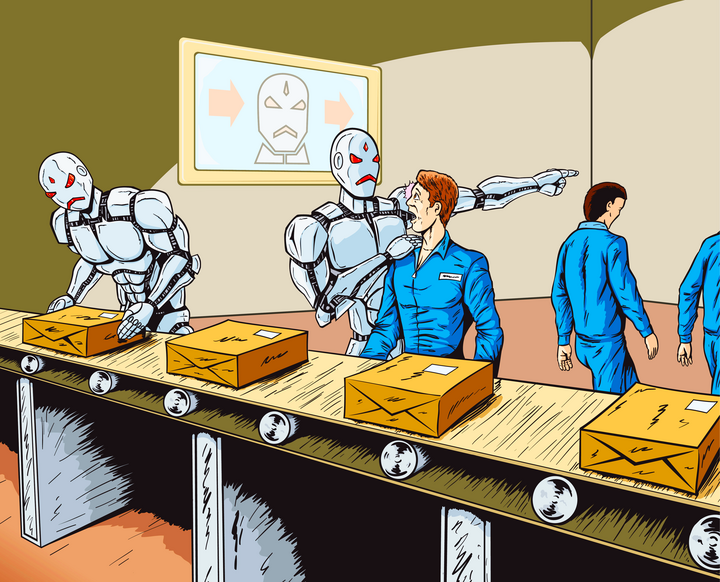
While it's true that artificial intelligence (AI) will take over some jobs, it cannot "dominate the world " as some media outlets have reported. (Image: Danomyte/Shutterstock)
However, beyond its inherent influence, AI is unlikely to replace jobs requiring human skills such as judgment, creativity, physical and intellectual dexterity, and emotional and cognitive abilities. Below are details of jobs that AI cannot replace:
Surgeons and healthcare professionals
Doctors, nurses, surgeons, physician assistants, and other healthcare professionals combine medical knowledge, clinical judgment, empathy, and human connection, including sensitivity, to diagnose, examine, and treat patients. While AI technology can support and enrich diagnostic and treatment recommendations, it cannot replace the human aspect of healthcare.
Lawyer
The legal profession, encompassing roles such as lawyers, judges, and legal counsel, often involves complex decision-making, in-depth contextual understanding, and strong judgment—all of which are beyond the reach of AI.
Legal professionals often interpret and apply the law based on the specific circumstances of each case, a task requiring intellectual flexibility and a deep understanding of society and its interactions. While AI can automate routine tasks like summarizing legal documents, it struggles to interpret the nuances of the law in detail, especially in complex cases.
Furthermore, the practice of law is fundamentally a human endeavor, heavily reliant on communication skills and emotional intelligence. Lawyers must be able to understand the emotions and perspectives of parties, build relationships, and persuade others, including judges and juries. These essential soft skills in the legal profession are precisely the areas where AI is severely lacking.
Furthermore, ethical considerations also need to be taken into account. The use of AI in legal decision-making can raise serious ethical and fairness concerns. Issues of AI bias, transparency in the decision-making process, and accountability for AI-generated decisions are significant challenges.
CEO, leadership positions
Leadership requires a broad vision, anticipating everything else that happens, but AI lacks this. Even key elements like strategic thinking, decision-making, motivation, inspiration, and team-building are areas where AI struggles to achieve its core competencies.
Scientific research and development
Scientific research has always involved discovering the unknown, curiosity, formulating hypotheses, and a keen sense of continuous experimentation, all of which rely on human creativity and profound understanding. Currently and in the future, it is difficult to find an AI system that can achieve all of this on its own.
Therapist and counselor
Providing emotional support, therapy, and counseling requires deep empathy, human connection, and an understanding of complex emotional nuances; therefore, AI has no chance of replacing it in this type of profession.
Teaching and Education
While AI can provide information and support in education or training, teachers offer emotional support, the ability to adapt to individual learning styles, and highly practical guidance—qualities that AI cannot provide. This is one of the jobs least likely to be replaced by AI.
Writer
In reality, writers are the ones who generate ideas and produce original content; the exclusivity of their texts is unique, and writers need a certain level of creativity and empathy. AI and machines can never do this, meaning that no matter how advanced AI becomes, it will be difficult for it to replace the role of the writer.
Event organizer
In practice, event organizers must coordinate and negotiate with others to ensure everything is in agreement. Event organizers require human creativity and interpersonal communication skills to meet the unique needs of clients and handle unforeseen situations. AI can assist with logistical tasks, but it lacks the emotional intelligence, intuition, and proactiveness necessary to plan or execute a successful event.
Construction worker
In the near future, much of the building design work will be done with the help of AI software, but when it comes to construction, hammering, and laying bricks, the construction industry still needs a lot of the muscle of traditional builders.
Plumber
Plumbers deal with a myriad of different plumbing problems, requiring strong problem-solving and adaptability skills. They must assess specific situations, taking into account the state of the plumbing systems in a house. AI, however, lacks the necessary human judgment for plumbing tasks.
Electrician
AI cannot completely replace electricians, as their job requires adapting to complex and unpredictable electrical systems, troubleshooting, and ensuring absolute safety.
Welders and metal foundries
These craftspeople work on projects with materials of varying thicknesses and shapes, requiring high levels of control and expertise. They must make real-time adjustments to material texture based on visual and tactile feedback, something AI currently struggles with.
Welding and metal casting also require creativity and innovation in problem-solving in complex, non-standard projects. Notably, underwater welding is also one of the most dangerous jobs in the world.
Chefs and culinary experts
Artificial intelligence can never replace culinary professionals, due to their artistry, innovation, and heightened senses. Ultimately, AI can assist in creating and optimizing recipes, but it cannot compare to or completely replace chefs and culinary experts.
Fireman
AI cannot replace emergency responders like firefighters, as their role requires rapid physical responses to dangerous, complex, and potentially life-threatening situations. Firefighting demands quick, timely, and accurate decision-making, and they require high levels of physical strength, qualities that artificial intelligence lacks.
Carpenter
Carpenters create custom-made wooden structures, a task that demands creativity, skill, and adaptability, but this is one of the jobs that AI cannot replace anytime soon.
HUYNH DUNG (Source: Unmudl/Yahoo News/Forbes/Sensoriumarc)
Source


![[Photo] Prime Minister Pham Minh Chinh attends the Conference on the Implementation of Tasks for 2026 of the Industry and Trade Sector](/_next/image?url=https%3A%2F%2Fvphoto.vietnam.vn%2Fthumb%2F1200x675%2Fvietnam%2Fresource%2FIMAGE%2F2025%2F12%2F19%2F1766159500458_ndo_br_shared31-jpg.webp&w=3840&q=75)




























































































Comment (0)