

The strategic symbiotic (not competitive) development between Dong Nai and Ho Chi Minh City in the new phase requires greater institutional compatibility, a rational division of roles in the key regional linkage chain, and a genuine partnership to both "rise" together while protecting shared resources and promoting their unique identities.
The recent April 30th milestone marks a significant achievement in Dong Nai's development history. However, following this milestone comes an even heavier responsibility: building a development roadmap commensurate with its status as a centrally-governed city. In this context, the challenge of economic restructuring is particularly clear.
The service sector currently accounts for only 26.42% of GRDP, while industrial production remains heavily reliant on outsourcing, and the FDI sector accounts for 75%-85% of export turnover. Along with this are significant gaps in urban quality, social infrastructure, living environment, and the capacity for modern urban governance.
Ultimately, the key to unlocking these doors to development lies in the institutional framework. For Dong Nai, a particular advantage is its proximity to Ho Chi Minh City – a city that has gone through several pilot phases of special mechanisms and is preparing to enter the framework of the Law on Special Cities. In this symbiotic relationship, Ho Chi Minh City can fully share its experience in policy development, implementation lessons, and mechanism design to help Dong Nai formulate a highly feasible special resolution that closely aligns with development requirements.
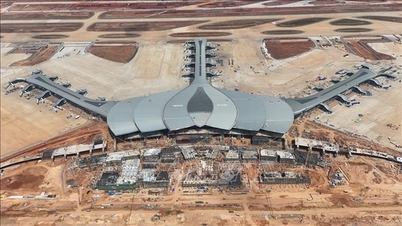
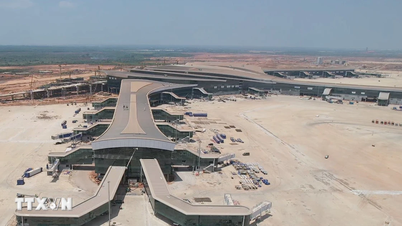
This is also a crucial time to clearly define the goals and methods of connection between the two localities; the contents that need to be codified into law; and the mechanisms that need to be piloted in Dong Nai's specific resolution. In particular, inter-regional transportation infrastructure must be the foundation. Long Thanh International Airport will only truly fulfill its role as an international aviation hub when passengers from central Ho Chi Minh City can reach Long Thanh in under 45 minutes using public transportation. Without solving this connectivity problem, Long Thanh will struggle to become a true regional driving force.
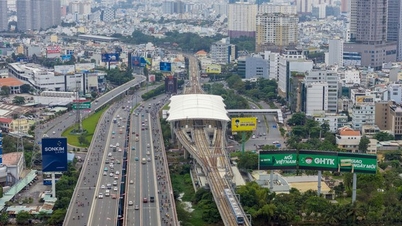
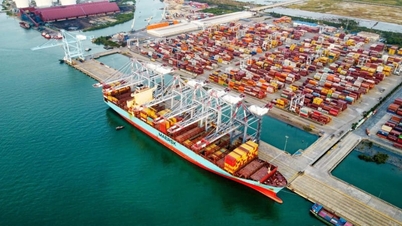
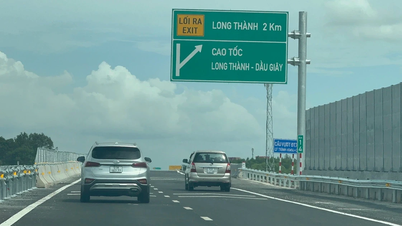
Therefore, the specific resolution for Dong Nai needs to consider strategic investment directions such as the Tan Son Nhat - Thu Thiem - Long Thanh connecting route; establishing a logistics corridor between Dong Nai and Ho Chi Minh City; accelerating the construction of the Ho Chi Minh City Ring Road 3, and promptly starting the Ring Road 4 to alleviate pressure on goods transportation between Dong Nai's industrial zones and Ho Chi Minh City's seaport system. Along with that, it is necessary to build an integrated logistics center in Long Thanh, connecting road, rail, and air transport, creating a foundation for Dong Nai to become a national logistics center.
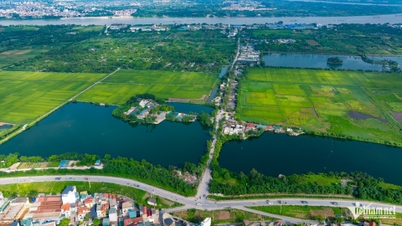
Another indispensable pillar is the protection of the environment and shared resources. The Dong Nai and Saigon rivers do not belong to any single locality. Therefore, a mechanism for inter-provincial and inter-city coordination in river basin management is needed, with genuine coordinating authority, instead of just administrative coordination. Sustainable development in Dong Nai must be linked to fundamentally addressing water pollution, protecting ecosystems, and improving the quality of life for people throughout the region.
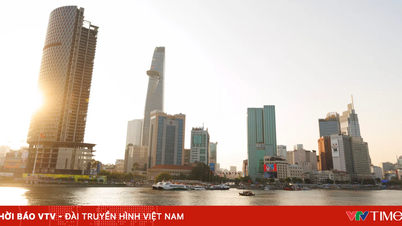
From a regional development perspective, Ho Chi Minh City is defined as the financial, service, technology, and innovation center; while Dong Nai is designated as a high-tech industrial city, logistics hub, and international air gateway. These two cities complement and support each other, jointly expanding the development space for the Southeast region.
Therefore, what is most needed right now is a framework mechanism that suits Dong Nai's internal strengths, is compatible with the restructuring and development roadmap, and is closely linked to its future positioning. In a way, with the Law on Special Urban Areas, Ho Chi Minh City is once again "a pioneer." During the discussion of the draft law, Ho Chi Minh City proposed that the Central Government decide to establish a permanent coordinating agency for the Ho Chi Minh City Special Urban Area based on the Regional Development Fund, in order to ensure that Ho Chi Minh City, Dong Nai, and Tay Ninh develop together.
This also "paves the way" for a new development model in the Southeast region: where localities do not move side-by-side in a fragmented manner, but instead take off together on a new runway, with a shared vision and new aspirations.
Source: https://www.sggp.org.vn/cung-cat-canh-tren-duong-bang-moi-post853302.html















































































Comment (0)