

LESSON 1 - WEDDING DEBTS, FUNERAL DEBTS, AND WASTE
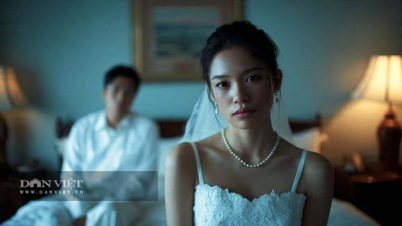
Civilized wedding and funeral practices are a major and consistent policy of the Party and State aimed at building a healthy, economical cultural life in line with socio-economic development conditions. However, weddings lasting many days with lavish feasts and tents encroaching on roads; funerals that are cumbersome, with endless eating and drinking, excessive music and drumming, and many other outdated customs leave behind numerous negative consequences for families and society.
When weddings become ostentatious events.
One weekend morning in Pho Voi village, Lang Giang commune, the usually wide inter-village road suddenly became congested, making traffic difficult. Along the road stretched a wedding tent nearly a hundred meters long, occupying more than half the road. A sign at the entrance to the groom's house read: "Sorry, there's a family matter," forcing passersby to take a detour. From early morning, powerful loudspeakers were blaring, the music pounding loudly. This was the wedding of Mr. B's son, from a family considered well-off in the village. The wedding lasted three days, with four separate feasts, and the number of guests reached a thousand. "If we didn't make it big, people would think we're stingy," Mr. B explained.
 |
In Pho Voi village, Lang Giang commune, a wedding party placed a sign that read "Sorry, there's a family matter" blocking the road. |
The extravagant weddings in Pho Voi village are not unique. In many rural areas and residential communities throughout the province, the practice of holding lengthy wedding ceremonies with lavish feasts is still common. Weddings are no longer confined to one day but extend to two to three days, even four days, with all the rituals: meeting, engagement, two wedding processions, the main wedding, and the post-wedding visit… Each ceremony is accompanied by feasts, drinks, and guests, resulting in the wedding becoming "bloated." Even the setting up of wedding tents has changed dramatically, becoming much more luxurious and elaborate than before, so the cost of renting tents and tables and chairs for each wedding can range from tens to hundreds of millions of dong. Mr. Dao Van Truong from Tien La village, Dong Viet commune, who specializes in renting tents and event furniture, said: "The demands for wedding tents are constantly changing, increasingly requiring more splendor and elaborate designs, so I have to constantly upgrade them even though the cost is high. If I use old designs or simple decorations, they won't rent them."
In urban areas, many families are willing to rent large restaurants and hotels, holding lavish wedding receptions spanning two or three floors with hundreds of tables of food. Many people attend simply to "put down an envelope as a formality" and then quickly leave to attend another wedding. A local cultural official shared: "Weddings are no longer just a matter between two families; they've become a measure of prestige. If one family holds a big wedding, others must do even bigger, for fear of comparison."
Funerals - a pain obscured by outdated customs.
While lavish weddings create economic pressure, elaborate funerals can intensify and prolong grief. In a residential area of Van Ha ward, the funeral of an 82-year-old man lasted four days. Many guests came to pay their respects, but what concerned many was the continuous feasting, the drums and trumpets playing from early morning until late at night, and the family members taking turns entertaining guests. Mrs. H, a neighbor of the bereaved family, shared: "Everyone grieves, but doing this is both expensive and exhausting." At another funeral, which also lasted three days, the family prepared feasts for guests for several days, hired drums and trumpets, and played loud funeral music. The family members were exhausted from entertaining guests and preparing the food, while the pain of loss had not yet subsided.
Although outdated customs such as hiring professional mourners, rowing boats right up to the time of the coffin's transfer, and lavish feasting on the day of the funeral have decreased significantly compared to the past, they still exist in some localities. This is a manifestation of "cumbersome funerals," where formality overshadows the solemn and commemorative meaning of the funeral ceremony.
Consequences after each ritual
In Vietnamese culture, weddings and funerals are important rituals with profound humanistic significance. However, when these rituals are taken to an excessive degree, becoming occasions for families to show off their wealth and compete on scale, negative consequences begin to emerge.
 |
The wedding feast had a lot of leftover food, which was very wasteful. |
Weddings often last for many days, with multiple feasts and a large number of guests exceeding the family's financial capacity. As a result, after these lavish celebrations, many young couples enter married life burdened with significant debt. The joy of marriage is thus overshadowed by worries about making ends meet. Nearly six months after their wedding, Mr. N and Ms. L (workers at the Van Trung Industrial Park), originally from Yen The commune, are still struggling financially. “The wedding gifts aren’t enough to cover the expenses. Now we have to work overtime, tighten our belts, and barely have time to rest, let alone have a honeymoon,” Ms. L said, her voice heavy. In reality, wedding gifts can hardly compensate for the ever-increasing costs, especially with rising prices for food, tent rentals, sound systems, decorations, etc. Some families have to borrow money to hold their children's weddings "to keep up with the Joneses," and it takes many years to repay the debt. As a result, the joy of the wedding day is quickly replaced by financial pressure, directly impacting the family's life and economic development plans.
Not only the hosts, but also the guests face many inconveniences. At times, a couple might receive nearly 20 wedding invitations in a single month, having to divide up the tasks of attending the feasts. Furthermore, the food is often overprepared, with many dishes left over, leading to waste of money, food, and the effort of those preparing it.
The wastefulness is even more evident at funerals. In some localities, especially in the former Viet Yen district, funerals last for many days, involving the slaughter of several pigs and endless feasts, causing fatigue for the bereaved family and incurring significant costs. After the funeral, some families have to work hard to pay off debts, while their loved ones are still grieving. Furthermore, on the first week, seventh week, and hundredth day after the death, more feasts are held, costing relatives even more time, effort, and income. One resident shared: "In the old days, times were tough, so attending a feast was a joy because we got to eat well and be full. Now, life is better, the feasts are so elaborate that we can't finish everything, and the leftovers are both unappetizing and very wasteful." Wastefulness in funerals is also clearly demonstrated in the use of wreaths. On average, a standing wreath costs from 700,000 to 1,000,000 VND, or even more; round wreaths cost at least 300,000 VND. In many funerals, the total cost of wreaths can reach tens of millions of dong. Notably, when transporting the deceased to the burial site, these wreaths have to be transported by truck, which is both expensive and aesthetically displeasing.
Currently, in rural areas, most young people work in factories or construction, earning around 350,000 VND per day. Weddings and feasts are constantly taking place, forcing many to take time off work, directly impacting their income and family's economic well-being. Mr. Chu Ba Ngu, from Dong Long residential area, Van Ha ward, said: "The Chu Ba clan in our village has over 1,000 households, so there are almost constant weddings, funerals, and feasts. If we continue with the old customs, it will be very difficult; we'll have to take time off work, lose days off, and won't have time for other businesses, easily leading to poverty," Mr. Ngu shared.
Extravagant weddings and elaborate funerals not only put economic pressure on families but also negatively impact the community. The erection of wedding and funeral tents encroaching on roads and sidewalks obstructs traffic and poses safety risks. Loud, prolonged use of loudspeakers disrupts the daily lives, studies, and rest of nearby residents. If these unspoken grievances are not addressed promptly, they will gradually erode neighborly relations and diminish the valuable cultural heritage of the community.
(To be continued)
Source: https://baobacninhtv.vn/cuoi-rinh-rang-tang-ruom-ra-postid433674.bbg











![[Photo] Reception to welcome General Secretary and President To Lam and his wife on their State visit to the Philippines](https://vphoto.vietnam.vn/thumb/1200x675/vietnam/resource/IMAGE/2026/06/01/1780295488620_vna-potal-chieu-dai-chao-mung-tong-bi-thu-chu-tich-nuoc-to-lam-va-phu-nhan-tham-cap-nha-nuoc-toi-philippines-8798060-7855-jpg.webp)








































Comment (0)