

Dr. Pham Thuc Minh Thuy, Specialist I in Congenital Heart Disease, Cardiovascular Center, Tam Anh General Hospital , Ho Chi Minh City, explains that cyanotic congenital heart disease occurs when blood flow through the heart and lungs is reduced, resulting in less oxygenated blood being pumped out of the body. This condition causes the child's skin to turn bluish.
Three months ago, the child was admitted to the hospital with severely reduced heart function. Echocardiogram results showed left ventricular ejection fraction (LVEF) was only 10% (normal is at least 50%), and the skin and mucous membranes were severely cyanotic. Blood oxygen saturation (SpO2) was only 60%, while normal is 98-100%, meaning the ability to supply oxygen to the brain and other organs was severely reduced. The child could only sit in one place, breathing with difficulty and cyanosis, unable to perform basic tasks such as eating, walking, or bathing.
Associate Professor, Dr. Pham Nguyen Vinh, Director of the Cardiovascular Center, Tam Anh General Hospital, Ho Chi Minh City, said that MT suffered from severe cyanotic congenital heart disease leading to chronic hypoxia, affecting the myocardium, reducing ejection fraction, and causing heart failure on a background of pulmonary atresia (a congenital defect that disrupts blood flow to the lungs).
"In over 50 years of working in the medical field, I have never encountered a case of cyanotic congenital heart disease with such a significant decline in cardiac function," said Associate Professor Vinh.
The child's father said that his son had suffered from heart disease for a long time, receiving only medical treatment and outpatient monitoring. For about six months now, the condition has worsened, forcing him to miss school. His heart function is very poor, with severe heart failure, making intervention or surgery impossible.
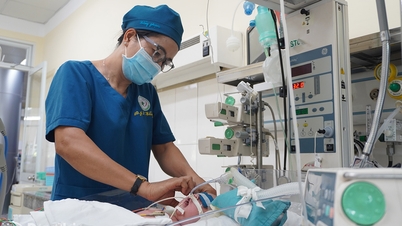
Doctors consulted the world's medical literature to determine the cause of the severe cardiac dysfunction in the child, then held a consultation to decide on cardiac catheterization to address the heart failure. MT was given medication while being prepared for the procedure to help the heart recover.
The cardiac catheterization team performed angioplasty on the narrowed collateral circulation (superficial veins that protrude and develop subcutaneous branches in the abdomen), with a 50% chance of success.
After a 60-minute surgery, the doctors successfully placed a 7mm stent into a branch of the blood vessel via the pulmonary artery. The patient did not experience pulmonary edema or heart failure. Following treatment, heart function gradually increased to 60%, almost reaching the level of a normal child.
During a recent follow-up examination, the child's health stabilized, she was able to walk on her own, returned to school, and recently even went on a family trip to Ba Den Mountain (Tay Ninh). This was an outcome that the doctors could not have anticipated.
Once heart function recovers, the patient will undergo corrective heart surgery, after which they will require lifelong monitoring and regular follow-up appointments as scheduled by their doctor.
Source: https://nhandan.vn/cuu-song-be-trai-chi-con-10-chuc-nang-tim-post825580.html
























![[Video] 24-hour News on December 20, 2025: Prime Minister: Digital economy is the driving force, digital society is the foundation, and people are at the center.](https://vphoto.vietnam.vn/thumb/402x226/vietnam/resource/IMAGE/2025/12/20/1766235700402_z7347346595938-223e51292102cd91b8fceb2841c70f8c-jpg.webp)









































































Comment (0)