

Spiny móp (or spiny móp) is a type of wild vegetable that commonly grows along streams, riverbanks, pond edges, or damp areas in the southern provinces of Vietnam. In the past, this vegetable was considered a plentiful source of green vegetables, a gift from nature that helped poor people survive hunger.
But in recent years, as consumers have favored clean agricultural products, this "gift from nature" wild vegetable has become a sought-after delicacy. More and more households in Ho Chi Minh City are growing móp (a type of wild vegetable).

However, the method of growing móp (a type of leafy vegetable) still follows natural practices. People dig wide ditches, channeling water from canals and ditches to create an ideal growing environment for the vegetables. Young móp seedlings are planted in the ground, similar to sowing rice seedlings, and then left to grow naturally, requiring almost no care. After more than a year, the plants begin to yield a harvest.
When harvesting, farmers only take the tender shoots, about 30-40cm long. Harvesters walk along each row to avoid missing any young shoots, because even a day's delay will cause the shoots to become old and lose their flavor.
The older, tougher stems have many sharp thorns along the middle, so harvesters always have to wear long clothes and gloves to avoid getting scratched.


Currently, water spinach is selling very well. Traders come directly to the farms to buy it at an average price of 20,000-25,000 VND/kg. The young shoots of water spinach can be prepared into many dishes such as salads, boiled, stir-fried, sour soup, hot pot, etc.
However, fresh wild spinach is difficult to preserve and cannot be transported long distances. Businesses will pickle the wild spinach, can it, or vacuum-pack it to keep it fresh for longer and sell it throughout the provinces and cities.
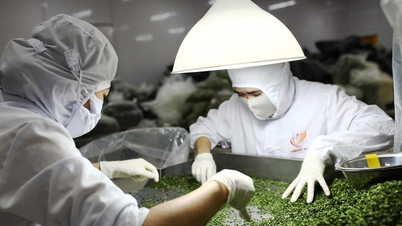
After harvesting, the wild spinach is carefully selected, keeping only the tender, curled shoots. The tiny thorns are removed, and then it is soaked in diluted salt water. After a period of soaking, the spinach turns yellowish-brown, acquires a refreshing sour taste, and has a characteristic crunchy texture.
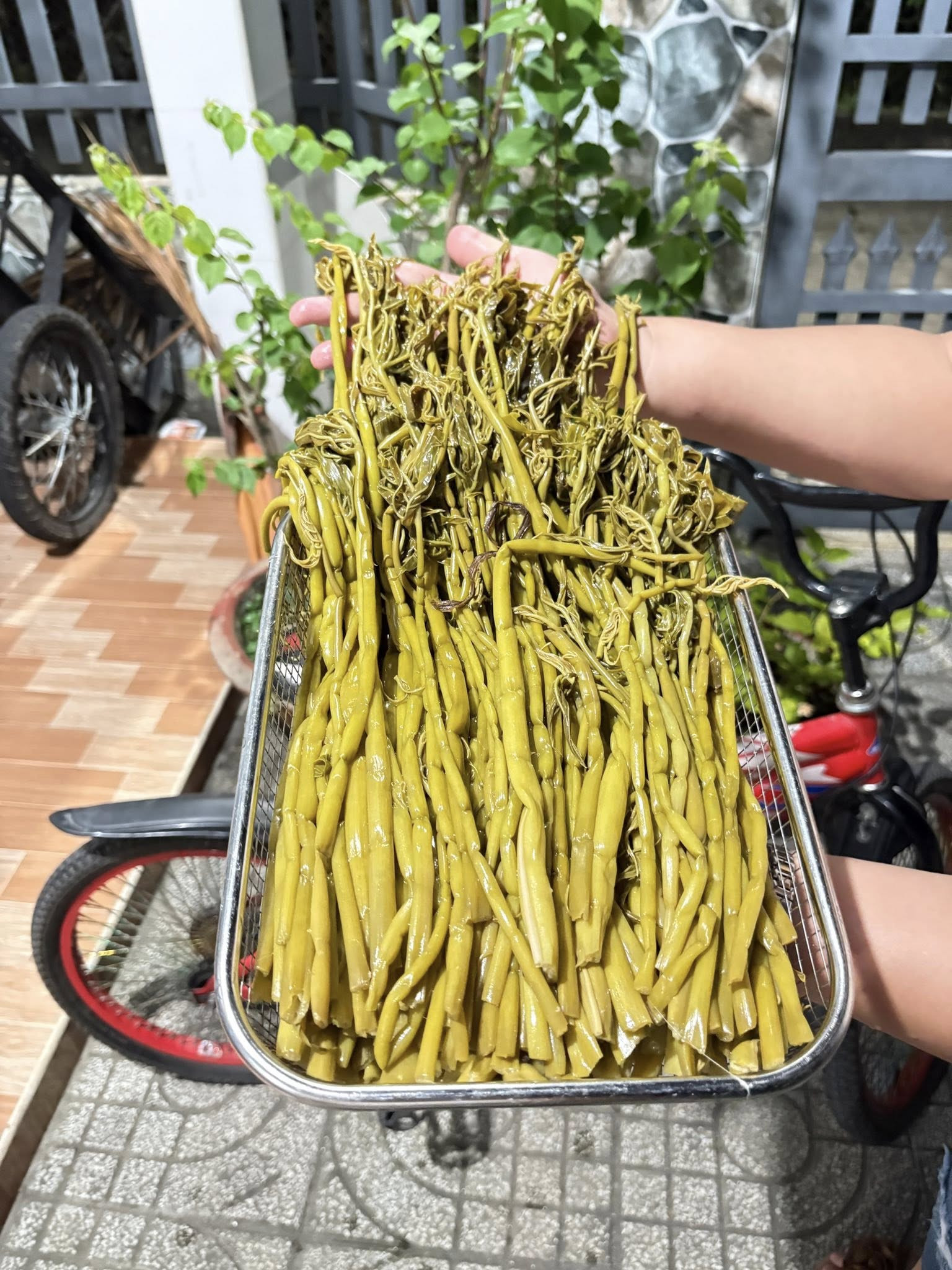
Pickled wild spinach is now considered a local specialty of Ho Chi Minh City, priced from 50,000 VND per 1kg jar. Tourists visiting attractions in the former Cu Chi district often buy pickled wild spinach as souvenirs.
Many restaurants have added this once-poor man's dish to their menus. The most popular is stir-fried pickled wild spinach with garlic. Although simple, consisting only of pickled wild spinach stir-fried with fragrant fried garlic, a little fatty pork crackling, Vietnamese coriander, and sprinkled with crunchy roasted peanuts, this dish leaves an unforgettable impression on diners.
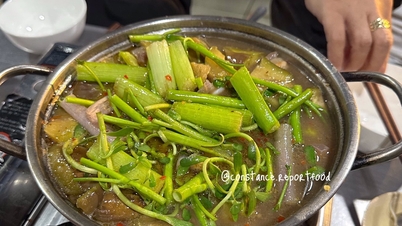
In addition, restaurants also prepare stir-fried wild spinach with pork intestines, sour soup, stir-fried shrimp, served with braised fish, braised fermented fish paste, etc.
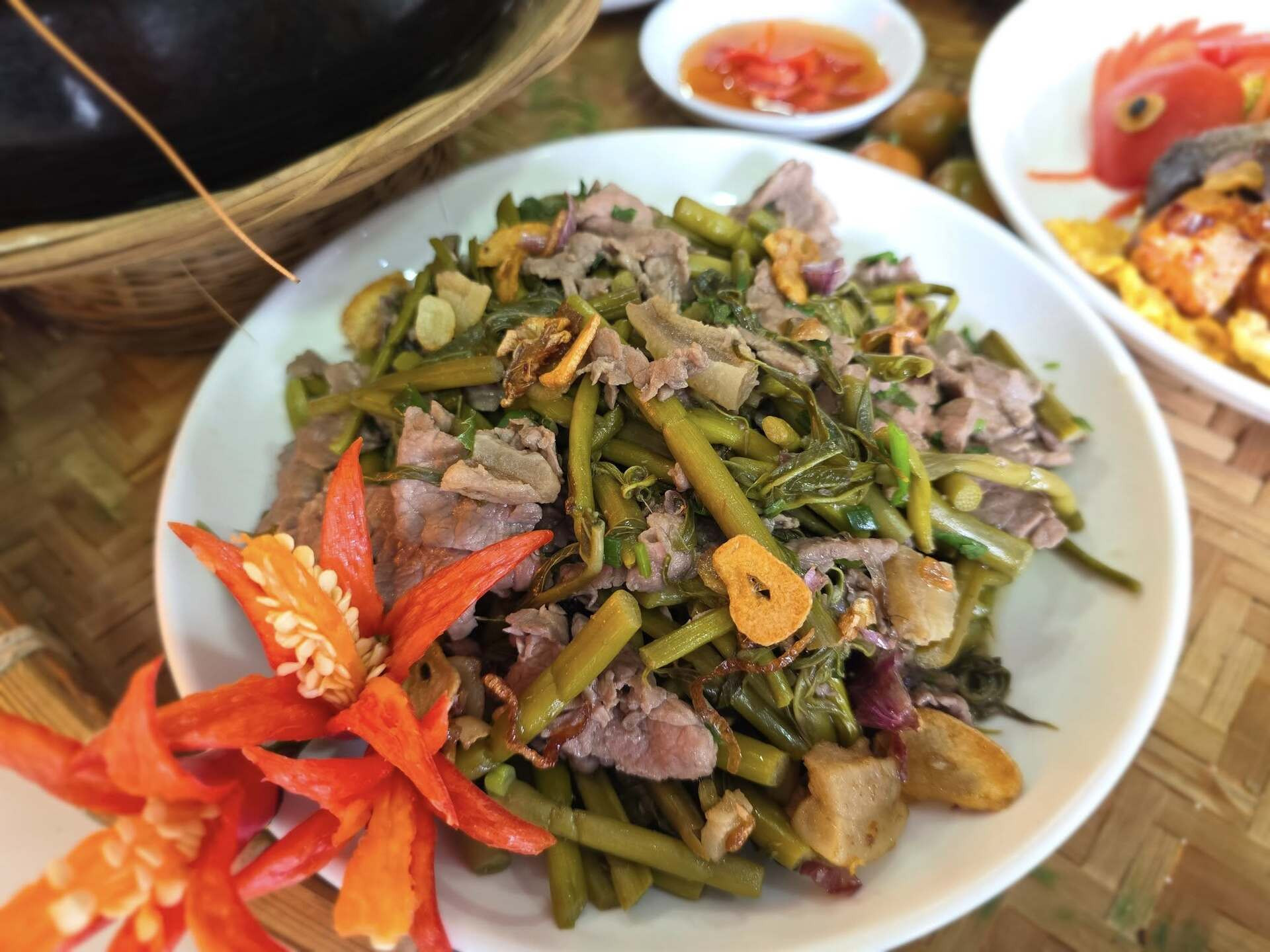
Nguyen Ngoc Tra (33 years old, Ho Chi Minh City), a passionate food enthusiast, said that pickled wild spinach has a crispy texture and distinctive flavor, making it enjoyable without being cloying. "Stir-fried wild spinach with garlic, stir-fried with beef, or mixed in shrimp or chicken salad are all easy to prepare, quick, and delicious."
"Among them, the dish that evokes the most fond memories for my family is sour soup with móp leaves. Pickled móp leaves combined with a few shrimp or pieces of freshwater fish, and a little fragrant herb are enough to create a hot, tangy, crunchy bowl of soup that's incredibly appetizing," Mr. Trà said.
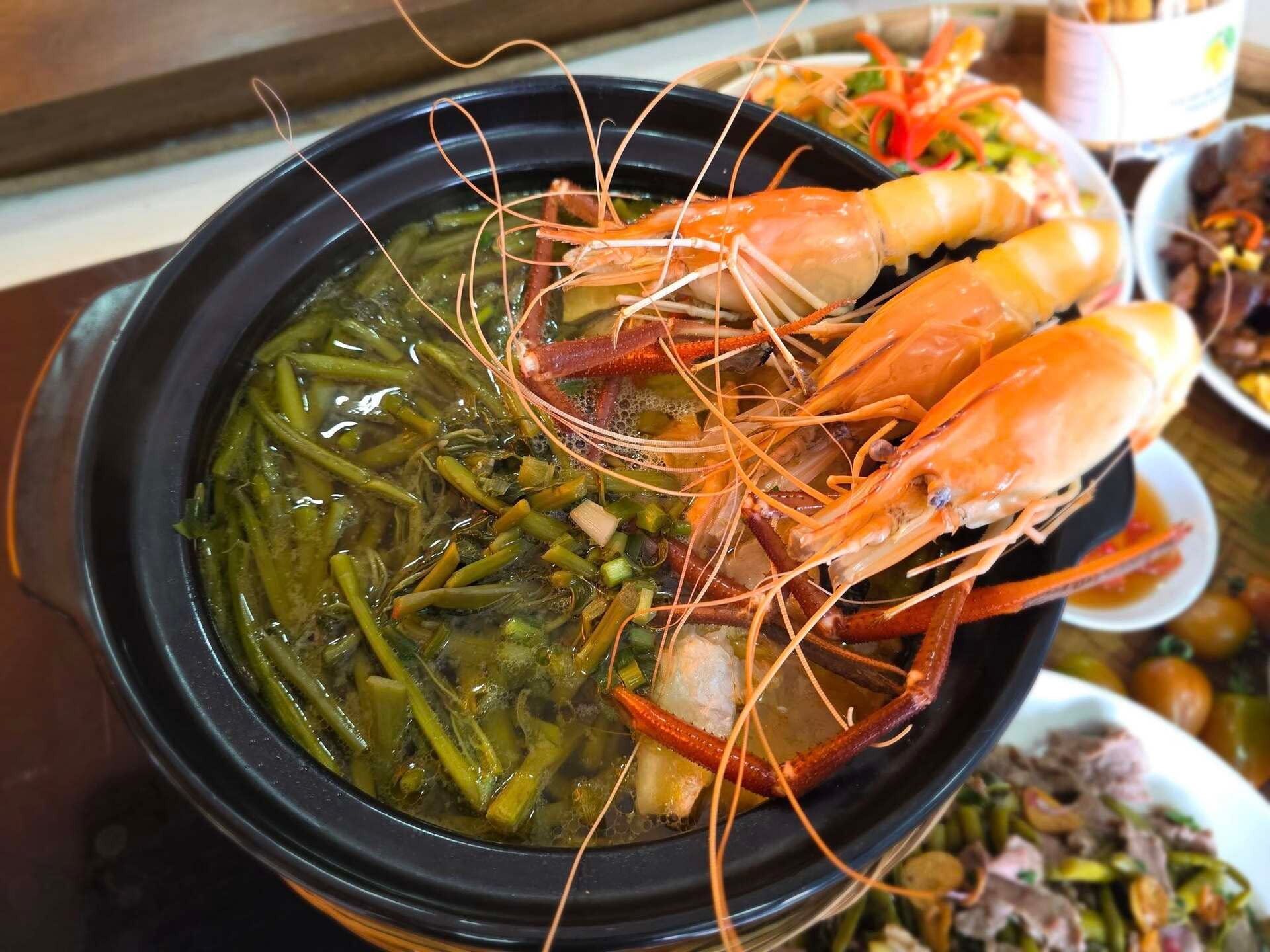

Not only is it clean and delicious, but according to traditional Chinese medicine, this vegetable has cooling properties, helping to clear heat, detoxify, and aid digestion.
Source: https://vietnamnet.vn/dac-san-troi-cho-o-tphcm-khong-can-cham-van-lon-an-gion-san-sat-2477548.html

![[Photo] General Secretary and President To Lam presides over a meeting on preparations for the review of one year of operation of the three-tiered government system.](https://vphoto.vietnam.vn/thumb/1200x675/vietnam/resource/IMAGE/2026/06/02/1780391821195_a1-bnd-4595-9717-jpg.webp)

















































































Comment (0)