

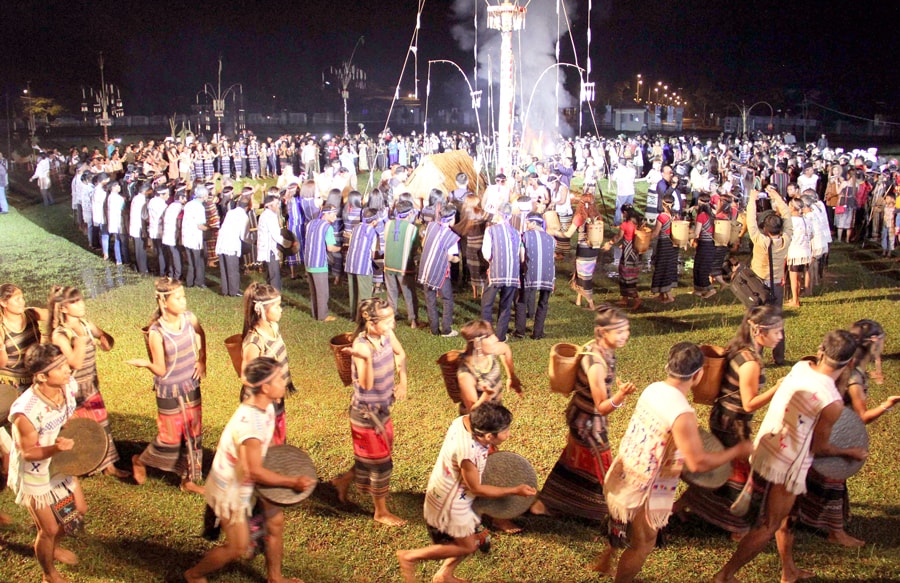
Following the course of history
In the process of searching for the memories of ethnic groups, from epics, folk tales, customary laws to traditional songs, these ancient texts have revealed the origins of these communities. In prehistoric times, there were groups of people speaking two languages, Mon-Khmer and Malayo-Polynesian, who migrated en masse in search of land to live on. By chance, they settled in the vast forests of the Central Highlands, becoming the inhabitants of this region. From here, communities were formed, closely connected to and dependent on the forest, creating a unique culture and its own system of philosophy. These include the Ede, Bana, Sedang, Jrai, Co Ho, Ma, M'Nong, and S'Tieng people…
Historical records also state that, as early as 1470, King Le Thanh Tong of Dai Viet knew of the Central Highlands and called it the Southern Land. During the Nguyen Dynasty, officials were sent to patrol the western mountainous region and received tribute from the local leaders. Before 1945, Western missionaries and scholars, upon encountering this unfamiliar land, referred to it as "Ke Moi," "Ru Moi," or "Xu Moi."
"The Roof of Indochina" is a metaphorical way of referring to the Central Highlands. Many Western strategists have stated: Whoever controls the Central Highlands will control Indochina. This is because the Central Highlands holds a strategically important position in terms of politics , economics, culture, and military. Historically, after conquering Southern Vietnam, from approximately 1867 to 1883, the French advanced into the Central Highlands. They quickly established an administrative apparatus and organized the exploitation of this rich land. The Republic of Vietnam government, with American advice, also developed the Central Highlands into one of the most important military areas in the South. Da Lat became the "summer capital" of the top officials of the Saigon government. This city was also where they established training centers for high-ranking generals, such as the Political Officer School and the Da Lat Military Academy. The entire Central Highlands region belonged to the 2nd Tactical Zone of the Republic of Vietnam Armed Forces, with a dense defensive system…
France and then America invaded our country, and the people of the Central Highlands groaned under the foreign boots. The blood and tears of our people were shed for the fertile plantations and valuable mines that brought wealth to the colonialists and imperialists...
The people of the Central Highlands rose up, driven by the spirit of the Party and President Ho Chi Minh. A new revolutionary spirit blazed in the Central Highlands. The indomitable strength of the mountains and waters was ignited by the "people of the Party." The Central Highlands stood shoulder to shoulder with the entire nation in the fight against the enemy. The ethnic groups, following the Party's and President Ho Chi Minh's words, fought the French and expelled the Americans, becoming heroes of the new era, such as Dinh Nup, A Sanh, Bi Nang Tac… Villages that were once shrouded in darkness and lacked any light became steadfast war zones, such as Dak Ui (Quang Ngai); Chu Dju ( Dak Lak ); Nam Nung, Dong Mang - Da Tro, Loc Bac, Loc Lam, Dong Nai Thuong (Lam Dong)…
Fifty-one years ago, recognizing the extremely important strategic location of this region, our Party decided to launch the General Offensive and Uprising of Spring 1975 with the historic Central Highlands Campaign. This was a decisive blow. Losing the Central Highlands completely demoralized the government and armed forces of the Republic of Vietnam, leading to their collapse under the swift advance of our army and people. From here, the history of the Central Highlands entered a new chapter.
Building a prosperous and culturally rich Central Highlands.
Since the reunification of the country, the ethnic groups of the Central Highlands have been liberated from the long night of poverty and backwardness; they have developed equally with the rest of the country. The Party and the State have implemented many resolutions, organized many programs, and invested significant resources to develop this region with rich potential.
Returning to the period when our Party initiated the Doi Moi (Renovation) process, programs, policies, and resources invested in this strategic region have steadily increased. In the western part of the country, with a total natural area of over 55 square kilometers, a treasure trove of rich resources, and home to more than 5 million people from 47 ethnic groups, life in villages and towns is becoming increasingly prosperous. Infrastructure and welfare projects are being built more frequently. The Central Highlands, in our memories, was a remote and desolate region.
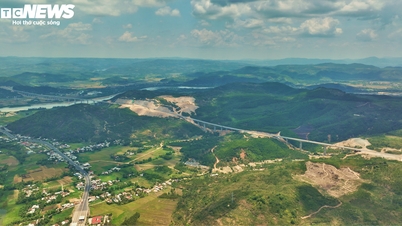
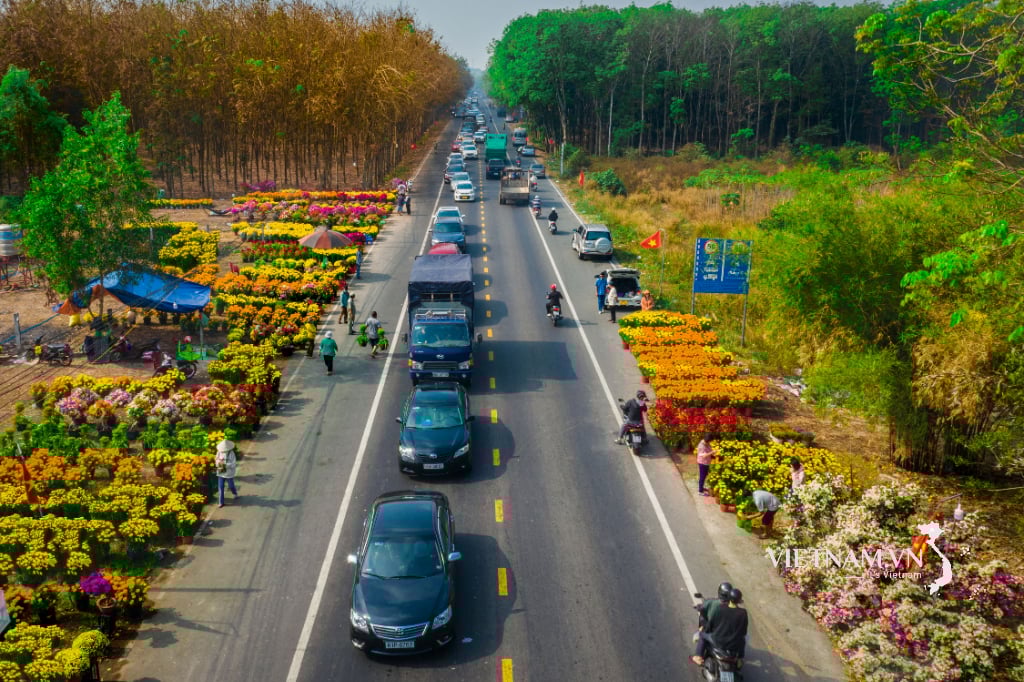
Therefore, the State mobilized all resources to develop transportation. Today, the entire road network, with a total length of over 40,000 km, connects provinces, expanding trade opportunities with major centers nationwide and countries in the region. Of this, national highways and expressways running through the Central Highlands have a total length of nearly 3,000 km; inter-provincial roads exceed 2,000 km; and the inter-border transport system connects the Central Highlands with neighboring Laos and Cambodia.
The Ho Chi Minh Highway and the East-West corridor traversing the region have transformed the landscape of villages that were once remote and isolated. Air travel has developed with three airports: Lien Khuong, Buon Ma Thuot, and Pleiku. Projects to restore the Da Lat-Thap Cham railway and open new railway lines to serve the Nhan Co and Tan Rai alumina plants are being considered. A series of expressway projects connecting the Central Highlands with Ho Chi Minh City, the eastern and southwestern provinces, the coastal region, and the North are being launched.
The Central Highlands regions are becoming interconnected, linking the entire area to comprehensively exploit their advantages and unique characteristics. Dak Lak Plateau is the capital of coffee and fruit. Lam Dong is a tourism center and a major area for vegetable, flower, and industrial crop cultivation. Eastern Gia Lai is home to pepper, rubber, and agricultural and forestry product processing. The Central Highlands has become a key agricultural production region of the country with nearly 600,000 hectares of coffee, yielding an average of 1.3 million tons annually; 72,000 hectares of pepper, producing 121,000 tons annually; and strong development in rubber, cashew nuts, vegetables, and flowers. The average GDP per capita exceeds 40 million VND.
Along with urban development, the Central Highlands provinces have strived to implement solutions to accelerate rural development, especially in ethnic minority areas, narrowing the income gap and improving access to social welfare benefits. Simultaneously, the expansion of industrial zones, clusters, and large-scale projects, along with the implementation of the New Rural Development Program in all communes and villages, has contributed to improving infrastructure, raising awareness, and helping ethnic minorities overcome poverty and move towards prosperity. The effective exploitation of land potential and successful access to the market economy have resulted in the emergence of many ethnic minority millionaires in this region. In addition to preserving cultural identity, ethnic minorities also benefit from preferential policies in education, healthcare, and other social welfare programs.
***
In the Central Highlands, three towering mountains—Cu Yang Sin, Bidoup, and Ngok Linh—stand majestically like three roofs spreading out from three corners of the magnificent forest. Large rivers such as Krong Ano, Krong Ana, Rerepok, Dak Bla, Se San, and Dong Nai originate from these mountain ranges, winding through forests and villages like colorful patterns, carrying with them the historical and cultural values of millennia. The land, water, and people of the Central Highlands have formed a solid foundation, creating a symbol of unity, unwavering courage, and pride. This source of inspiration continues to nurture a constantly developing Central Highlands in the westernmost part of the country.
In 2025, in accordance with the National Assembly's resolution on the reorganization of provincial-level administrative units, the Central Highlands became a region comprising four major provinces: Lam Dong, Dak Lak, Quang Ngai, and Binh Dinh. With a vast development space, the Central Highlands, with its expansive forests, is now looking towards the open sea with a new mindset.
Source: https://hanoimoi.vn/dai-ngan-tay-nguyen-bat-nhip-cung-ca-nuoc-747951.html
![[Image] Close-up view of the interchange connecting the two expressways and Long Thanh Airport.](https://vphoto.vietnam.vn/thumb/1200x675/vietnam/resource/IMAGE/2026/05/25/1779703378210_ndo_br_z7863716673926-224453a31600126cce10622af6290afd-4549-jpg.webp)
![[Image] Hanoi's urban life under the challenge of a "scorching hot" environment](https://vphoto.vietnam.vn/thumb/1200x675/vietnam/resource/IMAGE/2026/05/25/1779706979265_nang-nong-t5-2026-minh-duy-7-4636-jpg.webp)

















































































Comment (0)