

 |
When banks are short of trillions of dong to lend
Never before has the loan-to-deposit ratio (LDR) of the banking sector been as high as it is now, standing at approximately 111% by the end of 2025, the highest in the past half-decade.
The situation where lending exceeds deposit mobilization is common in many banks. VPBank's separate financial report for 2025 shows that its customer deposits amounted to only VND 631,000 billion, while outstanding loans to customers reached VND 845,000 billion. The figures for Techcombank were VND 624,000 billion and VND 723,000 billion respectively, and for VIB, VND 294,000 billion and VND 377,000 billion…
This situation is expected to continue into the first quarter of 2026, with credit increasing by 2.15% (as of March 24, 2026) while deposits only increased by 0.44% compared to the end of 2025.
The total outstanding credit balance at the end of the first quarter reached 19 million billion VND, while deposits were only about 17 million billion VND. In other words, deposits are lagging behind loans by nearly 2 million billion VND, forcing banks to find ways to raise capital.
Currently, lending capital from banks mainly comes from four sources: deposits from the public; borrowing on the interbank market, from the State Bank of Vietnam (SBV), from credit institutions and international financial institutions; issuing securities (certificates of deposit, bonds, etc.); and equity capital.
With slow capital mobilization, banks have to raise capital from the remaining three sources, including interbank market borrowing and bonds. This is one of the reasons why interbank interest rates have been continuously rising since the beginning of the year, even reaching 21% (overnight lending) at times. In the corporate bond market, the banking sector is also a major player, accounting for 65% of corporate bonds issued in 2025 and 43% of new bonds issued in the first three months of this year.
 The country is entering a period of high development (double-digit growth), so increasing the capital of the banking sector at this stage is a mandatory requirement, as preparation for a new growth cycle.
In addition, to secure capital for growth, banks are also aggressively increasing their equity capital through various means, the most common of which is issuing additional shares to existing shareholders or issuing shares to the public to increase charter capital.
This is also why, during this year's Annual General Meeting season, banks are aggressively planning to distribute stock dividends to increase capital from retained earnings. Of course, banks have many goals for increasing capital: improving financial capacity, ensuring the Capital Adequacy Ratio (CAR) meets international standards (Basel II, III), investing in technology, and enhancing competitiveness… However, one of the main purposes of increasing capital remains to secure additional funds for expanding lending capacity.
The race to increase capital is becoming increasingly fierce. In its published General Shareholders' Meeting documents, Vietcombank plans to issue over 1 billion bonus shares, raising its charter capital to nearly 94,000 billion VND. This bonus share issuance is expected to bring the bank over 10,686 billion VND to supplement its working capital and enhance its financial capacity.
VietinBank also plans to propose to shareholders a plan to use all remaining profits after allocating funds (over VND 16,200 billion) to distribute stock dividends, thereby increasing the bank's charter capital. This proposal is not surprising. At the 2025 annual general meeting, VietinBank proposed that regulatory authorities allow it to retain all annual profits for the period 2024-2028 to increase capital, enhance financial capacity, and expand credit growth potential.
Meanwhile, BIDV is urgently finalizing its private placement plan. In addition, it plans to continue raising capital in 2026 from retained earnings from 2023 and 2024 and from other equity sources, with a payout ratio of over 30% in shares. The bank stated that the capital increase not only meets increasingly stringent capital adequacy standards but also expands its business operations and fulfills its development goals for the coming period.
Among private commercial banks, Techcombank is the only one this year that does not plan to distribute stock dividends. The remaining banks all plan to significantly increase their charter capital.
Specifically, at this year's Annual General Meeting, MB plans to propose increasing its charter capital from VND 80,550 billion to a maximum of VND 102,687 billion, a 27.5% increase. VPBank plans to increase its capital from VND 79,339 billion to VND 100,000 billion this year (a 26% increase)...
In addition, at this year's Annual General Meeting, a number of other banks also planned to increase capital by issuing shares to pay dividends, or through private placements, offerings to existing shareholders, or issuing ESOP shares. Banks paying dividends in shares to increase capital, at rates ranging from 9.5% to 30%, include VIB, LPBank, HDBank, ACB, MSB, SeABank, KienLongBank, etc.
Raising capital is becoming increasingly urgent.
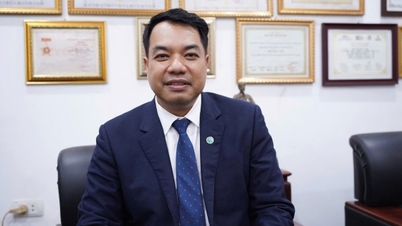
According to Dr. Can Van Luc, the story of increasing capital in the banking sector in 2026 is not just about expanding scale. Placed in the context of the country entering a high-growth phase (double-digit growth), increasing capital in the banking sector at this stage is also a mandatory requirement, a preparation for a new growth cycle.
Besides the pressure of capital for credit growth, according to economic experts, the 2026 energy crisis caused by Middle East tensions could be prolonged, impacting production costs and business efficiency, potentially leading to an increase in bad debts in the banking sector. Not to mention, rising interest rates are negatively affecting the real estate market – an industry considered to be closely linked to the banking system.
In this context, according to Mr. Nguyen Van Truc, Head of National Securities Analysis at NSI, banks are forced to develop capital increase plans to strengthen their financial foundations and be ready to respond to risks if bad debts increase.
Dr. Nguyen Tri Hieu, a banking expert, also commented that increasing capital is an unavoidable trend for banks. Increased charter capital not only provides banks with a solid financial "buffer" to cope with economic fluctuations, invest in technology, and increase credit growth, but also to meet the increasingly stringent standards of regulatory authorities.
According to Circular No. 14/2025/TT-NHNN of the State Bank of Vietnam regulating capital adequacy ratios for commercial banks and branches of foreign banks, by 2033, the minimum capital adequacy ratio of commercial banks will increase from the current 8% to 10.5%. Increasing capital is a decisive factor in affirming the position and competitiveness of banks in the coming period, not only to ensure compliance with the capital adequacy ratio regulations, but also as a prerequisite for sustainable credit growth.
For state-owned commercial banks, increasing capital is an even more pressing requirement. According to Mr. Le Ngoc Lam, General Director of BIDV, in 2025, the Big 4 banks (Agribank, BIDV, VietinBank, Vietcombank) will have a total outstanding loan balance of approximately 8 trillion VND. In 2026, this group of banks is expected to increase disbursements by about 1 trillion VND to meet the capital needs of the economy (i.e., a total outstanding loan balance of approximately 9 trillion VND).
However, according to Mr. Lam, in order to continue maintaining their role as the core capital provider for the market, leading and supporting growth drivers, the prerequisite is to continue improving the financial capacity of this group of banks. The General Director of BIDV proposed a flexible and proactive capital increase mechanism, which would allow the Big 4 to retain all profits to pay dividends in shares in order to enhance their capital capacity.
In the context of a banking system facing a capital shortage for growth, a race among banks to increase capital is inevitable. However, experts warn that when credit increases rapidly while deposit mobilization slows, the efficiency of capital utilization will be the decisive factor in determining the position of each bank.
Source: https://baodautu.vn/dang-sau-cuoc-dua-tang-von-cua-nha-bang-d564032.html



































![[Image] Hanoi's urban life under the challenge of a "scorching hot" environment](https://vphoto.vietnam.vn/thumb/1200x675/vietnam/resource/IMAGE/2026/05/25/1779706979265_nang-nong-t5-2026-minh-duy-7-4636-jpg.webp)



































































Comment (0)