

In Van Dinh commune, a historically rich area south of Hanoi, heritage values, cuisine , and rural atmosphere are gradually being "awakened," transforming into resources for tourism development linked to cultural industries, contributing to creating sustainable livelihoods for the people.
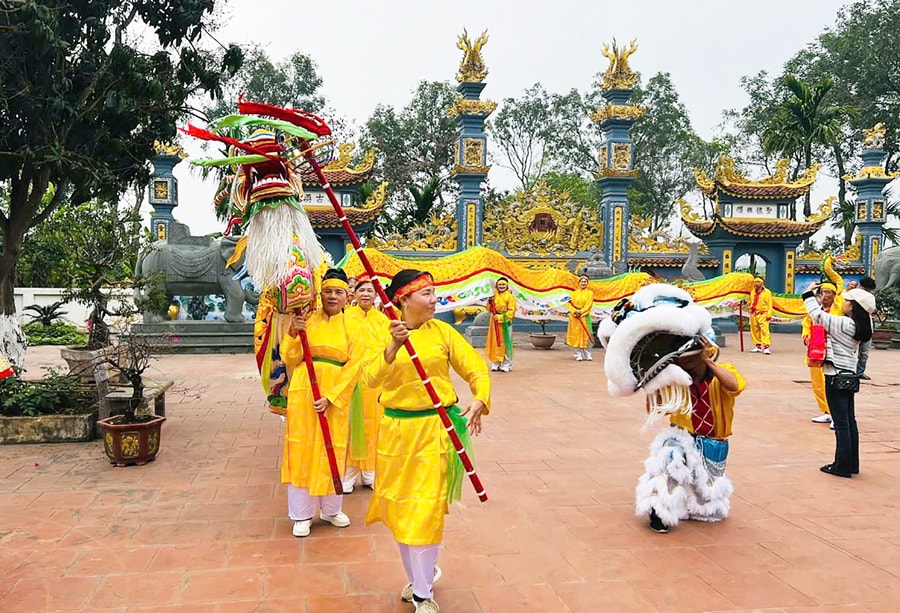
A land where heritage and cuisine converge.
On January 7, 2026, Resolution No. 80-NQ/TW was issued, marking a turning point in development thinking when culture was identified as one of the four pillars of national development, serving as both a foundation, a driving force, and a regulator for sustainable growth. Within this overall picture, the southern area of Hanoi , especially Van Dinh commune, is being recognized as a space with rich potential, along with other localities, to realize the objectives of the Resolution.
The commune currently boasts 108 historical and cultural relics, including 26 national-level relics and 35 city-level relics, along with 26 intangible cultural heritage sites. This is a valuable treasure trove for developing unique cultural tourism products. In addition, Van Dinh is renowned for its culinary values, which have become a brand, especially Van Dinh grass-fed duck – a dish currently being proposed for inclusion in the National Intangible Cultural Heritage list…
In particular, the rural landscape of Van Dinh still retains the distinctive features of the Northern Delta, from the houses and roads to the daily rhythm of life. On a morning in Van Dinh, visitors can stroll around, admire the village scenery, and enjoy dishes such as rice rolls with pork sausage, crab noodle soup, and snakehead fish soup – simple flavors yet deeply rooted in local culture. This convergence of heritage, scenery, and cuisine has created a favorable foundation for Van Dinh to gradually develop into an experiential tourism destination, a direction aligned with sustainable development trends.
However, like many other localities, Van Dinh's challenge lies not in a lack of resources but in how to transform these values into tourism products that can be effectively exploited. According to experts, connecting with travel businesses is the key. Only when cultural values, cuisine, and the rural atmosphere are "packaged" into specific tours and routes can they access the market and operate regularly.
Van Dinh commune is gradually reviewing and systematizing its tangible and intangible cultural values to build a "destination story." Based on this, the locality is orienting the development of several key products such as heritage experiential tourism, culinary tourism, and agricultural tourism associated with distinctive products.
Chairman of Van Dinh Commune People's Committee, Nguyen Ngoc Diep, said: "We are not developing tourism in a trendy way, but rather aiming to build products with depth and a story, so that tourists not only come to enjoy the food but also experience the culture of Van Dinh."
The people – the subjects of development.
One of the key highlights in the implementation process is enhancing the role of the people as key stakeholders. In the villages, people not only participate in tourism but also directly preserve and promote cultural values. From renovating houses and maintaining the environment to participating in community tourism models, all contribute to creating a new look for the locality.
According to Bui Thi Thu Hien, Secretary of the Party Committee and Chairwoman of the People's Council of Van Dinh commune, the locality has clearly defined its direction as developing tourism in conjunction with cultural industries. Van Dinh's advantage lies in its favorable geographical location, situated in the center of the southern area of Hanoi, with the ability to connect with the inner city and neighboring localities. Based on this, the commune focuses on developing culinary and community-based tourism routes and destinations linked to agricultural knowledge, historical sites, and festivals; while also developing tourism souvenir products that tell the story of the culture and people involved, thereby increasing their economic value. The locality also aims for each village to have at least one OCOP product, gradually forming a rural tourism chain, and strengthening links with businesses and localities in the region. Tourism promotion and marketing will be intensified to gradually integrate Van Dinh into the city's and surrounding areas' tourism tours and routes.
To realize this goal, the commune proposes that completing the dossier to include Van Dinh grass-fed duck cuisine in the list of National Intangible Cultural Heritage should be considered a crucial step in elevating the brand. In addition, the city needs to pay more attention to planning and investing in synchronized technical infrastructure, creating a foundation for the development of cultural industries and a green economy. “We have resources and determination, but for sustainable development, we need more mechanisms, resources, and support from all levels and sectors,” shared Bui Thi Thu Hien, Secretary of the Commune Party Committee.
In the context of Hanoi expanding its tourism reach to suburban areas, Van Dinh is expected to become a unique "piece" with a distinct rural character, setting it apart from traditional destinations. The journey to "awaken Van Dinh" is therefore not just the story of one locality, but also demonstrates a new approach to development, where culture is placed at the center, preserving traditional values while creating momentum for the future. When solutions are implemented synchronously, from institutions and products to people, Van Dinh could become a highlight on the capital's tourism map, where every experience is a story steeped in local cultural identity...
Source: https://hanoimoi.vn/danh-thuc-tiem-nang-van-hoa-du-lich-van-dinh-740614.html




































































Comment (0)