

 |
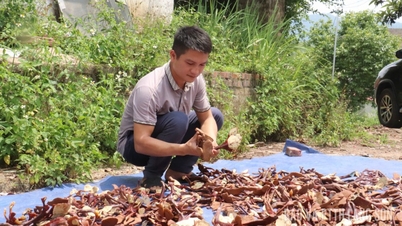
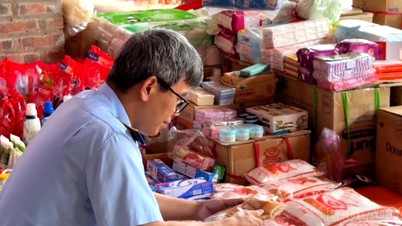
| Mr. A Hak (village 5, Ngok Wang commune, Dak Ha district, Kon Tum province) was once lured into the Ha Mon cult, but has now changed and focused on developing his family's economy . (Photo by PHUC THANG) |
The struggle to prevent and ultimately eliminate all forms of heresy , strange religions, and illegal organizations masquerading as religions is entirely correct and consistent with the religious policy of our Party and State; it contributes to protecting national security, maintaining territorial sovereignty, and removing political elements from religious life, ensuring the pure freedom of belief and religion of the people.
Thoroughly understand and be familiar with the local area.
Recognizing the dangers and negative consequences of cults present in daily life, and their serious impact on security in border areas and ethnic minority regions, the Party, the State, local authorities, as well as functional agencies and political and social organizations in areas with many ethnic minorities who are exploited and lured into cults, have proactively implemented many comprehensive and appropriate solutions over the years.
The border area of Dien Bien province comprises 29 communes across four districts: Dien Bien, Muong Cha, Nam Po, and Muong Nha. Taking advantage of the lack of information and incomplete understanding among some residents, malicious individuals have lured them into believing in cults such as: "Ba Co Do," "Vietnamese Word of Life," "Jehovah's Witnesses," "Salvation Grace," etc.
Recognizing the dangers and negative consequences of cults present in daily life, and their serious impact on security in border areas and ethnic minority regions, the Party, the State, local authorities, as well as functional agencies and political and social organizations in areas with many ethnic minorities who are exploited and lured into cults, have proactively implemented many comprehensive and appropriate solutions over the years.
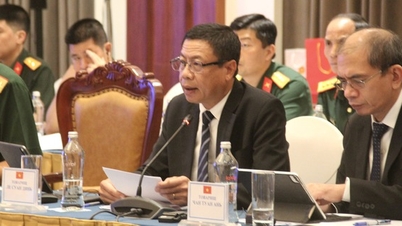
Muong Nha and Nam Po districts were once hotspots for the "Ba Co Do" cult. According to Bui Minh Hai, Secretary of the Muong Nha District Party Committee, the District Party Committee has directed mass organizations and members of the District's Steering Committee 160 to assign officials and leaders to oversee each commune, understand each village, and be aware of the circumstances of each family. Annually, the district organizes meetings to exchange information and listen to feedback from Party branch secretaries, village heads, group leaders, and influential people in the area. The district and commune police, as well as border guard posts, assign officers and soldiers to stay close to the people according to the "3 close ties, 4 together" principle.
Following a similar approach to Muong Nha district, the Nam Po District Party Committee (Dien Bien province) advocated for the establishment of 121 grassroots mass mobilization teams in 121 villages throughout the district, with core members being Party branch secretaries, village heads, and Party members.
The core group directly responsible for monitoring and guiding the activities of the grassroots mass mobilization teams consists of leaders from the District Party Committee, the District People's Committee, and leaders from various departments, the Fatherland Front, and other district organizations. The team's nhiệm vụ is to comprehensively understand the lives, thoughts, and aspirations of the people; to provide complete information on policies and regulations; to guide people in implementing production models; and to work alongside the people in production.
According to Le Khanh Hoa, Secretary of the Nam Po District Party Committee: "At the end of the week, members of the teams are the main force in understanding the aspirations of the people, identifying exemplary individuals to nurture and recommend to the Party. Thanks to this, since the establishment of the district, Nam Po has admitted thousands of ethnic minority people into the Party, including 89 people from ethnic minority groups who practice religion."
According to the Dien Bien Provincial Border Guard, in early 2023, authorities in the province eradicated the "Vang Chu" and "Mother God" cults. However, 70 households with a total of 371 people in three districts: Muong Cha, Nam Po, and Muong Nha, still follow the "Jesus" and "Ba Co Do" cults. Annually, border guard units reinforce their forces or assign Party members to areas where people follow these cults; they coordinate with local Party committees, authorities, the Steering Committee 160 at all levels, and other functional forces to directly meet with these individuals to educate them, request them to sign commitments to abandon their cults, and not to entice people to follow these cults.
The secret to the Lai Chau Provincial Police's success in eradicating the "Jesus" cult lies in the fact that in August 2022, the Party Committee and the Board of Directors of the Provincial Police established teams to strengthen grassroots efforts, directly implementing the "four together" approach with the people; advising and coordinating with various departments, agencies, Party committees, and local authorities to jointly propagate, mobilize, and support the people, refuting false propaganda; and strictly combating and handling violations related to the "Jesus" organization.
Bui Van Tuan, Deputy Secretary of the District Party Committee and Head of the Religious Affairs Steering Committee of Sin Ho District, emphasized: Along with propaganda, the local government continues to prioritize investment and comprehensive development in all aspects of politics, economics, culture, and society in ethnic minority areas of the province, in affected areas and areas with potential risks; mobilizing people to actively participate in new rural development programs, maintaining security and order in communes, villages, and neighborhoods; and promoting the "Protecting National Security" movement, tailored to each locality. In particular, special attention is paid to building and replicating advanced models and exemplary cases, and promoting the role of village heads, Party branch secretaries, influential people, and religious leaders in propaganda work.
The Head of the Dak Lak Provincial Party Committee's Mass Mobilization Department, H'Kim Hoa Byă, shared: To prevent and repel heretical and strange sects, Dak Lak province mobilizes the entire political system from the provincial to the grassroots level, with the Provincial Police force as the core. They also coordinate with the Vietnam Fatherland Front Committee of the province, the Mass Mobilization Department, and the Religious Affairs Department to organize numerous conferences with the participation of religious leaders and officials to disseminate the Party and State's policies on religion. At the same time, they urge religious leaders and officials to manage, educate, and guide followers to practice their religion purely, abide by the law, be vigilant, and not believe in or follow heretical or strange sects.
"Taking advantage" of influential people
Sa Loong commune, Ngoc Hoi district, Kon Tum province, is a poor and particularly disadvantaged border commune. In 2003, the "Ha Mon" cult appeared in Giang Lo 2 village, led by a self-proclaimed religious leader named A Gieng. Fifty-three households with 200 people, incited by the cult, gathered daily at A Gieng's house (his wife is Y Hlao) to illegally recite scriptures.
To eradicate the cult, the Standing Committee of the Ngoc Hoi District Party Committee issued a directive, developed a plan, clearly defined the roadmap, steps, and participating forces. Accordingly, the Giang Lo 2 village Party branch, in coordination with the Standing Committee of the Vietnam Fatherland Front Committee of the commune and the Sa Loong Border Guard Post, established five household groups. Party members and officials from the village's departments, the Fatherland Front, and mass organizations were assigned to each group to conduct propaganda, mobilization, and struggle. At the same time, the leaders, key figures, and active participants were identified and resolutely targeted for eradication.
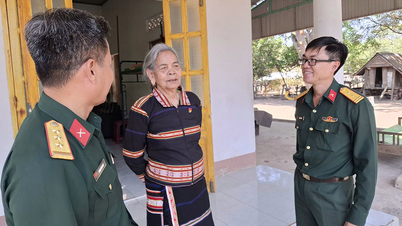
Major Pham Huy Thang, a former officer assigned to Sa Loong commune - Sa Loong Border Guard Post, recalled: "To eradicate the cult, it was necessary to make the people believe in and have a correct understanding of the Party's guidelines and policies, and the State's laws and regulations, preventing them from being misled and manipulated by propagandists. Every day, we ate, lived, worked, and spoke the local dialect with the people. At times, we patiently stayed for several months with the villagers, campaigning and persuading them. Through persistent effort, by 2017, the 'Ha Mon' cult was completely eradicated, and the ethnic minority people in Giang Lo 2 village returned to practicing the orthodox religion."
Meanwhile, in Kon Gu 1 village, Ngok Wang commune, Dak Ha district (Kon Tum province), key figures A Nip and A Cheoh lured 28 households/55 people, all Catholic parishioners, to follow the "Ha Mon" cult. Upon receiving this information, the Standing Committee of the District Party Committee and the leaders of the Dak Ha District People's Committee directed the police force and the Party Committee and government of Ngok Wang commune to develop a plan to combat and eliminate this cult. The plan involved regularly assigning personnel to monitor the area, educate, deter, and promptly neutralize key figures; proactively managing, monitoring, and promptly grasping all developments to prevent the ringleaders and key figures from exploiting the situation to engage in subversive activities, revive the Fulro and De Ga reactionary organizations; organize illegal border crossings into Cambodia; or cause disturbances, protests, and create hotspots of security and order in the locality.
The district police force closely coordinated with the commune's departments, agencies, and mass organizations to propagate and mobilize parishioners to not believe in or follow evil elements; promptly prevent the recruitment and development of new households practicing heretical religious activities; organize reconnaissance activities and closely monitor the movements of these individuals; educate, deter, and neutralize the activities of key individuals to prevent them from being lured by hostile and reactionary forces into participating in subversive activities; effectively enlist the support of influential figures in ethnic and religious communities such as village elders, religious leaders, village management boards, and associations to participate in propaganda and mobilization; intensify propaganda and mobilization efforts to encourage those who believe in heretical religious activities and the families of those who have fled to actively participate in persuading their relatives to return home to work and live; and provide good support to some disadvantaged families.
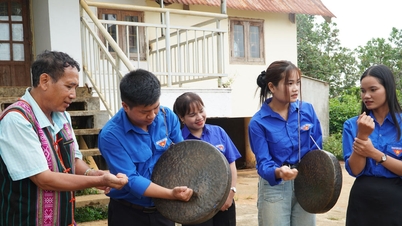
As a son of the village and a respected figure, the Party Secretary and Head of Kon Gu 1 village, A Đram, shared: "Raising awareness among the people through propaganda is very important. This cannot be done overnight; it requires a gradual, persistent approach. We must go to each house, meet each person to spread the message, help them recognize what is wrong and incorrect so that they will abandon it on their own."
According to Lieutenant Colonel Dang Minh Thang, Head of the Security Team of Dak Ha District Police, the initial period of persuading the 27 households in Kon Gu 1 village to abandon the cult was very difficult and tense due to the villagers' avoidance. However, with the spirit of being a son of the village, we persevered, approaching them closely, and then using emotional appeals alongside reasoned persuasion and concrete actions to gain their trust.
* Article 1: Ensuring religious freedom in Vietnam: Walking hand in hand with the nation
* Lesson 2: Ensuring religious freedom in Vietnam
----------------------
(To be continued)
(★) See Nhan Dan Newspaper from the issue dated September 20, 2024.
(Continued from previous issue) (★)
Source: https://baodaknong.vn/bai-3-dau-tranh-ngan-chan-ta-dao-229867.html





















































































Comment (0)