

The old plantation…
In mid-April, as the scorching hot winds from Laos began to blow, we arrived in Thai Hoa – the administrative and political center of the former Phu Quy region, now a bustling town situated on the banks of the tranquil Hieu River. A row of ancient trees provided shade in the heart of Tay Ho 1 block of Quang Tien ward, creating a very Western, ancient, and peaceful space, nestled amidst a rapidly developing city. Despite the noise and hustle outside, two rows of tall tamarind trees, with diameters ranging from 70cm to 1m, were planted in neat rows, spreading out to encompass the entire small town.
Joining us was Mr. Mai Xuan Thinh, 85 years old, former Secretary of the Party Branch of Tay Ho 1 block, who has spent almost his entire life connected to the tamarind trees in this area. Mr. Thinh is originally from Nam Dinh, having arrived in this land 60 years ago, when he was a young man helping to build the agricultural farm. He also knows quite a bit about the tamarind trees and the unique characteristics they bring to the local residents.
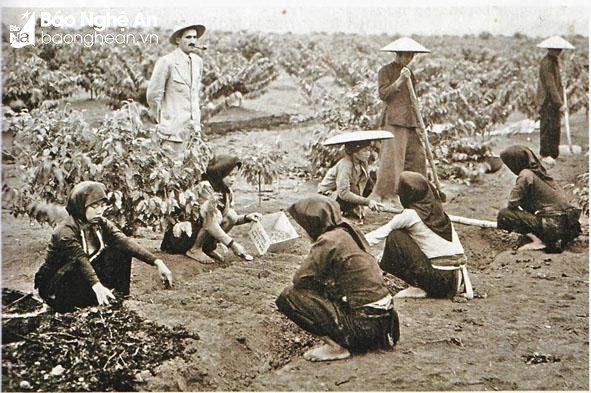 |
Image of a coffee plantation in Vietnam during the French colonial period. Photo: Coffeenewsvietnam |
Looking back in history, in the late 19th and early 20th centuries, when the process of colonization was at its peak, the French realized that the Phu Quy area had a climate and soil suitable for growing and developing coffee and rubber. Therefore, the French colonialists pressured the feudal government to seize the land and establish a vast plantation area with tens of thousands of hectares of coffee, rubber, and other industrial crops. The present-day National Highway 48 was also built during this period to serve the exploitation of resources and minerals in Phu Quy and to pacify the northwestern region of Nghe An province.
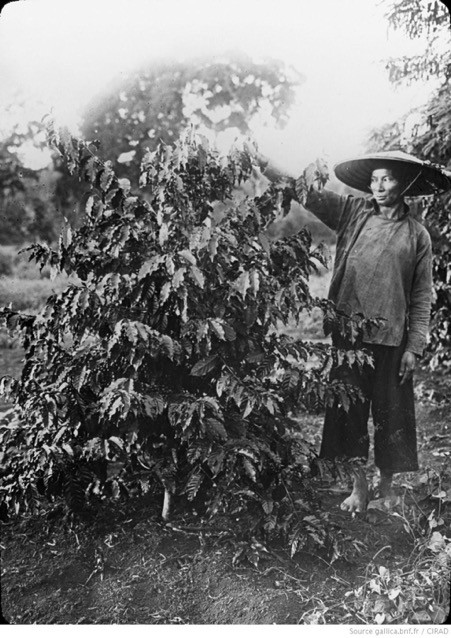 |
Coffee trees in Cao Trai, one of the coffee research facilities in Phu Quy. Photo courtesy of Pham Xuan Can. |
On October 22, 1907, in this very area, the Governor-General of Indochina issued a decree consolidating the Quy Chau - Nghia Dan region, establishing a provincial-level administrative office in Nghia Hung. This office was later renamed the Nghia Hung station on September 1, 1908. On March 3, 1930, the Governor-General of Indochina issued another decree elevating the Nghia Hung station to the Phu Quy administrative office, granting it greater responsibilities and authority. The French colonialists aimed to consolidate their ruling apparatus, intensify repression, seize land for plantations, and thoroughly exploit the rich resources of the Phu Quy region. At this time, Nghia Dan district comprised six communes (Cu Lam, Thai Thinh, Nghia Hung, Thanh Khe, Ha Suu, and Lam La), with 58 villages and hamlets, each with its own seal. The district headquarters was located in Tan Hieu (formerly Nghia Quang commune, now Quang Phong and Quang Tien). The administrative structure existed until the successful August Revolution of 1945, when it was abolished.
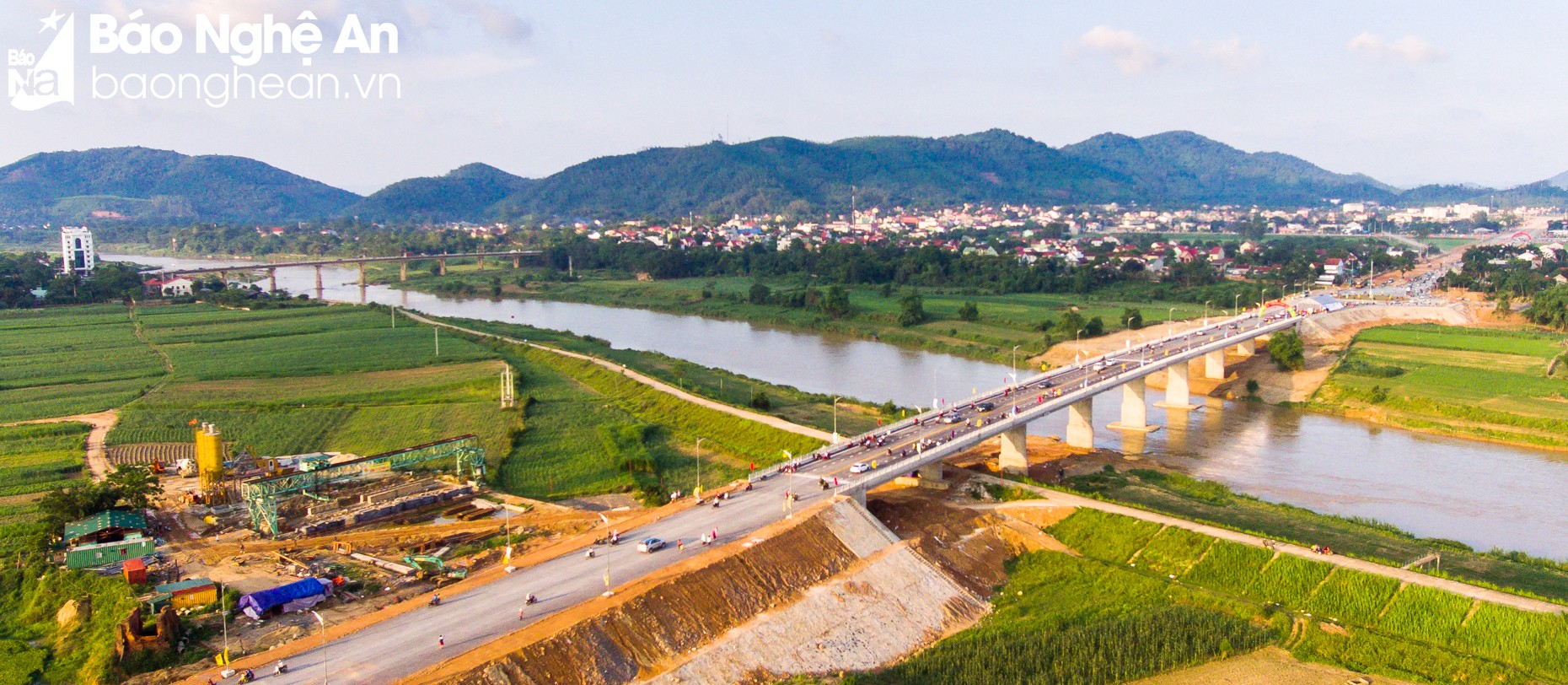 |
Images of the banks of the Hieu River today. Photo: BNA archives. |
Under the influence of colonial exploitation, the Phu Quy area became a bustling urban center in the early decades of the 20th century. Between 1937 and 1940, the French colonialists replanned the streets and houses of the villages of Cuu Hieu and Bac Hieu, naming the area Ville de Phu Quy – this was also the first urban planning project for what is now Thai Hoa town.
According to Mr. Thinh, the French colonial plantation system used to be located on both banks of the Hieu River, east and west of the river. The French officials' residences, camps, and rest stops were mainly situated in the area west of the Hieu River.
 |
A telegram advertisement from the Public and Private Engineering Research Company, owned by FLWalthert. FLWalthert is also one of the largest plantation owners in Phu Quy. Photo: Archival material. |
The Phu Quy region is blessed with unique soil and climate conditions. The soil, primarily red basalt, is highly suitable for the growth of industrial crops. After occupying the land, the French began exploiting it. Due to the need for a large workforce, in addition to forcing local people to work for them, the French colonialists also mobilized many laborers from other regions to come to Phu Quy to work as laborers. This later made the area a common home for many people from all over the world.
According to statistics compiled by Associate Professor Dr. Tran Vu Tai - Vice Rector of the Teacher Training College, Vinh University, in an article published in the Journal of Science of the University of Social Sciences and Humanities, Vietnam National University, Hanoi in 2006, the Nghia Dan area had many plantations owned by the French from 1919 to 1945. Among them, some plantation owners possessed large land areas such as: Walther, owning 6,000 hectares in Dong Hieu and Tay Hieu (Nghia Dan); Saintard, owning 500 hectares in Nghia Hop (Nghia Dan); or Lapic et Société Company in Nghia Hung (Nghia Dan) with an area of 7,560 hectares...
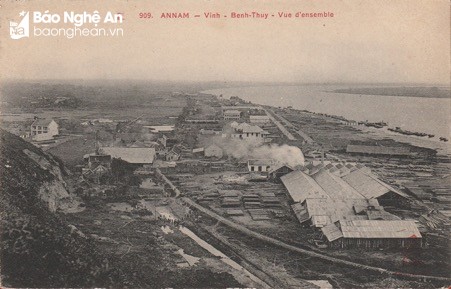 |
According to researcher Pham Xuan Can, Lapic et Société Company, headquartered in Vinh, owned a canning factory in Ben Thuy and also had plantations in the Phu Quy area. The photo shows the old Ben Thuy area. Photo: Archival material. |
According to Associate Professor Dr. Tran Vu Tai, although appearing later than in other regions of the country, after World War I, the plantation system in the North Central region was mainly consolidated and expanded by the French colonialists. French plantations were mainly concentrated in the midland areas, where there was fertile red basalt soil. These were primarily located in Ha Trung, Thach Thanh, Tho Xuan, Cam Thuy, Quan Hoa, Ngoc Lac, Nong Cong… (Thanh Hoa), Nghia Dan, Quy Chau, Yen Thanh, Quynh Luu (Nghe An), and Huong Son (Ha Tinh). The plantation system in this area was mostly used for growing industrial crops and raising large livestock. Coffee cultivation played a significant role in these plantations. Before conquering the entire Central Highlands, the French colonialists intended to transform North Central Vietnam into the largest coffee growing and exporting region in Indochina.
In fact, coffee cultivation in Phu Quy was noticed and exploited by the French very early on, from 1913, even before the red soil region of the Central Highlands (1920-1925). The coffee produced by the plantations here was mainly exported to France under the brand Arabica du Tonkin (Arabica coffee from Tonkin).
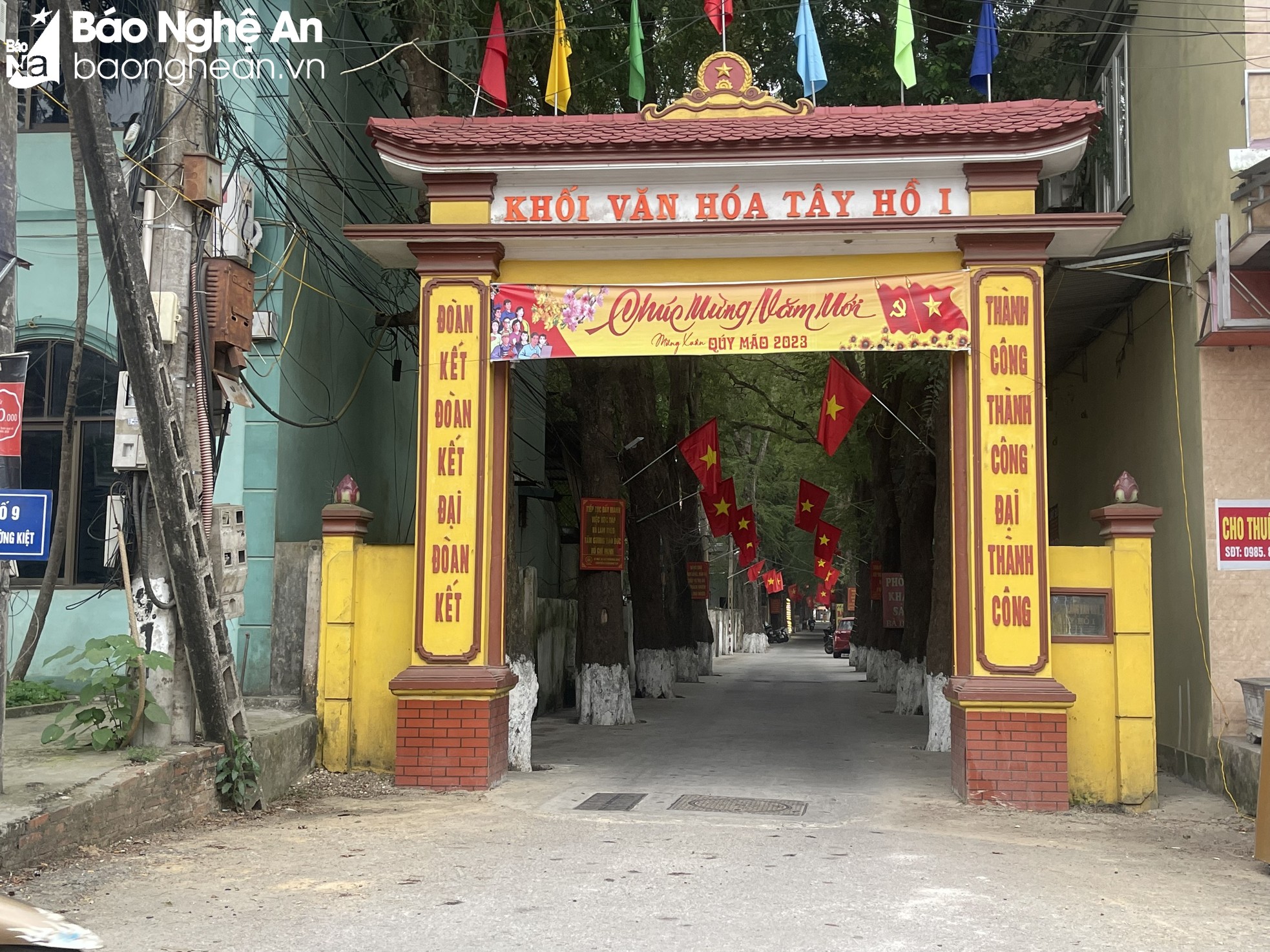 |
The entrance gate leads to the Tay Ho 1 block, where there are ancient tamarind trees over 100 years old. Photo: Tien Dong |
…and the ancient tamarind trees
Today, the villas and mansions of the French plantation owners in Thai Hoa town have been almost completely erased, leaving no trace. But the tamarind trees that the French brought and planted during their colonial exploitation of this land still remain, a testament to a vibrant period in this basaltic red soil region.
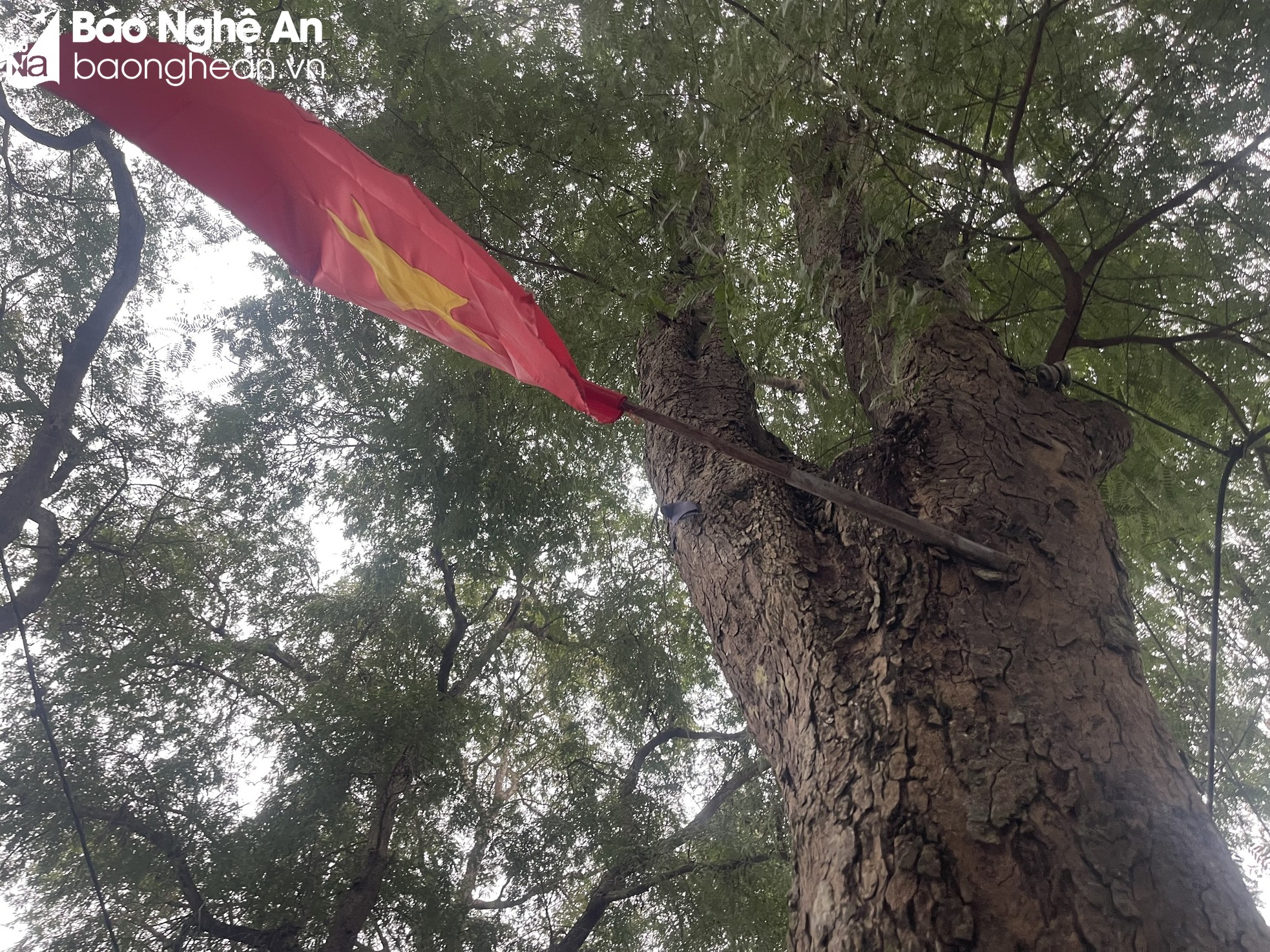 |
The tall tamarind tree, with its wide canopy, covers the entire small street. Photo: Tien Dong |
According to Mr. Thinh, even the village's old and current name, Tay Ho 1 block, or the Giao Te Hotel right at the entrance to the block, already gives the area a very Western feel. Most of the residents here are not native to the area. Previously, the area was surrounded by military posts and villas belonging to French plantation owners. Therefore, they brought tamarind trees – a species originating from Africa – to plant here. Later, the locals found them beautiful and no one dared to cut them down. Many local residents have also surveyed the area themselves, and the row of tamarind trees is located about 500 meters west of the Hieu River bank. What's special is that from the row of tamarind trees, you can see a flat, unobstructed area. Because of the tall tamarind trees providing shade, the wind blowing from the Hieu River is very cool in the summer. The temperature in the area around the tamarind trees can sometimes differ from the surrounding area by 3-5 degrees Celsius.
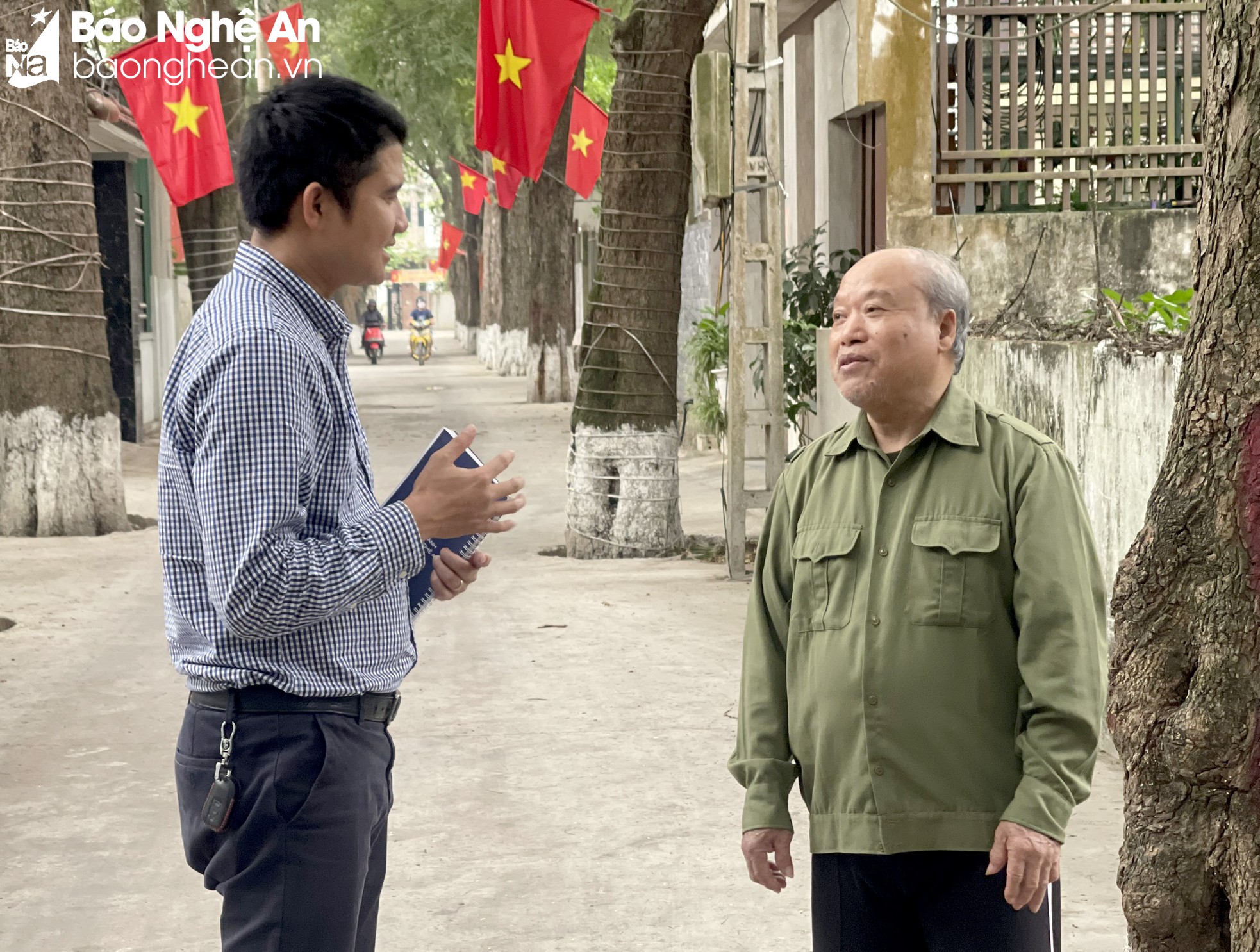 |
A reporter from Nghe An Newspaper interviewed Mr. Mai Xuan Thinh. Photo: Tien Dong |
Currently, this row of tamarind trees is under the care and protection of the Veterans' Association and the participating community. To protect the trees, according to the community's regulations, any families wishing to build houses must maintain a minimum distance of 80cm from the row of trees. Pipelines and drainage systems constructed along this road are not allowed to touch the tree trunks.
Elderly residents in Tay Ho 1 ward also believe that the most regrettable thing is the near disappearance of documents about the plantation system, landowners, and the history of the tamarind trees. Therefore, building a dossier to have them recognized as heritage trees is proving difficult. In addition, the care and protection of these trees are currently being done spontaneously.
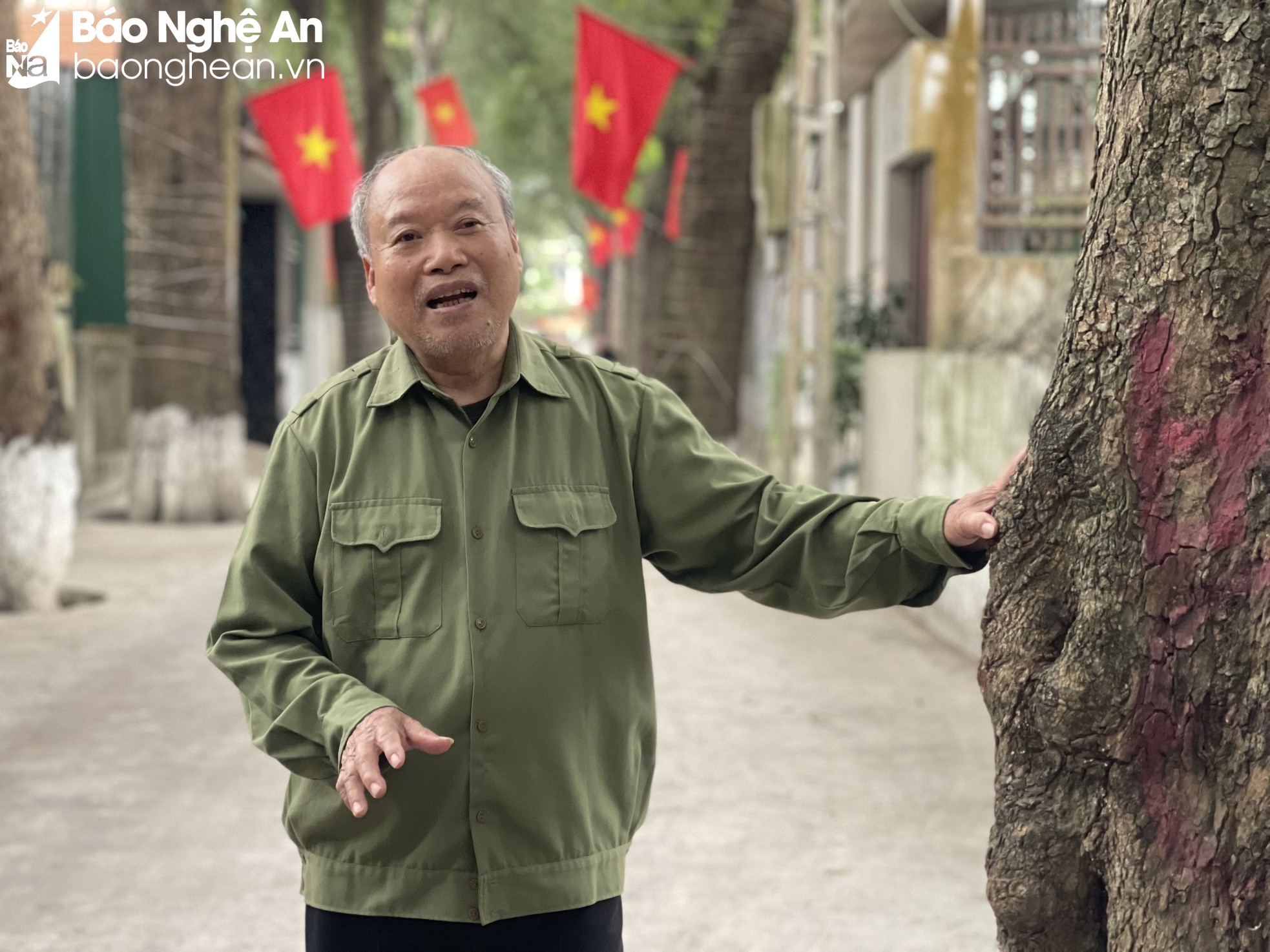 |
Mr. Mai Xuan Thinh next to an ancient tamarind tree. Photo: Tien Dong |
“Previously, the Veterans Association branch used to harvest the fruit to fund the protection of the tamarind trees, but now, the trees are growing taller and taller, making it impossible for anyone to climb and pick the fruit, so they just let it fall naturally. It would be wonderful if we could create a record and a plan for care, protection, and pruning… Because it is a unique cultural asset that this land of Thai Hoa has been bestowed upon us, something not easily found,” Mr. Mai Xuan Thinh mused.
Source link
![[Photo] Delegation attending the 14th Congress of the Vietnam Trade Union visits the Mausoleum of President Ho Chi Minh.](https://vphoto.vietnam.vn/thumb/1200x675/vietnam/resource/IMAGE/2026/06/03/1780451842301_ndo_br_img-3824-jpg.webp)








































































Comment (0)