
A view of Co Bo Temple in Thanh Hoa .
In the trend of heritage preservation combined with the development of cultural and religious tourism , Thanh Hoa is one of the destinations with a rich system of temples and shrines associated with the Intangible Cultural Heritage of Humanity - the practice of worshipping the Mother Goddess of the Three Realms by the Vietnamese people. Preserving the core of the heritage while exploiting tourism is opening up a new direction for the locality's development.
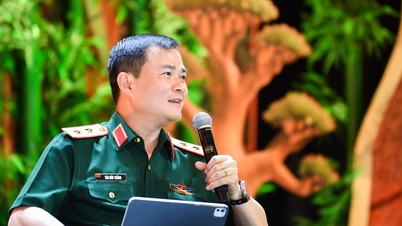
The allure of the Tam Phu Mother Goddess worship at the temples and shrines of Thanh Hoa province has been attracting a large number of domestic and international tourists, especially during festivals. Meritorious Artisan Tran Van Thuan, Chairman of the Association for the Protection of Hat Van and Mother Goddess Worship Heritage in Thanh Hoa province, and head priest of Phu Coc Temple (a national-level historical site of Tong Duy Tan Temple), said: “Many tourists from countries with goddess worship traditions, when visiting Vietnam and Thanh Hoa in particular, easily find similarities with the Mother Goddess worship. Therefore, in recent times, there has been a considerable number of foreign visitors coming to visit and learn about major historical sites such as Song Temple, Phu Na, Pho Cat Temple, and Cua Dat Temple...”
According to Meritorious Artisan Tran Van Thuan, the Thanh Hoa Provincial Association for the Protection of Traditional Singing and the Practice of Mother Goddess Worship has organized several cultural exchanges at goddess worship sites in Thailand, South Korea, Hong Kong (China), and Taiwan (China) to promote the unique spiritual culture of Thanh Hoa province and contribute to people-to-people diplomacy .
However, the increasing number of visitors is creating a need for stricter management of heritage sites, especially in Thanh Hoa, which is considered a region with a rich system of Mother Goddess worship sites, with a high density of worship of female deities, mother goddesses, and royal deities. Ms. Bui Thi Tuyet, Head of the Cultural Heritage Management Department of the Thanh Hoa Department of Culture, Sports and Tourism, stated: “To date, Thanh Hoa has approximately over 1,500 historical and cultural relics and scenic spots that have been classified and protected. In addition, the province has more than 4,000 private relics and shrines currently undergoing inventory and review.”
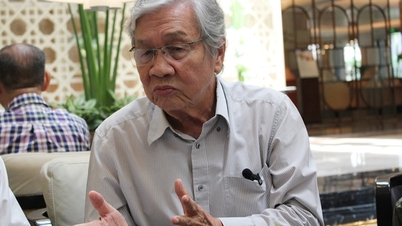
The rapid development of the aforementioned private shrines has led to distorted practices, diminishing the sacredness of the heritage. According to cultural researcher Ha Huy Tam, Deputy Director of the Institute for Applied Research on Traditional Culture and Architectural Construction in Vietnam, the Institute is currently conducting in-depth research on promoting the value of the Mother Goddess worship practice in Thanh Hoa with the scientific work "Mother Goddess Worship in Thanh Hoa Province - Identity and Solutions for Tourism Development," aiming to systematize documentation on rituals, folk songs, costumes, and related cultural values.
Mr. Ha Huy Tam commented: “Through our research, we have found some deviations from tradition, requiring timely guidance and correction. Preserving religious beliefs must be linked to maintaining traditional rituals, folk singing, costumes, and practice spaces. If exploited correctly, the Mother Goddess worship will contribute to moral education, preserve national identity, and open up opportunities for sustainable tourism development.”
Currently, with improved management, the standards are clearly demonstrated in many traditional performances at several temples and shrines in Thanh Hoa, typically the 36-person spirit medium ritual at Phu Coc Temple. At locations such as Tay Mo Shrine, Song Temple, Pho Cat Temple, and Lach Bang Temple, many traditional rules are strictly maintained: the medium must fast before the performance, the robes are steamed with incense to purify them, and the costumes and dances are appropriate for each spirit. It is this preservation of fundamental rituals that creates a special attraction for tourists.
Associate Professor, Dr. Bui Hoai Son, a member of the National Assembly's Committee on Culture and Society, believes that UNESCO's inscription of the Tam Phu Mother Goddess worship practice affirms the enduring vitality of Vietnamese traditional culture. He assessed: "Thanh Hoa plays an important role with its system of rituals and worship spaces deeply rooted in the Thanh Hoa identity. Research, collection, and publication of works on the Mother Goddess worship will contribute to preserving heritage values and create a basis for effectively promoting cultural values to serve the development of spiritual tourism."
Based on theoretical and practical foundations, many comprehensive solutions have been proposed. According to representatives from the Vietnam Institute of Applied Research on Traditional Culture and Architectural Construction, Thanh Hoa needs to improve its regulations on managing historical sites in accordance with the Law on Cultural Heritage, clearly defining the responsibilities of the site management board and strictly handling acts that distort the value of national culture.
Researchers propose restricting the burning of votive paper and the wasteful spending of money, preventing the spread of superstitious beliefs and the exploitation of spirituality; and simultaneously studying models for managing communities practicing religious beliefs in accordance with the State's policies. Professionally, it is necessary to collect and compile a complete collection of folk songs used in the 36 rituals of the spirit mediumship ceremony for publication as a book, and to organize regular folk singing festivals to preserve and refine traditional cultural values.
For cultural and spiritual tourism to develop in the right direction, training a team of tour guides and interpreters at historical sites with knowledge and understanding of the beliefs is an urgent requirement. Dr. Bui Thi Thanh Luong, from the Vietnam Institute for Research and Preservation of Folk Beliefs and Culture, stated: “Tourism should aim to introduce the cultural context and symbolic meaning of heritage sites instead of exploiting rituals as entertainment products. This requires coordination between practitioners, management agencies, and researchers to build educational experiences. Training tour guides with knowledge of the Mother Goddess worship is a crucial step to avoid misinterpretations and to limit the organization of rituals for tourism in a way that diminishes their sacredness.”
The combination of state management, scientific research, and the consensus of the religious community is creating a foundation for the Mother Goddess worship in Thanh Hoa to continue to maintain its intrinsic value, thereby contributing effectively to the development of tourism and the local economy.
Text and photos: NGUYEN HOAI
Source: https://nhandan.vn/khoi-day-nguon-luc-phat-trien-du-lich-tu-di-san-post966638.html


![[Photo] First session of the 14th Congress of the Vietnam Trade Union](https://vphoto.vietnam.vn/thumb/1200x675/vietnam/resource/IMAGE/2026/06/03/1780465947883_ndo_br_img-3852-jpg.webp)
![[Photo] General Secretary and President To Lam presides over a meeting with the Central Organizing Committee.](https://vphoto.vietnam.vn/thumb/1200x675/vietnam/resource/IMAGE/2026/06/03/1780482764658_a1-bnd-4741-3342-jpg.webp)
![[Photo] Secretary of the National Assembly Party Committee, Chairman of the National Assembly presides over the meeting of the Standing Committee and Executive Committee of the National Assembly Party Committee.](https://vphoto.vietnam.vn/thumb/1200x675/vietnam/resource/IMAGE/2026/06/03/1780480353201_ndo_br_bnd-2585-jpg.webp)






















![[Video] Sunset at Lap An Lagoon – Where the sun sets over the fishing nets](https://vphoto.vietnam.vn/thumb/1200x675/vietnam/resource/IMAGE/2026/05/31/1780192137701_beach-landscape-sea-water-nature-grass-745871-pxhere-com.jpeg)



















Comment (0)