

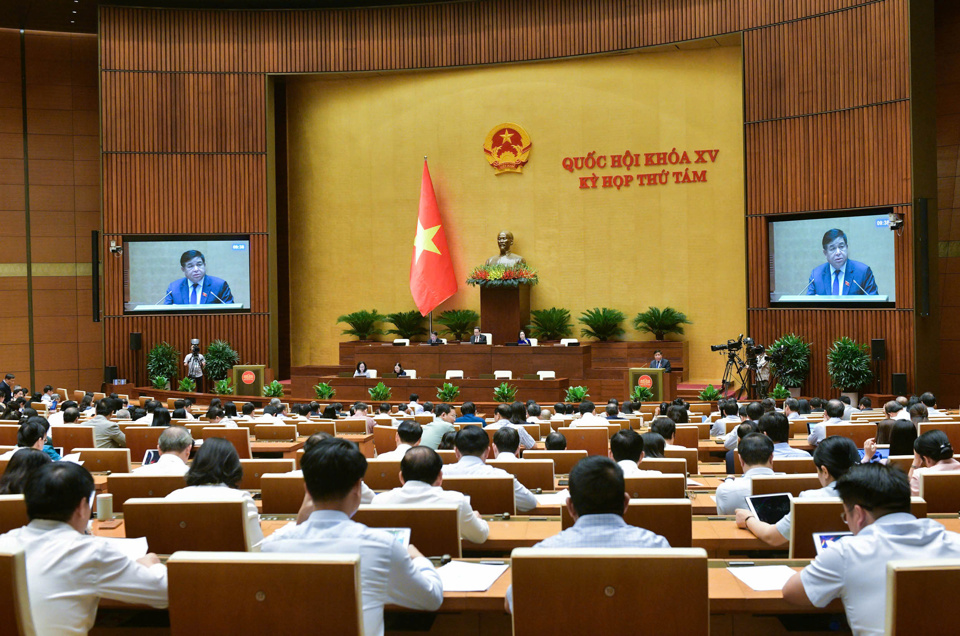
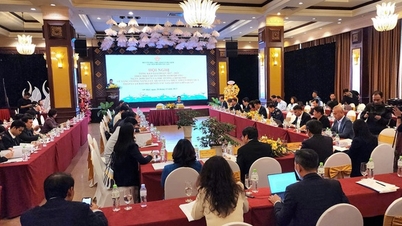
Kinhtedothi - On the morning of October 30th, at the 8th session of the 15th National Assembly, the National Assembly heard the presentation and the verification report on the draft law amending and supplementing a number of articles of the Law on Planning, the Law on Investment, the Law on Investment under the Public-Private Partnership method, and the Law on Bidding.
Presenting the Report on the Draft Law amending and supplementing a number of articles of the Planning Law, the Investment Law, the Law on Investment under the Public-Private Partnership Method, and the Bidding Law, Minister of Planning and Investment Nguyen Chi Dung stated that the Law was developed to promptly address urgent institutional difficulties and obstacles, simplify administrative procedures, and promote decentralization and delegation of power in the fields of planning, investment and business, investment under the public-private partnership method, and bidding.
The law-making process adheres to the principle of focusing on amending conflicting regulations, those causing obstacles, and those urgently requiring revision to facilitate investment, production, and business activities. It ensures the consistency and uniformity of the legal system, conforming to Vietnam's international treaties and commitments.
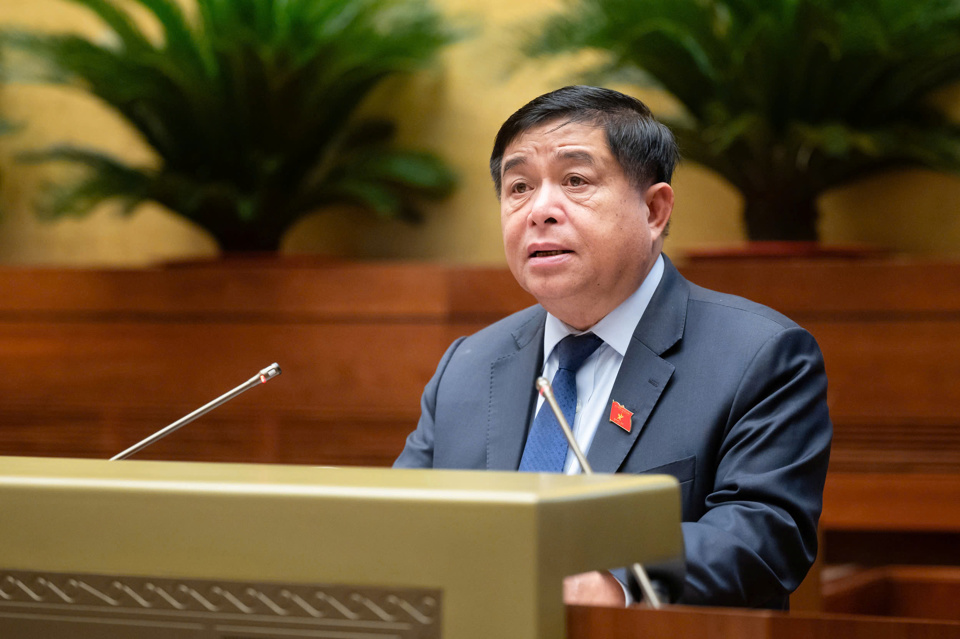
Regarding the Planning Law, this draft law clearly defines the relationship between technical and specialized planning and plans within the national planning system, aiming to resolve difficulties in establishing the basis for planning when higher-level plans have not yet been approved. The definition of "urban and rural planning" as "technical and specialized planning" is consistent with the nature of this type of planning and aligns with the provisions in the draft Law on Urban and Rural Planning…
Regarding the Investment Law, the draft law stipulates that the authority to approve investment policies from the Prime Minister is delegated to provincial People's Committees for: investment projects for the construction and operation of industrial park and export processing zone infrastructure; investment projects for the construction of new ports and port areas with an investment capital of less than VND 2,300 billion within special seaports; and investment projects, regardless of scale, within the protected areas of Zone I and Zone II of relics recognized by competent authorities as national relics or special national relics, except for investment projects in Zone I of special national relics on the World Heritage List, in order to empower localities.
This Bill amends several provisions of the Law on Public-Private Partnership Investment to encourage the implementation of PPPs for all public investment projects aimed at providing public goods and services, except for projects in sectors under state monopoly or projects in the fields of national defense, security, and social order and safety. It abolishes the minimum investment capital threshold for PPP projects; and assigns ministries, sectors, and localities the responsibility to consider and select projects that meet the needs and conditions of investors.
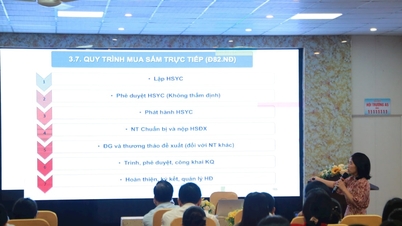
Regarding the Law on Bidding, amendments to certain provisions are proposed to allow for the approval of contractor selection results before project approval or the signing of contracts with contractors before international treaties or foreign loan agreements are signed, thereby contributing to saving time and accelerating project and bidding progress. The law also allows for the application of restricted bidding, international bidding, and domestic bidding in cases where development partners or foreign donors require these forms as binding conditions during the negotiation and signing of international treaties and foreign loan agreements, thus expediting the negotiation and signing process.
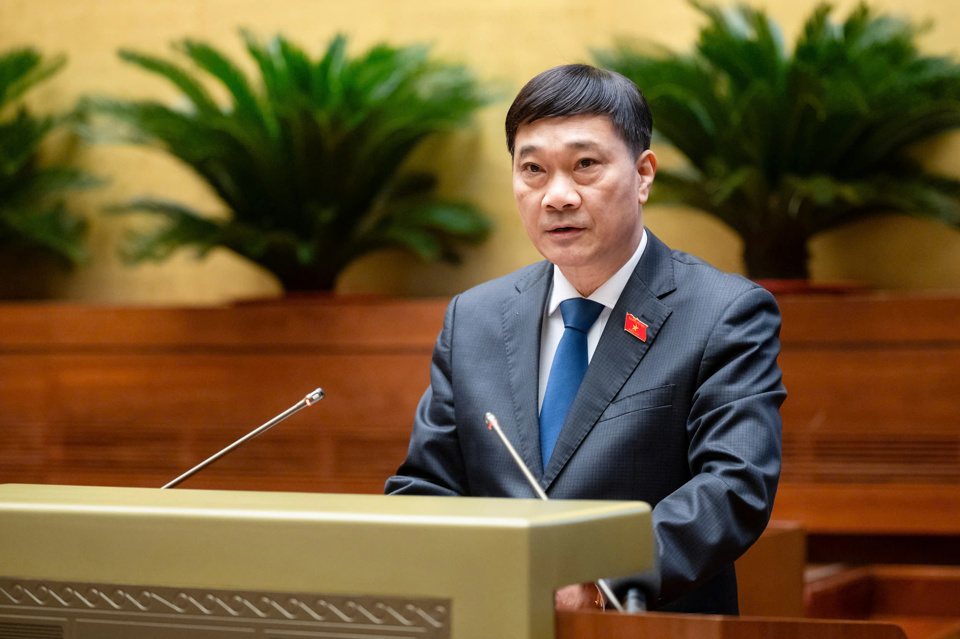
Reviewing this matter, the Chairman of the Economic Committee, Vu Hong Thanh, stated that the Economic Committee basically agrees with the necessity of amending and supplementing the laws included in the draft law.
Regarding specific issues related to the consistency of the Draft Law with the legal system, the Chairman of the National Assembly's Economic Committee stated that the Draft Law proposes amending and supplementing several regulations related to the planning process, planning content, and adjustment of national, regional, and provincial plans, which are plans that are prepared, appraised, approved, and adjusted according to the provisions of the Planning Law. However, at the 7th and 8th sessions, the Government also proposed promulgating the Law on Geology and Minerals, amending the Law on Electricity and the Law on Cultural Heritage to amend the contents on the procedures for preparing, appraising, approving, and adjusting national, regional, and provincial plans without immediately proposing amendments and supplements to the relevant provisions in the Planning Law, which is inconsistent.
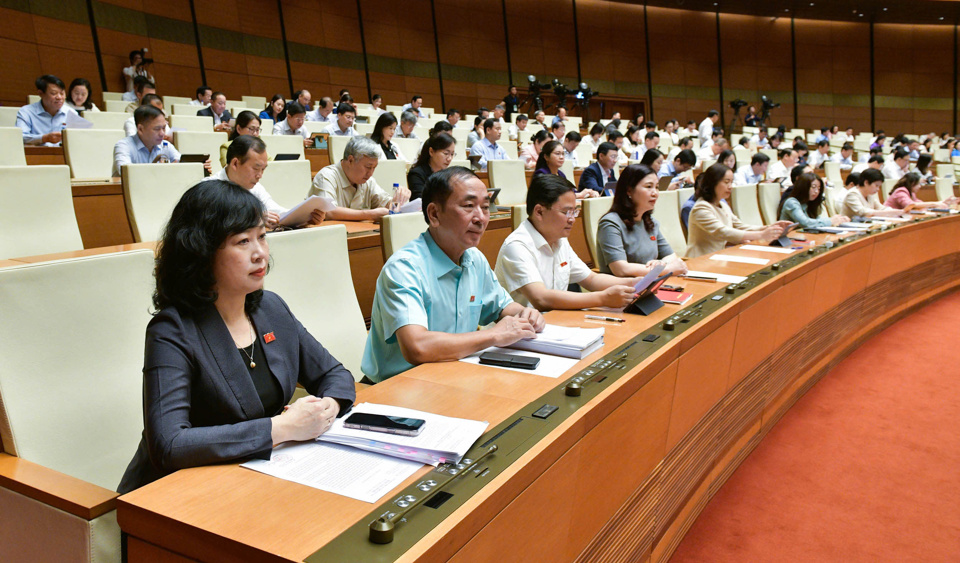
The Economic Committee proposed that the Government direct relevant agencies to review and revise the draft laws to ensure the consistency of the legal system; avoid having the same provision in multiple laws leading to overlaps, conflicts, and difficulties in the application of the law; and simplify procedures to expedite the process of drafting, appraising, approving, and adjusting planning.
Regarding the content on project categories in national, regional, and provincial planning documents in the revised Planning Law, the Economic Committee proposes continuing to review and revise regulations related to assessing conformity with planning in the Law on Public Investment, the Law on Investment, the Law on Investment under the Public-Private Partnership method, and several draft laws currently submitted to the National Assembly, such as the Draft Law on Electricity, to ensure feasibility, consistency, and avoid obstacles in the implementation process, contributing to resolving urgent difficulties and obstacles in the practical implementation of investment and business activities.
Regarding special investment procedures in the Investment Law, the Chairman of the Economic Committee suggested that the Government carefully review and clearly and strictly define the subjects to which these special investment procedures apply; conduct thorough research and impact assessments to ensure that the decentralization of authority for issuing special investment certificates meets the decision-making capacity, organizational capabilities, and human resources of each management level, ensuring consistency within the legal system; and at the same time, add sanctions with specific responsibilities and penalties for violations to ensure feasibility and effectiveness in implementation, especially for large, important projects with complex specialized characteristics and widespread impacts on the socio-economic development of localities, regions, and the entire country.
Regarding the scope and scale of investment under the PPP method and the minimum investment capital required to implement PPP projects, the Chairman of the Economic Committee stated that expanding the scope of application in some localities that are currently in the pilot phase has not yet been summarized and evaluated. Therefore, he requested a thorough review and careful consideration of this proposal, along with a comprehensive assessment.
Regarding the provisions on pre-bidding in the amendment to the Law on Bidding, the Economic Committee requests the Government to provide a detailed explanation and impact assessment of the application of pre-bidding regulations; this should include considering the rights and responsibilities of the investor and the contractor to establish appropriate regulations that protect the legitimate rights and interests of both parties and prevent complaints and accusations.
Earlier that morning, National Assembly delegates will hold group discussions on the draft law amending and supplementing several articles of the Planning Law, the Investment Law, the Law on Investment under the Public-Private Partnership Method, and the Bidding Law.
Source: https://kinhtedothi.vn/mot-luat-sua-bon-luat-day-manh-phan-cap-phan-quyen-trong-quy-hoach-dau-tu.html


![[Photo] Prime Minister Pham Minh Chinh presides over a meeting on private sector economic development.](/_next/image?url=https%3A%2F%2Fvphoto.vietnam.vn%2Fthumb%2F1200x675%2Fvietnam%2Fresource%2FIMAGE%2F2025%2F12%2F20%2F1766237501876_thiet-ke-chua-co-ten-40-png.webp&w=3840&q=75)

























































































Comment (0)