

For sustainable development
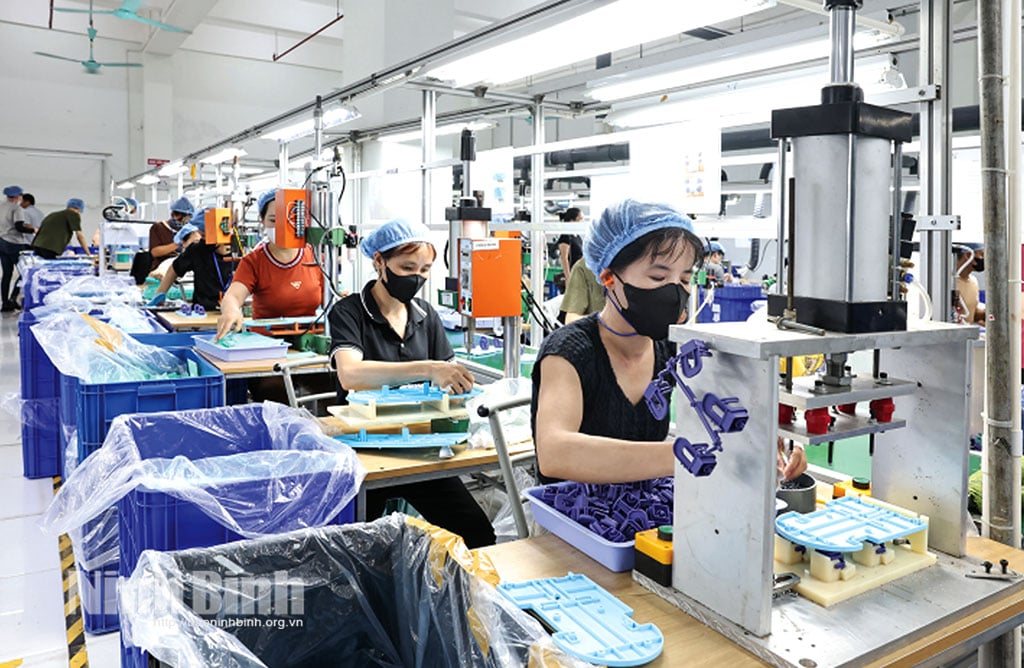
At the production facility of Itas Mars Intimates Fashion Co., Ltd.—a garment manufacturing company specializing in high-end fashion products—the working atmosphere is professional and modern, with a smoothly operating and efficient machinery system. Most notably, the automated hanging conveyor system, which the company invested in, installed, and put into operation in 2021, is particularly noteworthy.
Ms. Pham Thi Vui, Sewing Team Leader at Itas Mars Intimates Fashion Co., Ltd., shared: "Previously, before the hanging conveyor belt system was implemented, each worker had to manually carry the finished product to the next stage of sewing. This manual work was strenuous and prone to errors. It also made it difficult for the team leader to count and track the number of products; when errors occurred, it was hard to determine the cause and which worker was responsible."
Since the introduction of the automated system, products are processed quickly according to pre-programmed instructions, reducing intermediate operation time and saving labor. Furthermore, all information is integrated on the computer screen, allowing workers to easily access information, quantities, and productivity data, enabling them to focus on production and maintain consistent and stable output quality. The company has also implemented a production management software system that connects data directly from the sewing lines to the central control center, allowing management to monitor progress, quality, and productivity in real time.
Ms. Dinh Thi Hong Thinh, Chairwoman of the Board of Directors of Itas Mars Intimates Fashion Co., Ltd., stated: “We recognize technology as a key factor in maintaining and expanding our international market, especially in the high-end fashion sector which demands precision and aesthetics. Investing in an automated hanging conveyor system is a strategic step that saves manpower, increases flexibility in production layout, and aims to green the work process. Since implementing this automated system, productivity has increased significantly, averaging 20-25% compared to before.”
As one of the province's famous traditional craft villages, Ninh Van stone carving village (Hoa Lu city) once faced numerous challenges as the production and crafting of stone relied primarily on manual labor, posing risks of occupational safety hazards, environmental pollution, noise pollution, and low production efficiency. In recent years, thanks to proactively adopting and applying modern machinery and technology, businesses have improved productivity, reduced labor costs, and significantly minimized negative impacts on the environment.
Mr. Do Duc Tao, Director of Lam Tao Fine Art Stone Enterprise, said: “Currently, the facility has invested in many modern machines such as CNC cutting machines, drilling machines, automatic polishing machines, and large stone cutting machines. Thanks to this, the crafting time has been shortened to one-third compared to manual work, the product quality is more consistent, and the details are sharper. The application of modern machinery also helps reduce unskilled labor, creating conditions for craftsmen to focus on developing sophisticated carving techniques, which is the element that builds the brand of the craft village. The enterprise also actively applies 3D design, creating product models on computers before starting the crafting process, helping customers easily visualize and provide feedback from the very beginning.”
According to Mr. Luong Xuan Nghia, Head of the Ninh Van Stone Sculpture Village Management Board, the commune currently has about 100 enterprises and over 500 establishments and cooperatives involved in stone carving, creating jobs for thousands of workers. In recent years, the movement to apply science and technology in production and business has been actively embraced by enterprises and establishments, such as installing dust extraction systems in production areas, investing in equipment to supply water to grinding and cutting areas, and building wastewater treatment systems. With the attention and support of the province, city, and various levels and sectors, Ninh Van commune has now planned and put into operation an industrial cluster covering over 30 hectares, with a wastewater treatment system meeting national standards. Furthermore, with the support of the Department of Science and Technology, the geographical indication for Ninh Van stone art has been granted protection by the Vietnam Intellectual Property Office, contributing to enhancing the brand and recognition of stone products, while also promoting innovation in businesses and establishments in the area.
Strengthening support for businesses
According to statistics from the Department of Science and Technology, Ninh Binh province currently has over 6,500 operating businesses. Of these, over 60% are small and medium-sized enterprises (SMEs) that have initially applied technology to some stages of production and business; more than 25% have invested in upgrading equipment and technology in the last 5 years. Some large enterprises have implemented ERP enterprise management systems, quality control software, and automated production lines.
Businesses in Ninh Binh have applied science and technology in many fields, notably in the manufacturing and assembly of automobiles, electronics, supporting industries; handicrafts; and agriculture. The province has over 150 products granted industrial property protection certificates, more than 300 trademarks protected domestically and internationally, and 3 products achieving national brand status.
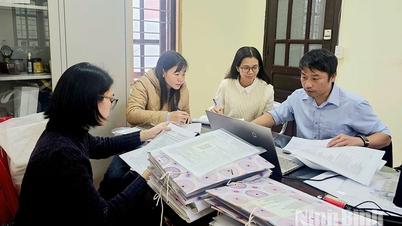
Representatives from the Department of Science and Technology stated that, over the years, Ninh Binh province has focused on promoting innovation and the application of science and technology in businesses to improve productivity, product quality, and competitiveness. Under the direction of the Provincial People's Committee and the active involvement of the Department, many support activities have been effectively implemented. Annually, the Department has actively advised the Provincial Party Committee, the Provincial People's Council, and the Provincial People's Committee on the issuance of guiding documents. At the same time, it has facilitated businesses' access to preferential policies and support from the state in implementing research and application projects and technological innovation.
Technology management, technology transfer, and the technology market are becoming increasingly effective. This has created favorable conditions for businesses to access and apply advanced, high-tech, and clean technologies, and to use advanced machinery and equipment in production. From 2021 to the present, the Department has assessed machinery, equipment, and technology for 166 investment projects in the province; issued 12 technology transfer certificates, including one domestic technology transfer contract and the rest being technology transfer contracts from foreign countries to Vietnam. The Department has organized numerous scientific and technological conferences and seminars to connect businesses with research institutes and universities in the search for and transfer of technology; and supported businesses in commercializing their products through product displays at the Technology and Equipment Market (Techmart) and supply-demand connection events (Techdemo).
“To ensure the widespread adoption of technological innovation, it is necessary to further strengthen the role of the bridge, preventing businesses from being left alone in the process of scientific and technological transformation. To achieve this, the cooperation of many parties is needed. State management agencies need to continue improving policies and mechanisms, supporting access to capital and technological information; industry associations need to play an intermediary role in advising and guiding appropriate transformation roadmaps; and businesses themselves need to be more proactive in their thinking and actions,” said a representative from the Department of Science and Technology.
In Ninh Binh province's ongoing efforts to promote innovation and transform its economic growth model towards a green, harmonious, and sustainable environment, businesses are identified as the leading force in this transformation. With the support and collaboration of all levels of government, relevant agencies, and localities in policy advice, financial assistance, knowledge sharing, and technology transfer, businesses will undoubtedly contribute significantly to enhancing their capacity, thereby contributing to the province's socio-economic development.
Source: https://baoninhbinh.org.vn/day-manh-ung-dung-khoa-hoc-cong-nghe-trong-san-xuat-kinh-534736.htm


![[Photo] Prime Minister Pham Minh Chinh attends the Conference on the Implementation of Tasks for 2026 of the Industry and Trade Sector](/_next/image?url=https%3A%2F%2Fvphoto.vietnam.vn%2Fthumb%2F1200x675%2Fvietnam%2Fresource%2FIMAGE%2F2025%2F12%2F19%2F1766159500458_ndo_br_shared31-jpg.webp&w=3840&q=75)





















































































Comment (0)