

In the Mekong Delta, this year's drought and salinity levels are higher than the multi-year average, with a risk level of 2. The National Center for Hydro-Meteorological Forecasting stated that water levels at stations along the main Mekong River are changing slowly and are generally lower than the multi-year average. The extent of saltwater intrusion in the Mekong Delta depends on water resources from the upper Mekong River and tidal surges in the estuary areas.
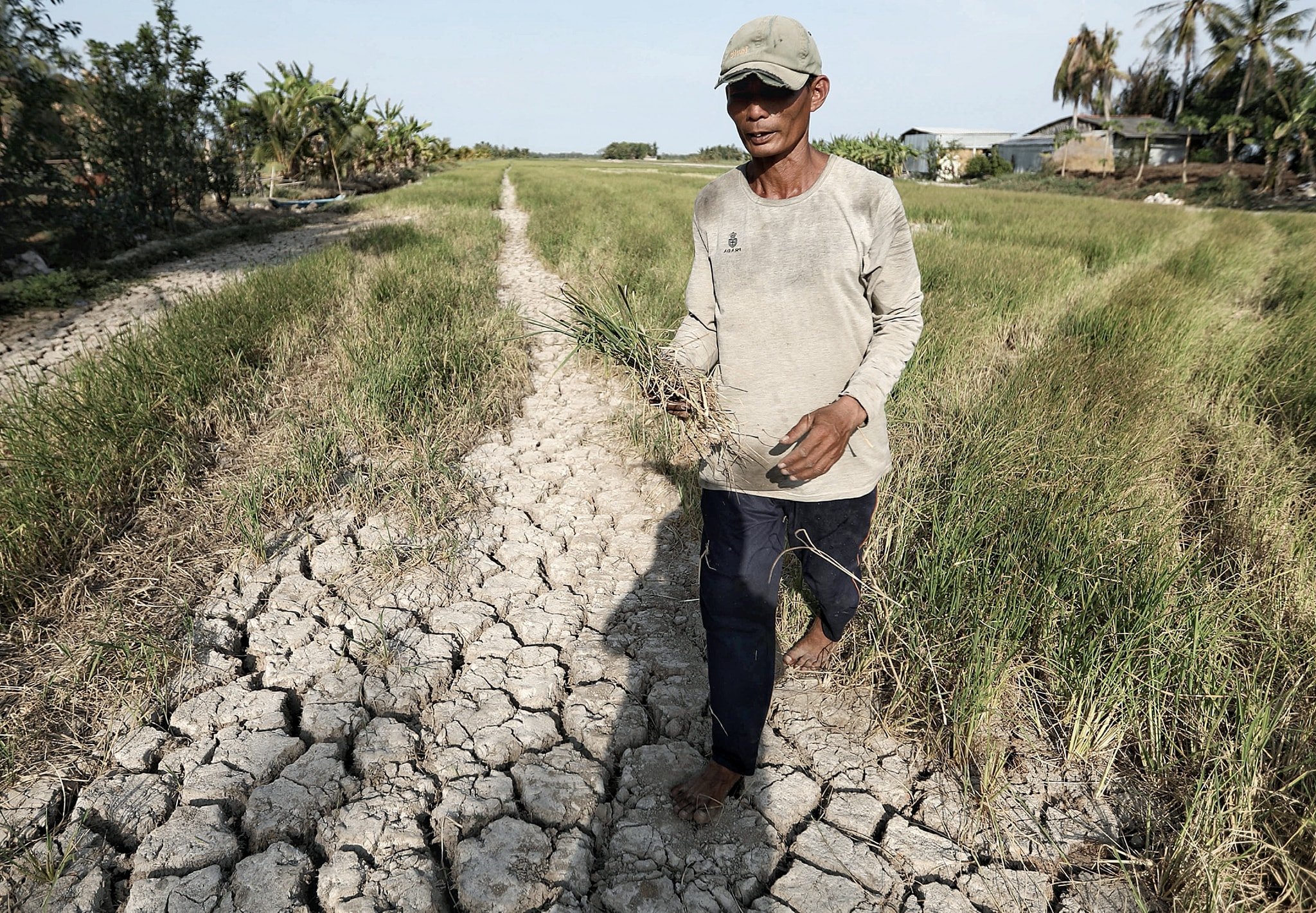
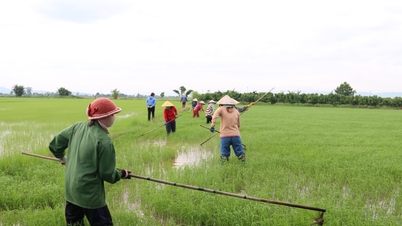
The Mekong Delta rice granary is entering the peak of drought and saltwater intrusion, with the risk level at level 2.
The forecast for saltwater intrusion in the Mekong Delta during the 2023-2024 dry season is higher than the multi-year average, but not as severe as the 2015-2016 and 2019-2020 dry seasons.
Increased saltwater intrusion in the Mekong Delta estuaries is likely to be concentrated in February-March 2024. Specifically, high tides will occur from February 10-13; from February 22-27; and from March 7-12. For the Vam Co and Cai Lon rivers, the peak of saltwater intrusion will be in March-April 2024; specifically, there will be several periods during high tides from March 7-12, March 22-27, April 7-12, and April 21-26.
Forecast of the 4‰ salinity boundary depth at major river mouths from February 11-20 at some river mouths such as: Vam Co Dong and Vam Co Tay rivers: salinity intrusion range 50-60km; Cua Tieu and Cua Dai rivers: salinity intrusion range 32-37km; Ham Luong river: salinity intrusion range 35-42km; Co Chien river: salinity intrusion range 45-52km; Hau river: salinity intrusion range 50-57km; Cai Lon river: salinity intrusion range 25-32km.
To respond to the relatively high risk of drought and saltwater intrusion, the National Center for Hydro-Meteorological Forecasting recommends: "Local authorities should take advantage of low tides to store freshwater for agricultural and domestic use."
Previously, on January 15th, Prime Minister Pham Minh Chinh signed a directive requesting ministers and chairmen of People's Committees of provinces and centrally-administered cities to monitor and proactively implement measures to respond to the risks of drought, water shortage, and saltwater intrusion during the upcoming peak months of the dry season. The Ministries of Natural Resources and Environment and Agriculture and Rural Development were instructed to proactively implement preventive and response measures, resolutely avoiding any passive or unexpected situations. They were also instructed to proactively direct the implementation of drought, water shortage, and saltwater intrusion prevention, mitigation, and recovery efforts in accordance with actual developments.
According to the MDM (Mekong Hydropower Dam Monitoring Project), for several consecutive weeks, upstream hydropower dams have continuously released over 1 billion cubic meters of water per week to support electricity generation. However, in recent days, Chinese hydropower dams have reduced water releases during the dry season. River water levels throughout the basin are almost at normal levels for this time of year. Meanwhile, at Tonle Sap Lake (Cambodia), water levels are about 0.70m lower than the average of previous years.
Source link


![[Photo] Prime Minister Pham Minh Chinh presides over the conference announcing the establishment of the International Finance Centre in Vietnam.](/_next/image?url=https%3A%2F%2Fvphoto.vietnam.vn%2Fthumb%2F1200x675%2Fvietnam%2Fresource%2FIMAGE%2F2025%2F12%2F21%2F1766309817714_ndo_br_dsc-3400-jpg.webp&w=3840&q=75)
![[Photo] Prime Minister Pham Minh Chinh presides over a meeting on private sector economic development.](/_next/image?url=https%3A%2F%2Fvphoto.vietnam.vn%2Fthumb%2F1200x675%2Fvietnam%2Fresource%2FIMAGE%2F2025%2F12%2F20%2F1766237501876_thiet-ke-chua-co-ten-40-png.webp&w=3840&q=75)


















































































Comment (0)