


Currently, there are approximately 13,200 businesses in the province, with small and micro-enterprises making up the majority. In 2024, the province saw the establishment of 1,400 new businesses, but the number of businesses dissolving or ceasing operations was also roughly the same. This shows that the challenges facing businesses are considerable.
Mr. Tran Thieu Nha, Director of Phu Nhuan Jewelry Joint Stock Company (PNJ) Central Highlands - South Central Region Branch, said that in 2024 and the first quarter of 2025, we will witness many major changes such as continued geopolitical conflicts; inflation in many developed economies not yet fully controlled; and major adjustments in global supply chains.
The biggest obstacles currently are high capital costs, due to investment in infrastructure, marketing, research and development; limited markets, difficulties in accessing new customers and a lack of effective distribution channels; a shortage of high-quality human resources not only in expertise but also in innovative thinking and adaptability to technology; and a lack of access to cooperation opportunities, projects, or trade connections from outside and central government sources.
For small and newly established businesses, cash flow pressure, operational sustainability, and digital transformation are critical challenges. Therefore, specific support is needed to help businesses overcome these obstacles. Furthermore, current government mechanisms and policies still have many "bottlenecks," including bureaucratic red tape and cumbersome administrative procedures.
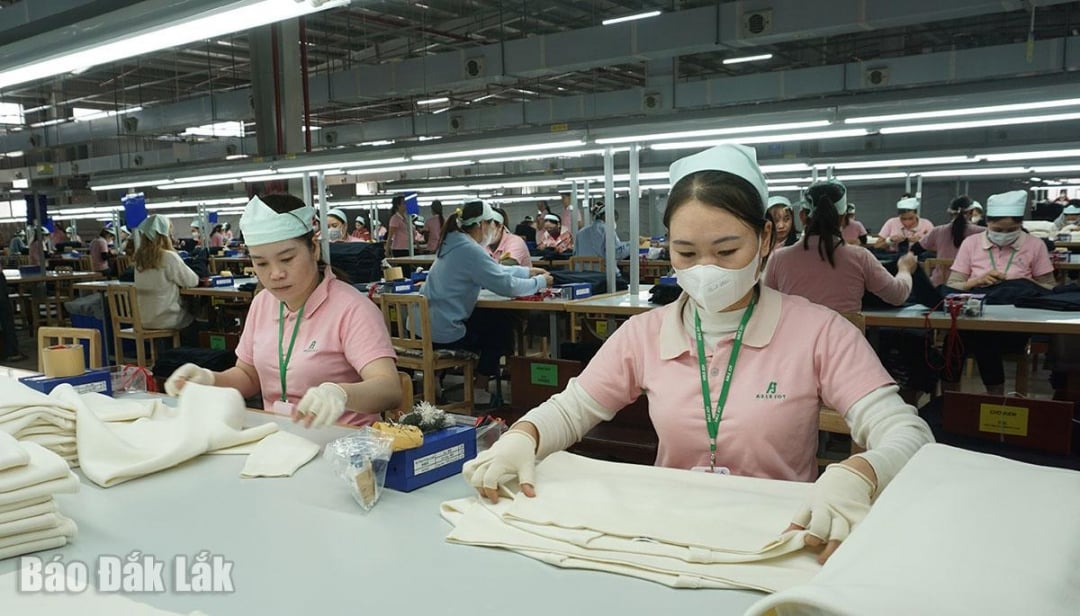 |
| Workers at Able Joy Dak Lak Garment Co., Ltd. (Hoa Phu Industrial Park, Buon Ma Thuot City). |
Clearly, the limitations on the development of private enterprises stem partly from inadequacies in the institutional system, economic policies, and business environment. These "bottlenecks" not only hinder the growth rate of the private sector, causing its contribution to GDP to remain almost unchanged for over a decade, but also impede the economy in increasing added value, escaping the middle-income trap, and slowing down Vietnam's progress towards becoming a high-income developed country by 2045, as envisioned in the Party's resolution and the people's expectations.
To enable the private sector to maximize its potential and become a driving force for the economy, in Directive No. 05/CT-TTg dated March 1, 2025, on key tasks and breakthrough solutions to promote economic growth and accelerate the disbursement of public investment capital, ensuring the national growth target of 8% or higher in 2025, Prime Minister Pham Minh Chinh assigned the Ministry of Finance to urgently research and develop a resolution on mechanisms and policies for breakthrough development of the private sector; and to establish the view that the private sector must be one of the most important drivers for growth, increased labor productivity, and the competitiveness of the economy.
In addition, as part of the solutions to improve institutions, mechanisms, policies, and legal regulations, the Ministry of Finance is tasked with conducting a comprehensive review of investment and business conditions, professional practice conditions, administrative procedures, and compliance costs for businesses. Simultaneously, it must report to competent authorities and propose policies for tax, fee, and land rent exemptions, reductions, and extensions… to support people and businesses, and promote domestic production, business, tourism, and consumption in 2025.
Recently, at the first meeting of the Steering Committee for the Development of the Private Economy Project, Deputy Prime Minister Nguyen Chi Dung emphasized that, together with the Ministry of Finance, relevant ministries, sectors, and agencies must focus all their efforts, intellect, and time on finalizing the draft Private Economy Development Project. Accordingly, the completed project must create a "boost" for the private economy, ensuring the removal of bottlenecks and obstacles, and creating enthusiasm, confidence, and a transparent and attractive environment for the private sector to develop, which is the most important driving force for economic development.
To enhance their position in the economy, in addition to government support and the creation of a healthy, transparent, and fair business environment, businesses need to innovate and adapt to the new context, which means that businesses themselves must transform.
According to representatives of the Dak Lak Provincial Young Entrepreneurs Association, artificial intelligence (AI), blockchain technology, and big data are reshaping how businesses operate. Meanwhile, the global economy remains unstable, and the trend of "localization" replacing "globalization" forces businesses to be more flexible. Private enterprises need to improve their internal capabilities and invest in technology and human resources.
Leverage AI and digital tools to optimize costs, improve services, and expand distribution channels. Develop a sustainable mindset to not only maximize profits but also contribute to the community and the environment. Instead of viewing AI merely as a tool, small businesses can utilize existing AI platforms to enhance operational efficiency without large investments.
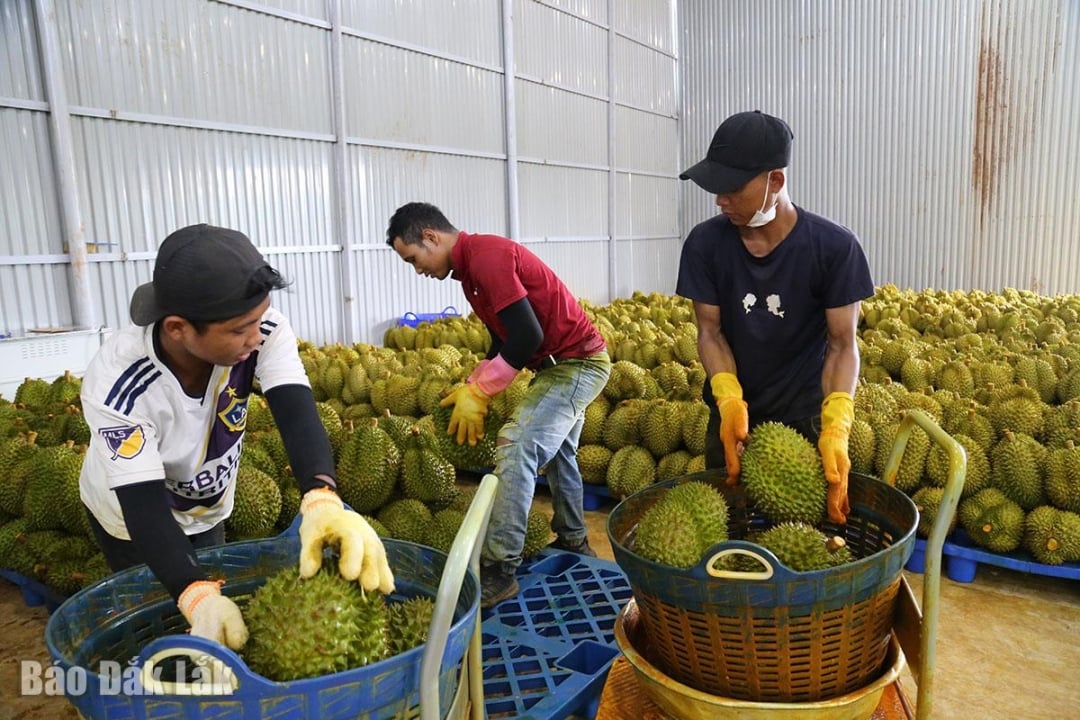 |
| Durian processing at a business in Cu M'gar district. |
Furthermore, as General Secretary To Lam emphasized, the development of the private economy should be based on sustainability, ethical business practices, and social responsibility. In the new era, business ethics and social responsibility are no longer slogans, but must become guiding principles. For sustainable development, businesses must build trust with customers, partners, employees, and the community. Businesses can apply ESG (environmental, social, governance) models to measure social responsibility. Following this direction, the Dak Lak Young Entrepreneurs Association encourages businesses to operate ethically, comply with the law, and be transparent in management; participate in community activities, contribute to education and environmental protection; support local supply chains, and create development opportunities for smaller businesses.
| Resolution No. 66/NQ-CP, dated May 9, 2024, promulgating the Government's Action Program to implement Resolution No. 41-NQ/TW, dated October 10, 2023, of the Politburo on building and promoting the role of Vietnamese entrepreneurs in the new era, sets the goal that by 2030, at least 2 million enterprises and the business sector will contribute approximately 65-70% of the country's GDP, about 32-38% of total employment in the economy, and 98-99% of total import and export turnover. |
Source: https://baodaklak.vn/kinh-te/202504/but-pha-trong-ky-nguyen-moi-dae1d60/


![[Photo] Walking amidst the coffee blossoms in the Central Highlands](https://vphoto.vietnam.vn/thumb/1200x675/vietnam/resource/IMAGE/2026/02/22/1771736214034_ndo_bl_img-3460-8365-jpg.webp)




















































































Comment (0)