

The Ministry of Education and Training has issued numerous circulars related to year-end awards and emulation titles.
According to Circular 22 of 2021 issued by the Ministry of Education and Training, the title "Excellent Student" at the lower and upper secondary levels is awarded to students whose academic and behavioral performance throughout the school year is at a good level (average score of 6.5 or higher, with at least 6 subjects achieving a score of 8.0 or higher). "Outstanding Student" requires at least 6 subjects assessed using a combination of qualitative and numerical evaluations, with an average subject score of 9.0 or higher.
Specifically for students in grades 8, 9, 11, and 12, In implementing the 2006 education program , the assessment and grading of students are based on Circular 58 of 2011 and Circular 26 of 2020 of the Ministry of Education and Training.
As a teacher with 37 years of teaching experience in junior high schools, I would like to explain why competitive awards are creating pressure on students.

Competition and achievements
In reality, homeroom teachers want their classes to have many excellent and outstanding students so that the school administration will praise them as an advanced class.
For subject teachers, being evaluated as a good teacher with strong skills and dedication is a criterion for considering year-end performance evaluations based on subject quality.
The principal always wants the school to have many high-achieving students so that at the end of the year, this can be included as a criterion for ranking the school as an advanced or excellent school at the district, city, or provincial level.
Therefore, many teachers are "creditors" of students' grades. When students haven't prepared for a review, instead of giving them a low grade, many teachers, out of concern for the end-of-year quality, allow them to "owe" the grade for another test. Sometimes, out of affection for their students, teachers don't grade tests seriously or rigorously.
Before the periodic tests (mid-term and final exams), also out of concern for the quality of the subject, teachers provide syllabuses and review sessions that closely match the exam questions, with the motto "study as you study, and you'll get the right answers," so most students achieve high scores.
Some teachers even said, "It's a crime to let students get below average grades, and then having them retake the test is very difficult. Let's not try to trick the students anymore."
Or, at the end of the year, there are cases where homeroom teachers, out of compassion for their students, "ask for extra points" from subject teachers to help students achieve the title of excellent or outstanding student, because they are only 0.1 or 0.2 points short of reaching 8.0.
In addition, many schools stipulate that if two-thirds of the students in a class score below average on a test, the teacher must report it to the school administration for a re-examination in order to achieve better scores.
The aforementioned actions contribute to the inflation of the number of academically gifted students.

The pressure to achieve high scores in exams creates a lot of stress for students.
The criteria for awarding the title of "excellent student" should be abolished.
The overabundance of "excellent students" also stems from the evaluation and ranking regulations outlined in Circular 58.
Specifically, according to Article 13 of Circular 58, the conditions for achieving the title of excellent student include: an average score of 8.0 or higher in all subjects (including an average score of 8.0 or higher in one of the three subjects: mathematics, literature, or English); no subject with an average score below 6.5; and all subjects assessed by qualitative evaluation achieving a passing grade.
Therefore, students only need to diligently study subjects like history, geography, and civics to "compensate" for the difficult subjects like math, literature, and English, making it easier to achieve an average grade of 8.0 or higher.
Given this situation, the regulations on student assessment applicable to grades 8, 9, 11, and 12 are no longer appropriate.
Furthermore, many students are dishonest during tests in order to get the highest possible scores to appease teachers and parents. Therefore, parents should not view grades as the sole measure of their children's abilities.
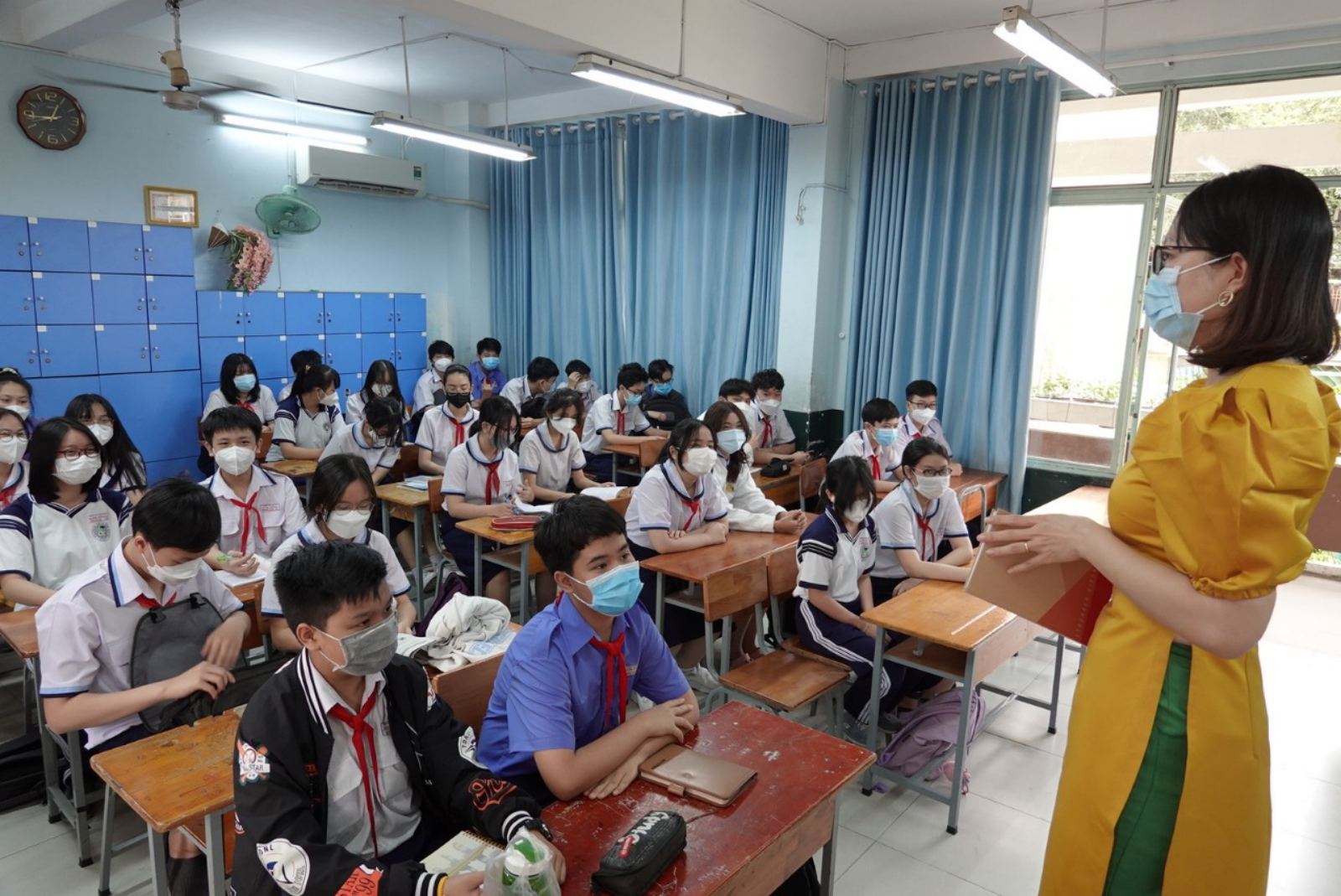
Parents should not view grades as the sole measure of their children's abilities.
With the desire for their children to achieve excellent academic results, many parents rush to enroll their children in extra classes with the same teachers who teach their regular school subjects. They hope that their children will receive special attention from the teachers in class, thus earning preferential treatment and higher grades.
All of the above puts pressure on students, partly because of the need for competitive titles. Therefore, schools should abandon targets, achievements, and subject quality standards.
Furthermore, it is crucial that teachers adhere to the principle of "genuine teaching, genuine learning, genuine testing, genuine quality" so that competitive awards do not create pressure on students.
Source link


![[Photo] Prime Minister Pham Minh Chinh presides over a meeting on private sector economic development.](/_next/image?url=https%3A%2F%2Fvphoto.vietnam.vn%2Fthumb%2F1200x675%2Fvietnam%2Fresource%2FIMAGE%2F2025%2F12%2F20%2F1766237501876_thiet-ke-chua-co-ten-40-png.webp&w=3840&q=75)



































































































Comment (0)