

1. The Covid-19 pandemic and the negative impacts of climate change globally have forced governments in many countries to change their perceptions and thinking about national governance and sustainable urban development, especially in poor and developing countries. At this point, the "15-Minute City" concept by Carlos Moreno – Professor at the Pantheon Sorbonne University (Paris, France) – which was awarded the 2021 Obel Prize by the Henrik Frode Obel Foundation (a prestigious international award honoring outstanding architectural contributions to human development worldwide ), began to attract attention from many developed countries in Europe and North Asia.
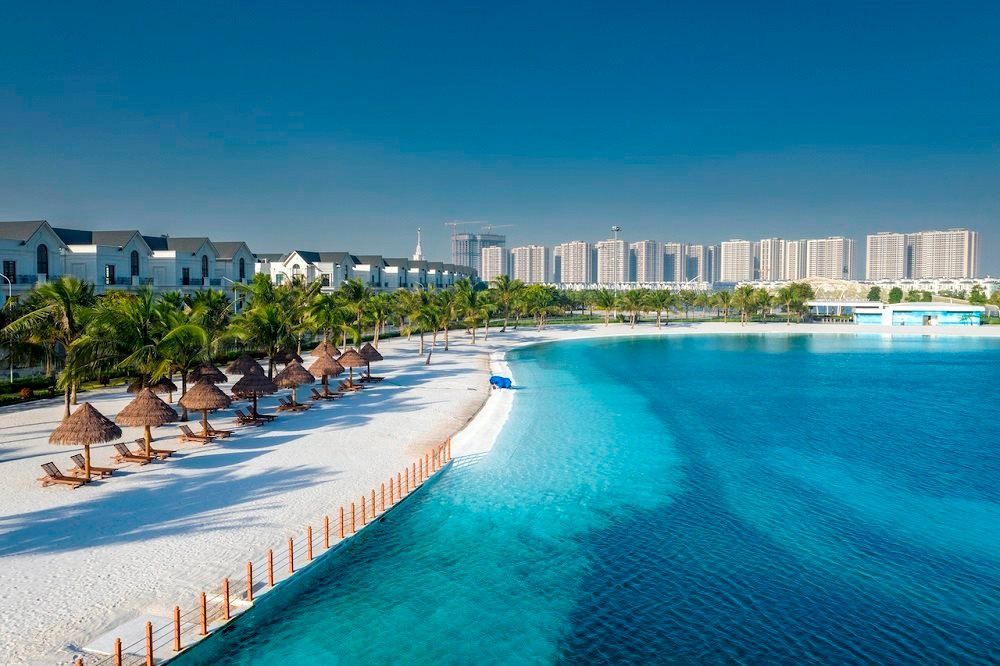
With this concept, all essential needs of residents such as work, education, shopping, entertainment, healthcare, etc., are met within a radius equivalent to a 15-minute walk or bike ride. The "15-minute city" is a complex and ambitious urban development strategy, but also a novel, pragmatic approach that can be adapted to local culture, conditions, and needs, easily translated into political programs and policies that transform the structure of cities. It is also an ideal model of a small city adapted to pandemics and climate change.
When it was first introduced (in 2016), Moreno's "15-Minute City" concept was considered "unrealistic" by many urban planners. However, it has now gained attention and become more feasible thanks to a special catalyst: the Covid-19 pandemic. In many European countries and South Korea, the "15-Minute City" model is being promoted as a post-pandemic recovery strategy. The Parisian government is pioneering the implementation of this urban development model. Mayor Anne Hidalgo invited Professor Moreno to advise on the implementation of the urban renewal plan in Paris, with the ambition that by 2024 all streets in Paris will have dedicated bicycle lanes, and 70% of street parking spaces will be eliminated, replaced by green spaces and playgrounds. Several other cities such as Houston, Milan, Brussels, Valencia, Chengdu… are also adopting a similar model, with names like “20-minute residential area” (Melbourne - Australia), or “15-minute city” (Milan - Italy)... where most of what residents need can be found within a 15-20 minute walking, cycling, or public transport radius.
According to experts, the "15-Minute City" model will be an inevitable trend in urban development worldwide during the Fourth Industrial Revolution, enabling people to reduce the need for travel and direct contact through online communication and shopping platforms. In particular, this model also helps residents better cope with the Covid-19 pandemic, which disrupted all economic activities, trade, and social interaction. In July 2021, in Rio de Janeiro (Brazil), the 27th World Congress of Architects (UIA-2021) was held both in-person and online, with the participation of architects, urban planners, social organizations, architectural associations, thinkers, policymakers, and citizens… to discuss the future of the city and the city of the future. The UIA Congress issued the Rio de Janeiro Architectural-Urban Charter 21, with new insights into cities and urban development worldwide. The Charter clearly states that at a time when the Earth's environment is deteriorating and resources are being wasted, endangering humanity, the pandemic has further exacerbated the dangers, threatening both the material well-being and health of humankind. The pandemic has further clarified the interdependent relationship between nations, politicians, economic, cultural, social, and environmental aspects – fundamental elements that constitute cities and territories.
The pandemic, like a whirlwind, exposed the weaknesses of thousands of cities around the world, including large cities, megacities, and even green and smart cities, especially the uncontrolled rapid urbanization in poor and developing countries. The uncontrolled urban expansion in many countries has led to negative consequences for society, creating economic inequality between citizens and real estate businesses, as well as with local authorities in the acquisition (both illegal and legal) of a vast proportion of agricultural and rural land, rivers, lakes, and protected areas (green zones). Globally, hundreds of millions of people worldwide are harmed by living in dilapidated houses in slum areas lacking infrastructure, clean water, healthcare, and government attention. Cities and territories have become unbalanced, human life is threatened by depleted resources, polluted living environments, degraded ecosystems, and public health problems due to the adverse impacts of climate change, epidemics, and urban development and urbanization.
2. In Vietnam, on January 24, 2022, the Party issued Resolution 06-NQ/TW, a very important and strategic resolution on the planning, construction, management, and sustainable development of Vietnamese cities until 2030, with a vision to 2045. The resolution affirms that, after 35 years of reform, especially in the last 10 years, urban planning, construction, management, and development in our country have achieved many significant results. The urban system is increasingly developing with 862 cities of various types, and the urbanization rate has reached nearly 40%. Technical infrastructure and socio-economic infrastructure have been invested in more comprehensively and effectively. The quality of life for urban residents has improved and is gradually being enhanced.
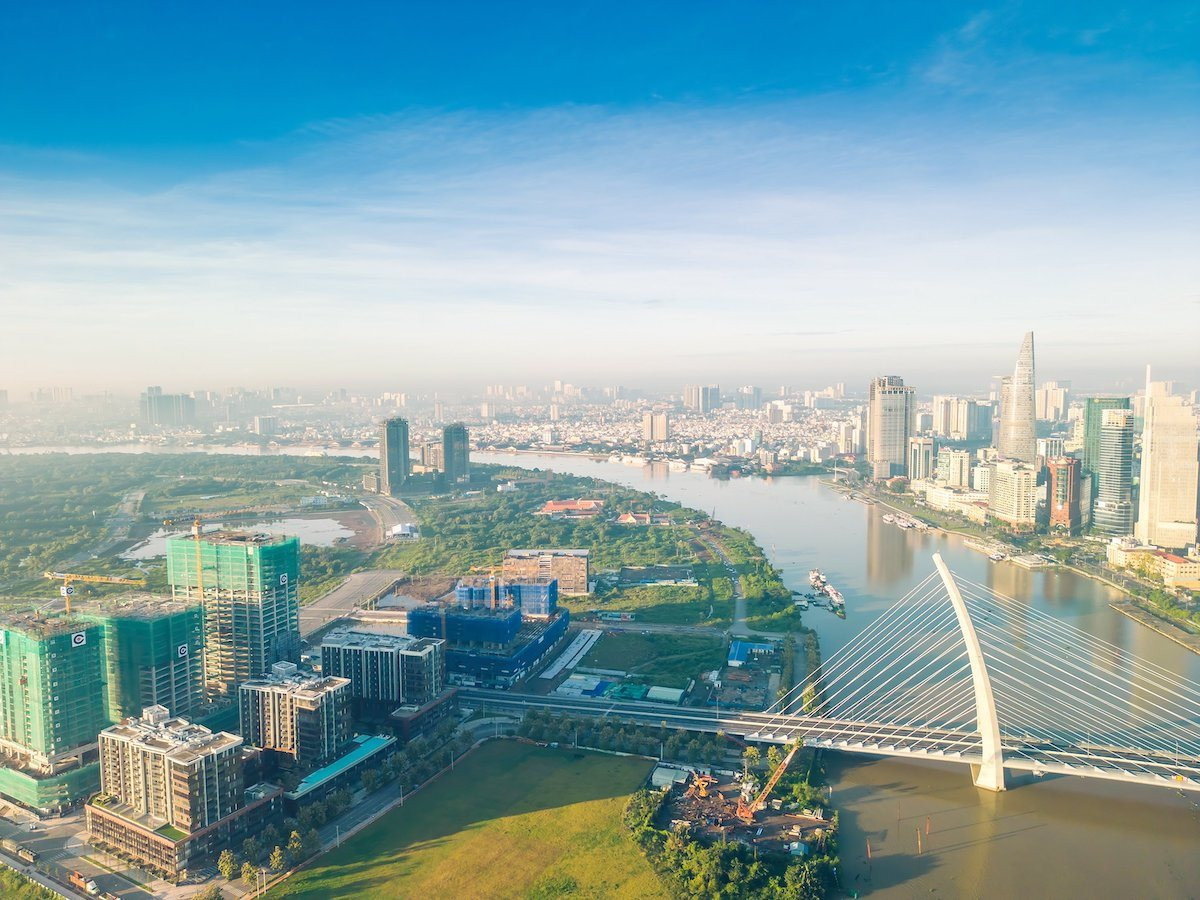
Urbanization and urban development have become important drivers of the country's socio-economic development and industrialization and modernization. The urban economy contributes approximately 70% of the country's GDP. Urbanization and urban development have brought a new architectural landscape to the country in a civilized and modern direction. These are very significant achievements. However, Resolution 06 also clearly states that, during the urbanization process, urban planning, construction, management, and development have revealed many shortcomings and limitations, such as: “The urbanization rate achieved is lower than the target set in the Socio-Economic Development Strategy 2011-2020 and is still quite far from the average rate of the region and the world. The quality of urbanization is not high, urban development is mainly extensive, causing waste of land, and the level of economic concentration is still low. The urbanization and urban development process is not closely and synchronously linked with the industrialization, modernization, and new rural construction processes…”. “…The understanding of urbanization and sustainable urban development is incomplete and has not received adequate attention. Urban planning is slow to innovate, lacks vision, and is of low quality; implementation still has many limitations, and in many places, adjustments to planning are arbitrary…” (Excerpt from the Resolution). These limitations became somewhat apparent during the Covid-19 pandemic in our country from February 2020, causing significant losses in terms of human lives and the economy, especially in large cities, particularly Ho Chi Minh City.
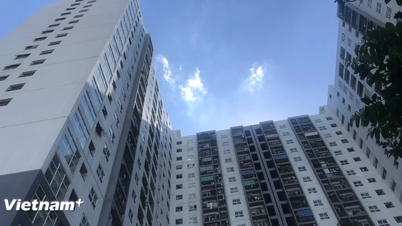
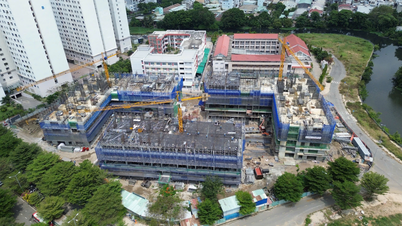
Many experts have pointed out that the current irrational urban structure is also a major cause of disease outbreaks. With inadequate infrastructure, narrow streets (only 1.5m to 2m wide), and a high population density, mostly consisting of the poor and vulnerable, who have poor resilience to epidemics and natural disasters, it is not surprising that the number of people infected and dying from Covid-19 in alleyways and narrow streets is much higher than in the main streets. The Covid-19 pandemic has temporarily ended, presenting urban planners and managers with many issues to address. First and foremost, a serious and responsible consideration must be given to how to develop a model for urban development in Vietnam that minimizes damage and has the lowest impact on people's lives and the socio-economic development of communities and localities when dealing with pandemics and climate change. Is it right for large, densely populated cities like Hanoi and Ho Chi Minh City to race to build high-rise buildings with massive volumes in their already crowded urban cores? Are concentrated industrial zones lacking housing for workers? The satellite cities in the Hanoi Capital City master plan for 2030, with a vision to 2050, approved by the Prime Minister in 2011, should have been areas of development and population attraction, but for the past 10 years (except for the Hoa Lac - Xuan Mai urban area) have received little attention. New urban areas are increasingly emerging with densely packed high-rise apartment buildings – home to hundreds of thousands of people – but they severely lack social housing, public spaces, and have fragmented socio-technical infrastructure that lacks connection to the city's overall system and public transportation. This has created bottlenecks causing traffic congestion and environmental pollution. How will these shrinking and deteriorating public spaces, green areas, and bodies of water be able to function effectively in the face of climate change and disease outbreaks?
The city-within-a-city structure, connecting the central urban area, satellite cities, the Red River urban chain, smart cities... and even the "15-20 minute city" model that the world is talking about, needs to be studied in order to have a modern, culturally and civilized capital city plan, rich in identity, for the sustainable happiness of the people.
3. Hanoi is adjusting its approved master plan for urban development in 2011 and, for the first time, is developing a comprehensive master plan for the capital city using a multi-sectoral integration approach encompassing 17 fields and 30 contents. This presents a challenge, but also an opportunity to comprehensively examine existing shortcomings in past development, propose a sustainable development plan for Hanoi and the capital region in the new era, meeting the country's development requirements and adapting to climate change and pandemics. The city-within-a-city structure, connecting the central urban area, satellite cities, the Red River urban chain, smart cities… and even the "15-20 minute city" model discussed globally, need to be studied to create a modern, culturally and culturally rich capital city plan that contributes to the sustainable happiness of its people.
Our urban strategic planning remains too general, and urban development is driven by investment projects rather than by planned strategies. To enhance the resilience and adaptability of urban systems, it's time to focus on improving urban quality, rather than simply upgrading and expanding urban areas and scales by any means (including borrowing specific indicators). Small, decentralized cities with low population density need to develop modern and civilized technical and social infrastructure, interconnected by transportation systems and the North-South expressway. This will be a driving force for sustainable economic development at the local, regional, and national levels.
We are entering the Fourth Industrial Revolution, with artificial intelligence, digital technology, the Internet of Things, and a strong national-level digital transformation to operate and manage all aspects of socio-economic life. Therefore, smart urbanization, smart urban planning, smart urban development, smart urban management… are urgent tasks not only for the construction industry in particular, but also political tasks for local Party committees and governments, ministries, and sectors, with the participation of the entire society, for the sustainable happiness of the people and the prosperity of the country.
Source








































































Comment (0)