

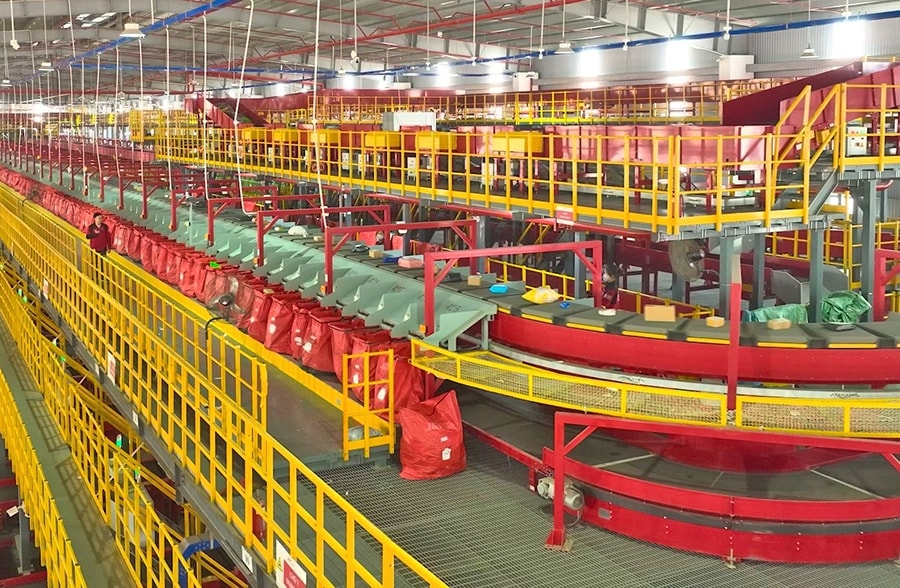
Businesses need to proactively transform themselves.
According to Mr. Nguyen Van Minh, Editor-in-Chief of the Industry and Trade Newspaper, Vietnam's logistics industry is facing great opportunities to develop and become one of the key economic sectors, making a practical contribution to national economic growth. However, for sustainable development, this industry needs investment in infrastructure, improving human resource quality, applying new technologies, and perfecting the legal framework.
Mr. Minh stated that the Ministry of Industry and Trade is finalizing the Strategy for the Development of Vietnam's Logistics Services for the period 2025–2035, with a vision to 2045, aiming to reduce logistics costs to 12–15% of GDP and achieve an annual growth rate of 15–20% for the industry.
Simultaneously, logistics will be integrated into the national green growth strategy, with 30% of vehicles switching to clean energy and 80% of businesses adopting digital transformation.
"For logistics to be more than just a supporting link, but to become a driving force for trade growth and enhancing national competitiveness, clear and timely strategic directions from state management agencies are essential," Mr. Nguyen Van Minh stated.
Regarding the development direction of the logistics industry in the new phase, Dr. Bui Ba Nghiem, from the Import-Export Department (Ministry of Industry and Trade), said that it is about modernization and close integration with the global supply chain. The two strategic pillars will be digital logistics and green logistics, acting as levers to help businesses optimize costs, enhance competitiveness, and expand markets.
Emphasizing the central role of logistics in the digital economy, Dr. Bui Ba Nghiem stated: "It's impossible to talk about e-commerce, digital transformation, or green growth if logistics doesn't keep pace. Therefore, logistics businesses also need to proactively transform themselves, instead of just playing a supporting role."
We need to promote preferential policies for businesses.
Sharing insights from business practice, Mr. Pham Nguyen Thanh Quang, General Director of Lazada Logistics LEX Vietnam, stated: “In the 4.0 era, logistics has become a high-tech service industry. At LEX Vietnam, we comprehensively apply technologies such as artificial intelligence (AI), big data, IoT sensors, and supply chain management systems to automate processes and enhance user experience.”
Mr. Quang also clearly analyzed the changes that digital transformation brings: “Our AI system is integrated into processes ranging from order forecasting, delivery route optimization, warehousing coordination to consumer behavior analysis. Digital transformation not only helps us reduce costs and increase processing speed but also expands our service capabilities to remote areas.”
Emphasizing the need to integrate multimodal transport with smart warehouse systems, Ms. Truong Thi Mui, Deputy General Director of Bac Giang International Logistics Co., Ltd., stated that the northern midland region has the advantage of road, waterway, and rail connectivity, but these modes of transport are currently developing in a fragmented manner. Synchronizing and building a multi-tiered supply chain will help reduce logistics costs by 10-15% for key industries such as e-commerce, electronics, and textiles.
Ms. Mui also proposed promoting policies to incentivize investment in transportation infrastructure and connectivity, supporting businesses in applying WMS, IoT, and AI systems in warehouse management, and creating conditions for smart warehouses to develop according to international standards.
Sharing his views on the greening strategy for logistics, Mr. Cap Trong Cuong, General Director of Macstar Group Joint Stock Company, affirmed: “Green logistics is no longer an option but a condition for Vietnam to participate deeply in the global supply chain. Multinational corporations are setting very high standards regarding emissions and the environment.”
Macstar is currently a pioneer in deploying inland waterway transport using barges, connecting Hai Phong with the North Central provinces. This transport route helps reduce emissions by 70% compared to road transport. In addition, Macstar is investing in smart warehouses using renewable energy and experimenting with reforestation to generate carbon credits.
"Businesses need a national set of green logistics criteria, and also need preferential financial policies such as green credit or tax and fee reductions to support businesses in their transformation," Mr. Cuong suggested.
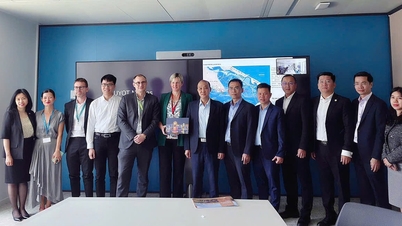
On the afternoon of April 24th, the Industry and Trade Newspaper, in collaboration with the Import-Export Department (Ministry of Industry and Trade), organized a seminar titled "Opportunities for Sustainable Logistics Development in the 4.0 Era".
At the workshop, representatives from ministries, sectors, and businesses discussed and proposed solutions for the sustainable development of Vietnam's logistics industry, such as: digital transformation, green logistics, strengthening multimodal transport connectivity, developing smart warehouses, and applying AI, IoT, and blockchain technologies to optimize the supply chain.
Businesses are committed to cooperation and determined to build a modern, smart, green, and efficient logistics ecosystem.
Source: https://hanoimoi.vn/de-logistics-tro-thanh-dong-luc-thuc-day-tang-truong-700226.html
![[Photo] First session of the 14th Congress of the Vietnam Trade Union](https://vphoto.vietnam.vn/thumb/1200x675/vietnam/resource/IMAGE/2026/06/03/1780465947883_ndo_br_img-3852-jpg.webp)


![[Photo] Secretary of the National Assembly Party Committee, Chairman of the National Assembly presides over the meeting of the Standing Committee and Executive Committee of the National Assembly Party Committee.](https://vphoto.vietnam.vn/thumb/1200x675/vietnam/resource/IMAGE/2026/06/03/1780480353201_ndo_br_bnd-2585-jpg.webp)
















































![[Video] Sunset at Lap An Lagoon – Where the sun sets over the fishing nets](https://vphoto.vietnam.vn/thumb/1200x675/vietnam/resource/IMAGE/2026/05/31/1780192137701_beach-landscape-sea-water-nature-grass-745871-pxhere-com.jpeg)






































Comment (0)