

New thinking about socialist communes and wards.
After nearly 100 years of revolutionary leadership and almost 40 years of implementing the Doi Moi (Renovation) process, the Party's understanding and theory of the socialist model in Vietnam have been continuously supplemented, developed, and perfected. The documents of the 14th National Congress of the Party clearly define the goal of making Vietnam a developed, high-income country by 2045, for a peaceful, independent, democratic, prosperous, civilized, and happy Vietnam, steadily advancing towards socialism.
The Resolution of the 14th National Congress of the Party also clearly states that the Vietnamese socialist model is composed of three major pillars: a socialist-oriented market economy ; a socialist rule of law state of the people, by the people, and for the people; and socialist democracy.
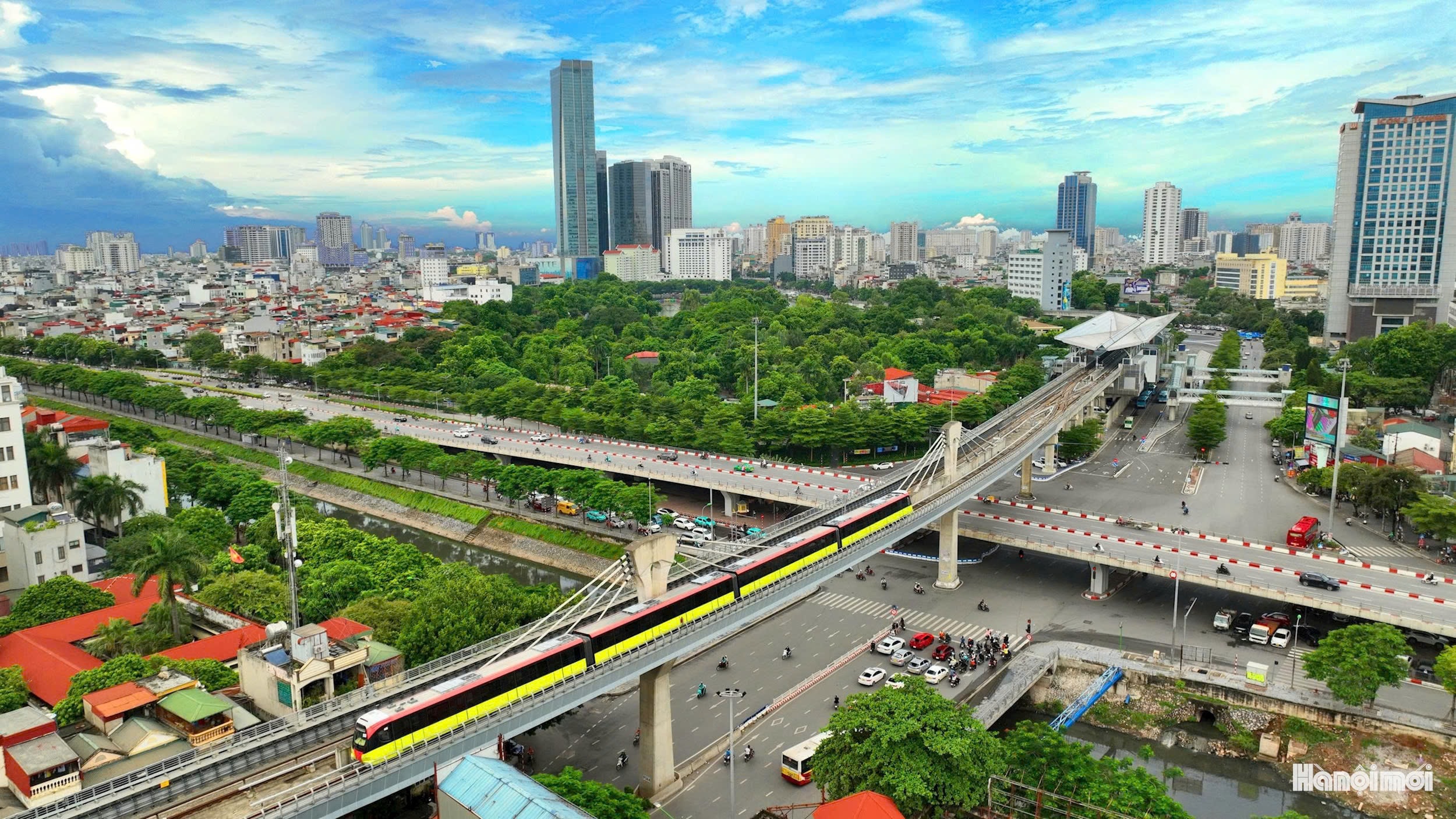
In this context, researching and developing models of socialist communes and wards is a step that demonstrates a spirit of daring to think and act, proactively seeking new ways to achieve national development goals from the grassroots level.
According to Major General Nguyen Van Sau, Deputy Director of the Vietnam Institute of National Defense Strategy and History, building socialist communes and wards is an urgent requirement as the country enters a new era of development. In this model, democracy must become the foundation of social trust; the rule of law must be linked with transparency and accountability. At the same time, building socialist communes and wards does not mean imposing a "common denominator" on all localities, but rather creating space for each locality to develop its unique characteristics, strengths, and creative abilities.
Professor Nguyen Quoc Suu, Assistant Director of the Ho Chi Minh National Academy of Politics, stated that socialist communes and wards are not merely administrative titles or a return to the old subsidized management system. Instead, they should be a modern and humane development model; digitized but not inhumane; developing rapidly but sustainably; competitive but not neglecting fairness; and dynamic while maintaining community cohesion.
Professor Nguyen Quoc Suu emphasized that the goal by 2045 is not to find the perfect model from the outset, but to build a model capable of self-learning and self-improvement, aiming for a more equitable and humane society where people truly feel happiness in their daily lives.

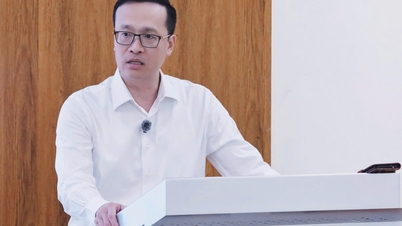
Associate Professor Dr. Dang Quang Dinh, Director of the Institute of Philosophy, argues that socialist communes and wards should not be simply understood as a "political designation" or a new administrative model. They should be a model of grassroots governance where the core values of socialism are institutionalized and implemented through specific mechanisms that can be verified in practice.
The government must truly serve the people, the people must truly be the subjects of the development process, all policies must aim to improve the quality of life and happiness of people, and the effectiveness of governance is measured by social trust and the satisfaction of the people.
"If the Vietnamese socialist model is the 'overall design' of the regime, then the socialist commune and ward are the places where the correctness of that design is tested through real life," Associate Professor Dr. Dang Quang Dinh stated.
Overcoming delays in implementation.
In the process of realizing socialist values at the grassroots level, the current requirement is no longer limited to defining goals or refining criteria. The more important issue is how to translate those goals into concrete, measurable, and tangible results in the daily lives of the people.
According to Professor Nguyen Quoc Suu, the goal of development is not just to make people richer, but to help them live better and happier lives through very specific changes in their daily lives. This means children attending better schools; people having easier access to healthcare ; a greener and safer living environment; a more transparent government; and everyone having a fairer opportunity for development.

From that approach, Professor Nguyen Quoc Suu proposed six pillars of the socialist commune/ward model, including: Inclusive and innovative economic development; building digital government and modern governance; holistic human development; building communities with high self-governance and social cohesion; creating a green, safe, and humane living environment; ensuring genuine democracy and accountability.
These six pillars all aim towards a common goal: bridging the gap between the government and the people. Instead of viewing the people as subjects of administration, the socialist commune/ward model places the people at the center of all governance and development activities.
However, the biggest challenge in realizing these directions is overcoming the "lag" in implementation. According to Associate Professor Dr. Le Van Cuong, many policies and guidelines are correct but have not fully achieved their effectiveness due to delays in their implementation. Therefore, it is crucial to quickly translate these policies into concrete actions and tangible benefits for the people.
Evaluating Hanoi's development of a set of 54 criteria for piloting the socialist commune and ward model, Associate Professor Dr. Le Van Cuong believes this is a necessary step. Quantifying the objectives will create a basis for more objective monitoring, evaluation, and verification of effectiveness.
To ensure the pilot model is effective and has a widespread impact, Associate Professor Dr. Le Van Cuong noted that the city needs to develop a clear implementation roadmap, select representative areas for the pilot program, and prepare all necessary conditions regarding human resources, funding, and implementation mechanisms.
In addition, it is necessary to focus on critical feedback right from the preparation stage, from experts, scientists, and the people themselves – those who directly benefit from the model's results.
The implementation process must also be linked to regular inspection and monitoring to promptly identify effective models for replication, while also recognizing difficulties and obstacles to make appropriate adjustments.
Source: https://hanoimoi.vn/khoi-day-tinh-than-dam-nghi-dam-lam-de-tao-dot-pha-1146929.html
![[Photo] General Secretary and President To Lam presides over a meeting with the Central Organizing Committee.](https://vphoto.vietnam.vn/thumb/1200x675/vietnam/resource/IMAGE/2026/06/03/1780482764658_a1-bnd-4741-3342-jpg.webp)

![[Photo] First session of the 14th Congress of the Vietnam Trade Union](https://vphoto.vietnam.vn/thumb/1200x675/vietnam/resource/IMAGE/2026/06/03/1780465947883_ndo_br_img-3852-jpg.webp)

![[Photo] Secretary of the National Assembly Party Committee, Chairman of the National Assembly presides over the meeting of the Standing Committee and Executive Committee of the National Assembly Party Committee.](https://vphoto.vietnam.vn/thumb/1200x675/vietnam/resource/IMAGE/2026/06/03/1780480353201_ndo_br_bnd-2585-jpg.webp)










































![[Video] Sunset at Lap An Lagoon – Where the sun sets over the fishing nets](https://vphoto.vietnam.vn/thumb/1200x675/vietnam/resource/IMAGE/2026/05/31/1780192137701_beach-landscape-sea-water-nature-grass-745871-pxhere-com.jpeg)



























Comment (0)