


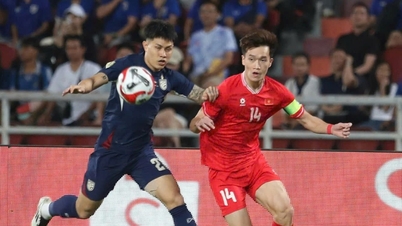
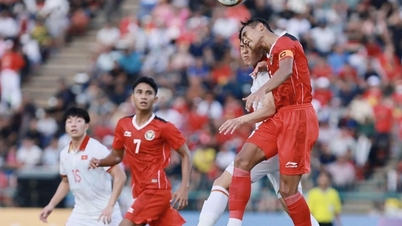
There's a familiar saying, "Winning is the team's credit, losing is the coach's fault." Never has that been truer for Coach Troussier than it is now. Fans also have their own opinions, because under his leadership, the Vietnamese national team has lost more than it has won in the past year. The failure at the 2023 Asian Cup, with the lowest performance among Southeast Asian teams participating in the tournament, seems to have worsened the situation. For many, not getting points against Japan and Iraq wasn't a disaster, but losing to Indonesia and leaving the tournament with three consecutive defeats, two red cards, and three penalties conceded is simply unacceptable.
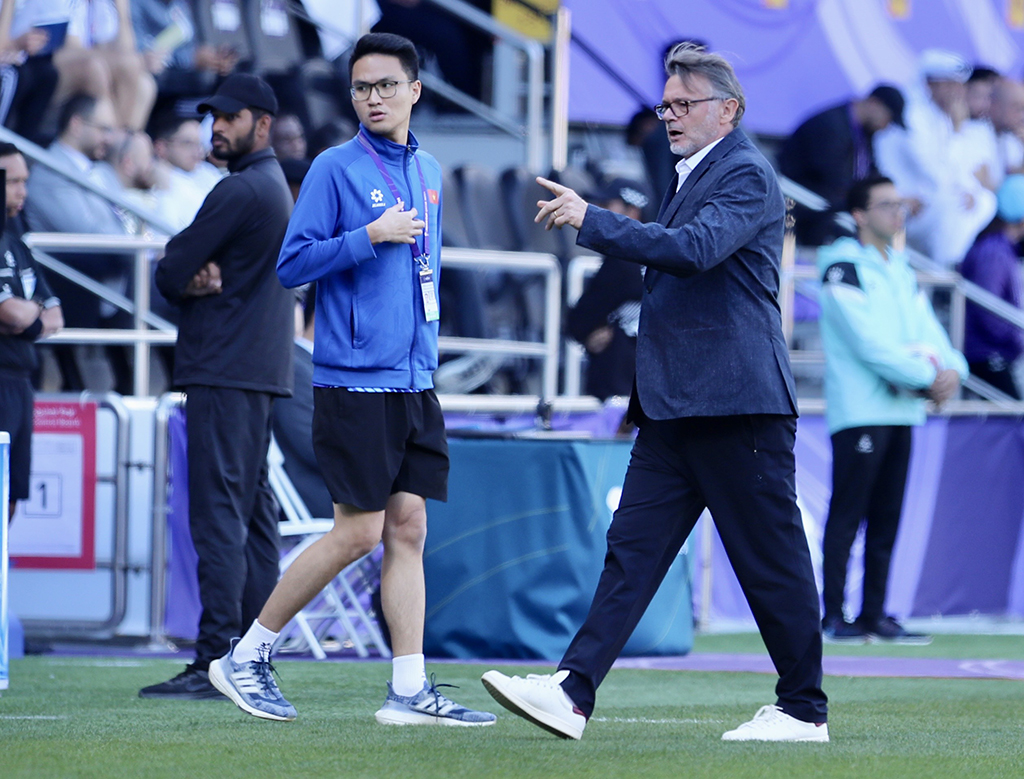
Coach Troussier and his staff are under a lot of pressure.
There were further questions regarding coach Troussier and off-field issues, such as his relationship with the veterans of his predecessor Park Hang-seo, his attitude towards the press, and even whether the interpreter had misinterpreted his words in public.
It was a tense and suffocating atmosphere after a campaign that left many disappointed. Of course, things would have been different if they had at least secured a point against Indonesia, or at least avoided a humiliating last-minute defeat against Iraq. Such results, if they had occurred, would certainly have eased the pressure on Troussier and his coaching staff. And in this context, with only about two months left until the two matches against Indonesia in the second round of the 2026 World Cup qualifiers, implicitly understood as a crucial milestone that could determine Troussier's future, a high-caliber coach like him certainly understands this and naturally wants two memorable matches to prove that the path he's taking with the team is the right one. The task would undoubtedly become easier if off-field issues were handled gradually and more gently.
There have been suggestions that the National Coaching Council should offer critical feedback on Coach Troussier's playing style and player selection. There have also been opinions that Troussier needs to be less extreme in placing all his faith in the young players he is using, in order to create a team where youth blends well with experienced and high-caliber players (who still possess a strong desire to compete). Naturally, people hope the 68-year-old coach will heed these suggestions, even though they understand that the authority to choose a playing philosophy and select players rests entirely with the coach, who bears the ultimate and highest responsibility. This remains a delicate and sensitive issue, and if both sides lack a willingness to compromise, the conflict will only escalate, putting even greater pressure on Troussier.
But more than anyone else, regardless of the path he takes and the extent of his revolutionary changes, Coach Troussier knows his situation and how to handle the problems. The Asian Cup journey was incomplete from the start, with the number of experienced players he called up having to return home due to injuries—enough to form a whole team. Furthermore, the very young players he trusted, who had created miracles like the match against Japan, destroyed the achievements they and their teammates had made, all because of regrettable red cards in the matches against Indonesia and Iraq.
But in March, expectations will rise significantly as the team and Troussier cannot afford to make mistakes. The veterans Troussier needs will return, while the young players are expected to learn valuable lessons from the Asian Cup.
If we consider what we've just experienced and its consequences as motivation, along with positive adjustments from coach Troussier, it means the team will approach the two crucial matches against Indonesia in the best possible way. Hopefully, everyone's patience will be rewarded.
Source link
![[Photo] General Secretary To Lam attends the meeting between voters and candidates for the 16th National Assembly.](https://vphoto.vietnam.vn/thumb/1200x675/vietnam/resource/IMAGE/2026/02/26/1772088196117_a1-bnd-7412-5887-jpg.webp)





































![[Photo] Prime Minister Pham Minh Chinh presides over the meeting of the Central Steering Committee on Housing Policy.](https://vphoto.vietnam.vn/thumb/402x226/vietnam/resource/IMAGE/2026/02/26/1772088860610_anh-man-hinh-2026-02-26-luc-13-54-08.png)


















Comment (0)