

The new Pixel phones make it easy to edit photos, add people who weren't in the original picture, or move their positions. You'll also be able to record phone calls and get a detailed summary of the conversation.
These interesting features point to a worrying trend as AI tools become integrated into more phones. The easier it is to manipulate the content we capture on our devices, the harder it becomes to trust what we see on them.

People around the world now spend an average of about 6 hours a day on their smartphones. Photo: iStock
For the new Pixel 9 phone, which went on sale on August 22nd, Google has focused most of its AI power – supported by the powerful G4 chip inside the phone – on the camera. The “Add Me” feature is considered a solution for handling difficult situations when taking selfies.
For example, imagine you're two people and no one to take a picture for you. Instead of taking a typical selfie that doesn't capture the whole scene and isn't aesthetically pleasing, you take a picture of a friend, then ask them to take a picture of you. Google's AI will then combine the two of you to make it look like you're standing next to each other.
When everyone can be a "tech expert"
In today's era of information overload and difficulty in verifying facts on social media, wouldn't that make it even harder to determine which photos are authentic?
Rick Osterloh, head of Google's Android platform, offered reassurance in an interview with the Wall Street Journal, stating that Google is simply allowing people to edit moments from their real lives and "store memories the way they want"—no different from Photoshop.
However, most people who use phones don't bother or are willing to pay $23 a month for Adobe Photoshop unless it's for work, but most people can afford a new AI-powered phone from Apple, Samsung, or Google, which can edit photos with just a few taps.
Apple's upcoming iPhones will have a Clean Up tool to remove objects and people from photos. Samsung will allow you to move a person in a photo to make it look like they are facing someone else.
Of course, these features are nothing new in the world of technology, and have even been familiar to the average computer technician for a long time, but once they can be used with just a few simple steps, the story really changes.
These features are advertised as convenient, but they also make us much more likely to doubt the accuracy and realism of images than we do now.
In his interview, Osterloh also defended a TV commercial promoting Google's Gemini AI tool during the recent Paris Olympics, in which a father encouraged his young daughter to use the AI to write a letter to an athlete saying, "How inspiring she is."
Google has been criticized for not understanding the real reason why parents encourage their children to write thank-you letters. It's not like going to a store to buy a gift; it's the very process of expressing gratitude.
The price to pay is loss of trust.
To date, the price of the latest technological conveniences has been money, personal data, and privacy. Using Google's services means you have to share your personal data—location, browsing history, videos you've watched, and much more. Then, with a variety of different advertising networks targeting you, you feel like you're being tracked everywhere, all the time.
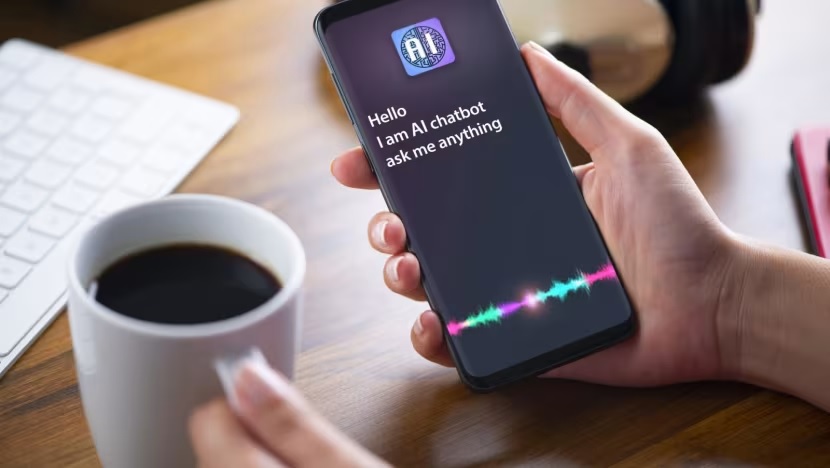
Tech giants like Apple, Google, and Samsung are racing to integrate generative AI into their mobile operating systems. (Image: iStock)
The price we pay for the wonders of technology may initially seem subtle and abstract, but it becomes clearer over time as it becomes more widespread. People around the world now spend about six hours a day on their smartphones. Technology is forcing you to sacrifice time for sleep, children, or more productive activities.
According to Statista, over 70% of companies in the US are currently collecting personal data, and according to YouGov research, two-thirds of consumers worldwide feel that technology companies control too much of that information.
Ultimately, trust is increasingly eroded within us, even in what we see with our own eyes, including real things. And whether we like it or not, the growing prevalence of AI phones will force us to be even more vigilant about everything around us, at least during the 6 or even 8 hours we spend online each day.
Hai Anh
Source: https://www.congluan.vn/dien-thoai-ai-cua-google-va-apple-se-lam-xoi-mon-niem-tin-vao-moi-thu-post309220.html
![[Image] Nearly 125,000 Hanoi students completed the Literature exam for the 10th grade entrance exam.](https://vphoto.vietnam.vn/thumb/1200x675/vietnam/resource/IMAGE/2026/05/30/1780117233041_ndo_br_thiet-ke-chua-co-ten-2-png.webp)


































![[Photo] Admire the coral "masterpiece" amidst the million-year-old heritage of Dak Lak province.](https://vphoto.vietnam.vn/thumb/1200x675/vietnam/resource/IMAGE/2026/05/30/1780107638639_y25-jpg.webp)








































































Comment (0)