

A survey conducted between May 2024 and May 2025 revealed that half the global population experienced at least 30 additional days of unusually hot weather, with temperatures exceeding any heatwave recorded in their region between 1991 and 2020.
 |
People walk on the streets under the hot sun in Daegu, South Korea. |
It's important to recognize that extreme heat can be deadly. In August 2003, a record-breaking heatwave in Europe claimed the lives of approximately 50,000 people. The U.S. Environmental Protection Agency reports that more than 1,300 heat-related deaths occur in the U.S. each year – the leading cause of death related to weather.
Against this backdrop, cities in both the US and Europe are implementing new measures to specifically address heat-related issues, such as appointing "heat officers" to develop and manage safety programs.
According to Constructconnect, construction efforts to address rising urban temperatures are also underway. San Antonio, Texas, has implemented a $5 million “Cool Pavement” program to renovate 35.4 km of the city’s hottest streets using heat-reflective materials. Temperatures on the streets included in the “Cool Pavement” program can be up to 11 degrees Celsius higher than on other streets in the city due to a lack of trees and shade.
Nearly a dozen cities across the U.S. are also implementing similar road resurfacing programs, while many others are considering pilot projects. Los Angeles is leading the way. Since 2017, the city has coated more than 281 kilometers of road lanes with reflective material. Reports indicate this measure reduces ambient temperatures by approximately 4.4 degrees Celsius in the first year. Even after several years of weathering and wear and tear, temperatures on these roads remain up to 3.3 degrees Celsius lower.
Meanwhile, the city of Seville (Spain), sometimes called the "frying pan of Europe," has adopted an ancient cooling technique invented by the Persians 3,000 years ago called the qanat system. This system uses gravity to transport water from underground aquifers or wells, often in mountainous areas, to lower areas for irrigation and domestic use.
Currently, the city of Seville has installed a system called CartujaQanat in several buildings. At night, water stored underground naturally cools as the temperature drops. A portion of this water is then pumped and sprayed onto solar panels covering the buildings. During the day, solar-powered pumps bring the water to the surface through small pipes, where fans spray cool air onto the ground floors of the buildings. Meanwhile, external sprinklers release mist into the air. This cooling effect reduces ground temperatures by up to 10°C, transforming an area the size of two football fields into an urban oasis.
Increasing the number of parks with trees is often listed in modern urban planning to mitigate the impact of high temperatures. What is being studied is that, in addition to traditional green spaces, even repurposed parks, such as the High Line in New York City, can have a significant positive impact. A study by Climate Central showed that, on average, the urban heat island index along the High Line is reduced by 4 degrees Celsius compared to surrounding neighborhoods.
Clearly, minimizing extreme temperatures in open urban areas is crucial, but future architectural structures must also be designed and built to withstand extreme temperatures.
In Antwerp, Belgium, newly constructed or renovated roofs with a certain slope and area are required to be "green roofs." Buildings are also being repainted in light colors to reflect heat instead of absorbing it.
Adapting buildings to the future, which may see more extreme heat, also offers economic benefits. Abhishek Parmar of HB Reavis (UK), a workspace provider, commented: “Buildings that overheat or rely on overly complex engineering solutions to combat heat will consume more energy than necessary, leading to a premature decline in market competitiveness.”
Melissa Guardaro of Arizona State University's School of Sustainable Development told Time magazine: "No matter where you are, you're going to experience extreme heat waves. The best thing is to prepare not only for emergencies like heat waves or heat domes, but also for long-term increases in urban temperatures."
Source: https://baobacninhtv.vn/do-thi-khap-the-gioi-tim-cach-ha-nhiet--postid446465.bbg



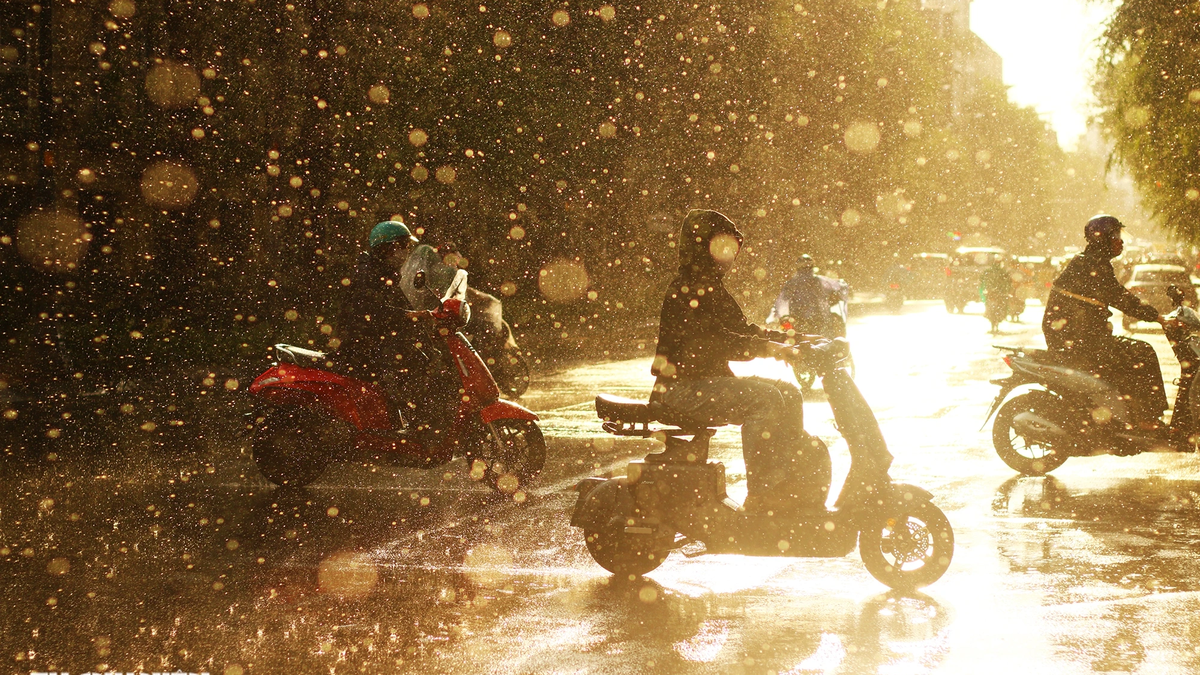
![[Image] Hanoi's urban life under the challenge of a "scorching hot" environment](https://vphoto.vietnam.vn/thumb/1200x675/vietnam/resource/IMAGE/2026/05/25/1779706979265_nang-nong-t5-2026-minh-duy-7-4636-jpg.webp)





















































































Comment (0)