

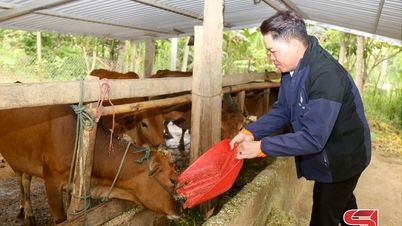
Each locality has 1-2 low-emission agricultural models.
According to the Ministry of Agriculture and Environment , each province and city will develop 1-2 low-emission farming models to create a database and develop a "low-emission" brand for Vietnamese agricultural products.
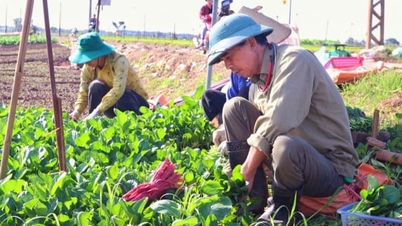
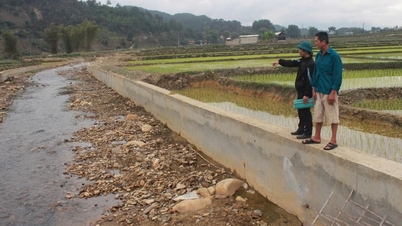
The project identifies six key tasks: restructuring crop patterns, applying emission-reducing farming techniques, replicating sustainable models, enhancing capacity, and connecting low-emission agricultural products to markets. Each province and city will develop 1-2 scalable low-emission farming models, establish a database connected to the national registration system, and aim to develop a "low-emission" brand for Vietnamese agricultural products. Statistics show that crop production accounts for nearly 80% of total agricultural emissions. Therefore, restructuring production towards emission reduction is considered an urgent requirement and also an opportunity to enhance the competitiveness of Vietnamese agricultural products.
Businesses proactively conduct greenhouse gas inventories.
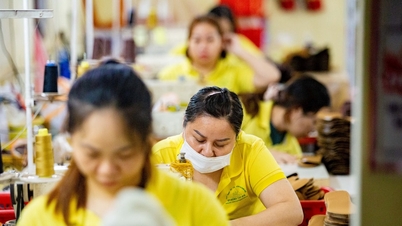
Starting in 2026, greenhouse gas emissions inventory will become mandatory for large-scale emitters under Government Decree 06. However, many businesses not subject to this mandatory requirement are already proactively conducting greenhouse gas inventories. Many companies view this as preparation for the upcoming phase when the EU's Carbon Border Adjustment Mechanism (CBAM) comes into full operation. At that time, high-emission goods will be subject to heavy taxes, increasing costs and reducing competitiveness.
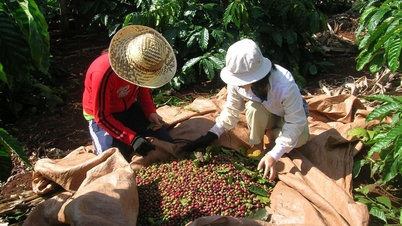
Considered the first agricultural enterprise in Vietnam to conduct a greenhouse gas inventory for its entire pepper and coffee production plant system, the company is now developing a practical emission reduction roadmap and participating in the voluntary carbon credit market after completing the inventory.
Mr. Phan Minh Thong, Chairman of the Board of Directors of Phuc Sinh Company, said: “First, we hired a consulting company, which lasted for many months, and they inspected all our factories to check the measurement standards. They showed us step by step what we needed to do, how to adapt, how to change, how to invest, and how to comply. I don't think everything is simple; how to calculate CO2, how to calculate emissions, how to compensate to meet the trends and stringent standards.”
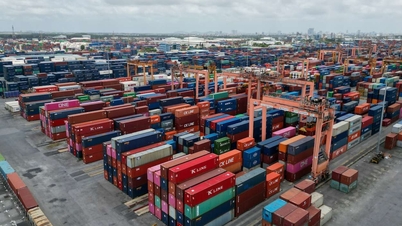
The transportation company also completed its greenhouse gas inventory report in the middle of the year. Based on the report, the company aims to reduce emissions by 5% each year.
Mr. Tran Viet Huy, CEO of Transport and Maritime Services Joint Stock Company (TRA-SAS), shared: “Many of our customers have included ESG clauses in their contracts. In the short term, we will have more opportunities to access customer groups with less price competition.”
According to experts, if businesses don't measure, they can't improve; without transparency, they can't integrate.
Mr. Pham Thien An from Vinacontrol Inspection Company Limited commented: "Many businesses have taken the first step, sending their personnel to training courses on greenhouse gas inventory. If a business cannot conduct its own greenhouse gas inventory, it can seek assistance from consulting firms."
Pressure from export markets and global supply chains is driving businesses to invest in emission measurement, reporting, and assessment systems according to international standards. Emission inventory and reduction are no longer a compliance cost, but have become a strategic investment, helping businesses enhance their reputation, attract green investment, and maintain their position in the international trade market.
Source: https://vtv.vn/doanh-nghiep-chu-dong-thuc-hien-kiem-ke-khi-nha-kinh-100251023115726948.htm


![[Photo] Prime Minister Pham Minh Chinh attends the Conference on the Implementation of Tasks for 2026 of the Industry and Trade Sector](/_next/image?url=https%3A%2F%2Fvphoto.vietnam.vn%2Fthumb%2F1200x675%2Fvietnam%2Fresource%2FIMAGE%2F2025%2F12%2F19%2F1766159500458_ndo_br_shared31-jpg.webp&w=3840&q=75)









































































Comment (0)