

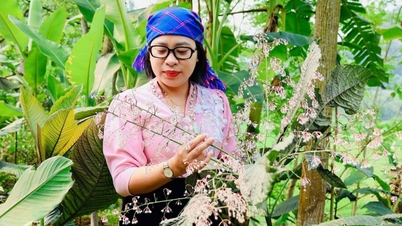
One late spring afternoon, in a small house in Lang Moi village, Ban Xeo commune (formerly Muong Vi commune), the rhythmic ringing of bronze bells harmonized with the warm, deep voice of Mrs. Vang Thi Sui, born in 1960. This woman, now over sixty, is known in the area as a respected Then shaman.
After completing the Then rituals, she gently removed her headscarf, folded her ceremonial attire, and carefully put away each familiar tool, such as the bronze bell and Then fan, into the cloth bag that had accompanied her for many years. Once everything was neatly arranged, she sat down to chat with everyone.
Ms. Sui said that previously she only knew how to sing a few traditional folk songs of the Giay people. Around the year 2000, after being taught and guided in the rituals by a teacher in the area, she began to follow the path of becoming a Then shaman. “Being a Then shaman is not something just anyone can do; it requires a special connection, or perhaps, being chosen. Being a Then shaman isn't just about singing well; it also requires understanding the prayers, customs, and maintaining a pure heart to help people pray for peace and good fortune,” she shared.
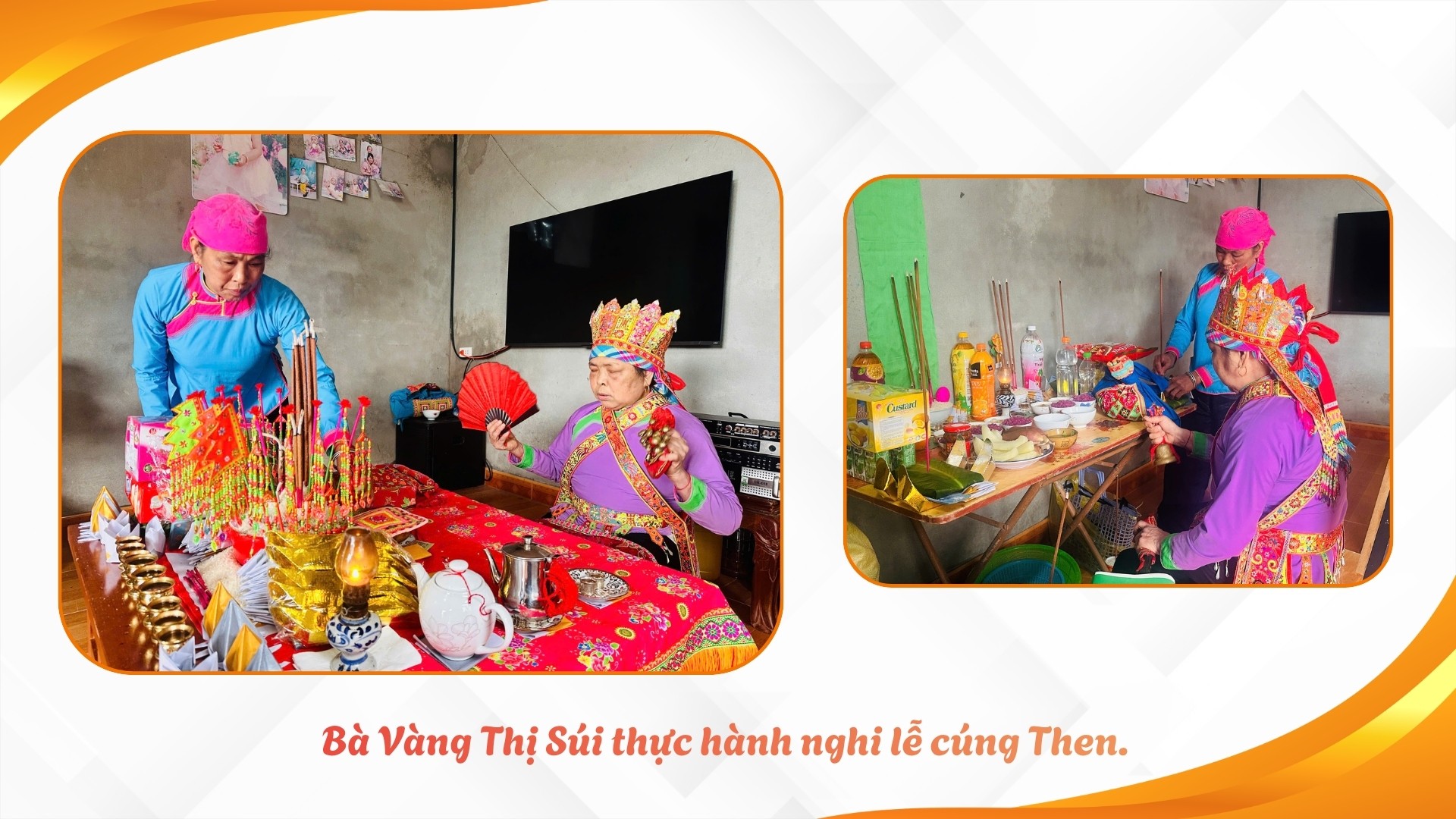
Since then, for over twenty years, Ms. Sui has participated in practicing many Then rituals in her village and surrounding areas, even in remote locations in Lai Chau, Son La, and Dien Bien provinces . For her, each ritual is not just a job but also a responsibility to preserve the traditional culture of her people.
The Then rituals of the Giáy people are most frequently held in January after the Lunar New Year and in July of the lunar calendar. This is the time when people pray for a peaceful new year, a bountiful harvest, and a tranquil life. These ceremonies not only reflect rich traditional culture but also provide an opportunity for people to meet, share, and strengthen their bonds.
Before the ceremony begins, the host prepares offerings such as chicken, sticky rice, wine, traditional cakes, and fruits. In a solemn setting, the Then shaman, holding a bronze bell in one hand and a paper fan in the other, sings ancient Then songs, conveying the hopes and wishes of the people to their ancestors and deities.
According to Ms. Vang Thi Sui, in the Then ritual of the Giay people, the bronze bell is an indispensable musical instrument. There are two types of bells: one is a single bronze bell with a compact shape, which produces a clear and resonant sound when rung. The other type has many small copper beads clustered together at the handle, which, when shaken, create a lively jingling sound, contributing to the sacredness of the ritual space.
Notably, each Then melody has its own structure and must be sung in the correct ritual sequence. Then songs not only carry religious significance but also reflect the lives of the people in the highlands. These songs include verses about labor and production, family affection, and the connection between humans, nature, and deities.
Having been involved with the Then ritual for many years, Ms. Vang Thi Sui always believes that the practice of the ritual must preserve its traditional cultural meaning, avoiding superstitious or wasteful practices.
"Although I am a Then shaman, I don't promote superstition. I always explain to the people that the Then ritual of the Giáy people mainly carries cultural and spiritual significance, helping people to have more faith in life, and to pray for health, happiness, and peace," she shared.
In recent years, Ms. Sui has also begun teaching Then melodies to some young people in the village. For her, the most important thing is for the next generation to understand and appreciate the cultural values left behind by their ancestors.
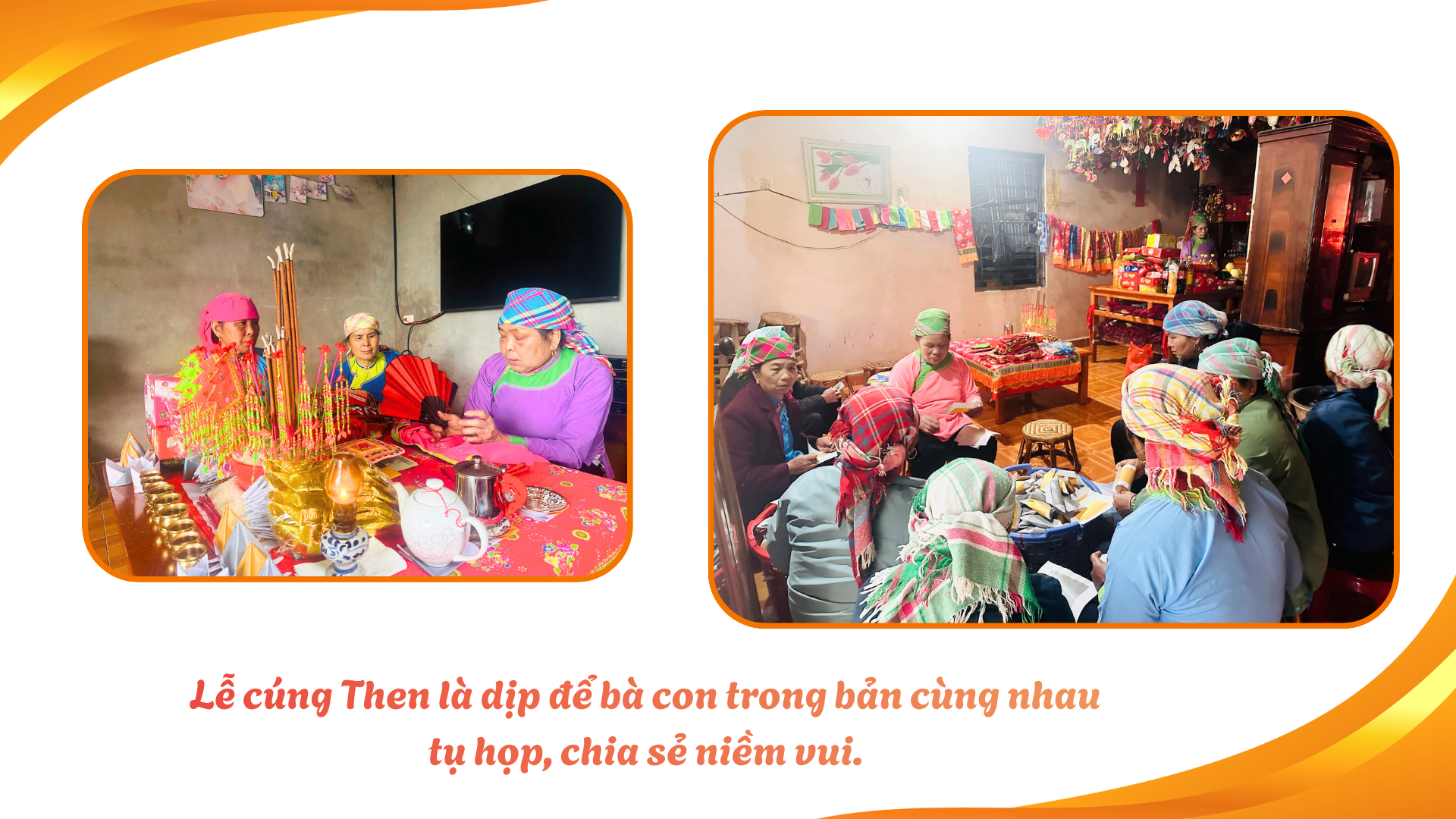
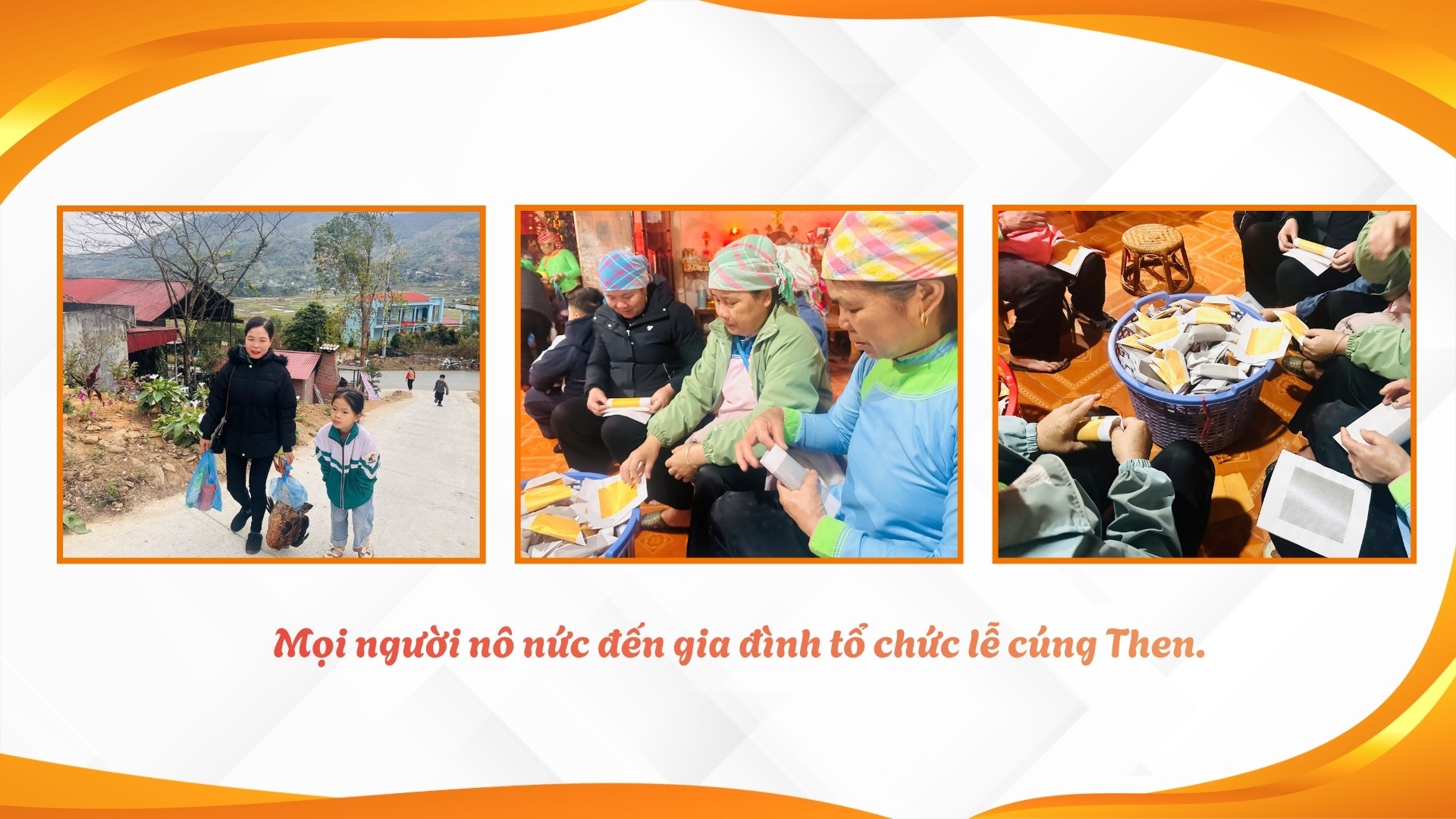
Ms. Vang Thi Yeu, a resident of Lang Moi village, Ban Xeo commune, said: “For a long time, we Giay people have believed that performing the Then ceremony will bring peace of mind to our families, and we pray for good health and a bountiful harvest. More importantly, it is an opportunity for the villagers to gather together and share joy.”
For the Giáy people in Bản Xèo, one of the most special times of the year is the third day of the Lunar New Year. On this day, many families and people in the area often gather at the homes of the Then shamans to participate in the New Year's rituals. Everyone performs the ceremony together, listens to ancient Then melodies, and prays for a new year of favorable weather, abundant harvests, and peaceful lives.
According to Mr. Pham Van Tuan, head of Lang Moi village, Ban Xeo commune, such rituals not only have religious significance but also contribute to community cohesion. Each ceremony provides an opportunity for villagers to meet, strengthen neighborly bonds, and together preserve traditional customs.
Today, along with socio -economic development, many traditional cultural values are gradually changing. However, in highland villages like Ban Xeo, the sound of bronze bells and the Then songs of the Giay people still resonate during traditional festivals. These simple melodies remind present and future generations of their cultural roots, encouraging them to cherish, preserve, and pass on these beautiful cultural traditions to the future.
Source: https://baolaocai.vn/doc-dao-net-van-hoa-then-cua-nguoi-giay-post897001.html
![[Photo] First session of the 14th Congress of the Vietnam Trade Union](https://vphoto.vietnam.vn/thumb/1200x675/vietnam/resource/IMAGE/2026/06/03/1780465947883_ndo_br_img-3852-jpg.webp)


![[Photo] General Secretary and President To Lam presides over a meeting with the Central Organizing Committee.](https://vphoto.vietnam.vn/thumb/1200x675/vietnam/resource/IMAGE/2026/06/03/1780482764658_a1-bnd-4741-3342-jpg.webp)
![[Photo] Secretary of the National Assembly Party Committee, Chairman of the National Assembly presides over the meeting of the Standing Committee and Executive Committee of the National Assembly Party Committee.](https://vphoto.vietnam.vn/thumb/1200x675/vietnam/resource/IMAGE/2026/06/03/1780480353201_ndo_br_bnd-2585-jpg.webp)



![[Infographic] Over 1.2 million candidates registered for the 2026 High School Graduation Exam](https://vphoto.vietnam.vn/thumb/402x226/vietnam/resource/IMAGE/2026/06/03/1780496872518_w_20260603205412.jpeg)

































![[Video] Sunset at Lap An Lagoon – Where the sun sets over the fishing nets](https://vphoto.vietnam.vn/thumb/1200x675/vietnam/resource/IMAGE/2026/05/31/1780192137701_beach-landscape-sea-water-nature-grass-745871-pxhere-com.jpeg)




























Comment (0)