


Innovating the Party's leadership methods is not simply about changing the way of governing or working methods, but more profoundly, it is about innovating leadership thinking, innovating the approach to practice, aiming to build a streamlined political system that operates efficiently, effectively, and is closer to the people, serving them better. Adhering to the spirit of Resolution No. 28-NQ/TW dated November 17, 2022, of the Central Committee of the Party (13th term) on "Continuing to innovate the Party's leadership and governance methods over the political system in the new period," the Resolution of the 14th National Party Congress, and the Resolution of the 1st Provincial Party Congress, term 2025-2030; in recent times, the Provincial Party Committee and its Standing Committee have focused on leading and directing the synchronous implementation of solutions, creating clear changes in leadership thinking, management methods, and task implementation.
First and foremost, the innovation in the Party's leadership methods is clearly demonstrated in improving the quality of formulating, promulgating, and implementing the Party's policies and guidelines. The Provincial Party Committee and its Standing Committee have focused on leading and directing the implementation of reforms to improve the quality of Party documents, aiming for a comprehensive, synchronized, focused, and highly predictive approach, closely adhering to reality, and only issuing new documents when absolutely necessary.
For major policies with far-reaching impacts, before issuance, Party committees always direct practical surveys and gather broad opinions from elected bodies, the Fatherland Front, political and social organizations, cadres, Party members, and the people. Notably, the quality of advisory work by specialized agencies assisting Party committees continues to improve.
The Standing Committee of the Provincial Party Committee requires that the drafting of resolutions, directives, programs, and work plans must be specific, clearly defining responsibilities, tasks, deadlines, and expected results. Each resolution and directive must be linked to surveys and assessments of the actual situation, the selection of key priorities, and mechanisms and resources to ensure effective implementation.
Along with that, the organization and implementation of the Party's guidelines and policies, and the State's laws and regulations have also seen many positive changes. Party committees at all levels have focused on developing programs and plans that are appropriate to the actual conditions of each locality, agency, and unit; clearly assigning responsibilities, timelines, and implementation schedules.
Major, new, complex, and sensitive issues are all given attention and leadership by the Provincial Party Committee and its Standing Committee, from orientation and policies to implementation. The work of disseminating information and mobilizing cadres, Party members, and the people to implement the Party's guidelines and policies, and the State's laws, is ensured to be practical, easy to understand, and appropriate to each target group and the specific conditions of each locality, agency, and unit.
Party committees at all levels should strengthen the organization of dialogues, exchanges, and the reception of feedback and criticism from the Vietnam Fatherland Front, political and social organizations, and the people in the process of implementing the Party's guidelines and policies, and the State's laws, especially regarding new issues arising from practice.
Simultaneously, the role of press and media agencies, as well as the team of reporters and propagandists, should be effectively promoted, along with the accelerated application of science and technology, especially information technology and digital technology, in propaganda and mobilization work. The innovation in leadership methods is also clearly demonstrated in directing the implementation of organizational restructuring and promoting decentralization and delegation of power.
The Provincial Party Committee and its Standing Committee have seriously and decisively led and directed the restructuring of administrative units and the reorganization of the political system's organizational apparatus to be streamlined, efficient, effective, and efficient, in accordance with the directives, regulations, and guidelines of the Central Committee, while simultaneously reforming the leadership methods of Party committees and organizations at all levels.
Implementing the Central Committee's policy on administrative unit restructuring, Ninh Binh has significantly reduced the number of commune-level administrative units from 398 to 129, a reduction of 67.5%. After the restructuring, agencies and units quickly stabilized and resumed operations without disrupting work. The political system was reorganized to clearly define functions and responsibilities, overcoming overlapping, duplication, and shirking of responsibility. Personnel work has undergone many innovations towards democracy, openness, and transparency. The evaluation, planning, appointment, rotation, and recommendation of Party cadres to leadership and management positions in the political system are carried out rigorously, linked to job requirements and work efficiency.
The province has reviewed its staff of officials and civil servants to strengthen the grassroots level; more than 452 officials and civil servants have been seconded, assigned, or rotated to supplement the commune-level workforce. Following the administrative reorganization, 100% of communes and wards have fully consolidated key positions, ensuring smooth and effective operation. Grassroots officials are gradually improving their professional skills, information technology application capabilities, sense of responsibility, and attitude towards serving the people, contributing to increased satisfaction among citizens and businesses.
In reforming the Party's leadership methods, inspection and supervision work continues to be identified as an important task to maintain strict discipline and order within the Party.
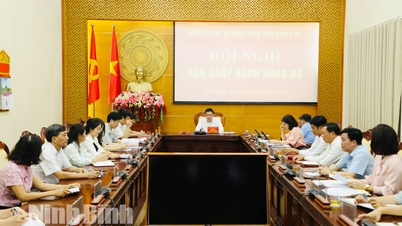
The Provincial Party Committee and its Standing Committee have led and directed Party committees and inspection committees at all levels to seriously develop and implement annual and thematic inspection and supervision programs with the motto "Supervision must be broad, inspection must be focused and targeted." The content of inspections focuses on areas prone to negative practices, sensitive and complex issues, and the responsibility of leaders in performing their duties.
In 2025, Party committees and inspection committees at all levels in the province inspected 231 Party organizations and 326 Party members; and supervised 485 Party organizations and over 420 Party members. In the first quarter of 2026 alone, 86 Party organizations and 54 Party members were inspected; and 166 Party organizations and 151 Party members were supervised. Through inspection and supervision, many shortcomings and weaknesses were identified and promptly and fairly addressed, contributing to maintaining Party discipline and improving the effectiveness of preventing and combating corruption, waste, and negative phenomena.
One of the key highlights of the leadership reform is promoting the exemplary role of cadres and Party members, especially those in leadership positions. The Provincial Party Committee and its Standing Committee have directed the strict implementation of regulations on exemplary conduct, linked to studying and following the ideology, ethics, and style of Ho Chi Minh. Many cadres and Party members have clearly demonstrated a sense of responsibility, innovative thinking, improved working styles, close engagement with the grassroots, and proactive research and proposal of solutions for task implementation.
The implementation of Conclusion No. 21-KL/TW, dated October 25, 2021, of the Central Committee of the Communist Party of Vietnam on strengthening Party building and rectification and the political system; resolutely preventing, repelling, and strictly handling cadres and Party members who have degenerated in political ideology, morality, and lifestyle, and exhibiting "self-evolution" and "self-transformation" has been carried out vigorously; annually, 100% of cadres and Party members make commitments to maintain moral qualities and lifestyles, and not to degenerate, "self-evolution," or "self-transform," serving as the basis for review, evaluation, and ranking at the end of the year.
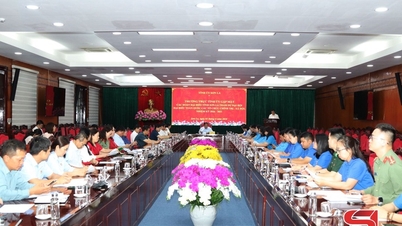
Administrative reform and digital transformation continue to be identified as important tasks. The province has implemented many digital platforms in the operation of the political system such as: "Electronic Party Member Handbook", paperless meeting rooms, electronic document management system, organizing online conferences combined with in-person meetings… This helps to improve the efficiency of work processing, reduce unnecessary meetings and ensure smooth information flow from the province to the grassroots.
The renewal of the Party's leadership methods in Ninh Binh is gradually deepening, creating positive and comprehensive changes in Party building and the operation of the political system. This is also an important foundation for enhancing the leadership capacity and fighting strength of Party organizations; building a cleaner and stronger Party and political system; consolidating the people's trust; and creating momentum to promote rapid and sustainable socio-economic development in the coming period.
Source: https://baoninhbinh.org.vn/doi-moi-phuong-thuc-lanh-dao-cua-dang-tu-tu-duy-den-hanh-dong-260601080101517.html







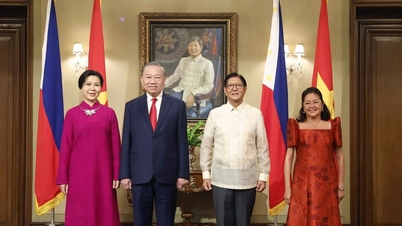







![[Photo] Reception to welcome General Secretary and President To Lam and his wife on their State visit to the Philippines](https://vphoto.vietnam.vn/thumb/1200x675/vietnam/resource/IMAGE/2026/06/01/1780295488620_vna-potal-chieu-dai-chao-mung-tong-bi-thu-chu-tich-nuoc-to-lam-va-phu-nhan-tham-cap-nha-nuoc-toi-philippines-8798060-7855-jpg.webp)



















































Comment (0)