

Prioritize disease prevention.
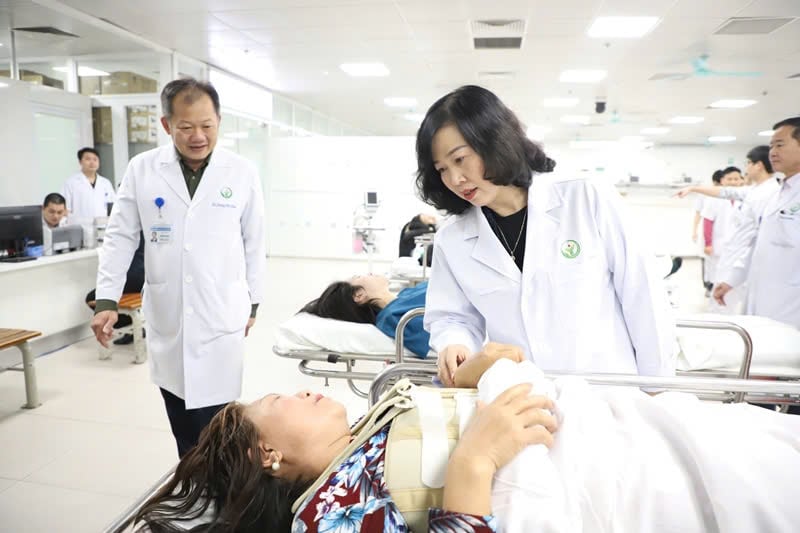
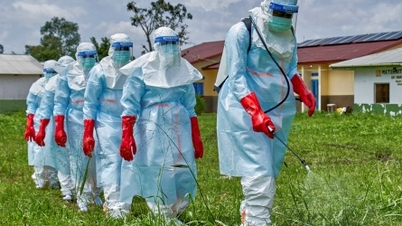
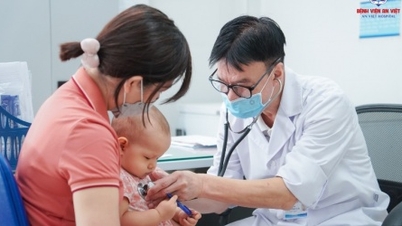
One of the key highlights of Resolution No. 72-NQ/TW is shifting the focus from "treating diseases" to "preventing diseases," using preventive medicine and primary healthcare as the foundation, so that people can access quality healthcare services and receive comprehensive health management right at the commune-level health station.
 |
| The state budget will ensure recurrent expenditures and development investments for primary healthcare and preventive medicine. In addition, the Ministry of Health will develop appropriate financial mechanisms to mobilize social resources into the public health sector. |
Minister of Health Dao Hong Lan stated that, to realize this policy, the Ministry of Health is focusing on implementing several groundbreaking solutions. According to the Minister, the quality of services and the effectiveness of the healthcare system depend on three key factors: human resources, infrastructure and equipment, and financial mechanisms.
Regarding human resources, the health sector will prioritize the allocation and mobilization of resources, while also issuing outstanding policies and mechanisms to develop the primary healthcare and preventive medicine workforce, ensuring uniformity in quantity, quality, and structure. Special attention will be paid to human resources in remote, disadvantaged, border, and island areas.
Commune-level health stations will be strengthened to ensure sufficient human resources, guaranteeing the number of doctors according to their functions and duties; maintaining the team of village and neighborhood health workers, village midwives, and population collaborators.
During the period 2025-2030, at least 1,000 doctors will be rotated and assigned to work temporarily at commune health stations each year. By 2027, each health station will have at least 4-5 doctors; by 2030, there will be enough doctors to meet professional requirements.
Training will be intensified with the Project to train and develop reserve doctors for commune health stations, prioritizing disadvantaged areas. At the same time, focus will be placed on developing several high-quality health training facilities on par with regional standards, and implementing advanced postgraduate training tailored to the specific needs of the medical field.
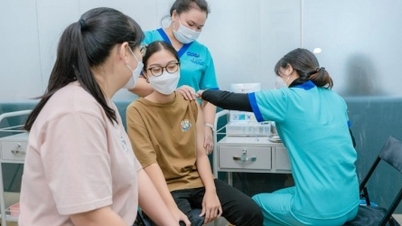
Regarding infrastructure, medicines, and medical equipment, the Ministry of Health ensures adequate and timely supply, especially in remote areas, border regions, and islands. 100% of commune-level health stations will receive investment in basic infrastructure and equipment in accordance with their functions and duties. In addition, the Ministry of Health is developing and refining mechanisms and policies to ensure a stable, safe, and timely supply of vaccines.
The Ministry of Health, in coordination with relevant ministries and agencies, will promote investment and encourage domestic enterprises to research and produce vaccines, gradually mastering the technology to meet the needs of the Expanded Immunization Program and proactively respond to emerging infectious diseases.
Regarding financial mechanisms and organizational structure, commune health stations will be organized according to the model of public service units, ensuring the provision of basic and essential services such as disease prevention, primary healthcare, medical examination and treatment, and social care services.
The state budget will ensure recurrent expenditures and development investments for primary healthcare and preventive medicine. In addition, the Ministry of Health will develop appropriate financial mechanisms to mobilize social resources into the public health sector.
The state budget continues to play a leading role in investing in infrastructure and equipment for grassroots healthcare, especially for social policy beneficiaries, ethnic minority areas, mountainous and island regions, disadvantaged areas, and specialized fields such as psychiatry, forensic medicine, intensive care, and pathology.
Minister Dao Hong Lan emphasized that all these solutions aim to realize the spirit of "innovation, creativity, acceleration, and breakthrough" set forth in Resolution 72-NQ/TW, so that every Vietnamese citizen receives comprehensive healthcare, from prevention to treatment. Commune-level health stations will have the opportunity to improve their professional capacity and service quality, attracting and building strong trust with the people.
Attracting private investment
Minister Dao Hong Lan stated that although the health sector receives significant investment, the limited state budget makes attracting investment from the private sector a necessary solution. Resolution 72-NQ/TW was issued in the context of the Politburo 's issuance and implementation of a comprehensive set of "four pillar resolutions," including Resolution 68-NQ/TW on the development of the private economy.
Therefore, tasks and solutions to attract and develop private healthcare are prioritized with superior policy mechanisms to build confidence for businesses, unlock investment resources, and develop healthcare facilities.
The Ministry of Health acknowledges the positive response from the private healthcare community, who have embraced this resolution as a breath of fresh air, inspiring motivation and determination to invest in the cause of public health care.
The resolution specifically encourages investment in the development of high-quality healthcare services, preventive services, scientific research, human resource training, drug and vaccine production, medical equipment manufacturing, testing, inspection, and standardization.
In particular, the development of large-scale private hospitals with advanced technical expertise comparable to that of developed countries should be encouraged.
Private investment and public-private partnerships are facilitated in accordance with legal regulations, prioritizing clean land, reclaimed land, and allowing the conversion of land use purposes to medical land; reducing or waiving land use fees, land rent, and land tax for domestic medical facilities.
Corporate income tax will not be applied to public and private non-profit healthcare facilities. The Ministry of Health, in coordination with the Ministry of Finance and relevant agencies, will implement comprehensive solutions to ensure the policy takes effect starting in 2026.
Developing advanced medical technology and digital transformation.
In the context of globalization and digital transformation as inevitable trends, according to Minister Dao Hong Lan, the Ministry of Health has identified the development of science and technology and innovation as a key breakthrough task.
The Ministry will develop mechanisms and policies to promote comprehensive digital transformation in healthcare, implement electronic health records, electronic medical records, electronic prescriptions, and complete the national healthcare database, ensuring connectivity, interoperability, and management of people's health throughout their lifecycle.
The Ministry of Health organizes and directs the application of artificial intelligence, big data, blockchain, and the Internet of Things in medical practice such as forecasting, diagnosis, treatment, and management to improve the quality, transparency, and efficiency of services.
The Ministry also collaborates with other ministries, agencies, institutes, and universities to establish high-tech research centers focusing on gene technology, nanotechnology, regenerative medicine, and nuclear medicine, aiming to bring Vietnamese healthcare to an international level.
Promote international cooperation in learning and technology transfer, participate in global medical research networks, and collaborate with technology companies.
The Ministry of Health proposes a mechanism to prioritize the development of the pharmaceutical, vaccine, biological product, and medical equipment industries, aiming for self-reliance and the establishment of a pharmaceutical industrial park by 2030. The orientation is to accelerate digital transformation, promote high technology, and improve policy mechanisms so that all citizens can benefit from modern, equitable, and sustainable healthcare.
Source: https://baodautu.vn/doi-moi-y-te-tu-phong-benh-dau-tu-tu-nhan-den-cong-nghe-cao-d386424.html






















![[Video] Sunset at Lap An Lagoon – Where the sun sets over the fishing nets](https://vphoto.vietnam.vn/thumb/340x192/vietnam/resource/IMAGE/2026/05/31/1780192137701_beach-landscape-sea-water-nature-grass-745871-pxhere-com.jpeg)


![[Photo] The General Secretary, President and his wife lay flowers at the Ho Chi Minh Monument in Manila.](https://vphoto.vietnam.vn/thumb/1200x675/vietnam/resource/IMAGE/2026/05/31/1780219759477_anh-man-hinh-2026-05-31-luc-16-29-07.png)































































Comment (0)