

Eliminate parochial thinking.
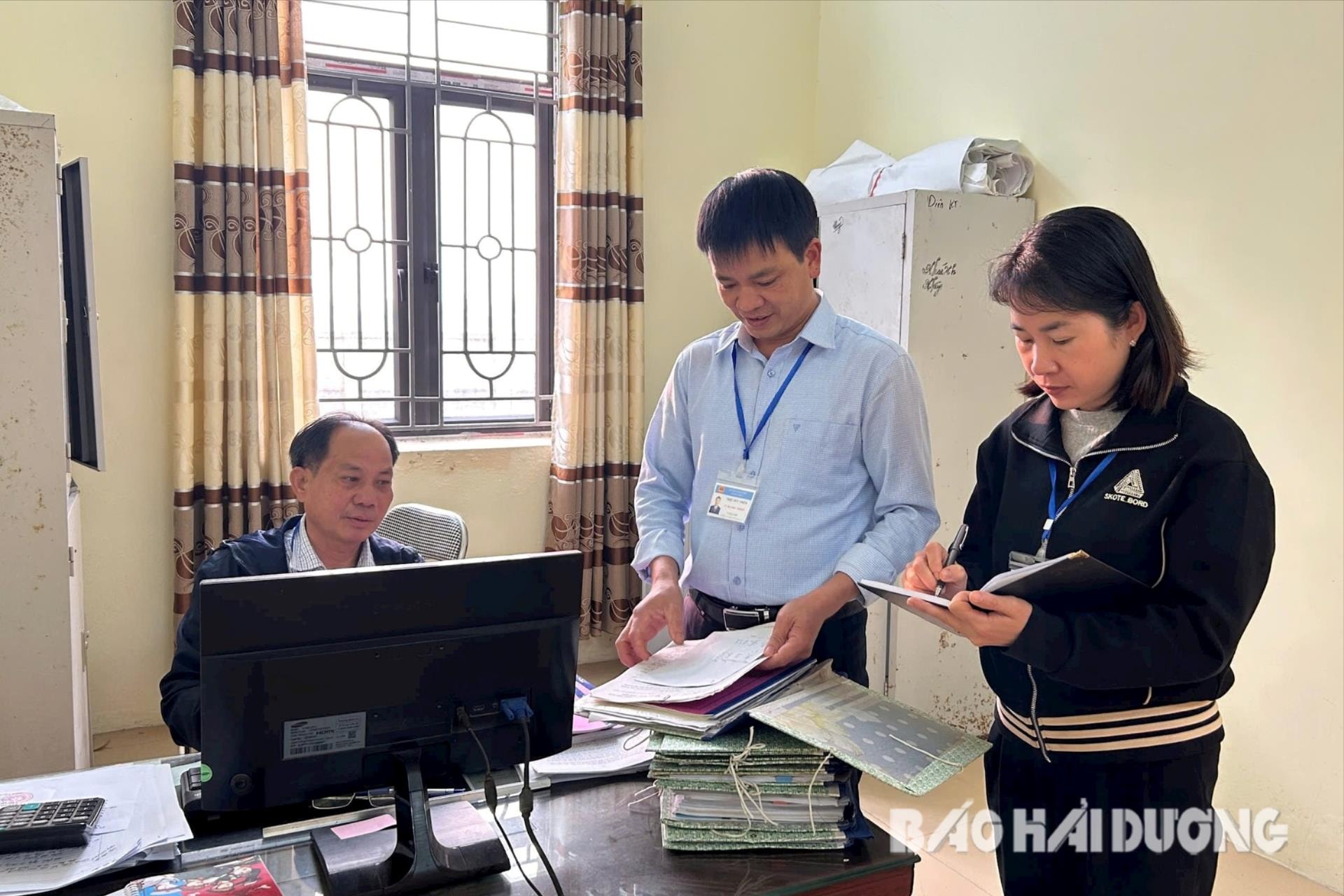
When reorganizing commune-level administrative units and ending the operation of the district level, along with the existing commune-level officials and civil servants, a large number of district-level officials and civil servants will be transferred to the grassroots level. Therefore, localities need to focus on the arrangement and placement of officials and civil servants so that the new organization and apparatus operate smoothly, efficiently, and effectively.
Between 2019 and 2024, Thanh Ha district merged 13 communes into 6. According to the Thanh Ha District Party Committee leadership, the arrangement and utilization of cadres received high consensus from officials, civil servants, and the people. However, a small number of cadres expressed concerns about being demoted from head to deputy, or being transferred from one unit to another, requiring longer commutes, a new work environment, and new tasks.
“To date, no problems have arisen in the district regarding the arrangement of officials in the merged localities. The district's experience shows that it is necessary to do a good job of ideological work, create consensus, promote democracy, objectivity, and fairness in evaluating, assigning, and arranging the team of officials and civil servants. Each official and civil servant also needs to proactively promote the role of a Party member, correctly understand their position and responsibility with regard to the new tasks assigned to them,” added Comrade Pham Van Hung, Standing Deputy Secretary of the Thanh Ha District Party Committee.
Along with Thanh Ha district, when rearranging commune-level administrative units, other localities in the province have arranged and utilized cadres in accordance with the procedures and regulations of the Central Government and the province. Many localities have implemented solutions to prevent the emergence of parochialism and localism among cadres and civil servants. This includes arranging key cadres and heads of political and social organizations in a way that ensures harmony between the former localities. Some places have transferred and appointed heads of Party committees and governments who are cadres from other districts or localities to the merged localities. Tu Ky district has also proactively implemented the "horizontal" transfer and rotation of many key cadres between communes and towns.
The right person for the right job.
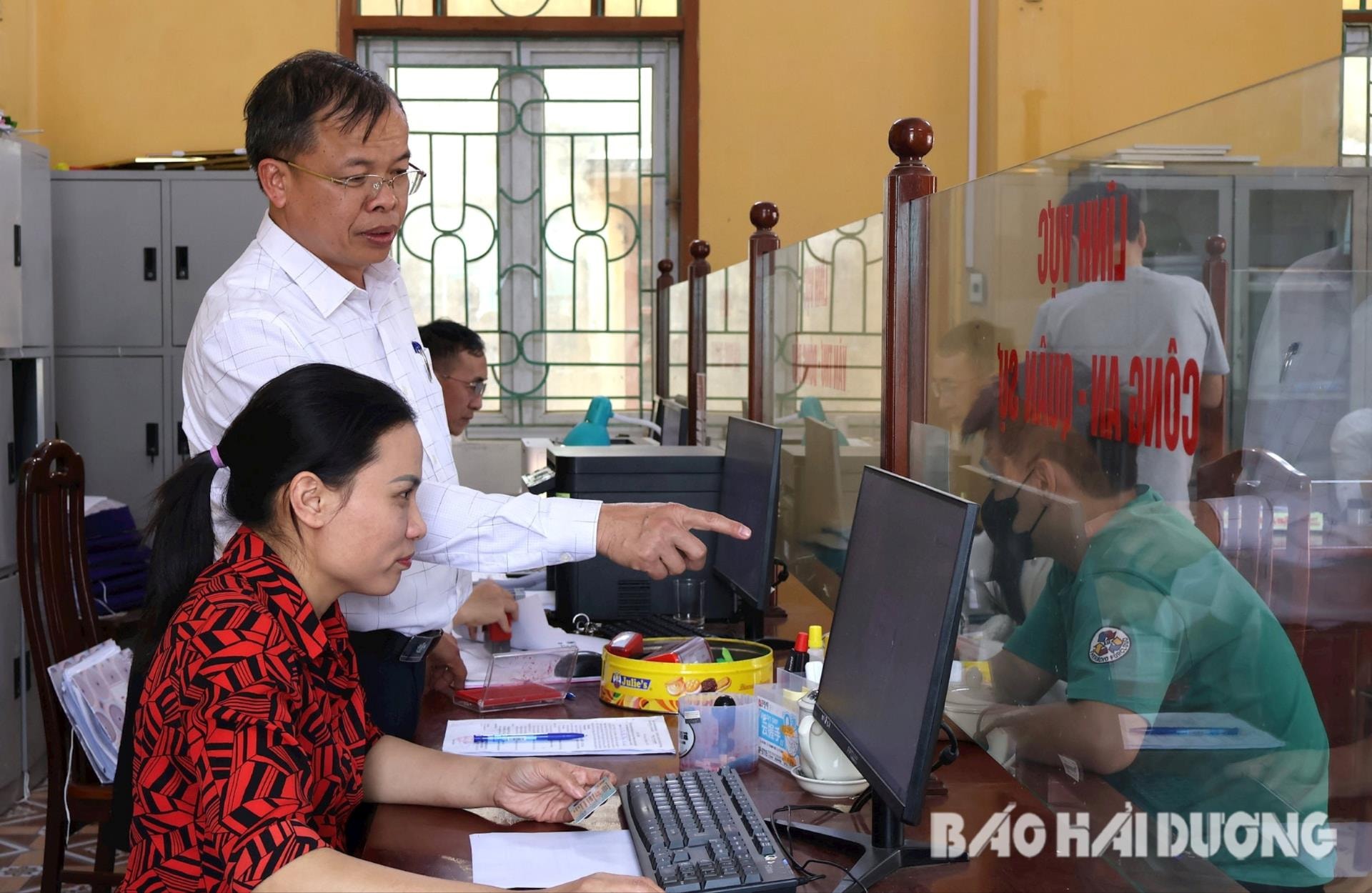
It is expected that most functions and tasks at the district level will be transferred to the commune level. With heavier responsibilities and higher demands, the current commune-level staff will likely struggle to meet the workload immediately. Therefore, along with strengthening the number of officials and civil servants at the provincial and district levels at the grassroots level, the competent authorities need to evaluate, screen, and effectively utilize the existing staff in administrative units when reorganizing commune-level administrative units.
Like many other localities in the province, Nam Sach district is taking steps to prepare for the reorganization of commune-level administrative units. According to Mr. Dang Van Duy, Head of the District's Department of Internal Affairs, to meet the demands of the new work, commune officials and civil servants must proactively change and adapt. "As communes grow larger, the workload becomes more numerous and complex, especially in the context of current digital transformation, which will place much higher demands than before. This requires commune officials and civil servants to change their mindset and working methods, with a spirit of working closer to the people and directly with them," Mr. Duy explained.
According to investigations by reporters from Hai Duong Newspaper in many localities, the percentage of commune officials and civil servants with formal university degrees has increased, reaching 30% in some areas. A large proportion of those with part-time degrees are also quite old, and many wish to retire early when commune-level administrative units are reorganized. Therefore, if additional district-level officials and civil servants are added, the commune-level workforce will be stronger.
Regarding whether the criteria of graduating from a full-time or part-time university program should be used as a basis for evaluating and assigning current commune-level officials and civil servants, Mr. Dang Dinh Chien, former Deputy Head of the Party Building Department at the Hai Duong Provincial Political School, stated that when selecting commune-level officials, an evaluation should be conducted on all aspects: educational qualifications, capabilities, and practical experience. The assessment of official quality, in addition to professional qualifications, must also be based on practical experience such as the level of task completion and the ability to perform official duties over the past 3-5 years. Mr. Chien believes that personnel management at this time needs to be democratic, open, transparent, and ensure the right person is in the right job to guarantee the effective operation of the new organizational structure. "The selection and placement of officials and civil servants also need to take into account factors such as dedication and competence. Dedication here refers to enthusiasm and responsibility for the work. A government apparatus that is close to the people requires officials to have such dedication. And competence refers to vision, political awareness, and the ability to oversee the work in order to plan and propose tasks and solutions to promote local development," Mr. Chien stated.
Up until now, localities have only attracted talented and highly skilled personnel to the provincial and district levels, but there has been no separate mechanism to attract them to the commune level.
Paying attention to redundant officials and civil servants.
When reorganizing commune-level administrative units and abolishing the district level, a significant number of commune-level officials and civil servants will retire early, retire permanently, or resign. This is necessary to streamline the administrative apparatus in a substantive manner, achieving the set goals.
According to the Central Government's requirements, the maximum number of officials and employees in the newly reorganized commune-level administrative units shall not exceed the total number of officials and employees present in the commune-level administrative units before the reorganization and the number of district-level officials and employees assigned to work in the new commune-level administrative units. This number will gradually decrease over a period of 5 years from the date the resolution on the reorganization of each administrative unit takes effect.
Compared to the periods from 2019-2021 and 2023-2025, the current restructuring of administrative units is more favorable. Government Decrees 178/2024/ND-CP and 67/2025/ND-CP on policies and regulations for officials, civil servants, public employees, and the armed forces in the implementation of the restructuring of the political system's organizational apparatus fully cover all subjects and provide maximum support to those affected by the restructuring and streamlining of the apparatus. The draft Law on Officials and Civil Servants (amended), currently under consultation, also proposes eliminating the distinction between officials and civil servants at the commune level and other levels. This will facilitate the deployment and rotation of officials and civil servants between levels; at the same time, the mechanisms and policies for officials and civil servants at the commune level will be improved compared to the current situation.
Leaders of some localities also suggested that, to facilitate the restructuring and streamlining of the administrative apparatus, the central government could research and consider expanding the scope of support under Government Decrees 178/2024/ND-CP and 67/2025/ND-CP to include officials, civil servants, and public employees with more than 10 years of service, with appropriate support levels.
According to Comrade Nguyen Thi Viet Nga, Provincial Party Committee member and Deputy Head of the Provincial National Assembly Delegation, along with doing a good job of information dissemination and ideological work to ensure that cadres and civil servants agree and voluntarily sacrifice political and material interests to serve the revolution of streamlining the organization and apparatus, at the macro level, the Central Government and localities need to have more mechanisms and policies to support the development of the private economic sector, including small and medium-sized enterprises and family businesses, in terms of administrative procedures, credit, taxes, etc., to contribute to attracting labor and creating jobs for those retiring or leaving the state sector when the apparatus is reorganized and streamlined. "Up until now, localities have only attracted talented and highly qualified personnel to the provincial and district levels, but there has been no separate mechanism to attract them to the commune level. As the requirements for commune-level officials and civil servants become higher, provinces and cities also need to supplement mechanisms and policies to attract capable people to work at the grassroots level," suggested the Deputy Head of the Standing Committee of the Provincial National Assembly Delegation.
According to the Hai Duong Provincial Department of Internal Affairs, the province currently has 4,203 commune-level officials and civil servants, including 2,192 officials and 2,011 civil servants. In terms of age, 675 officials (31%) and 224 civil servants (11%) are over 55 years old. Regarding professional qualifications, 2,038 officials (93%) and 1,909 civil servants (95%) hold university or postgraduate degrees.
Source: https://baohaiduong.vn/lam-gi-de-cac-don-vi-hanh-chinh-cap-xa-hoat-dong-hieu-qua-sau-sap-nhap-bai-2-nang-tam-can-bo-co-so-408902.html





































































Comment (0)