

From colorful plants to perennial plants
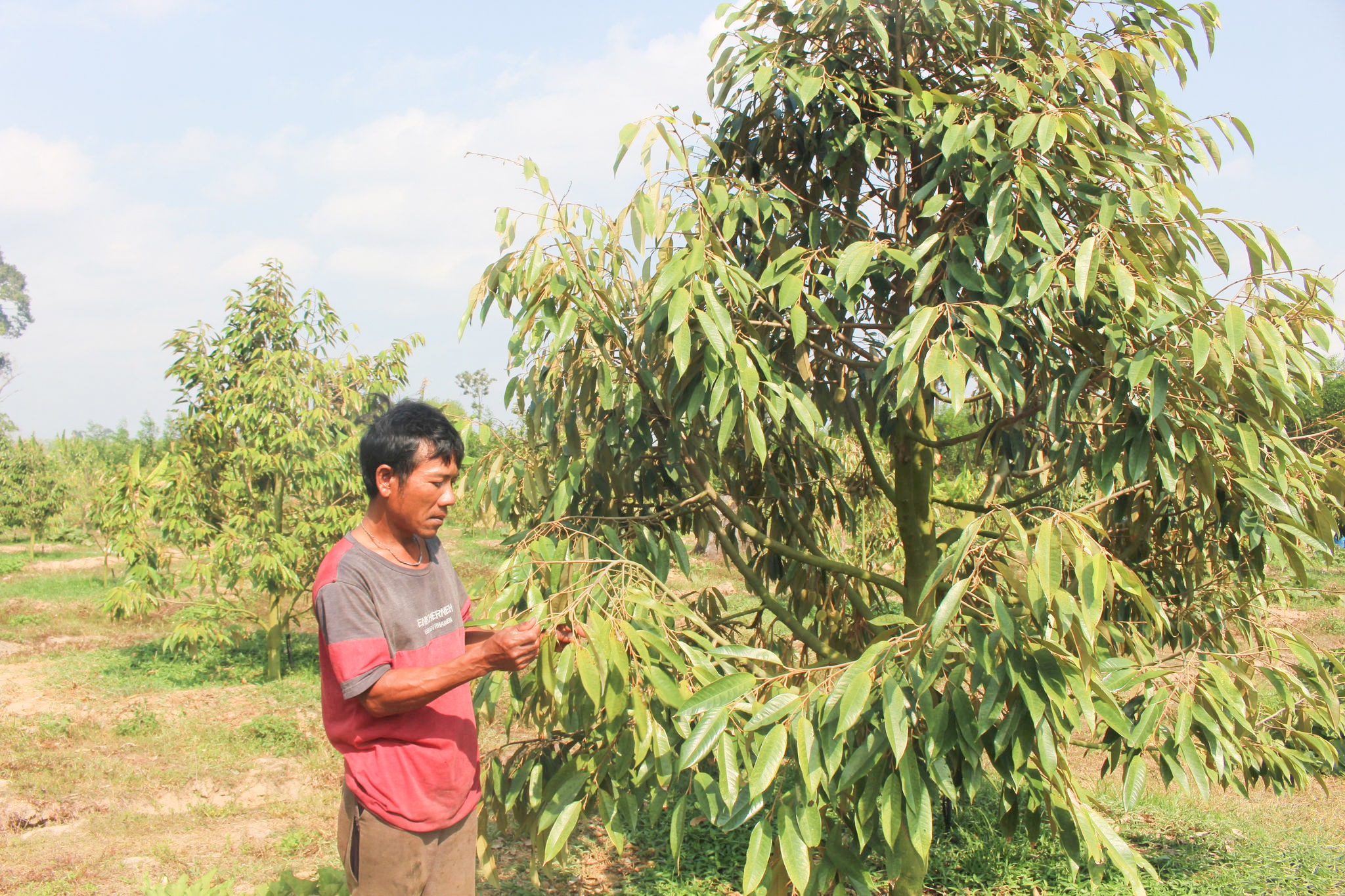
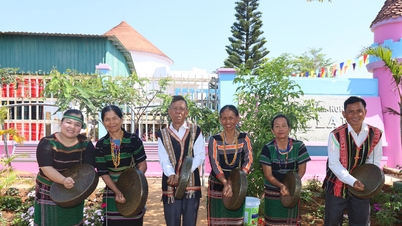
Dong Giang is a highland commune inhabited primarily by the K'ho ethnic minority. Previously, besides rice, the main crop, many households mainly cultivated corn, cassava, beans, or cashew nuts using traditional methods, resulting in low economic efficiency. In recent years, thanks to a change in production mindset, many households have boldly switched to crops with higher economic value.
Mr. B'Rông Thơm, from Hamlet 2, is one of the pioneering households in the area to switch crops. Since 2023, his family has converted nearly 2 hectares of land previously used for growing cashew trees and old cashew trees to coffee and durian cultivation. According to Mr. Thơm, although the initial investment costs were quite high, the results have been promising, with a stable market. Not only is he hardworking, but he also proactively seeks out neighboring communes to learn about coffee and durian cultivation techniques to apply to his family's orchard.
Similarly, Mr. K'Van Diem in Hamlet 1 has also converted nearly 2 hectares of his vegetable crops to coffee and durian cultivation for about two years now. In addition, his family also grows 2 sao (approximately 0.2 hectares) of wet rice in the Sa Lon field. Mr. Diem said that previously, his family mainly grew cashew trees, intercropping them with corn and beans under the trees. Realizing the low economic efficiency, he decided to switch crops. This year, the orchards are preparing for their first harvest. However, the initial cultivation process has encountered many difficulties; many areas of his family's coffee and durian trees were affected by flooding last year, weakening the plants, requiring intensive efforts to recover and restore them.
Forming specialized production zones
According to statistics from the People's Committee of Dong Giang commune, by the end of 2025, the entire commune will have more than 1,740 hectares of perennial crops and more than 2,120 hectares of annual crops. The locality is focusing on guiding people to develop crops suitable to the soil conditions and market demand. Mr. Bo Rong Thiet - Chairman of the Farmers' Association of Dong Giang commune, said that the entire commune currently has about 62 hectares of coffee and about 440 hectares of durian, concentrated most heavily in the Buon Cui area, a specialized durian farming region with about 400 hectares.
This area has abundant water resources and red basalt soil, as well as sandy loam soil, making it very suitable for growing perennial crops. “Previously, people mainly grew corn and cassava, and production was fragmented. In recent years, the local authorities have been guiding the restructuring of crop patterns, encouraging people to develop high-value economic crops such as durian, coffee, and rubber. Many K'ho ethnic minority households have also boldly changed their farming methods, gradually increasing their income,” Mr. Thiet said.
Currently, Dong Giang commune is encouraging farmers to participate in professional associations, including the Buon Cui durian farming association and the Hoa Tien rice farming association. Through these associations, farmers receive training in crop care techniques, staggered flowering management, and safe production practices to improve product quality and mitigate the problem of "bumper harvests leading to low prices"...
According to the People's Committee of Dong Giang commune, the commune has developed a specialized durian cultivation area in Buon Cui, and has currently been granted 4 planting area codes. The locality is developing the area towards registering geographical indications and traceability to enhance product value and expand the consumer market. At the same time, it maintains a stable 400 hectares of rubber plantations, creating conditions for farmers to replant rubber trees to improve productivity and quality.
Source: https://baolamdong.vn/dong-bao-k-ho-manh-dan-chuyen-doi-co-cau-cay-trong-441090.html

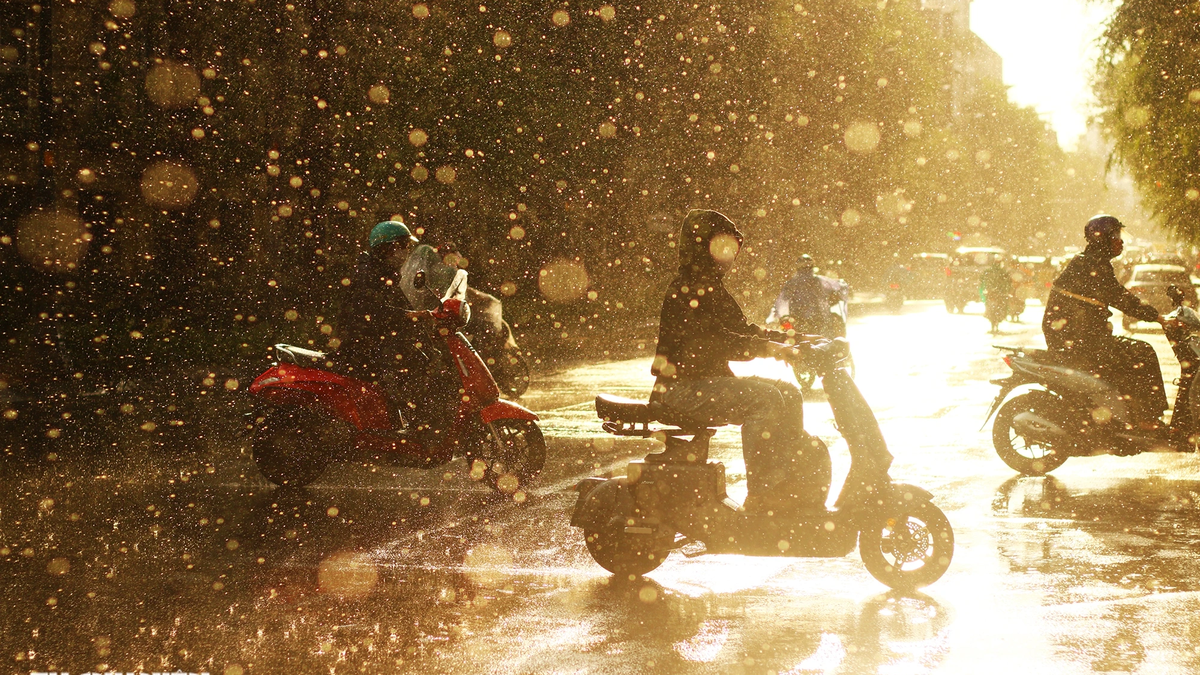
![[Image] Hanoi's urban life under the challenge of a "scorching hot" environment](https://vphoto.vietnam.vn/thumb/1200x675/vietnam/resource/IMAGE/2026/05/25/1779706979265_nang-nong-t5-2026-minh-duy-7-4636-jpg.webp)



![[Image] Close-up view of the interchange connecting the two expressways and Long Thanh Airport.](https://vphoto.vietnam.vn/thumb/1200x675/vietnam/resource/IMAGE/2026/05/25/1779703378210_ndo_br_z7863716673926-224453a31600126cce10622af6290afd-4549-jpg.webp)






































































Comment (0)