

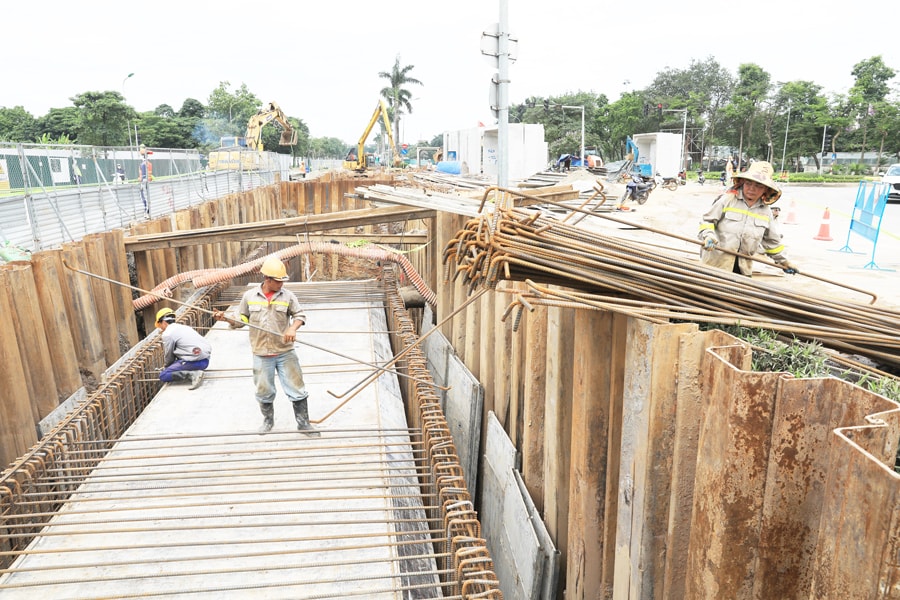
Expedite construction progress.
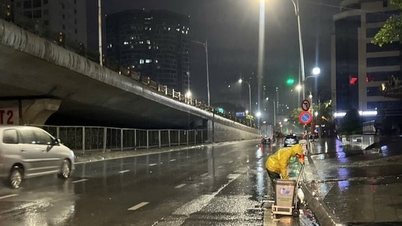
In late May 2026, along Quang Trung Street (Cua Nam Ward), the construction of the project to address localized flooding in the inner city was bustling day and night. With the peak of the rainy season approaching, construction teams worked continuously, closely monitoring each section of the road and each item of underground drainage pipe installation, creating a rapid pace of work under the construction site lights.
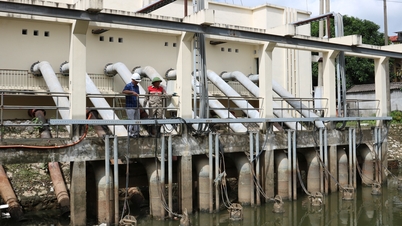
Vo Quynh Nam, Deputy Head of the Technology and System Management Department ( Hanoi City Infrastructure Management Center, Hanoi Department of Construction), affirmed that Quang Trung Street is identified as a crucial project for addressing localized flooding in the inner city. This area plays a particularly important role in the drainage system, as the entire sewer system in the area converges on this street before leading to Bay Mau Lake.
From May 23rd, the city adjusted its traffic management plan, allowing construction to continue day and night on many streets, including Quang Trung Street, to compensate for time lost due to weather and other external factors. Continuous construction is considered a key solution to ensure completion before the rainy season.
Mr. Mai Van Quy, project manager of 68 Construction, Service and Trade Joint Stock Company, said that previously, construction on Quang Trung street was only permitted at night, from 10 PM to 5 AM the following morning, with about 4 construction teams. However, after May 23rd, the city and the Department of Construction allowed construction to continue day and night. The contractor has organized about 10 construction teams working simultaneously to accelerate the progress of the entire route.
To date, the volume of sewer installation on Quang Trung Street has reached approximately 95%. Several items under the Project for Localized Flood Control in the Inner City, such as Ly Thai To, Tran Nguyen Han, Le Lai streets and the area around the State Bank Square, have also completed road surfacing or are entering the final stages of completion. According to assessments by specialized agencies, the Project for Localized Flood Control in the Inner City is basically meeting the set schedule, striving to complete sewer installation and road surface restoration on time.
Establishing a comprehensive flood control infrastructure.
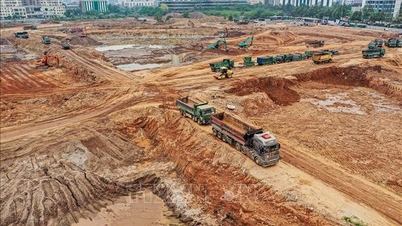
Across the city, Hanoi is simultaneously implementing 10 emergency flood control projects with a total investment of nearly 5,600 billion VND, focusing on addressing serious flooding hotspots in the inner city. In addition, the city is adding 3 new projects with a total investment of nearly 1,400 billion VND, expected to be completed in the 2026-2027 period.
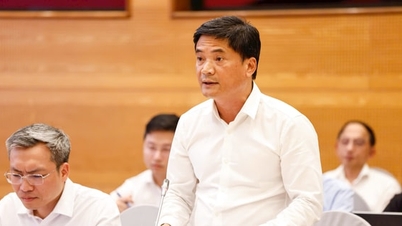
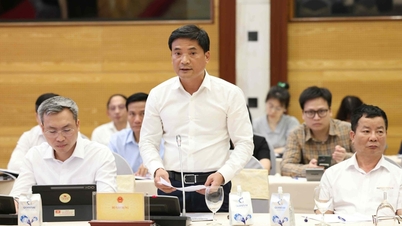
According to Le Van Du, Head of the Water Supply and Drainage Infrastructure Management Department (Hanoi Department of Construction), after the heavy rains in 2025, the entire city recorded approximately 200 flooded areas. A review revealed that the main cause stems from the discrepancy between the old design standards and the increasingly frequent extreme rainfall events.
The current drainage plan is based on a design rainfall of 310mm over two days. However, in reality, rainfall has reached 500-600mm, far exceeding the calculated capacity of the existing system and causing localized overload in many areas. Besides climatic factors, the progress of investment according to the plan is limited. The entire drainage system has only reached about 20% of the plan, with many catchment areas lacking comprehensive investment. The system of regulating reservoirs and pumping stations is insufficient, leading to a heavy reliance on natural drainage and suburban drainage systems.
Associate Professor Dr. Nguyen Hong Tien, former Director of the Department of Technical Infrastructure ( Ministry of Construction ), believes that the simultaneous implementation of urgent projects is necessary in the current context, but long-term effectiveness depends on the ability to connect the systems.
Along with immediate solutions, Hanoi is gradually shifting its thinking in drainage planning towards a more sustainable approach. Instead of focusing solely on rapid drainage, the infrastructure system is oriented towards the principles of water retention, storage, and regulation within the urban area. According to Mr. Le Van Du, rainwater is not only a factor causing flooding that needs to be drained, but also a resource that needs to be exploited, stored, and reused under appropriate conditions. Therefore, regulating lakes, underground reservoirs, and canal systems are being implemented with a multi-functional approach.
The Phu Do regulating reservoir is one of the key projects, contributing to reducing flooding in the western part of the inner city while completing the water regulation structure according to the long-term plan until 2030, with a vision to 2050. Along with this, projects to replenish water for the To Lich River and the drainage system in the West Lake area are being implemented, aiming for a balance between the rainy and dry seasons, and between drainage and water storage.
According to Associate Professor Dr. Nguyen Hong Tien, this trend is approaching the "sponge city" model, where urban areas not only drain water but also retain, infiltrate, and reuse it under controlled conditions. This approach has been adopted by many countries in the context of increasingly extreme climate change. For this model to be effective, three elements need to be synchronized: hard infrastructure, water storage space, and operational management technology. Lacking any one of these three elements will reduce the overall effectiveness of the system.
In its planning for the period 2026-2030, Hanoi is developing a comprehensive plan to address inner-city flooding, ensuring synchronization between existing systems and new constructions, while also strengthening the application of digital technology in modeling, forecasting, and operating the drainage system.
From the projects that the city is accelerating, we can see that flood control is no longer just a temporary solution, but is becoming a component of a long-term planning strategy, aiming towards a sustainable and adaptable development vision for the capital city for decades to come.
Source: https://hanoimoi.vn/dong-bo-giai-phap-nang-cao-nang-luc-thoat-nuoc-1103855.html

![[Photo] General Secretary and President To Lam presides over a meeting with the Central Organizing Committee.](https://vphoto.vietnam.vn/thumb/1200x675/vietnam/resource/IMAGE/2026/06/03/1780482764658_a1-bnd-4741-3342-jpg.webp)



![[Photo] Secretary of the National Assembly Party Committee, Chairman of the National Assembly presides over the meeting of the Standing Committee and Executive Committee of the National Assembly Party Committee.](https://vphoto.vietnam.vn/thumb/1200x675/vietnam/resource/IMAGE/2026/06/03/1780480353201_ndo_br_bnd-2585-jpg.webp)













![[Photo] First session of the 14th Congress of the Vietnam Trade Union](https://vphoto.vietnam.vn/thumb/1200x675/vietnam/resource/IMAGE/2026/06/03/1780465947883_ndo_br_img-3852-jpg.webp)


























![[Video] Sunset at Lap An Lagoon – Where the sun sets over the fishing nets](https://vphoto.vietnam.vn/thumb/1200x675/vietnam/resource/IMAGE/2026/05/31/1780192137701_beach-landscape-sea-water-nature-grass-745871-pxhere-com.jpeg)


























Comment (0)