Gold prices surge, repeatedly setting new records.
The global gold market has just experienced a particularly volatile trading week as the price of the precious metal accelerated sharply and repeatedly set new historical highs, far surpassing the previous record of $4,381/ounce recorded on October 17th.
During the trading week of December 22-26, the spot gold price successively conquered important psychological milestones. After surpassing $4,400 per ounce, the price of gold continued its strong surge and officially reached $4,500 per ounce - a milestone that few financial institutions had previously dared to include in their baseline scenarios.
At one point during the week, the spot gold price surged above $4,545 per ounce, before closing the week at $4,535 per ounce. This was the highest closing price in the precious metal's trading history. Simultaneously, the February 2026 gold futures price also rose to $4,552 per ounce, reflecting strong market expectations for a medium-term trend.
Since the beginning of the year, the price of gold has increased by nearly 72.3%, equivalent to an increase of approximately $1,910 per ounce. This is a rare increase in the history of the modern gold market, making 2025 one of the best-performing years for this precious metal.
In the domestic market, gold prices are rising more slowly than in the global market, but are also trending towards new highs. SJC gold bars are close to 160 million VND/ounce, while gold rings from many major brands have officially surpassed the peak of 159.5 million VND/ounce (selling price) recorded in October.
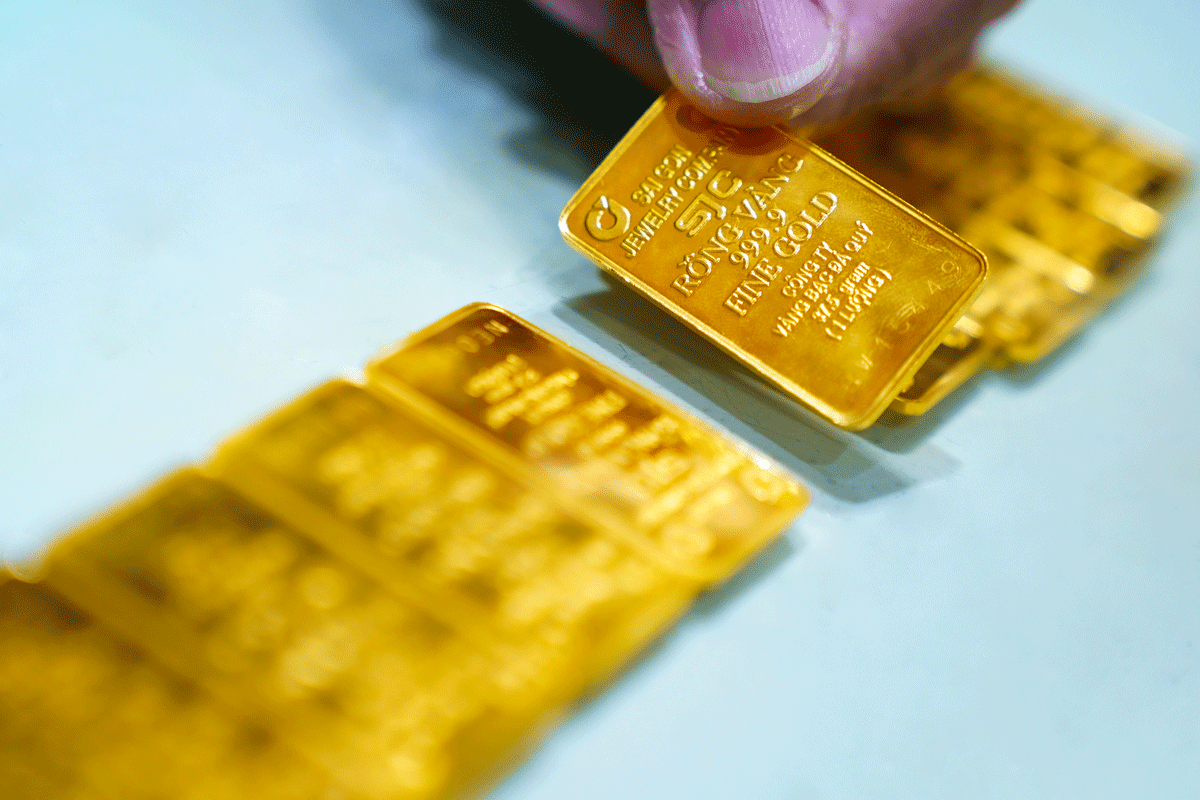
The price of gold bars and gold rings has risen to new record highs. Photo: HH
Not only gold, but other precious metals also saw sharp increases. Silver prices recorded a rare surge, rising by nearly $12.2/ounce, equivalent to an 18% increase, to $79.27/ounce. Domestically, the selling price of silver reached approximately 82 million VND/kg. Even on the black market, some places were offering silver at 93-100 million VND/kg, reflecting scarcity and strong speculative sentiment.
Platinum prices also surged to a record high in the latest trading session, extending a historic rally that began late in the year.
The rise in gold and some other precious metals is supported by safe-haven demand amid escalating geopolitical tensions and a weakening US dollar.
According to analysts, the sharp rise in gold and silver prices last week was also influenced by technical factors. Pent-up demand during the Christmas holiday exploded as soon as the market reopened. In addition, the trend of countries increasing their gold and silver stockpiles while restricting exports further exacerbated concerns about supply.
The upward trend is expected to continue into 2026.
Beyond just short-term trends, many major financial institutions believe that the upward trend in gold is structural and could extend into 2026.
In its 2026 Commodity Outlook report, Goldman Sachs affirmed that gold continues to be the number one preferred long-term commodity. The bank forecasts that the spot price of gold could reach $4,900 per ounce by the fourth quarter of 2026, or even higher if there is a strong influx of investment from individual investors and central banks.
According to Goldman Sachs commodity strategists, gold is the best option in the overall commodity market next year, especially amid geopolitical instability, technological and artificial intelligence competition between the US and China, and waves of adjustments in the global energy supply chain.
Goldman Sachs' base scenario includes robust global GDP growth and the Federal Reserve cutting interest rates by a total of approximately 50 basis points in 2026. This environment is considered particularly favorable for precious metals, which typically benefit from monetary easing cycles.
The bank highlighted two structural trends. First, on a macro level, commodities—especially metals—will continue to be at the heart of the geopolitical and technological power struggle between the US and China. Second, on a micro level, the waves of energy supply adjustments beginning in 2025 will continue to significantly impact commodity markets.
Among the commodities analyzed, Goldman Sachs was the most optimistic about gold, primarily due to sustained buying demand from central banks. The bank forecasts that central banks will purchase an average of around 70 tonnes of gold per month in 2026 – approximately four times the average before 2022.
Three main reasons were cited: the freezing of Russia's foreign exchange reserves in 2022 changed how emerging countries perceive geopolitical risks; the proportion of gold in the reserves of many central banks, especially China, remains low; and central bank demand for gold is at record highs.
Furthermore, Goldman Sachs also warned of the possibility of gold prices rising beyond the baseline scenario if the trend of asset diversification spreads to individual investors. Currently, gold ETFs account for only about 0.17% of US investors' portfolios, lower than the peak in 2012. It is estimated that for every 1 basis point increase in the gold weighting within a portfolio, the price of gold could rise by approximately 1.4%.
Goldman Sachs forecasts that gold prices could reach a new peak around $4,630 per ounce in the third quarter and advance to the $4,900 per ounce range by the end of the fourth quarter of 2026.
Despite the positive outlook, experts also note that gold prices have risen very sharply in a short period of time and technical corrections are inevitable.
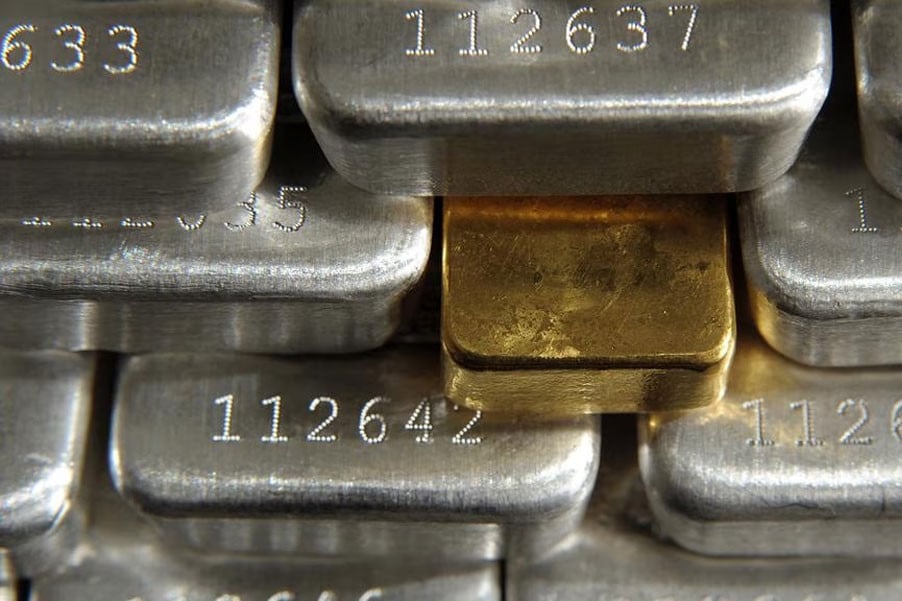
Global Silver Seismic Shock: Prices Soar, Dominating Gold. Silver prices surged by over 10% in a single session, repeatedly reaching record highs and showing no signs of stopping, reaching 82 million VND/kg domestically. This is an unprecedented development, with silver outperforming gold even though gold prices have seen their strongest increase since 1979.
Source: https://vietnamnet.vn/dong-luc-dai-han-cua-vang-va-du-bao-cho-nam-2026-2476880.html



![[Photo] General Secretary and President To Lam presides over a meeting on preparations for the review of one year of operation of the three-tiered government system.](https://vphoto.vietnam.vn/thumb/1200x675/vietnam/resource/IMAGE/2026/06/02/1780391821195_a1-bnd-4595-9717-jpg.webp)
































































































Comment (0)