

 |
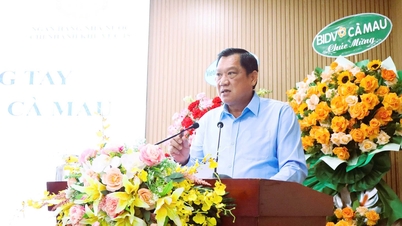
| The bank not only provides loans but also supports and advises farmers to improve the efficiency of capital utilization. |
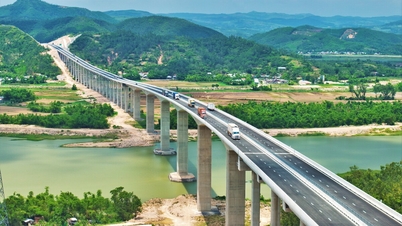
In the Central Highlands after the reunification of the country on April 30, 1975, the memory of a "remote and difficult" land still lingers in the minds of those who once knew it. But now, that "dead land" has faded into the past. The red dirt roads of yesteryear have been extended with smooth asphalt, winding through villages, crossing hillsides, and leading to vast areas of specialized industrial crop cultivation. The steep mountain passes like An Khe and Mang Yang, once enough to send shivers down anyone's spine, are gradually being replaced by expressway projects such as Nha Trang - Buon Ma Thuot and Pleiku - Quy Nhon, which are taking shape and being completed...
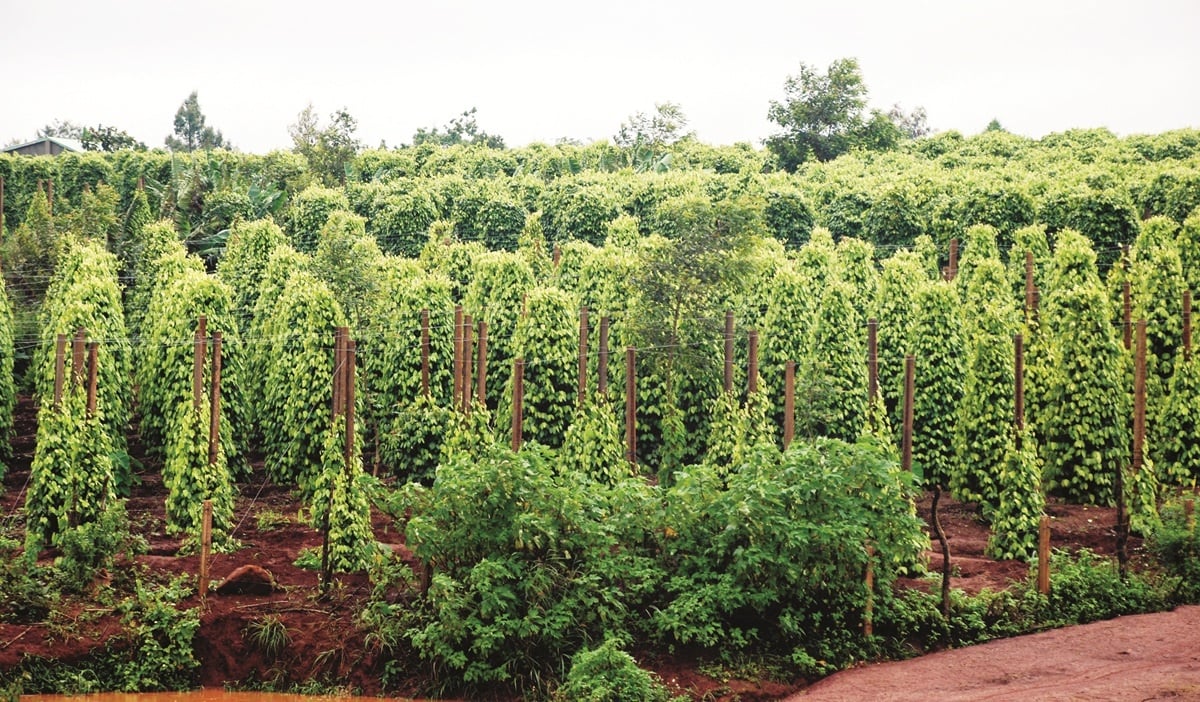
This season, amidst the vast forests, the fragrance of late-blooming coffee flowers gently wafts through the air. Wind blows through pepper plantations, durian orchards, avocado and passion fruit gardens… carrying the breath of the “land of steel” from the resistance war, now vigorously reviving. In this space, a silent but persistent flow of bank credit nurtures each seed of life, each harvest of sweet fruit, contributing to the rebirth of a land that suffered so much loss after the war.
***
The Central Highlands was once a place that witnessed brutal times. In the memories of the older generation, it was a fierce battlefield, marked by pivotal battles such as the Central Highlands Campaign of 1975, the Battle of Buon Ma Thuot (March 10-11, 1975), a strategic "crucial blow" that caused the collapse of the old regime's defense system in the Central Highlands, paving the way for the great victory of that spring.
This place was once a "forest sheltering soldiers," where the red soil was soaked with sweat and blood. After reunification, the Central Highlands gradually embarked on a journey of reconstruction with countless difficulties: lack of capital, lack of infrastructure, and a lack of confidence in commodity production. Then, as time passed, along with the major policies of the Party and the State, bank capital began to penetrate even the most remote villages. Initially, these were just small loans, but over the years, that capital grew, paving the way for the formation of a commodity-based agricultural economy .
In Dak Lak , known as the "coffee capital" of the country, coffee hills stretch out like an endless green carpet. In specialized production areas like Cu M'gar and Cu Kuin, harvest season is a season of smiles. Sacks overflowing with coffee, bustling drying yards, the sounds of bean-separating machines, and the rumble of farm trucks create a vibrant rhythm of life amidst the vast forest.
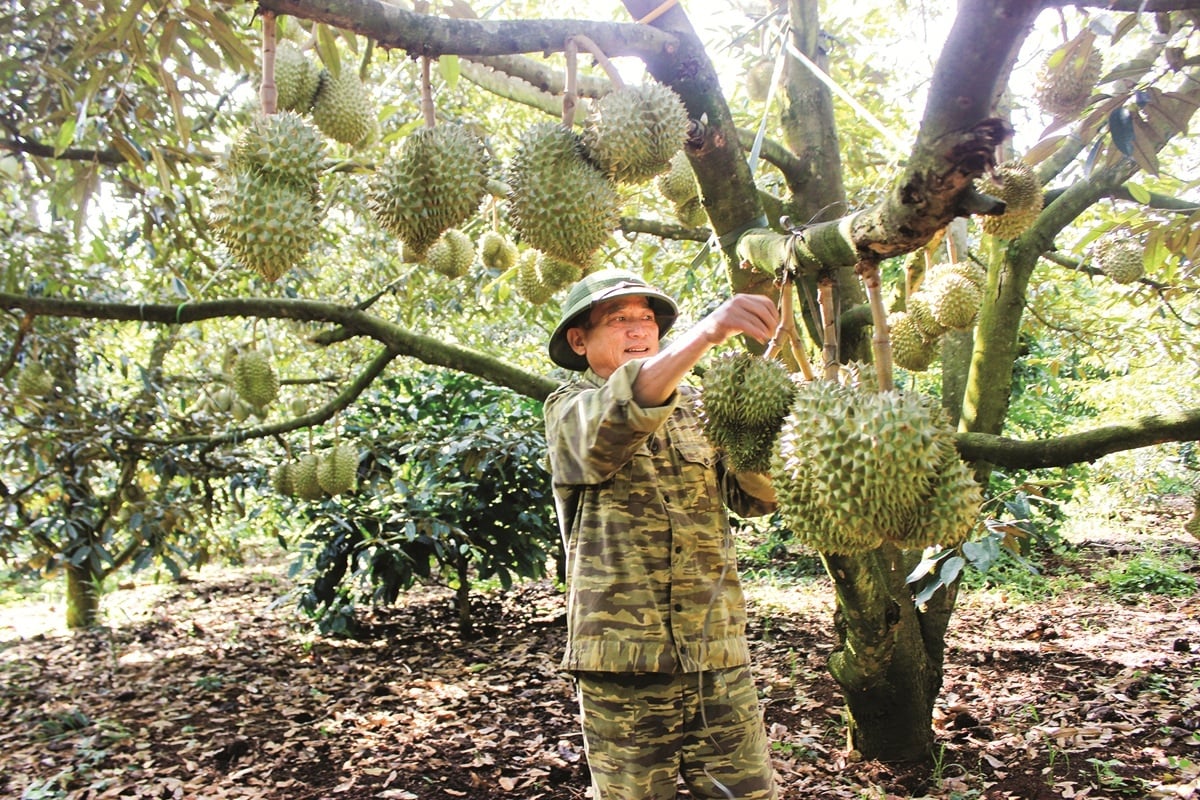
Ms. H'Duh, from Buon Tieu hamlet, Ea Tieu commune (Dak Lak province), an Ede ethnic farmer, stood amidst her coffee plantation and slowly recounted: “In the past, my family was very poor, only working as laborers for the state farm. We wanted to grow coffee but lacked capital and land. Thanks to my parents who gave us a small plot of land, we saved up to buy more, and then got a loan from the bank, so we dared to start. From just a few acres initially, our family now has over 2.5 hectares of coffee, plus pepper and durian. Life is much less difficult now.” She then gently stroked the growing durians, as if cherishing the fruits of years of hard work. Each coffee bean is the culmination of a journey of the land, the people, and the timely investment.
Mr. Le Van Thinh, Director of Agribank Dak Lak, shared: “We always consider agriculture, farmers, and rural areas as our focus. For long-term industrial crops like coffee, pepper, and rubber, people need large and stable capital. The bank not only provides loans but also accompanies and advises farmers to produce efficiently, improve product quality, and aim for sustainable development.” Not only coffee, but in recent years, the Central Highlands has witnessed a strong shift towards high-value crops.
In Krông Pắc commune (Đắk Lắk province), lush green durian orchards are becoming the "green gold" of the local people. Ms. Bành Thị Thu, a native of Nghệ An province who settled here more than two decades ago, shared with enthusiasm: "Growing durian requires significant investment, from seedlings to irrigation systems. Thanks to bank loans, my family boldly ventured into it. Now, we earn billions of dong annually, and our lives have completely changed." Besides growing durian, Ms. Thu's family has also invested in machinery to process frozen durian for export. "Each season, we purchase over 1,000 tons. The best quality is exported fresh, and the rest is processed. We owe our success today to the great support from the bank," Ms. Thu said.
In Krông Năng, intercropping coffee with macadamia trees is spreading and proving highly effective. Rows of macadamia trees interspersed among coffee plants utilize the land efficiently while increasing income. Mr. Nguyễn Văn Hùng shared: “With a loan, I switched to intercropping. Income is more stable, and I'm no longer dependent on just one crop. Especially when agricultural product prices are low, bank loans are like a 'lifeline,' helping me to cover fertilizer, irrigation, and labor costs in a timely manner.” Bank loans are also spreading strongly to Gia Lai, where vast sugarcane fields stretch out, and avocado and passion fruit orchards are laden with fruit.
 |
Mr. Pham Van Tu, a passion fruit farmer, shared: “Previously, we grew cassava, which yielded low income. Thanks to bank loans, our family switched to passion fruit and invested systematically. Now our economic situation has improved, and our children are receiving a full education.” In Dak Doa (Gia Lai), Ms. Phan Thi Tuyet said: “Our family grows coffee, pepper, and also cultivates high-tech orchid seedlings, so we really need capital. Thanks to access to bank loans, we have the opportunity to expand production.” This is also the common story of thousands of farming households here, where bank credit has become a “lever” helping farmers rise to prosperity.
Mr. Ly Anh Dao, Director of SHB Gia Lai, said: “We focus our capital on key crops such as coffee, pepper, sugarcane, passion fruit… At the same time, we support processing businesses and build value chains. When the chain is formed, farmers are the direct beneficiaries.” In parallel, policy credit plays the role of an “extended arm” bringing opportunities to disadvantaged people, especially ethnic minorities.
Mr. Dao Thai Hoa, Director of the Vietnam Bank for Social Policies (VBSP) in Dak Lak province, said: “We bring capital directly to villages, helping the poor develop production. We not only provide loans but also guide them on how to use the capital effectively, thereby increasing their income and stabilizing their lives.” Mr. Hoa added that in 2025, the total outstanding loan balance of the branch will reach over 14,463 billion VND, a growth of 12.61%, with 252,006 customers still having outstanding loans. Even more commendable is the social impact that policy capital brings. During the year, 74,698 poor households, near-poor households, and other policy beneficiaries received loans; 23,350 workers found new jobs or maintained their employment; and 42,911 rural clean water and sanitation projects were built, contributing to improving living conditions for people in disadvantaged areas.
At the macro level, the involvement of the banking system has created a significant impetus for the Central Highlands economy. Mr. Nguyen Kim Cuong, Acting Director of the State Bank of Vietnam's Branch 11, emphasized: "The banking sector always closely follows the directives of the Governor of the State Bank of Vietnam, implementing them through credit institutions to prioritize capital for production and business, with a focus on agriculture and rural areas. Expanding credit goes hand in hand with quality control, ensuring efficiency and sustainability, contributing to the achievement of socio-economic development goals of the region and localities."
According to the Dak Lak Provincial Department of Agriculture, the sector continues to affirm its role as a "pillar" of the economy, with bank capital playing a crucial supporting role, creating momentum for a new phase of development. Therefore, the agricultural sector needs to continue overcoming limitations, promoting the development of concentrated production areas, improving quality, and aiming for large-scale production to serve processing and export.
As evening falls over the vast forest, the sunlight slowly descends upon the coffee plantations, painting the durian, avocado, and passion fruit orchards golden. The lively laughter and chatter of the harvest season mingle with the sounds of trucks carrying agricultural products away. Over half a century—a journey not long compared to history, but enough to transform this land.
From the fierce battlefields of the past, the Central Highlands today has become a major agricultural production region, with products reaching the world market. And in that journey, there is a never-ending flow: bank capital, silently seeping into the land and its people, nurturing bountiful harvests. Amidst the vast forests, that capital continues to flow, like a source of faith and hope, contributing to a prosperous, sustainable, and ambitious Central Highlands.
Source: https://thoibaonganhang.vn/dong-von-tuoi-xanh-dai-ngan-181393.html
![[Image] Hanoi's urban life under the challenge of a "scorching hot" environment](https://vphoto.vietnam.vn/thumb/1200x675/vietnam/resource/IMAGE/2026/05/25/1779706979265_nang-nong-t5-2026-minh-duy-7-4636-jpg.webp)
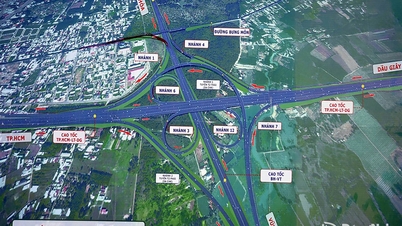
![[Image] Close-up view of the interchange connecting the two expressways and Long Thanh Airport.](https://vphoto.vietnam.vn/thumb/1200x675/vietnam/resource/IMAGE/2026/05/25/1779703378210_ndo_br_z7863716673926-224453a31600126cce10622af6290afd-4549-jpg.webp)







































































Comment (0)