

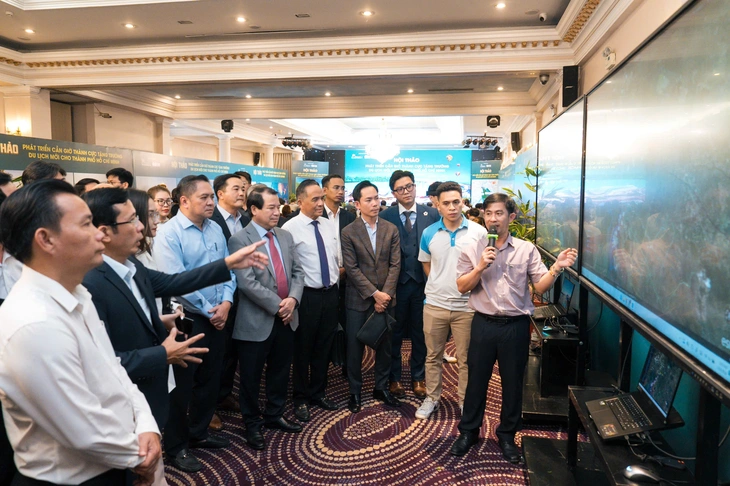
Delegates listen to a presentation of the digital map of the Can Gio area - Photo: HUU HANH
On the afternoon of January 29th, the Ho Chi Minh City Department of Tourism and Tuoi Tre newspaper jointly organized a seminar titled "Developing Can Gio into a New Tourism Growth Hub for Ho Chi Minh City," with the participation of leading departments, agencies, research institutes, and businesses.
The workshop was organized to discuss and clarify the tourism potential and find suitable solutions to promote Can Gio's development into a new tourism growth hub, aiming for high-quality, sustainable tourism products and services.
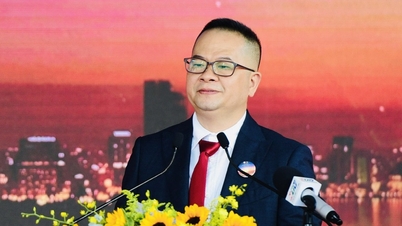
In his opening remarks, Mr. Tran Xuan Toan, Deputy Editor-in-Chief of Tuoi Tre newspaper, stated that the development space of Can Gio needs to be placed within the overall new development space of Ho Chi Minh City, with many special and pivotal factors.
In just the last six months or so, a series of mega infrastructure projects have been launched, such as the Ben Thanh - Can Gio railway line, the Can Gio bridge, the connecting route between the Ben Luc - Long Thanh expressway and the Rung Sac interchange, the Can Gio land reclamation mega-city project, and the planned sea-crossing road connecting Can Gio and Vung Tau…
Based on this foundation, Mr. Xuan Toan predicts that from now until 2030, the travel time between the center of Ho Chi Minh City and Can Gio could be shortened to less than 13 minutes, especially through metro lines. In the near future, international tourists arriving at Long Thanh airport will be able to easily connect to Can Gio for sightseeing and relaxation through the inter-regional infrastructure system.
"With its close proximity and large-scale transportation network, it will create a significant growth engine for Ho Chi Minh City in general and Can Gio in particular, especially in the tourism sector," Mr. Tran Xuan Toan emphasized.
This is also the reason why Tuoi Tre newspaper is organizing today's seminar.

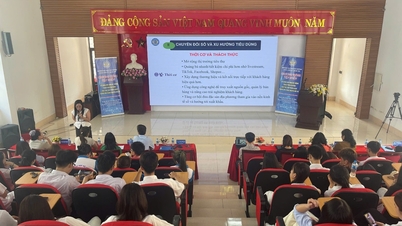
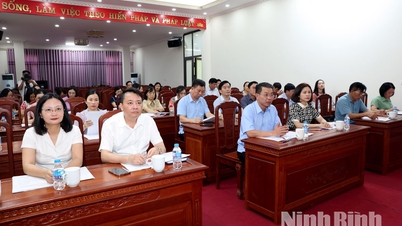
Participants in the seminar - Photo: QUANG DINH
In addition to the presentations, during the discussion session, speakers frankly exchanged views on issues such as: infrastructure development as a foundation for tourism and the economy ; diversification of eco-tourism, resort, and entertainment products; state management orientation in the development of Can Gio; solutions to attract investment; connecting Can Gio with Ho Chi Minh City and neighboring localities; and promoting Can Gio's image as a new tourist destination of Ho Chi Minh City.
Discussing ways to bring Can Gio to sustainable growth.

Mr. Nguyen Ngoc Vu - Secretary of the Party Committee of Can Gio Commune - Photo: HUU HANH
Attending the discussion were: Mr. Mai Trung Hung - Deputy Director of the Ho Chi Minh City Department of Construction; Ms. Huynh Ho Dai Nghia, M.Sc. - Faculty of History and International Relations - Ho Chi Minh City University of Social Sciences and Humanities; Mr. Le Hoang Chau - President of the Ho Chi Minh City Real Estate Association; and Ms. Nguyen Thi Hoa - Marketing Director of Vinpearl Joint Stock Company.
Speaking at the conference during the discussion session, Mr. Nguyen Ngoc Vu, Secretary of the Party Committee of Can Gio commune, stated that the goal of building Can Gio into a new growth pole should not only focus on rapid growth but also simultaneously address three core issues.
According to Mr. Vu, the first is to maintain a high but controlled rate of development; the second is to create superiority in investment and infrastructure development; and the third is to ensure a practical contribution to the economic development of the entire region and the entire economy. These are considered the three main pillars in the current development thinking of growth poles.
Can Gio currently has a total area of approximately 157 km², of which the majority is mangrove forest and a system of rivers and canals, accounting for about 60% of the natural area. This characteristic both creates a unique feature and serves as a fundamental element shaping the direction of ecotourism development in the locality.
According to Mr. Nguyen Ngoc Vu, many economic development projects have been and are being implemented in Can Gio district to create new growth drivers. A series of large-scale infrastructure and tourism projects have been identified as important highlights, contributing to preparing the foundation for the next phase of development.
Among the key projects are the Can Gio beach tourism project, the Ben Thanh - Can Gio metro line, and various bridge and transportation infrastructure projects connecting the area. These are considered major breakthroughs in infrastructure, enhancing connectivity between Can Gio and the central area of Ho Chi Minh City and surrounding regions.
Shifting mindset: from "resource exploitation" to ecosystem design.
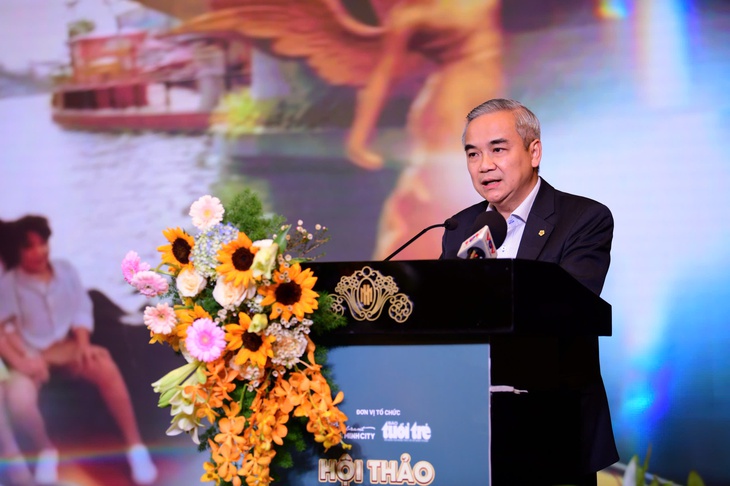
Mr. Vo Anh Tai - Deputy General Director of Saigontourist Group - Photo: QUANG DINH
Mr. Vo Anh Tai, Deputy General Director of Saigontourist Group, emphasized that for Can Gio to truly become a new tourism growth hub, it is necessary to shift the mindset from "resource exploitation" to "designing a structured product ecosystem".
Tourism products should not be just individual tours or services, but should be organized into flagship product lines with clear identities and long-term competitiveness. In particular, Can Gio's unique advantage lies in simultaneously possessing both the sea and mangrove forests – a foundation for forming an iconic ecological product system, combining daytime forest experiences and nighttime beach resorts, creating a distinction from purely beach or purely ecological destinations.
Furthermore, Can Gio has the potential to become a health and wellness tourism hub for Ho Chi Minh City, offering retreat products, meditation, yoga, and physical and mental recovery services for urban residents—products with high added value and aligned with sustainable development goals.
Transforming from an "ecological oasis" into a high-end tourist destination.
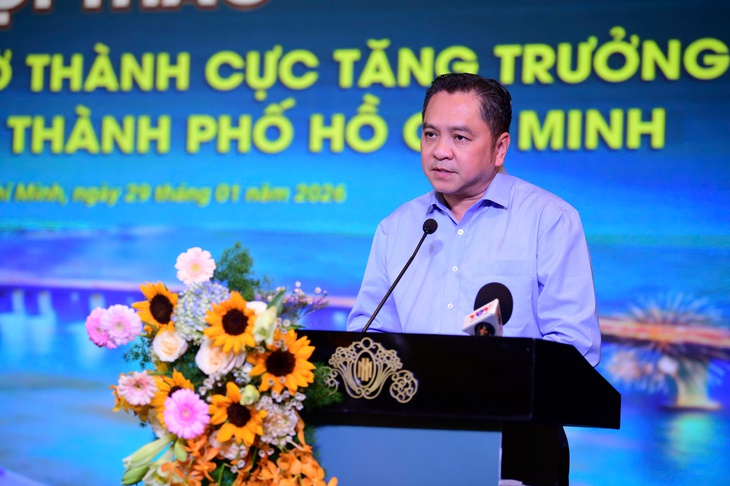
Mr. Pham Huy Binh - Director of the Ho Chi Minh City Department of Tourism, speaking at the workshop - Photo: QUANG DINH
Speaking at the workshop, the Director of the Ho Chi Minh City Department of Tourism, Pham Huy Binh, said that in the context of Ho Chi Minh City having just expanded its administrative boundaries and entering a new phase of development with a vision to 2030, Can Gio holds a strategic position in the city's urban-ecological-tourism spatial development structure.
Can Gio boasts a rare mangrove forest ecosystem recognized by UNESCO, a coastline stretching over 23 km, abundant land resources, and a distinctive fishing village culture. These are valuable resources for developing green, eco-tourism, and high-end resort tourism models that are increasingly attracting the attention of both domestic and international tourists.
The development of Can Gio is not only an internal need of the city but also meets the global trend of sustainable development, creating a balance between economic growth and resource and environmental conservation.

Numerous guests attended the seminar on the afternoon of January 29th - Photo: HUU HANH
Recently, the government has been investing heavily in transportation connectivity to Can Gio, attracting significant attention from the business community and major domestic and international investors with numerous large-scale and groundbreaking projects such as the Ben Thanh - Can Gio high-speed railway, the Can Gio bridge project, and the Can Gio - Vung Tau sea bridge and road project.
According to Mr. Binh, along with road transport, the Ben Bach Dang - Can Gio - Vung Tau waterway routes are also being restored with unique waterway tourism products. This is the foundation for Can Gio to transform from an "ecological oasis" into a high-end tourist destination, while also contributing to reducing the density of tourists away from the city center and promoting the redistribution of tourism development space in a balanced and sustainable manner.
Can Gio has a great opportunity to transform from a "hard-to-access area" into a new growth pole of Ho Chi Minh City thanks to the synchronized development of multi-directional transportation infrastructure, including more efficient road transport that shortens travel time; a modern railway system that opens up quick connections to the city center; and a potential seaport that will become a gateway for maritime economy and logistics.
Ho Chi Minh City has determined that the development of Can Gio must ensure that it is not a copy of any other destination, but will develop in the direction of high-end eco-tourism, resort tourism, and distinctive local culture, based on technology, green transformation, and the support of the community.
In that sense, Ho Chi Minh City especially appreciates the attention and support of Tuoi Tre Newspaper, businesses, associations, and international organizations that have always supported and promoted the image of Can Gio and accompanied the city in creating new development models.
These initiatives, critical perspectives, and practical contributions will be crucial for the city to develop appropriate policies, attract quality investment, and ensure that the core values of Can Gio are preserved and promoted.
"Today's workshop is an important first step. The city looks forward to continuing to receive specific proposals and solutions from you to jointly realize the goal of making Can Gio a new symbol of sustainable tourism in the South, contributing to enhancing Ho Chi Minh City's position in the region and the world," Mr. Binh said.
Ho Chi Minh City: Development opportunities from forests, rivers, and seas.

Ms. Nguyen Cam Tu - Director of the Tourism Promotion Center, Ho Chi Minh City Department of Tourism - Photo: HUU HANH
"In the context of increasingly deep globalization and the strong shift in urban development models, tourism is being seen not just as a simple service industry but as an economic, cultural, and social ecosystem. It has the potential to connect sectors, spread values, and increase the soft power of cities," shared Ms. Nguyen Cam Tu, Director of the Tourism Promotion Center, Ho Chi Minh City Department of Tourism.
In the specific case of Ho Chi Minh City, this becomes even more evident as the city officially enters a new phase of development following the multi-centered megacity model. "This is not just an expansion of administrative space, but also a comprehensive restructuring of growth drivers, in which tourism is identified as a crucial pillar," Ms. Cam Tu said.

The seminar on the afternoon of January 29 attracted a large number of guests, experts, and businesses in the fields of infrastructure and tourism - Photo: QUANG DINH
Accordingly, in terms of geographical and economic location, the new Ho Chi Minh City is situated in the center of the Southeast region, playing a crucial role as a transportation hub for the Southern region and serving as Vietnam's southern gateway to the world. With an increasingly synchronized and modern infrastructure system, the city has favorable conditions to strengthen trade connections, expand international cooperation, and develop diverse types of tourism, especially urban tourism, coastal and island tourism, and MICE tourism.
The favorable geographical proximity to major economic centers in Southeast Asia such as Singapore, Bangkok, and Kuala Lumpur also contributes to enhancing the ability to attract international tourists and promote inter-regional tourism.
Besides its advantageous location and infrastructure, the city also possesses a diverse culture and distinctive Southern Vietnamese identity, formed through a long process of exchange and integration.
In Ho Chi Minh City's overall strategy, Can Gio plays the role of a unique transitional ecological space, helping to complete the urban-river-sea tourism product structure, extending the length of stay and diversifying experiences for tourists, especially international visitors.
Therefore, Can Gio plays a crucial role in positioning Ho Chi Minh City as a modern megacity that develops harmoniously with nature, aiming for sustainable competitiveness in the Southeast Asian region.
The open, dynamic, and creative character of the people of Ho Chi Minh City, combined with the industrial traditions of Binh Duong and the maritime culture of Ba Ria - Vung Tau, has created a unique socio-cultural resource, forming the foundation for the development of cultural tourism, community tourism, and creative cultural industries.
Based on that foundation, the city has developed a multi-layered tourism resource system, including natural resources, tangible and intangible cultural heritage, along with a system of modern tourism facilities and infrastructure.
In its development orientation, Can Gio does not follow a model of rapid growth but is defined as a development space based on sustainable livelihoods. The model is based on a "three-way benefit" model involving the government, the local community, and tourists.
Based on the principles of co-creation, joint participation, and shared benefit, tourism products linked to local communities, such as eco-friendly homestays, local cuisine, and tours experiencing fishing and salt production, not only generate revenue but also contribute to preserving maritime culture and community identity. The preservation and promotion of traditional festivals continue to be prioritized alongside tourism development.

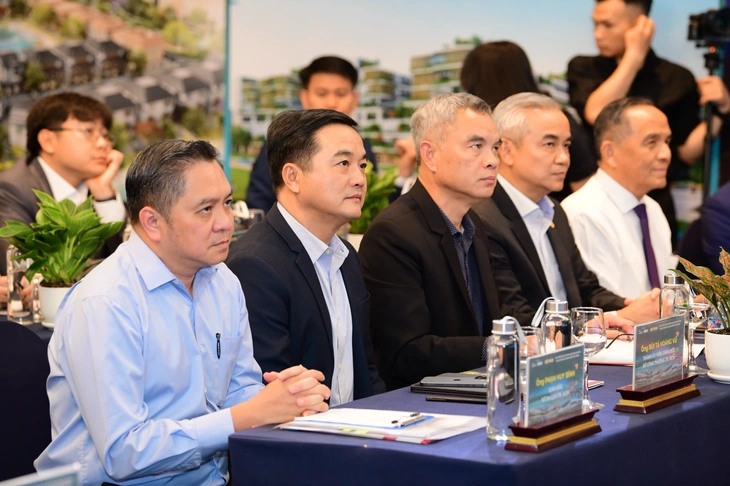
From left to right: Mr. Pham Huy Binh - Director of the Ho Chi Minh City Department of Tourism, Mr. Bui Ta Hoang Vu, Director of the Ho Chi Minh City Department of Industry and Trade - Photo: QUANG DINH

Visitors experience virtual reality tours of ports in Ho Chi Minh City at the seminar "Developing Can Gio into a new tourism growth hub for Ho Chi Minh City" on the afternoon of January 29 - Photo: QUANG DINH
In Ho Chi Minh City's urban and marine economic development strategy, Can Gio, according to the orientation until 2030, is expected to strongly develop its marine economy, ecotourism, and high-end resort tourism, ensuring ESG criteria and sustainable development.
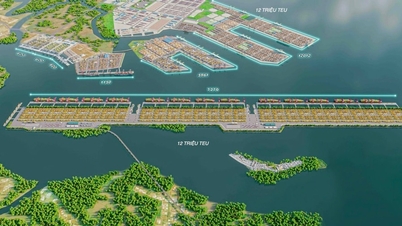
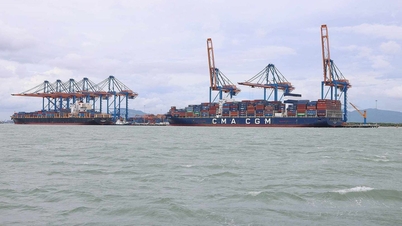
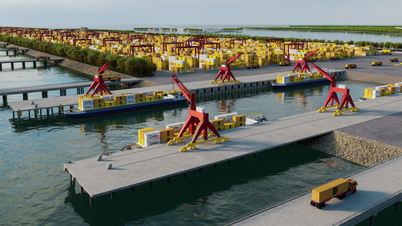
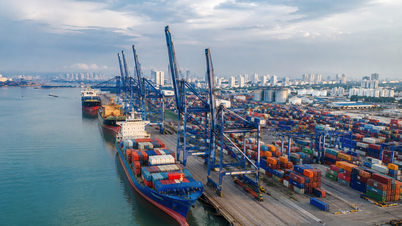
Currently, a series of strategic infrastructure projects – from the ESG++-model coastal megacity, the Ben Thanh - Can Gio high-speed railway line, the Can Gio - Vung Tau sea route, to the Can Gio international transshipment port and inter-regional expressways – are being heavily invested in and implemented synchronously.
These projects not only shorten geographical distances, but more importantly, have put Can Gio on the right trajectory to develop into an economic and tourism center in the southeastern part of Ho Chi Minh City, and a new tourism growth pole for the city .

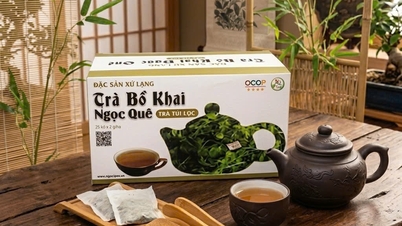
Many specialties from Can Gio were introduced on the sidelines of the workshop - Photo: QUANG DINH
In just the past 10 months, numerous large-scale infrastructure and urban development projects have been and are being implemented in Can Gio, creating convenient connections to all areas. Among them, the Ben Thanh - Can Gio high-speed railway line, scheduled to break ground in December 2025, will, upon completion, shorten travel time from the center of Ho Chi Minh City to Can Gio to just 13 minutes.
At the same time, the Can Gio Bridge is under construction and is expected to be completed in 2029, breaking the decades-long reliance on ferries to cross the river and shortening travel time from Ho Chi Minh City to Can Gio from over 2 hours to about 40-50 minutes.
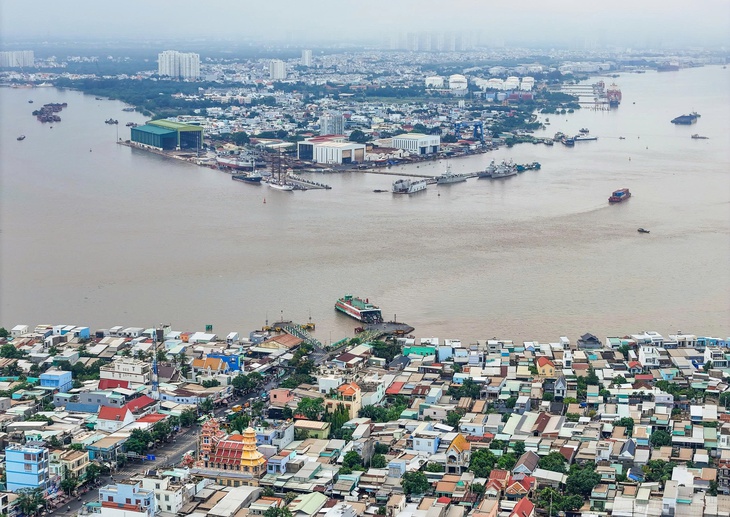
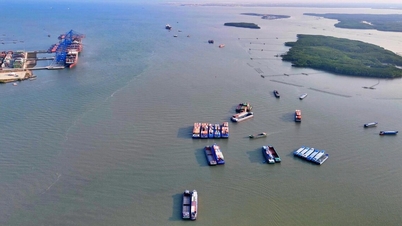
An aerial view of Can Gio - Photo: QUANG DINH
Furthermore, the Can Gio - Vung Tau sea route has been approved for investment by Ho Chi Minh City, opening up a connection between the two major development hubs in the South in just 10 minutes of travel. Along with logistics projects, seaports, and other projects with investments totaling hundreds of thousands of billions of VND, these projects are expected to create a multi-directional and multi-modal infrastructure network, eliminating Can Gio's isolation and transforming it into a strategic connection point between Ho Chi Minh City and the Southeast region.
In particular, the Vinhomes Green Paradise Can Gio destination, which Vingroup commenced construction on in April 2025, with a series of projects invested according to international standards, meeting the demand for diverse experiences in one destination, will become the spearhead for Can Gio to achieve the goal of attracting 40 million tourists per year.
In this context, developing Can Gio into a new tourism growth hub is not just a problem for the tourism industry alone, but a problem of restructuring the service economic space of Ho Chi Minh City.
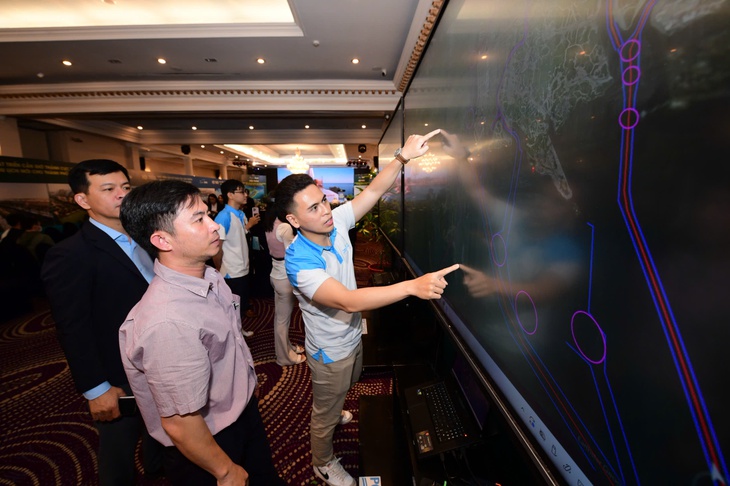
1. Tourists explore a digital map of the Can Gio area and Vung Tau port - Photo: QUANG DINH
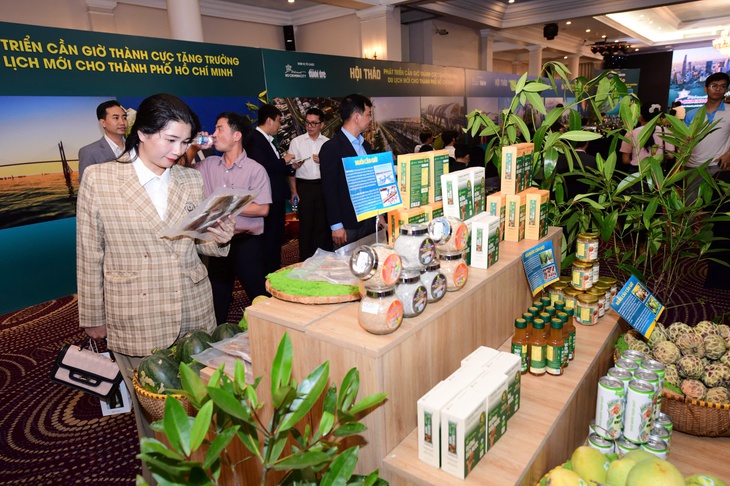
Guests learn about new projects in Can Gio - Photo: QUANG DINH
The workshop "Developing Can Gio into a New Tourism Growth Hub for Ho Chi Minh City" focused on discussing key issues: the development orientation of Can Gio within the new development space of Ho Chi Minh City; the role of transportation infrastructure and key projects; the development of high-class eco-tourism, resort, and entertainment products; solutions for balancing economic development and biosphere reserve conservation; and connecting Can Gio with Long Thanh - Vung Tau - Ho Chi Minh City to form a tourism-trade-service value chain.
In addition to the presentations, the discussion session addressed issues such as: infrastructure development as a foundation for tourism and the economy; diversification of eco-tourism, resort, and entertainment products; state management orientation in the development of Can Gio; solutions to attract investment; connecting Can Gio with Ho Chi Minh City and neighboring localities; and promoting Can Gio as a new tourist destination of Ho Chi Minh City.
The opinions expressed at the discussion session also contributed to clarifying solutions for developing Can Gio in a synchronized and sustainable manner, in line with the city's overall development orientation in the new phase.
Alongside the workshop, there will be a visual exhibition space showcasing interactive tourism maps, 3D models of Can Gio's infrastructure, urban areas, and tourism, as well as green tourism products, OCOP products, and typical local specialties.
Source: https://tuoitre.vn/dot-pha-ha-tang-mo-duong-cho-can-gio-phat-trien-20260129133352488.htm
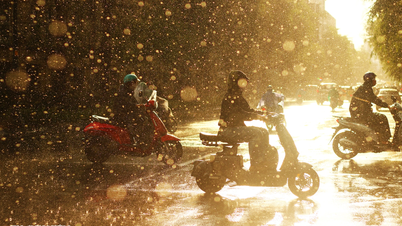
![[Image] Hanoi's urban life under the challenge of a "scorching hot" environment](https://vphoto.vietnam.vn/thumb/1200x675/vietnam/resource/IMAGE/2026/05/25/1779706979265_nang-nong-t5-2026-minh-duy-7-4636-jpg.webp)


![[Image] Close-up view of the interchange connecting the two expressways and Long Thanh Airport.](https://vphoto.vietnam.vn/thumb/1200x675/vietnam/resource/IMAGE/2026/05/25/1779703378210_ndo_br_z7863716673926-224453a31600126cce10622af6290afd-4549-jpg.webp)





























































Comment (0)