

Following signs that some commercial banks are raising deposit interest rates again, the State Bank of Vietnam (SBV) is sending a strong message about stabilizing interest rates to support economic recovery and promote growth.
Closely monitor interest rates.
According to records, in May 2026, the State Bank of Vietnam (SBV) continuously issued directives related to capital mobilization activities. Most recently, the SBV requested regional SBV branches to work with commercial bank branches in their areas to ensure strict implementation of the Governor's directive on interest rate reduction, while also strengthening inspections and handling violations if detected.
As directed, management units will review branches with unusually high deposit or lending interest rates compared to the region to conduct thematic inspections. This content is also integrated into the State Bank of Vietnam's 2026 inspection plan.
This move comes amidst a number of exceptional cases where deposit interest rates have been increased, contrary to the general policy direction. Others have not publicly announced the interest rate increase but have instead implemented programs offering additional interest, promotions, or online incentives to attract deposits into the system.
According to statistics from the Vietnam Banking Association (VNBA), high deposit interest rates are mainly found in online programs and special offers. For example, BacABank applies a rate of 6.85%/year for a 9-month term, while Shinhan Bank offers around 7.5%/year for a 12-month term. In some exceptional cases, banks raise deposit interest rates to over 10% with certain conditions attached.

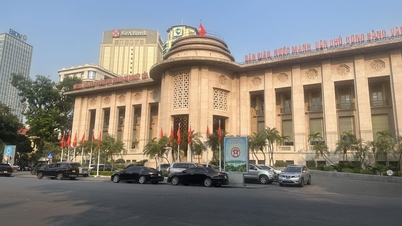
The State Bank of Vietnam requires commercial banks to strictly implement the Governor's directive on reducing interest rates. (Photo: TAN THANH)
Experts at Maybank Securities believe that the global economic environment continues to put pressure on monetary policy management, such as: ongoing geopolitical tensions in the Middle East, persistently high oil prices, and the recovery of the US dollar, which increase pressure on exchange rates and inflation. Domestically, liquidity is also becoming more challenging as credit growth is exceeding the rate of capital mobilization. People's and businesses' funds tend to be allocated to other investment channels such as stocks, real estate, or gold, forcing some credit institutions to compete for capital through interest rates.
To support system liquidity, the State Bank of Vietnam (SBV) has implemented a comprehensive set of monetary policy tools, including injecting capital through open market operations (OMO), extending maturities to support liquidity, and conducting foreign exchange swap transactions (FX Swaps). Simultaneously, the regulatory body has also strengthened supervision to curb interest rate wars among banks.
Analysts believe that stabilizing interest rates remains a top priority this year. Keeping capital costs at reasonable levels not only helps businesses access credit more easily but also facilitates production, investment, and economic growth amidst numerous existing challenges.
Untangle the liquidity bottleneck.
Amidst the continuing unpredictable fluctuations in the global economy, the State Bank of Vietnam (SBV) is simultaneously implementing various solutions to stabilize interest rates, support credit growth, and alleviate liquidity pressure on the banking system. Mr. Nguyen Phi Lan, Director of the Forecasting, Statistics, and Monetary and Financial Stability Department (SBV), stated that in 2025 and the first few months of 2026, the global economy will continue to face significant pressure from geopolitical factors and inflation. In particular, from the end of February 2026, escalating conflicts in the Middle East have created a new shock to the world economy by disrupting energy supply chains, driving up oil prices sharply, and increasing inflationary pressure in many countries.
In this context, the State Bank of Vietnam (SBV) continues to manage the exchange rate flexibly, closely monitoring domestic and international developments to absorb external shocks, stabilize market sentiment, and contribute to inflation control. The regulatory body also maintains current policy interest rates, creating conditions for credit institutions to access capital from the SBV at lower costs, thereby supporting the economy.
A notable point is the issuance of Circular 08/2026/TT-NHNN by the State Bank of Vietnam, effective from May 15th, aimed at resolving technical difficulties in calculating the loan-to-deposit ratio (LDR). According to experts, the new regulation helps state-owned commercial banks such as Vietcombank, BIDV, and VietinBank reduce their LDR by approximately 1.1% - 1.5% compared to before, thereby expanding their lending capacity.
According to estimates by MB Securities (MBS), this change could create additional lending capacity equivalent to 0.3% - 0.4% of the total outstanding credit in the entire system. With a credit volume of approximately VND 19.5 million billion by the end of April 2026, the additional capital for the economy could reach VND 58,000 billion to VND 78,000 billion.
Mr. Nguyen The Minh, Director of the Investment Banking Division at An Binh Securities Company (ABS), stated that before Circular 08 was issued, the three major state-owned commercial banks were operating close to the 85% Loan-to-Deposit Ratio (LDR) in the first quarter of 2026. This meant that the room for credit growth was almost exhausted, even though the demand for loans from businesses and individuals remained high. "Circular 08 was issued at the right time, demonstrating flexibility in monetary policy management and giving state-owned banks more room to disburse credit in the second half of the year," Mr. Minh commented.
However, the challenge of lowering interest rates remains significant. Dr. Do Thien Anh Tuan, a lecturer at the Fulbright School of Public Policy and Management, argues that pressure from both domestic and international sources is limiting the room for maneuver in monetary policy.
According to Mr. Tuan, in principle, reducing interest rates requires increasing the money supply to lower deposit rates, thereby reducing lending rates. However, given the significant inflationary pressures and the need for macroeconomic stability, the State Bank of Vietnam (SBV) finds it difficult to choose the solution of aggressively injecting money into the economy. Instead, the regulatory body continues to urge banks to cooperate with the Government in reducing interest rates through the coordinating role of the Vietnam Banking Association (VNBA) and the leadership of state-owned banks. According to Mr. Tuan, this is also a way to gradually reduce the net interest margin (NIM) of the banking system.
In addition, Mr. Tuan suggested that the restructuring of weak credit institutions should be accelerated to limit excessive competition in deposit interest rates. He also emphasized that controlling capital flows into speculative sectors, especially real estate, is crucial for sustainably reducing interest rate pressure.
"Speculatory businesses can accept borrowing at interest rates of 14% - 15%, while manufacturing businesses are unlikely to be able to withstand such capital costs. If the supply and demand for capital are not addressed and credit flows are not properly directed, interest rate reductions will only be technical, while the root of the problem will remain," Mr. Tuan analyzed.
Source: https://nld.com.vn/minh-bach-hoat-dong-huy-dong-von-196260525211518354.htm




![[Photo] General Secretary and President To Lam presides over the meeting to approve the draft report on the results of the second inspection by the Politburo of the Standing Committee of the Hanoi City Party Committee.](https://vphoto.vietnam.vn/thumb/1200x675/vietnam/resource/IMAGE/2026/05/26/1779789811432_a2-bnd-4430-9620-jpg.webp)



































































































Comment (0)