

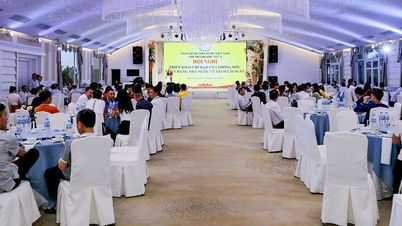
Within the framework of the VITM 2025 International Tourism Fair, on April 11th, the forum "Developing Green Destinations, Elevating Vietnamese Tourism" took place in Hanoi. With the participation of many managers and leading experts, the event served as a platform to share experiences, spread awareness, and promote practical actions for the green transformation of the tourism industry.
A significant step forward in green transition.
Vietnam, as a member state of the United Nations, has committed to implementing the 17 Sustainable Development Goals (SDGs). This commitment includes goals directly related to environmental protection, combating climate change, and sustainable tourism development.
At the COP26 conference in 2021, Vietnam also committed to achieving net-zero emissions by 2050. These strong actions have created a demand for Vietnam to undergo a green transition across all sectors, including tourism.
Looking back at 2024, according to Patrick Haverman, Deputy Head of the United Nations Development Programme (UNDP) in Vietnam, Vietnam's tourism industry has truly become a powerful economic driver, welcoming over 17.5 million international visitors and 110 million domestic visitors.
Tourism revenue reached an impressive figure of 840 trillion VND. This dynamic recovery and transformation demonstrates the industry's potential for growth.
Patrick Haverman, Deputy Head of UNDP in Vietnam, emphasized: “Vietnam has taken a significant step forward by focusing on realizing green destinations across the country. The focus of this growth is not just on quantity, but also on ensuring that the entire tourism sector develops in a green, sustainable, environmentally friendly manner that benefits everyone.”
Accordingly, the positive impacts of the tourism industry have spread widely, creating many new job opportunities, boosting local economies, and revitalizing business communities and people across the country.
 |
A view of the forum "Developing Green Destinations, Elevating Vietnamese Tourism". |
“However, the vision for green destination development is not limited to conservation efforts in marine and ecological areas; we also recognize the crucial role of green transportation. Encouraging tourists to prioritize environmentally friendly transportation options both enriches their experience and directly contributes to maintaining cleaner air,” said Patrick Haverman.
Recently, the United Nations Development Programme (UNDP), in collaboration with local authorities, launched a "Green Transport Check-in and Sharing Station." This project has been piloted in Tuy Hoa (Phu Yen province) and Hon Yen ( Hue City). This is a concrete step by UNDP in realizing this vision.
By promoting green transportation sharing models and raising community awareness, organizations, businesses, and localities are working together to gradually build the foundation for a truly sustainable green tourism ecosystem.
Vietnam has taken a significant step forward by focusing on realizing green destinations across the country. The focus of this growth is not just on quantity, but also on ensuring that the entire tourism industry develops in a green, sustainable, environmentally friendly manner that benefits everyone.
Patrick Haverman, Deputy Head of UNDP in Vietnam
Sharing the view that green transportation development is necessary, the Director of the Institute of Tourism Economics, Nguyen Van Dinh, stated: Developing green transportation is one of the essential transformation trends for the tourism industry today. Local authorities and travel businesses need to increase the provision of sustainable transportation options at destinations such as bicycles, electric vehicles, or encourage the use of public transport.
“In Bali, Indonesia, the electric bus system has helped reduce carbon emissions. Similarly, in Germany, the 'Rail & Fly' program encourages tourists to travel by train instead of plane to reduce emissions. The trend of slow travel will become increasingly popular,” Mr. Dinh added, highlighting countries that have successfully implemented this model.
Constantly striving to overcome challenges.
According to Mr. Pham Ha, Chairman of LuxGroup, the path to green tourism also faces many challenges. These include the high cost and long payback periods required for investing in energy-saving equipment, waste treatment, and environmentally friendly materials.
Persuading partners—especially in remote areas—to commit to green practices remains a challenging task that requires solutions through dialogue, training, and technical support.
Meanwhile, green tourism products face difficulties competing due to high costs, making sustainable tourism products inaccessible to the mass market and requiring clear value proposition and communication strategies.
In Vietnam, green businesses have not yet received specific incentives regarding taxes, credit, product bidding, or market access, especially small and medium-sized enterprises, which may discourage many businesses from transitioning to green tourism.
Based on his business experience, Mr. Pham Ha believes that three key factors are necessary: strategic thinking from leadership – placing sustainability at the core; establishing a green tourism supply chain – selecting and partnering with suppliers who share a commitment to sustainable goals and actions; and market education – raising awareness among customers, partners, suppliers, the community, and internal staff about the long-term benefits of responsible tourism.
 |
| LuxGroup planted trees for a carbon emission compensation project in Vang Ngan village, Suoi Quyen commune, Yen Bai province. |
For many years, the Vietnam Tourism Association has been working alongside businesses and localities to promote green tourism and green destinations, organizing numerous activities and events to foster green transformation in tourism.
In particular, the project "Reducing Plastic Waste in Vietnam's Tourism Sector" has promoted activities to reduce plastic waste in the tourism sector, contributing to environmental protection and tourism development, aiming to achieve the sustainable development goals of the tourism industry, and contributing to the sustainable economic development goals of the nation.
A pilot program implementing solutions and initiatives to reduce plastic waste over three months at 60 tourist areas and sites in Ninh Binh and Quang Nam provinces showed that the amount of plastic waste decreased by an average of 35%.
In Ninh Binh, a comparison of the total volume of plastic waste generated before and after the pilot program showed that the total volume of plastic waste generated after the pilot program decreased by 14-23% compared to before the pilot program across different types of businesses (hotels 23%, restaurants 14%, travel agencies 14%, tourist attractions 20%).
In Hoi An, the amount of plastic waste generated at hotels decreased by 64% during the pilot program.
According to Mr. Vu Quoc Tri, Secretary General of the Vietnam Tourism Association, in order to promote the development of green tourism and green destinations, the Vietnam Tourism Association has developed and issued a set of criteria for green tourism.
These criteria guide tourism service businesses and tourist destinations in voluntarily participating in green tourism practices. Initially, they will apply to tourist destinations, accommodation establishments, travel agencies, and businesses providing services to tourists (food and beverage, entertainment, shopping).
The Vietnam Tourism Association announced that by 2025, 75% of its member units will have increased awareness of the harmful effects of plastic waste and the importance of reducing plastic waste; and 50% of its member units will have issued guidelines/plans for reducing plastic waste or integrated plastic waste reduction content into their regulations/operational plans.
By 2030, 100% of members of the Vietnam Tourism Association will not use non-biodegradable plastic bags and single-use plastic products; 100% of member units of the Vietnam Tourism Association will issue guidelines/plans to reduce plastic waste or integrate plastic waste reduction content into their regulations/operational plans.
Source: https://nhandan.vn/du-lich-viet-nam-chuyen-doi-xanh-de-phat-trien-ben-vung-post871701.html
![[Photo] First session of the 14th Congress of the Vietnam Trade Union](https://vphoto.vietnam.vn/thumb/1200x675/vietnam/resource/IMAGE/2026/06/03/1780465947883_ndo_br_img-3852-jpg.webp)

![[Photo] General Secretary and President To Lam presides over a meeting with the Central Organizing Committee.](https://vphoto.vietnam.vn/thumb/1200x675/vietnam/resource/IMAGE/2026/06/03/1780482764658_a1-bnd-4741-3342-jpg.webp)
![[Photo] Secretary of the National Assembly Party Committee, Chairman of the National Assembly presides over the meeting of the Standing Committee and Executive Committee of the National Assembly Party Committee.](https://vphoto.vietnam.vn/thumb/1200x675/vietnam/resource/IMAGE/2026/06/03/1780480353201_ndo_br_bnd-2585-jpg.webp)








![[Photo] General Secretary and President To Lam presides over a meeting with the Central Organizing Committee.](https://vphoto.vietnam.vn/thumb/402x226/vietnam/resource/IMAGE/2026/06/03/1780482764658_a1-bnd-4741-3342-jpg.webp)






















![[Video] Sunset at Lap An Lagoon – Where the sun sets over the fishing nets](https://vphoto.vietnam.vn/thumb/1200x675/vietnam/resource/IMAGE/2026/05/31/1780192137701_beach-landscape-sea-water-nature-grass-745871-pxhere-com.jpeg)



























Comment (0)