

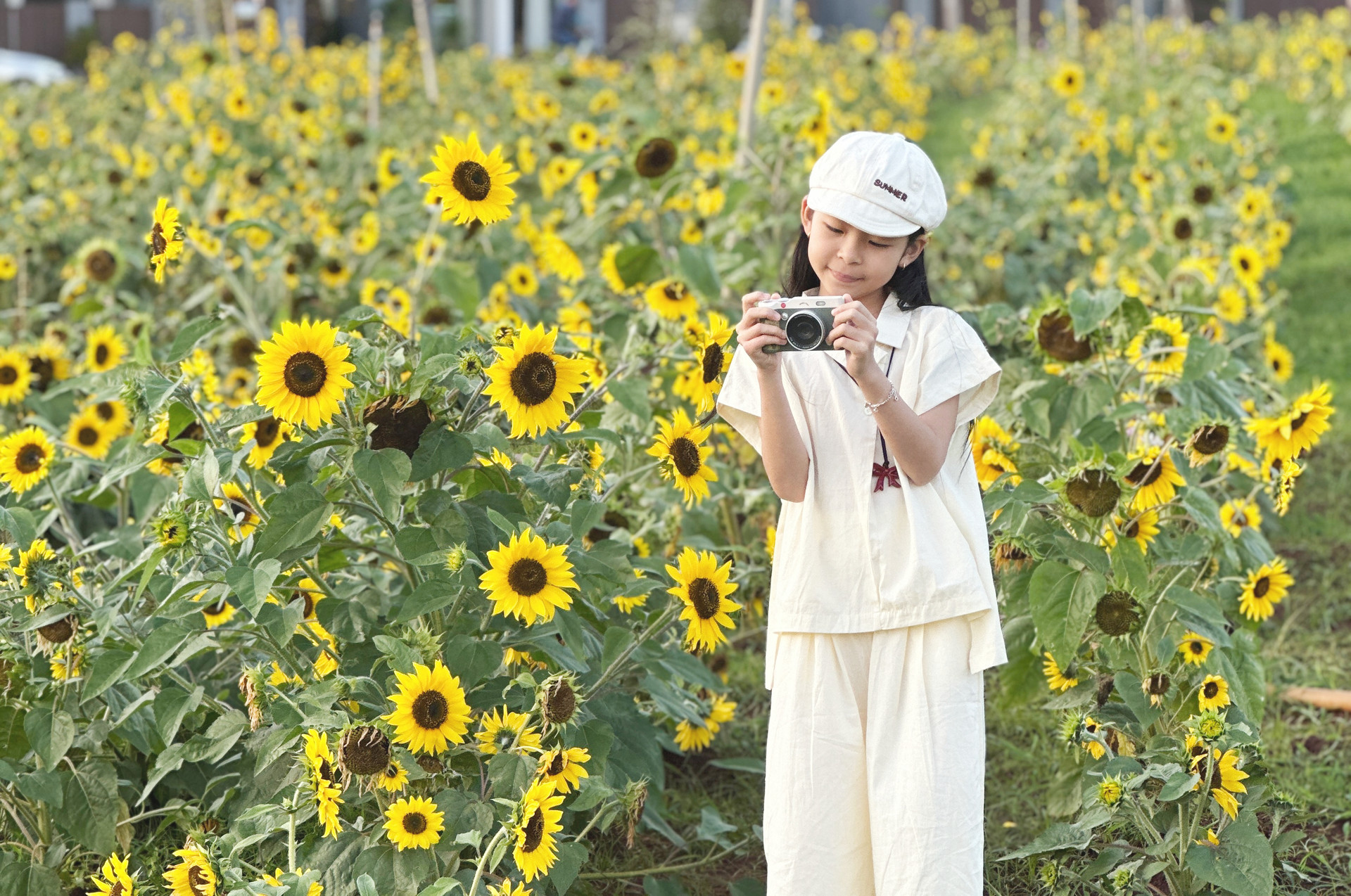
My mother, my wife, my daughter, and I—four people, three generations—carried a little unease at not celebrating New Year's Eve in our familiar home. But then, along those sun-drenched and windy roads, we realized that Tet (Vietnamese New Year) hasn't disappeared, it's just transformed in a different way.
Connected by culture
On the 27th of the twelfth lunar month, the journey began. The Da Nang -Quang Ngai expressway was smooth and straight, but the section of the old national highway through Binh Dinh was bumpier, with a rough, uneven surface that made the whole family a little tired. My mother sat in the back seat, gently gripping the seat whenever the car jolted. My daughter asked when we would arrive. I just smiled and said we'd be there soon.
Upon arriving in Tuy Hoa, now part of Dak Lak province, the atmosphere of Tet preparations was clearly evident. The streets were busier, shoppers were bustling, and flower stalls lined the roads. After checking into our rooms, we strolled to Nghinh Phong Tower to take some commemorative photos. A gentle sea breeze blew, and the last rays of the year's sun still lingered.
Upon arriving at 26/3 Park, the whole family lingered longer than planned. The space was brightly decorated, highlighted by two large horse statues placed right at the square's entrance, tall and prominent against the afternoon sky. But what truly captivated us was a corner where a traditional Vietnamese folk game (Bàiòi) was being played.
The family chose a small hut and bought two playing cards. My daughter sat in the middle, her eyes wide with each call. The rhythm of the drums, the shouts, and the laughter made the afternoon of the 27th of the twelfth lunar month feel strangely warm. I didn't think much, I just listened attentively. When the caller correctly read out the card we were holding, I was surprised. My daughter cheered, and my mother smiled gently. It was a small joy, but enough to start the trip with excitement.
Surprisingly, as soon as I stepped out of the hut, my colleagues from the Dak Lak Newspaper and Radio & Television recognized me and asked to interview my family, treating us like tourists at a festival. Amidst the crowds preparing for Tet, the four of us stopped to share our feelings. I felt happy to be able to talk about my journey in such a festive atmosphere.
On the night of the 28th of the twelfth lunar month in Da Lat, the wind rustled through the pine trees outside the veranda. In the small kitchen of the homestay, banana leaves were spread out, white sticky rice was carefully washed, mung beans were rinsed clean, and pork belly was cut into neat squares. My mother sat arranging the leaves, her hands slow but steady. My daughter sat close beside her, asking why the leaves had to be wrapped squarely, and why the string had to be tied just right. My wife washed the leaves, wiping each one dry.
Trung's father—the homestay manager—sat near the fire. He was a former army officer who had traveled extensively. He looked at the pot of rice cakes and said in a low voice, "Making rice cakes is a way for people to remember their roots. On the night of the 30th, the whole village sits by the fire, no one goes to bed early. The adults drink tea, the children listen to stories. When the rice cakes are cooked, it's also a time when people's hearts warm up."
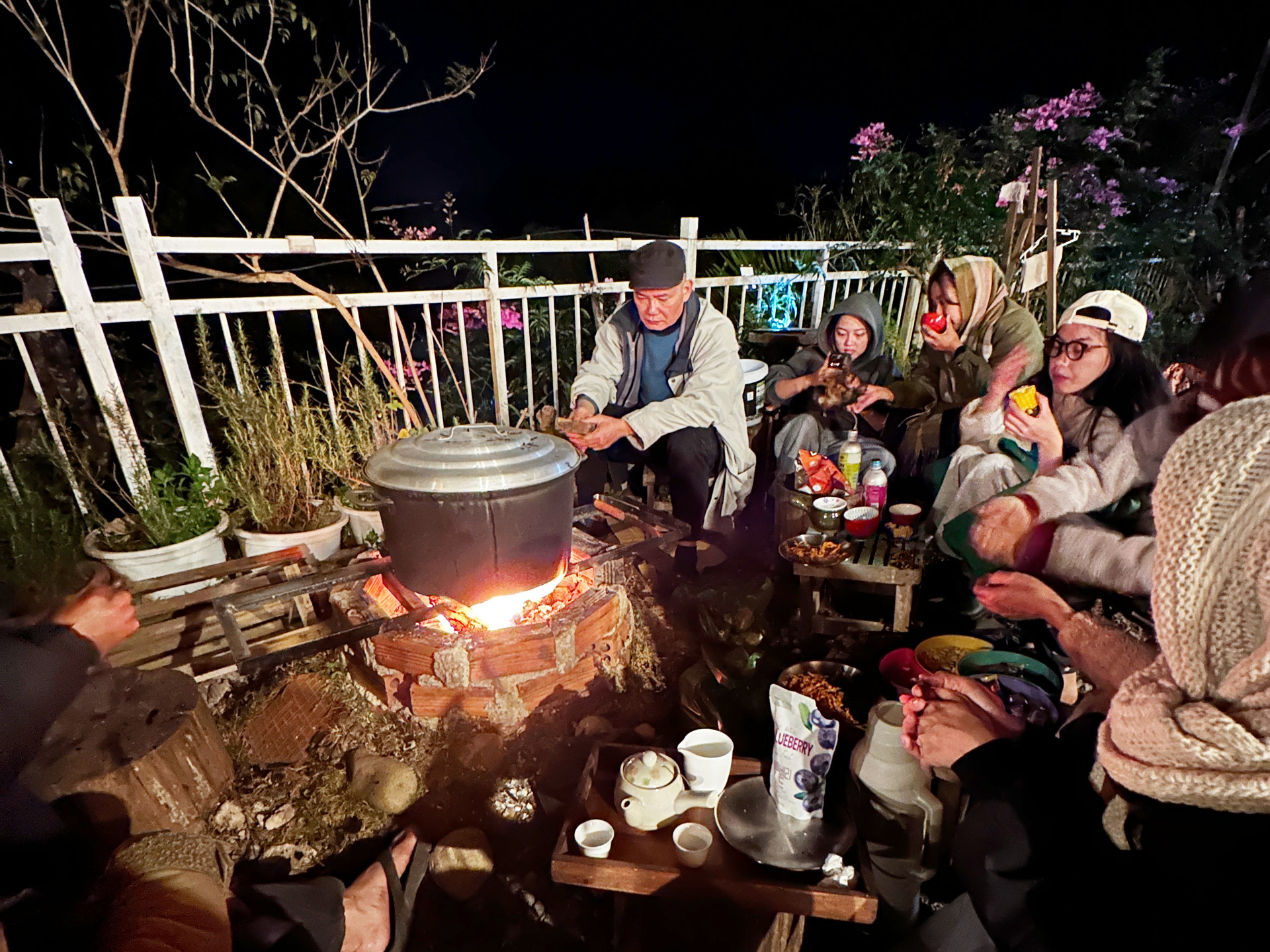
We took turns tending the fire. The wood crackled, and smoke swirled around. I looked at my mother and saw her eyes soften. We weren't in the countryside, but having a pot of rice cakes, the sound of storytelling, and people sitting together until late at night was enough.
The next morning, as we cut the first slice of cake, my daughter blew on the hot sticky rice. I thought about how many Tet holidays had passed, and how the decision to leave this year had made me hesitate. Perhaps, what matters isn't the destination, but whether we're together.
The sound of gongs blends with the wind from Ea H'leo Lake.
The Central Highlands this season is bathed in golden sunshine and cool breezes. Coffee blossoms bloom white along the roadside, their delicate fragrance wafting through the car windows. Some stretches of road are steep and straight, with the vast sky stretching out ahead and the red basalt soil behind.
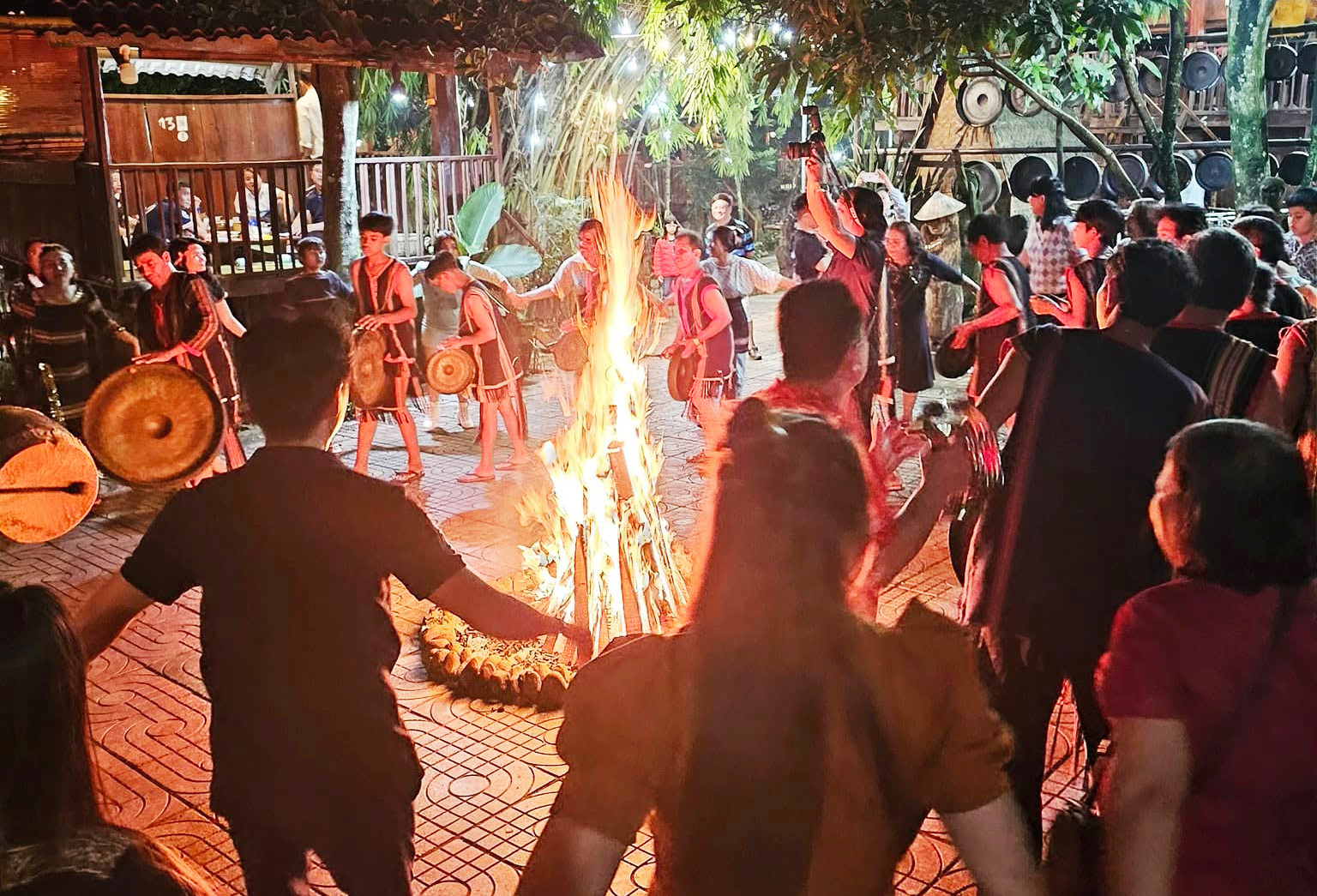
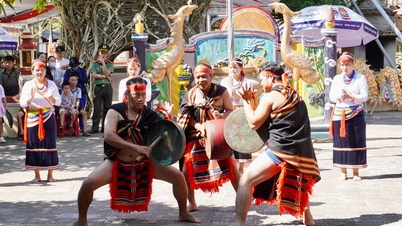
In Pleiku, we entered the gong performance space of the Ba Na people. The gongs resonated, their rhythm deep, steady, and rhythmic. A local woman took my daughter's hand and pulled her into the circle. My mother stood nearby, her eyes following my granddaughter's every step. My wife joined the other women, smiling and listening.
None of us fully understood the meaning of each gong melody, but the rhythm opened our hearts. I realized this was the first time my mother had stood amidst the cultural space of the Central Highlands, the first time my daughter had heard the sound of gongs echoing through the mountains and forests. These new experiences were a novelty for the elderly and a cherished memory for the children.
In Buon Ma Thuot, we visited the World Coffee Museum. The stories about coffee beans, about the journey from farm to hot cup, made me think a lot about perseverance. The next morning, we drove towards Ea Nam and then visited a university friend in Ea H'leo whom we hadn't seen in over ten years.
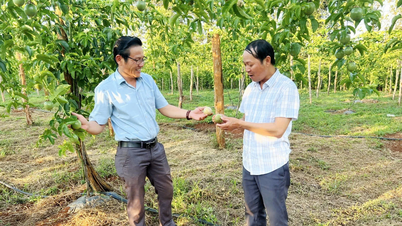
Your durian orchard is vast. The coffee plants are in season with good prices. You pour coffee, hand me a cup, and say, "These past few years, the prices of coffee and durian have gone up, making things easier for the people here. Some have built new houses, some have bought cars. The Central Highlands may look peaceful this season, but behind it all is so much sweat and a lot of luck."
We sat by Ea H'leo Lake, the strong spring breeze creating small ripples on the water's surface. My mother said the wind here is dry, not salty like the sea breeze back home, so it doesn't sting our faces even after blowing for a long time.
My daughter bent down to pick up a fallen coffee flower branch by the path, twirling it in her hand before asking why the flowers were white and not any other color. I explained that it was a characteristic of coffee plants; each season, the flowers bloom simultaneously, covering the entire area in white. She nodded, gazing at the rows of flowering trees in the distance.
Leaving Ea H'leo, we stopped at Bau Can tea plantation in Gia Lai. Amidst the lush green tea hills stretching along the slopes, I met a few people from Quang Nam and Da Nang who had come here many years ago to start a new life. Their accents were still distinctly Central Vietnamese, and their way of speaking was as genuine as back home.
One man smiled and said, "This red soil can sustain us, as long as we work hard," then pointed to the tea bushes that were sprouting new shoots. Standing in the windy highlands, listening to the sounds of my homeland echoing amidst the vast tea hills, I felt that the Central Highlands was no longer unfamiliar to me.
The six-day trip took us through Phu Yen, Da Lat, Buon Ma Thuot, Pleiku, Mang Den, and back to Tam Ky. There were bumpy stretches of road, and nights with temperatures below 20 degrees Celsius, making us Central Vietnamese shiver. But there were also home-cooked meals in the homestay, mornings opening the door to see the dew still clinging to the pine needles, and afternoons sitting quietly listening to the lake breeze.
I understand that Tet (Vietnamese New Year) is not just about fireworks or lavish feasts. Tet can be present in the pot of sticky rice cakes in the highlands, in the rhythmic drumming of gongs, or in a cup of coffee by a breezy lake.
When three generations walk together on the same path, gaze at the same row of coffee blossoms, and listen to the same story told by the fireplace, that is a form of reunion.
And as the bus rolled back to Tam Ky, I knew I would miss the sound of crackling firewood on the night of the 28th, the deep rhythm of gongs in Pleiku, and your words by Ea H'leo Lake. The red basalt roads we had traveled, but the feeling of being together, amidst the Tet holiday and the wind, would remain.
Source: https://baodanang.vn/du-xuan-tren-cung-duong-dat-do-bazan-3325200.html























![[Photo] Reception to welcome General Secretary and President To Lam and his wife on their State visit to the Philippines](https://vphoto.vietnam.vn/thumb/1200x675/vietnam/resource/IMAGE/2026/06/01/1780295488620_vna-potal-chieu-dai-chao-mung-tong-bi-thu-chu-tich-nuoc-to-lam-va-phu-nhan-tham-cap-nha-nuoc-toi-philippines-8798060-7855-jpg.webp)














































Comment (0)