

From nameless sorrows
It's not a psychological counseling room, nor is it a noisy social media forum. On the minimalist interface of the website: https://ai.raccoon.edu.vn, the words appear slowly and gently like an invitation: "How are you feeling today?".
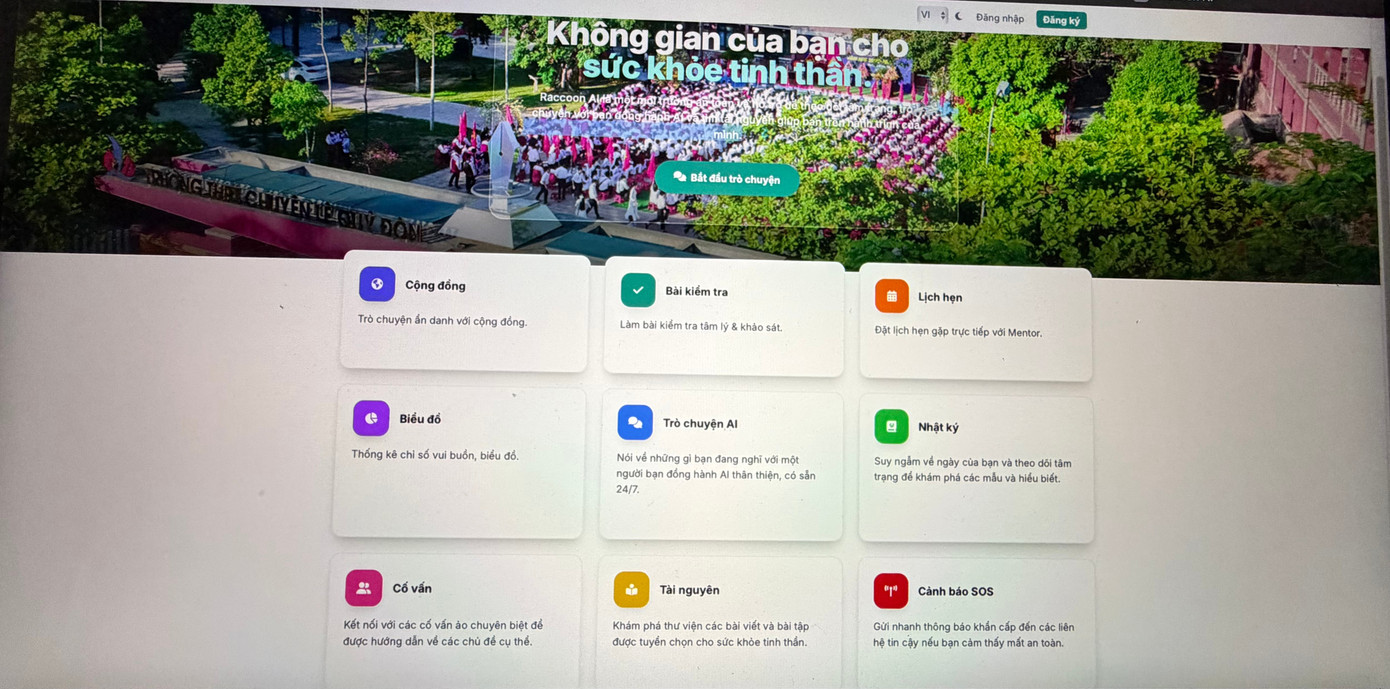
There, thousands of young people's thoughts and feelings are sent in silence. There, artificial intelligence doesn't play the role of a judge, but becomes a patient "listener."
And behind that extraordinary "listener" are two very young faces: Nguyen Thi Phuong Thao (born in 2009) and Nguyen Van Nhat Huy (born in 2010), students of Le Quy Don Specialized High School, Nam Dong Ha Ward, Quang Tri Province. From a very human impulse, the project rose to win the top prize at the national technology competition.
In recent days, among high school students in southern Quang Tri province, the website address https://ai.raccoon.edu.vn has been passed around with whispered messages like: "Try it out, you'll feel so much better!"
Vo Nguyen Bao Han, a student at Le Quy Don Specialized High School, shared that there were times when academic pressure, family expectations, and friendships left her feeling hopeless. “It wasn’t a big deal, but I didn’t know who to talk to. EchoMind helped me name my feelings and face them more calmly,” Han shared.
These kinds of sentiments are exactly what Phuong Thao – the "father" of EchoMind – saw early on. As a math student, Thao didn't just live within the circle of numbers. She observed her peers and realized that many young people were carrying psychological "bottlenecks": exam pressure, fear of failure, and feelings of loneliness even in a crowd.
“Some friends face problems but choose to remain silent and suppress their feelings. I understand that not everyone is ready to seek help from a psychologist, and even less likely to open up to family. That thought grew stronger, urging me to do something, however small, to help my friends,” Thảo confided.
When the heart guides technology
Not having a background in Computer Science, Phuong Thao started EchoMind with the awkwardness of a latecomer. From the 10th grade, she explored AI, emotion analysis, and how machines could "understand" humans. But amidst the demanding schedule of a math-focused student, the project was repeatedly at risk of being abandoned.
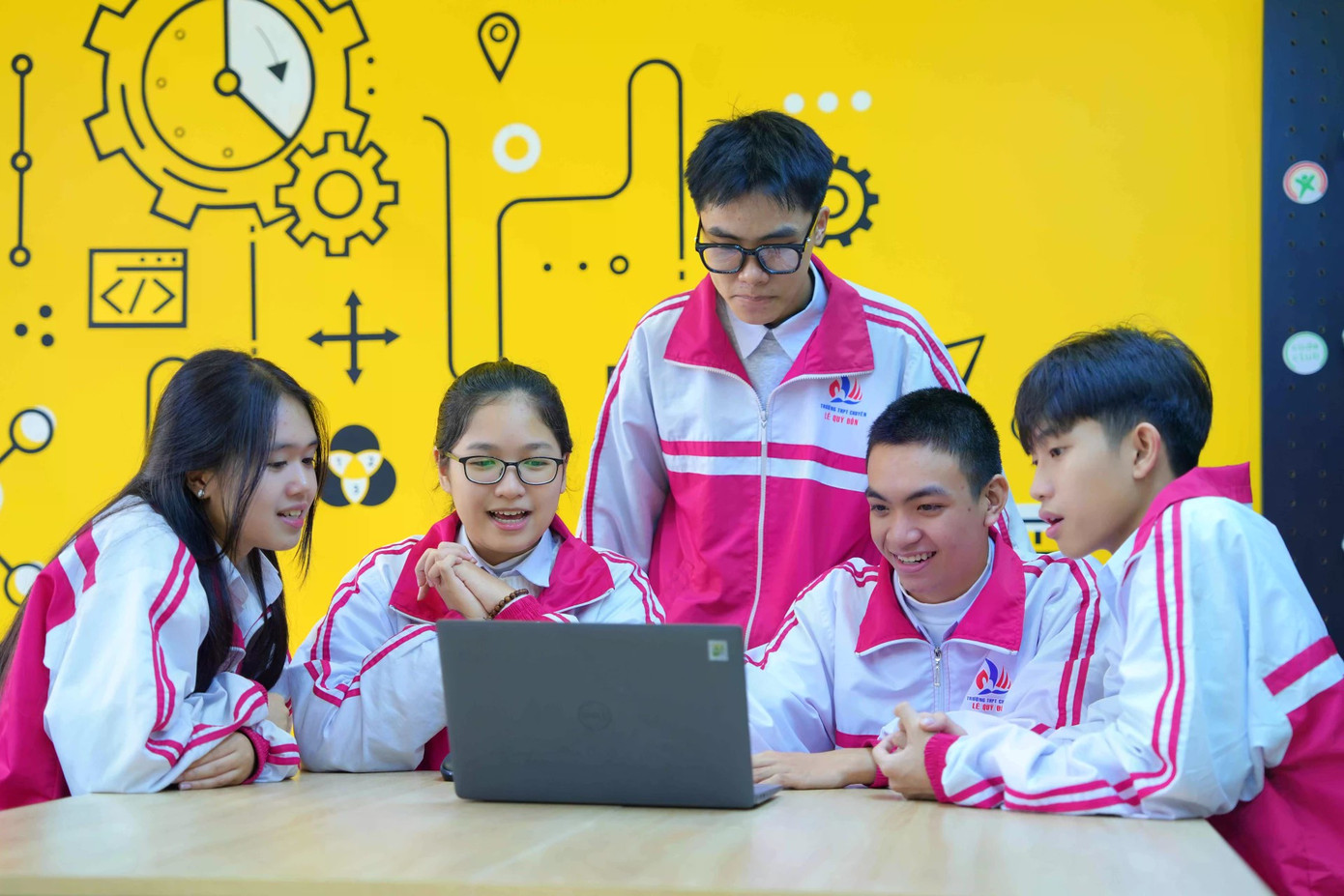
Thảo understood that to go far, she needed a companion. And the name Nguyễn Văn Nhật Huy, a student in the lower year of the specialized Computer Science class, appeared at the right time. "If you want to go fast, go alone; if you want to go far, go together," Thảo said with a smile, repeating the saying that became a guiding principle for the two young people.
With a solid foundation in programming and algorithms, Nhat Huy quickly became the "technical brain" of the project, helping to realize Thao's unfinished ideas.
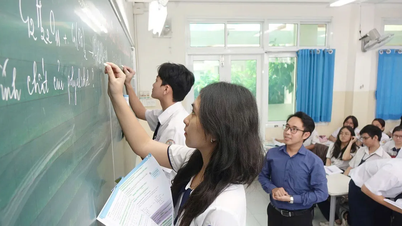
On evenings in the school's STEM lab, the lights remained on even after many classrooms had shut down. There, two high school students engaged in heated debates about AI models, about how EchoMind could not only "analyze" but also "empathize." There were disagreements, even sleepless nights due to system errors, but neither of them ever considered giving up.
Unlike popular inspirational platforms or healing videos , EchoMind is designed as an online emotional diary. Users can write down their thoughts, and the AI analyzes their emotional state in real time, providing personalized and appropriate responses.
The target audience for Thao and Huy is young people aged 13-25 who are experiencing mild to moderate psychological problems. EchoMind does not replace mental health professionals, but acts as an "initial support system," helping users identify their emotions and find positive ways to adjust.
Many tech experts praise the project for the fact that the AI doesn't offer empty platitudes, but is trained to respond based on context, language, and specific emotional states. The user-friendly interface and gentle language make users feel safe sharing their thoughts.
The journey is not over yet.
In the last month of 2025, Thao and Huy brought EchoMind to TDF TECH CAMP – an event within the framework of the Digital Technology Festival, co-organized by the Dariu Foundation in Vinh Long province. The event attracted nearly 300 delegates, experts, and students from many provinces and cities.
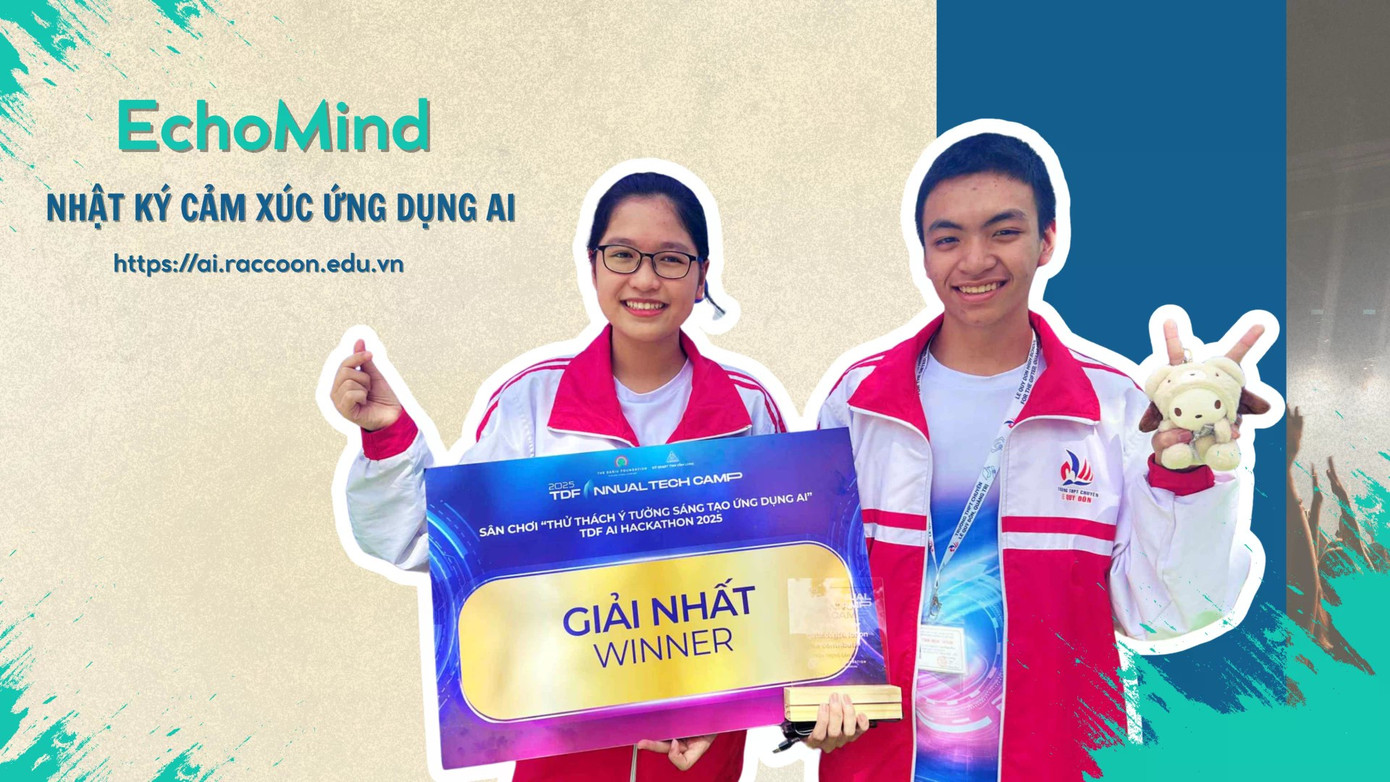
From over 400 entries nationwide, only 11 projects were selected for the final round of the AI Hackathon. Standing among strong, well-funded teams, Thao and Huy couldn't help but feel anxious. "There were some really 'powerful' projects in terms of technology. But we believed EchoMind had its own value, especially in its social significance," Nhat Huy recalled.
That belief paid off. EchoMind won over the judges with its humanistic approach, high applicability, and long-term development potential. The moment their names were announced as the winners, both were almost speechless, not only with joy, but because their months of hard work had finally been recognized.
Returning to Quang Tri after their victory, Thao and Huy quickly resumed their familiar work: perfecting the product. EchoMind is still offered for free, continuously updated with new features and improved AI accuracy.
According to Ms. Hoang Thi Ha, a teacher at Le Quy Don Specialized High School – who accompanied the two students throughout the competition – EchoMind's success did not come from luck. "The two students did this project with big hearts. That's what makes me most proud," Ms. Ha said.
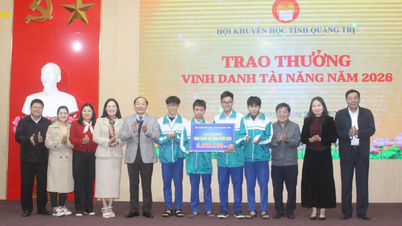
Not only EchoMind, but Phuong Thao and Nhat Huy are also students with impressive academic achievements. Thao was honored as "Outstanding Young Face of Quang Tri Province," winning numerous awards in creativity, public speaking, and reading culture. Nhat Huy, on the other hand, has won top prizes in the Central-Western Highlands Informatics Olympiad for three consecutive years and has participated in many other academic competitions.
But above all, what makes many people believe in the future of these two young people is their spirit of dedication. "They are not using technology to show off their intelligence, but to serve humanity," Ms. Ha affirmed.
In a small, sun-drenched corner of central Vietnam, two high school students from Quang Tri province are quietly proving that technology isn't necessarily cold and emotionless. When guided by empathy, artificial intelligence can truly become a bridge between humans and their own emotions – gentle, enduring, and deeply human.
Source: https://tienphong.vn/echomind-noi-ban-tre-trut-bau-tam-su-post1821675.tpo

































































































Comment (0)