

Arsenal's dream of conquering the UEFA Champions League for the first time in their history was shattered in the most painful way. In Budapest, the "Gunners" were so close to paradise, but ultimately had to watch Paris Saint-Germain lift the prestigious trophy after a tense penalty shootout.
In the penalty shootout, the harsh realities of football dealt a heavy blow to Arsenal. After Eberechi Eze missed his penalty, David Raya rekindled hope with a spectacular save. However, in the decisive penalty shootout, Lucas Beraldo successfully converted for PSG, while Gabriel Magalhaes sent the ball over the crossbar in utter disappointment.
The common thread in both of these missed penalties was the hesitant, one-two passing of Eze and Gabriel before taking the shot. Many fans criticized this action, but from a scientific perspective, this is a secret that professional players have yet to reveal.
The necessary pause
At first glance, a penalty kick seems simple, but behind it lies a fascinating psychological story. The success rate of penalty kicks is typically around 85% during regular time, but this number plummets dramatically to just 76% when it comes to tense penalty shootouts.
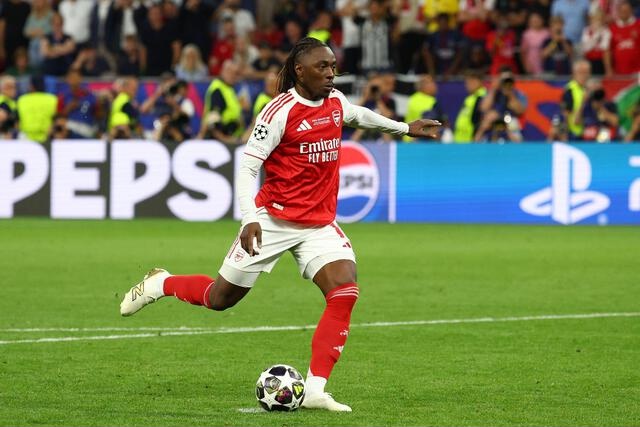 |
Eberechi Eze took quite a long, hesitant moment before taking the penalty kick and missing. Photo: Alamy. |
Most fans remember those heart-stopping moments when players slowly walked up to the penalty spot. In reality, timing plays a much bigger role than we realize.
Statistics show that players who rush their shots after the referee's whistle, within 200 milliseconds, only achieve a 57% success rate. Conversely, those who pause for at least a second to regain their composure can convert over 80% of their shots into successful ones. Nuno Mendes is a prime example of this statistic, as he took a short run-up with no pause before unleashing his shot. As a result, David Raya anticipated the move and dived precisely to make the save.
This patience allows the brain time to prepare for the complex sequence of movements that are about to follow. Statistics show that English players often have a lower penalty conversion rate than players from other countries because they tend to shoot too hastily.
That's also why, under manager Gareth Southgate, England began to improve their penalty-taking ability thanks to collaboration with football and psychology professor Geir Jordet, who has analyzed every penalty shootout at the World Cup, EURO, and Champions League since 1976.
From the run-up, angle, speed, breathing technique, optimal shooting area to the goalkeeper, every detail is meticulously analyzed.
Jordet details the psychological, emotional, and physical damage these events can inflict on a football player. For many, this is the most devastating experience, unlike anything else they have to endure on the pitch.
What makes a good penalty kick lies first and foremost with the player taking it. Psychology plays a crucial role when stepping up to take a penalty. A penalty kick expert will know where to shoot and won't be distracted until the ball leaves their foot.
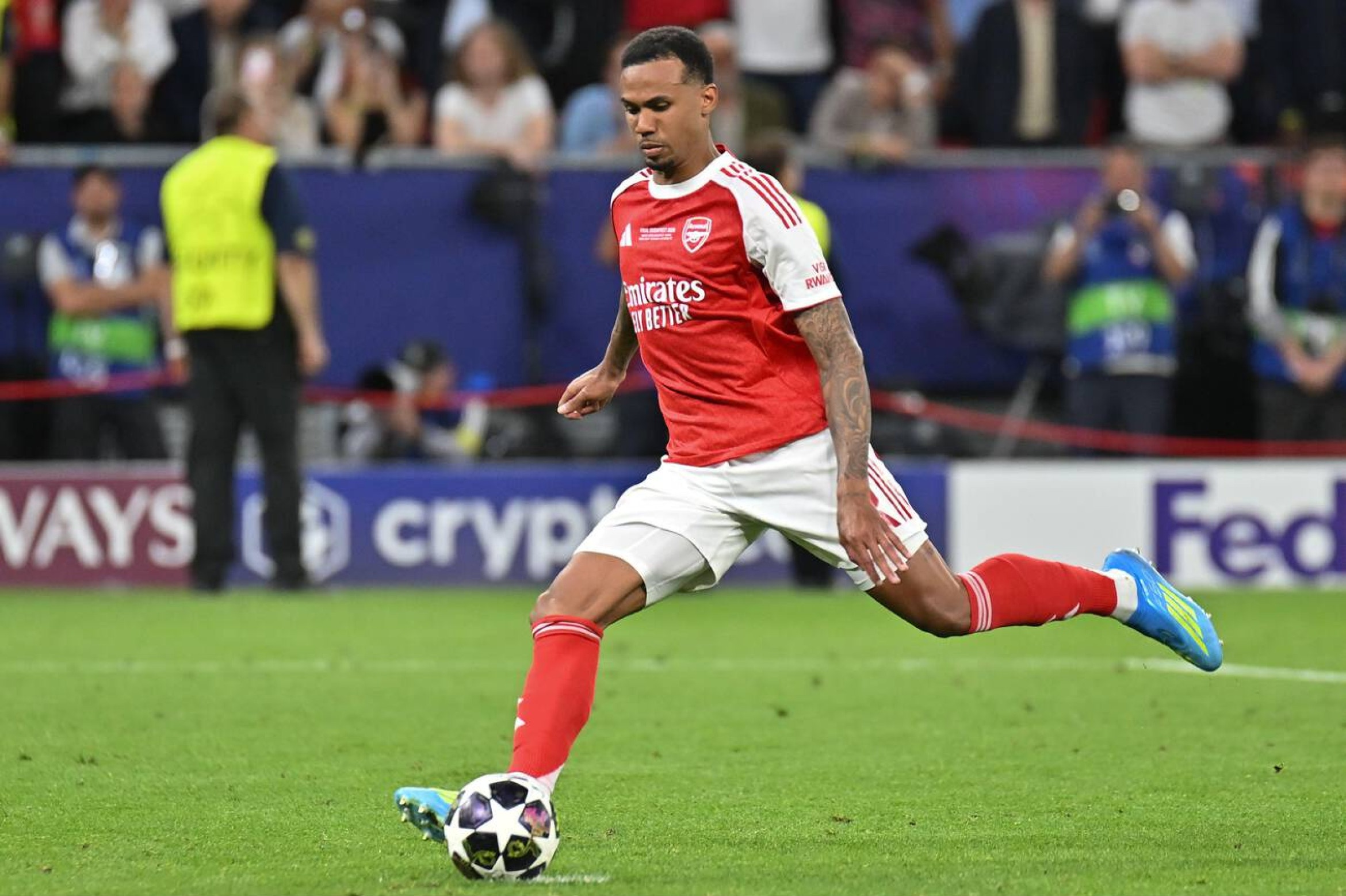 |
Players who pause for at least a second to regain their composure can convert over 80% of their shots into goals. Photo: Alamy. |
The best example of this kind of intermittent penalty kick is Ivan Toney, whom Jordet considers the safest penalty taker England has, even more so than Harry Kane. In his run-up, instead of slowing down, Toney usually moves slowly towards the ball, but then can accelerate when he sees the goalkeeper is unwilling to move too soon.
If the goalkeeper doesn't move, the shooter will have to increase their speed slightly in the final steps of their run-up. When the goalkeeper chooses to stand still, they can't generate enough force to reach the top corners of the goal.
Psychological warfare
However, hesitating too long before shooting can be a sign of overthinking. The record belongs to Marcus Rashford, at Euro 2020 when he needed 11 seconds after the referee's whistle to shoot and hit the post.
Megan Rapinoe also took a penalty kick that went over the crossbar at the 2023 Women's World Cup after a longer-than-usual pause.
The order in which penalties are taken is a crucial factor in determining which team wins. A study of 1,343 penalties in 129 penalty shootouts revealed that the teams that took the first penalty won 60.5% of the time.
Pressure also creates an interesting dynamic. Specifically, players successfully convert up to 92% of penalty kicks that could decide the victory for their team. However, this rate plummets to below 60% if a missed penalty means the team is eliminated.
Psychologically, it clearly reflects the "Loss Aversion" effect. This concept, proposed by psychologists Daniel Kahneman and Amos Tversky, indicates that people tend to react violently to the risk of losing what they already possess, much more strongly than to the motivation to gain an equivalent reward.
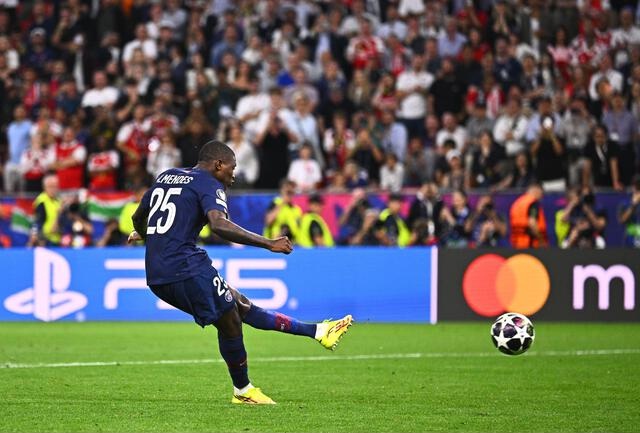 |
Nuno Mendes was the only PSG player to miss his penalty. The defender took a short run-up, didn't stop before shooting, and was completely saved by goalkeeper Raya. Photo: Alamy. |
Psychology suggests that humans feel the pain of failure more deeply than the joy of victory. The fear of failure becomes so overwhelming that success is downplayed, especially in moments of high pressure. As a result, players begin to view penalties as a "threat" rather than an "opportunity".
The distance taken to take a penalty can also determine the success or failure of the shot. Studies show that players who rush backward after placing the ball only achieve a 58% success rate.
Meanwhile, a player who takes more than a second to prepare will succeed in about 80% of their shots. Additionally, avoiding eye contact with the goalkeeper while preparing makes it easier for a player to miss.
This behavior disrupts concentration, reveals anxiety, and helps the goalkeeper guess the direction of the shot. Top stars turn this walk into part of their preparation routine. They take deep breaths to maintain composure and keep their eyes fixed on the goal to lock in focus.
Body language also reveals a player's confidence or doubt before a shot. Studies show that goalkeepers rate players with "assertive" body language higher than those with a "submissive" posture.
This makes goalkeepers feel threatened by confident players, thereby reducing their decision-making accuracy. Eden Hazard is an expert at exploiting this psychological advantage by maintaining a calm and confident posture throughout his run-up.
Source: https://znews.vn/eze-va-gabriel-khong-sai-khi-nhap-truoc-cu-phat-den-post1655727.html





















![[Photo] Reception to welcome General Secretary and President To Lam and his wife on their State visit to the Philippines](https://vphoto.vietnam.vn/thumb/1200x675/vietnam/resource/IMAGE/2026/06/01/1780295488620_vna-potal-chieu-dai-chao-mung-tong-bi-thu-chu-tich-nuoc-to-lam-va-phu-nhan-tham-cap-nha-nuoc-toi-philippines-8798060-7855-jpg.webp)








































































Comment (0)