

 |
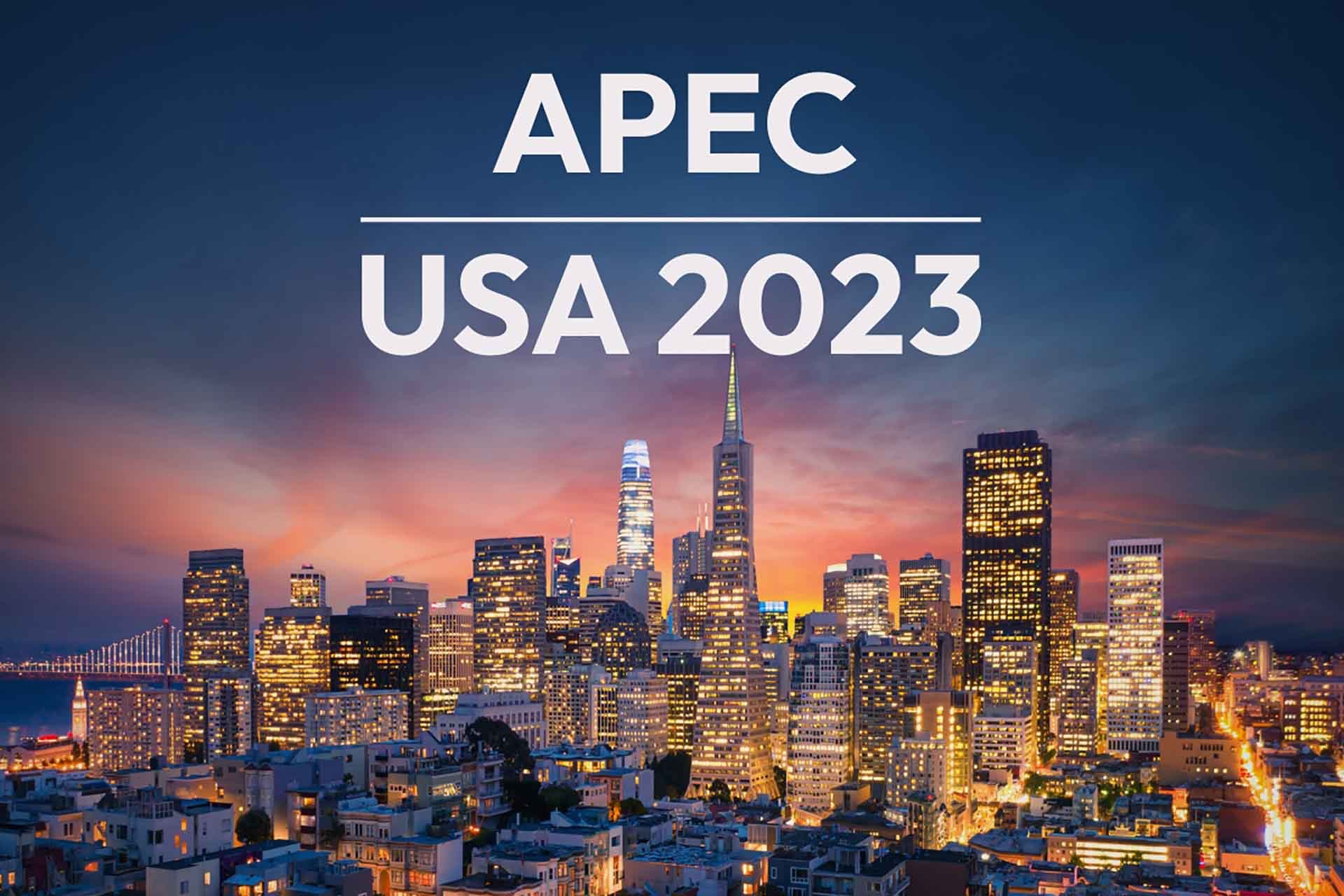
| San Francisco is considered the most suitable location for connecting APEC economies. (Source: Getty Images) |
San Francisco, a city on the West Coast of the United States, is becoming a global focal point. This is because the Asia-Pacific Economic Cooperation (APEC) Summit Week, held from November 11-17, is attracting thousands of leaders, private sector representatives, international organizations, and academics from 21 member economies.
As host country Foreign Minister Antony J. Blinken proudly introduced – it would be difficult to find a more suitable place to bring us all together than at APEC. Because San Francisco – a melting pot of cultures, a place connecting peoples, is also the place that, for generations, has bound the people and economies of the Asia-Pacific region together.
Strengthening teamwork
Against a backdrop of ongoing geopolitical conflicts, complex and unpredictable major power relations, and a global economy facing numerous recession risks, what signal does the holding of this important multilateral conference in a leading economy send to the world? This is a question of great interest to all global economies.
This is the third time the United States has hosted the APEC summit since 2011, marking exactly 30 years since the first summit was also held in the US. The host country's representatives emphasized that the US participation in APEC is a long-term commitment to the vision agreed upon in Malaysia in 2020 – a peaceful, dynamic, resilient, and open Asia-Pacific community that enhances the prosperity of its people and future generations.
The United States affirms its belief in that vision: a region where economies are free to choose their own paths and partners; where issues are resolved openly; where rules are reached transparently and applied fairly; and where goods, ideas, and people move legally and freely.
In fact, APEC has made significant progress, truly moving towards a more prosperous future. Since its establishment three decades ago, the region's GDP has increased from $19 trillion to $52.8 trillion. Per capita income has quadrupled, lifting millions out of poverty and creating a thriving middle class.
The 21 APEC member economies currently account for 38% of the world's population; they generate half of global trade and produce more than 60% of the world's goods and services.
In the US economy, APEC members have invested $1.7 trillion, supporting 2.3 million American jobs. Conversely, US companies have invested approximately $1.4 trillion in APEC economies.
However, APEC economies simultaneously face numerous uncertainties and significant challenges. In fact, while the world is still recovering from the disruptions of the Covid-19 pandemic, there remain deep wounds in the economy, trade, tourism, and the lives of many people. These include fragile supply chains, increasing economic inequality and insecurity, geopolitical tensions further weakening food and energy security, and a climate crisis exacerbating natural disasters and rising temperatures, disrupting supply chains and destroying crops.
That is why the host country, the United States, chose a theme focusing on creating a resilient and sustainable future for all. This is a moment that demands APEC members to reflect on and assess the reality, to strengthen dialogue and cooperation, and to transform challenges into opportunities for sustainable recovery and development.
A vision towards the future
After years of focusing on post-pandemic recovery, 2023 is considered a "pivotal year" for APEC – a time when economies can refocus on building long-term sustainable economies, as stated by US Treasury Secretary Janet Yellen at the APEC Finance Ministers' Meeting 2023 (November 12-13).
Building the APEC agenda has been a challenging process for many years. No in-person meetings between regional leaders were held in 2019, 2020, or 2021 due to travel restrictions caused by the pandemic or, in one case, domestic unrest in Chile.
The US hosting this year's forum was welcomed by most APEC members. Choosing the theme "Building a Resilient and Sustainable Future for All," the US emphasized three priorities: "connectivity, innovation, and inclusiveness" in building the Asia-Pacific region.
Accordingly, the goal is to collaborate in efforts to build better resilience for supply chains, invest in sustainable, high-quality infrastructure to connect economies, and lay the foundation for broader development.
Innovation aims to leverage APEC's role as a breeding ground for ideas, fostering new solutions to address some of the most challenging obstacles facing the region and the world – from facilitating a just energy transition to fostering a digital economy and enhancing the capabilities of workers and businesses.
Inclusiveness aims to increase inclusiveness and unleash untapped human potential, whether it's simply creating more opportunities for women, supporting local entrepreneurs in accessing capital, or, on a much larger scale, leveraging satellite systems to expand connectivity to rural and remote areas.
Experts believe that APEC's special significance is evident at both the global and regional levels. In particular, regarding its future vision, in the context of a rapidly changing world, complex interplay of internal and external factors, and increasing regional fragmentation, whether APEC can maintain its position as the leading channel for economic cooperation in the Asia-Pacific region, fostering a common understanding of cooperation among parties, and maintaining regional unity is not only the most valuable but also the most important question to consider.
Confident in the goals set for the 30th APEC Forum, in her opening remarks at the APEC Ministerial Meeting (November 14-15), US Trade Representative Katherine Tai emphasized: “We (APEC) are not building from scratch. We have a solid foundation for cooperation, built over many years: Malaysia with the Putrajaya Vision 2040, New Zealand with the Aotearoa Action Plan, and Thailand with the Bangkok Goals on a Bio-Green Economy… But we also know that there is still much work to be done.”
Source

![[Photo] Reception to welcome General Secretary and President To Lam and his wife on their State visit to the Philippines](https://vphoto.vietnam.vn/thumb/1200x675/vietnam/resource/IMAGE/2026/06/01/1780295488620_vna-potal-chieu-dai-chao-mung-tong-bi-thu-chu-tich-nuoc-to-lam-va-phu-nhan-tham-cap-nha-nuoc-toi-philippines-8798060-7855-jpg.webp)

![[Photo] General Secretary and President To Lam and the President of the Philippines hold talks.](https://vphoto.vietnam.vn/thumb/1200x675/vietnam/resource/IMAGE/2026/06/01/1780286997787_anh-man-hinh-2026-06-01-luc-11-09-43.png)




















































































Comment (0)