

Arabica coffee prices fell 6.92% to $6,526 per ton, the lowest level in a week; Robusta coffee prices declined for the second consecutive session, plummeting 10.63% to $4,834 per ton.
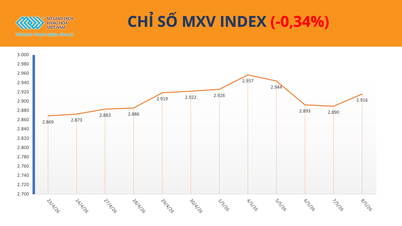
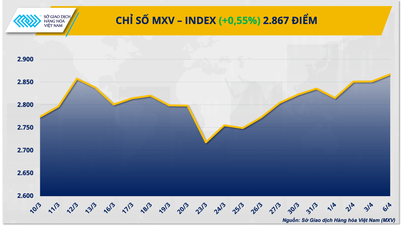
According to the Vietnam Commodity Exchange (MXV), the global raw materials market was in the red during the first trading session of the week (December 2nd). Strong selling pressure pulled the MXV-Index down 1% to 2,162 points. Notably, seven out of nine industrial raw materials saw price declines, with coffee prices plummeting by 7% for Arabica and 10.6% for Robusta. Following this trend, prices of most agricultural products also weakened.
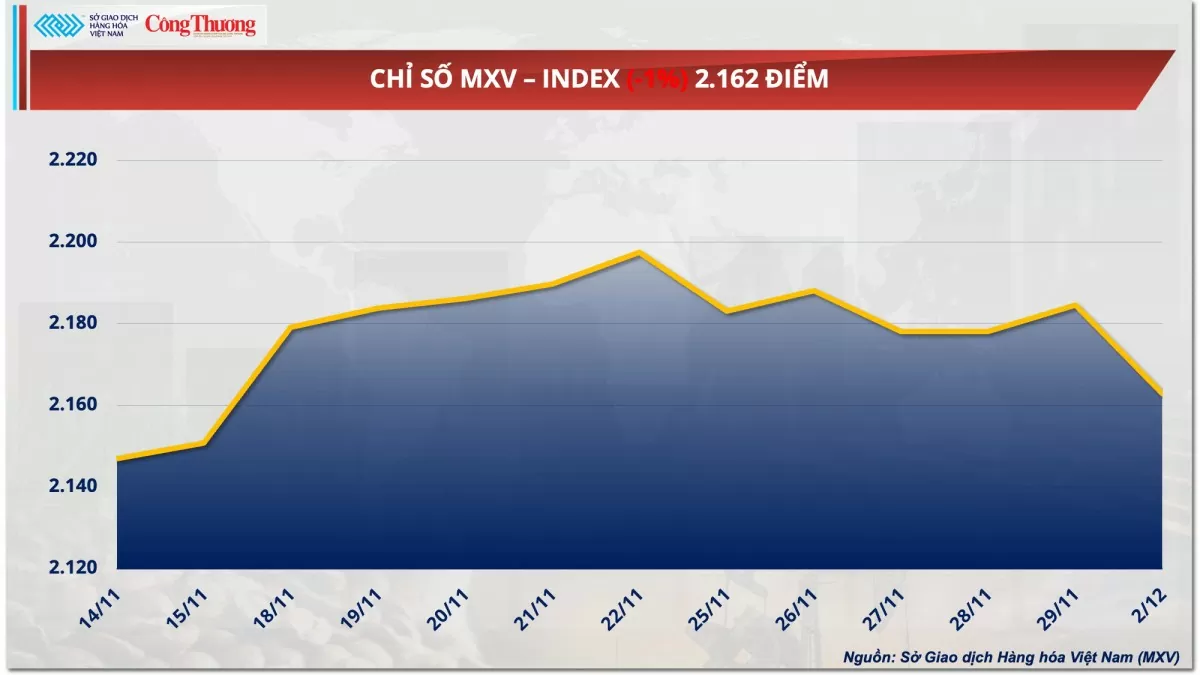 |
| MXV-Index |
Robusta coffee prices have fallen to a record low.
Closing the first trading session of the week, red dominated the industrial raw materials price board. In particular, coffee prices shocked the market as they plummeted sharply.
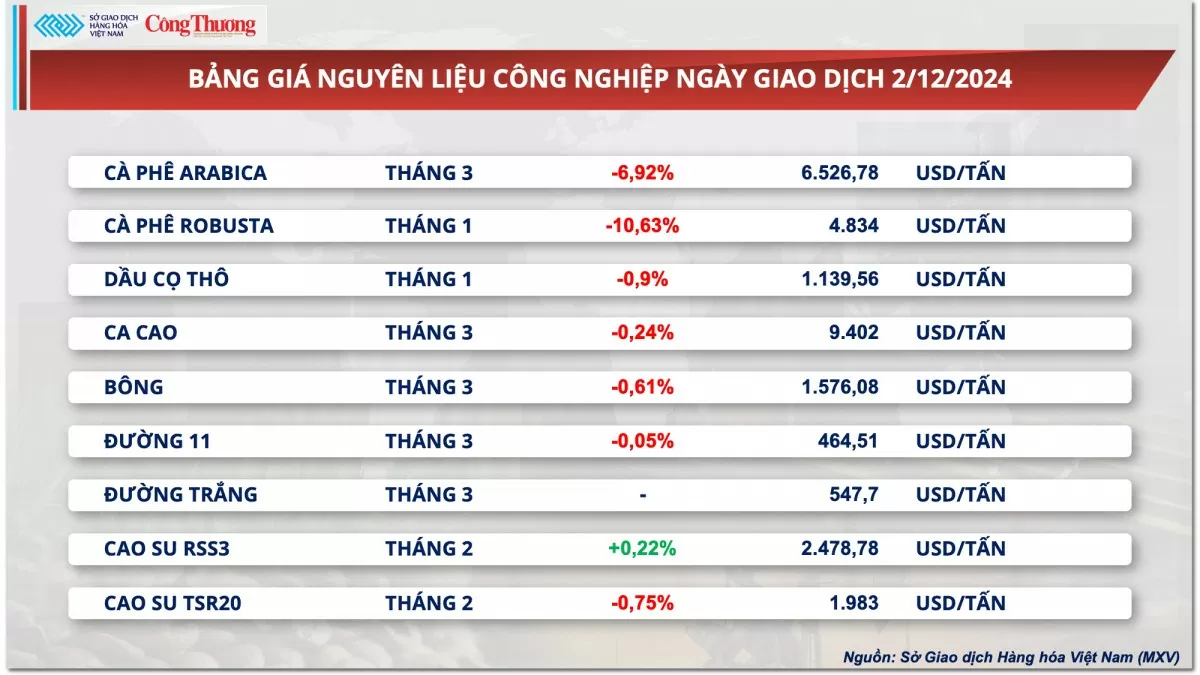 |
| Industrial raw material price list |
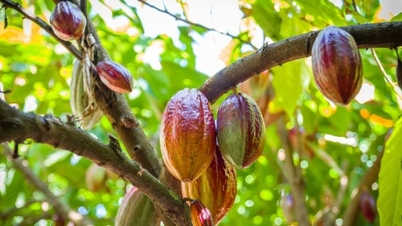
Specifically, Arabica coffee prices fell 6.92% to $6,526 per ton, the lowest level in a week; Robusta coffee prices declined for the second consecutive session, plummeting 10.63% compared to the reference price to $4,834 per ton.
The Dollar Index surged nearly 1% yesterday after President Trump announced on social media that he would impose 100% tariffs on BRICS countries if they attempted to create a new currency to replace the US dollar. Meanwhile, the Brazilian Real weakened, causing the USD/BRL exchange rate to jump 1.42% to a historical high. This widening gap fueled concerns that Brazilian farmers would sell off their coffee to profit, drawing money out of the coffee market and causing prices to fall sharply.
Furthermore, profit-taking selling pressure following last weekend's correction intensified, pushing coffee prices down to an unprecedented low in a single session. In addition, technical corrections after the surge also contributed to the upward pressure on prices.
In terms of fundamental information, the market continues to show certain concerns about coffee supply in major producing countries. Notably, persistently below-historical rainfall in Brazil's main coffee-growing region has cast a negative outlook on the new crop supply. Somar Meteorologia reported 17.8 mm of rainfall in Minas Gerais, Brazil's largest Arabica coffee-producing state, last week, equivalent to 31% of the historical average.
Also concerned about the weather, the consulting firm Hedgepoint, in its global market report, predicts Brazil's coffee production for the 2025-2026 crop year to be around 65.2 million bags. Of this, Arabica coffee production is expected to be 42.6 million 60kg bags, a 1.4% decrease compared to the previous season. The firm also stated that its production forecast may change depending on future weather conditions.
In the domestic market, coffee prices in the Central Highlands and Southeast regions this morning (December 3rd) were recorded at 125,800 - 126,500 VND/kg, a decrease of 4,000 - 4,300 VND/kg compared to December 2nd. However, compared to the same period last year, coffee prices have now doubled.
Soybean prices weakened for the third consecutive session.
According to MXV, soybean prices fell slightly by 0.43%, marking the third consecutive session of weaker closing prices. The market was pressured by positive supply prospects from leading South American producers such as Brazil and Argentina.
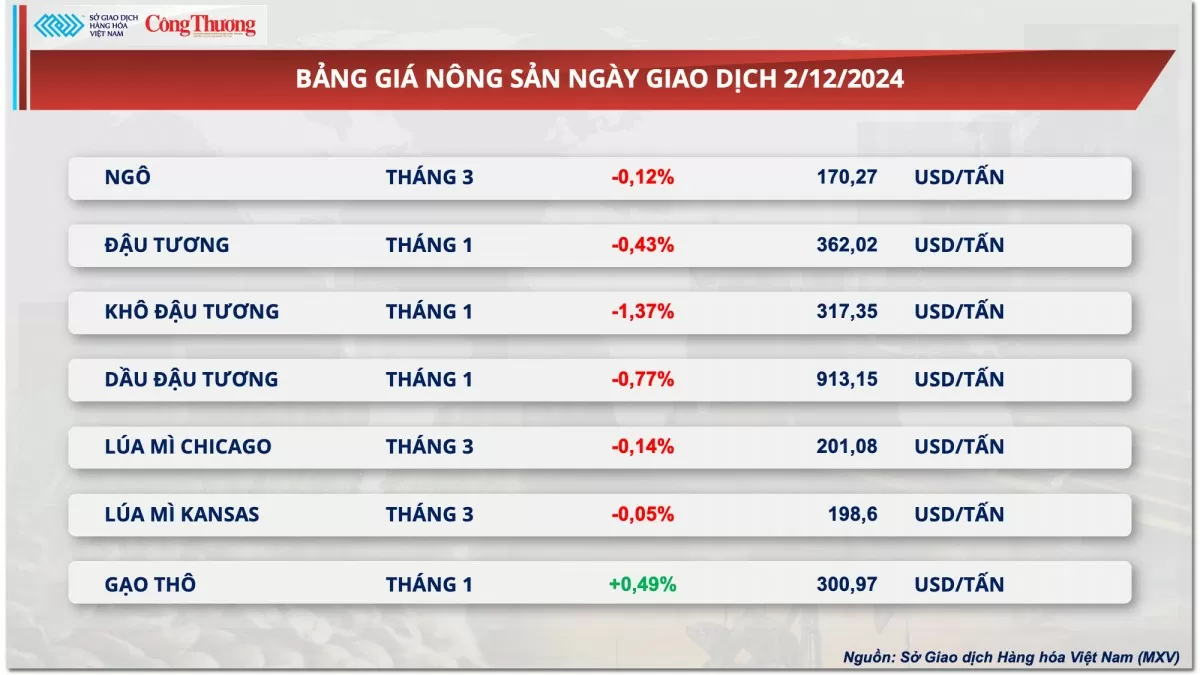 |
| Agricultural product price list |
According to a report from the consulting firm AgRural, Brazil's soybean planting progress for the 2024-2025 crop year reached 91% of the planned area as of November 28th, the highest level for this time since 2018. Although planting is slowing down in some areas east of Mato Grosso and Triangulo Mineiro due to excessive moisture, AgRural emphasizes that overall, many soybean fields across the country show very good yield potential. Another consulting firm, Céleres, stated that favorable climatic conditions in Brazil's soybean fields for the 2024-2025 crop year have reinforced expectations of a "bumper crop," with an estimated yield of 170.8 million tons. The report highlights that this bumper crop is expected to generate export volumes of up to 107 million tons. The need to transport such large volumes will create a higher demand for transportation services, therefore, transportation costs are likely to increase during harvest time.
In addition, in its Export Inspections report, the U.S. Department of Agriculture (USDA) indicated that soybean shipments for the reporting week reached 2.09 million tons, down from 2.12 million tons the previous week. While not a significant change, this still raises concerns that demand for U.S. soybeans has begun to slow. This factor contributed to the pressure on the market yesterday.
Soybean meal prices weakened by nearly 1.4%, the sharpest decline among agricultural commodities, also due to positive supply prospects. The Buenos Aires Grain Exchange reported that crops in Argentina are in good condition after receiving additional moisture from recent rainfall. This also contributed to downward pressure on prices.
On the domestic market, as of December 2nd, the quoted price for South American soybean meal delivered to Vietnamese ports increased slightly. At Vung Tau port, the quoted price for soybean meal futures for January 2025 - February 2025 delivery was 10,650 VND/kg. At Cai Lan port, the quoted price was approximately 100 VND/kg higher than at Vung Tau port.
Prices of some other goods
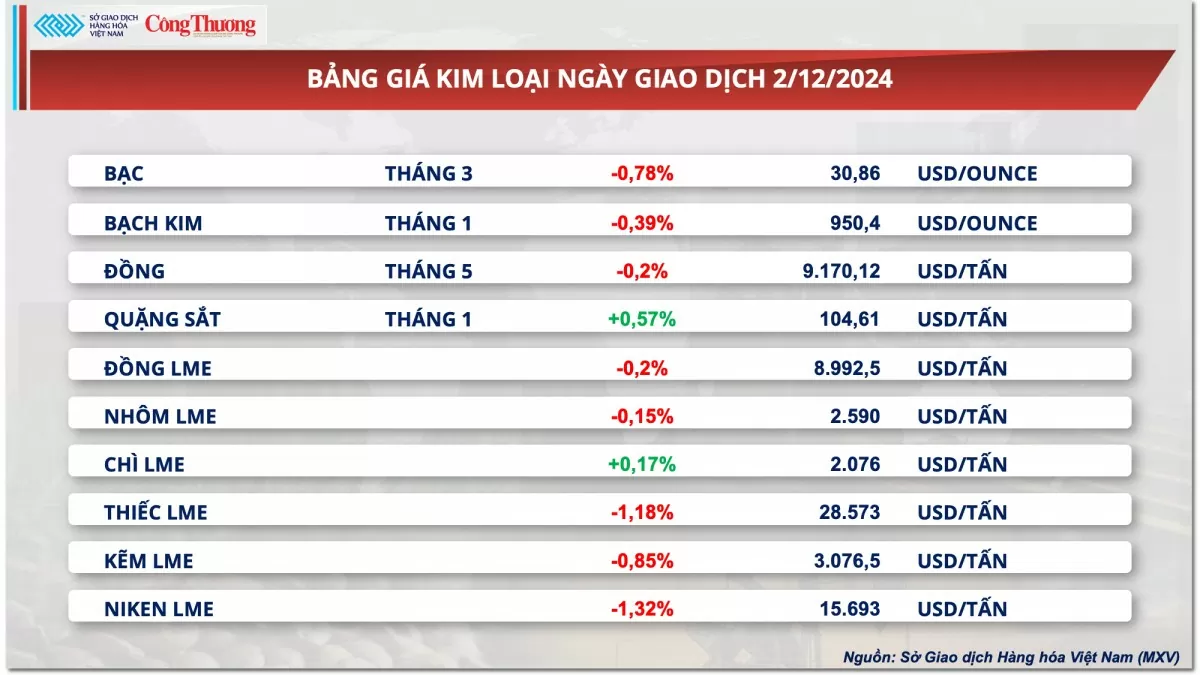 |
| Metal price list |
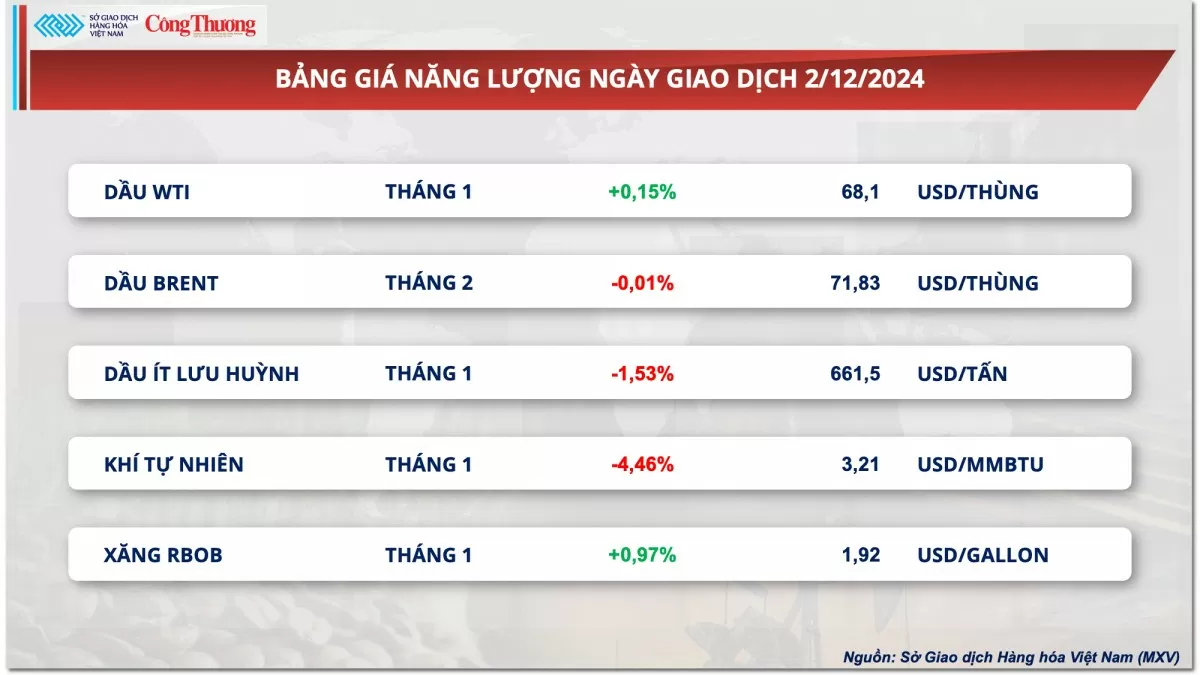 |
| Energy price list |
Source: https://congthuong.vn/thi-truong-hang-hoa-hom-nay-312-gia-ca-phe-robusta-giam-sau-ky-luc-362148.html

![[Photo] The courage of new recruits of Brigade 144 on the training ground.](https://vphoto.vietnam.vn/thumb/1200x675/vietnam/resource/IMAGE/2026/05/27/1779881651341_anh-man-hinh-2026-05-27-luc-18-32-52.png)

![[Photo] The heat at the fireworks display site on the opening night of the Da Nang International Fireworks Festival 2026](https://vphoto.vietnam.vn/thumb/1200x675/vietnam/resource/IMAGE/2026/05/27/1779889741485_ndo_br_z7872039145157-fecaba5112f39e8352544099d7ef4738-5140-jpg.webp)



















































![[Photo] The courage of new recruits of Brigade 144 on the training ground.](https://vphoto.vietnam.vn/thumb/402x226/vietnam/resource/IMAGE/2026/05/27/1779881651341_anh-man-hinh-2026-05-27-luc-18-32-52.png)




























Comment (0)