

Human resources capable of mastering AI technology - many challenges.
The emergence of AI has left journalists both excited and apprehensive. AI not only assists in automating content production processes but also contributes to data analysis, improving content quality, and enhancing the user experience.
As stated by the Chairman of the Vietnam Journalists Association, Le Quoc Minh: "If AI technologies are applied and deployed early to maximize their power, they can positively impact the sustainable development of media organizations." However, AI also presents significant challenges, from content production management to journalistic ethics and legal aspects. And from the perspective of human resource training, the rapid development of AI technology has placed considerable pressure on journalism training and development.
Journalist Vo Hung Thuat, Director of the Media Center of Tuoi Tre Newspaper, believes that the journalism industry and its operating model have undergone profound changes. However, current journalism training still focuses on professional skills development. Training programs concentrate heavily on traditional knowledge areas… Not to mention that many universities still use outdated textbooks that do not reflect the realities of modern journalism.
Some universities are overly reliant on lecturers with primarily research experience, leading to teaching that lacks practical relevance, or conversely, too heavily focused on lecturers with only practical experience and lacking general knowledge. Courses on programming and data analysis are almost completely absent. Therefore, journalism students often lack fundamental technological knowledge, limiting their ability to work with modern digital journalism tools. In particular, AI is playing an increasingly important role in collecting, processing, and creating journalistic content, but it has not been systematically integrated into the curriculum.
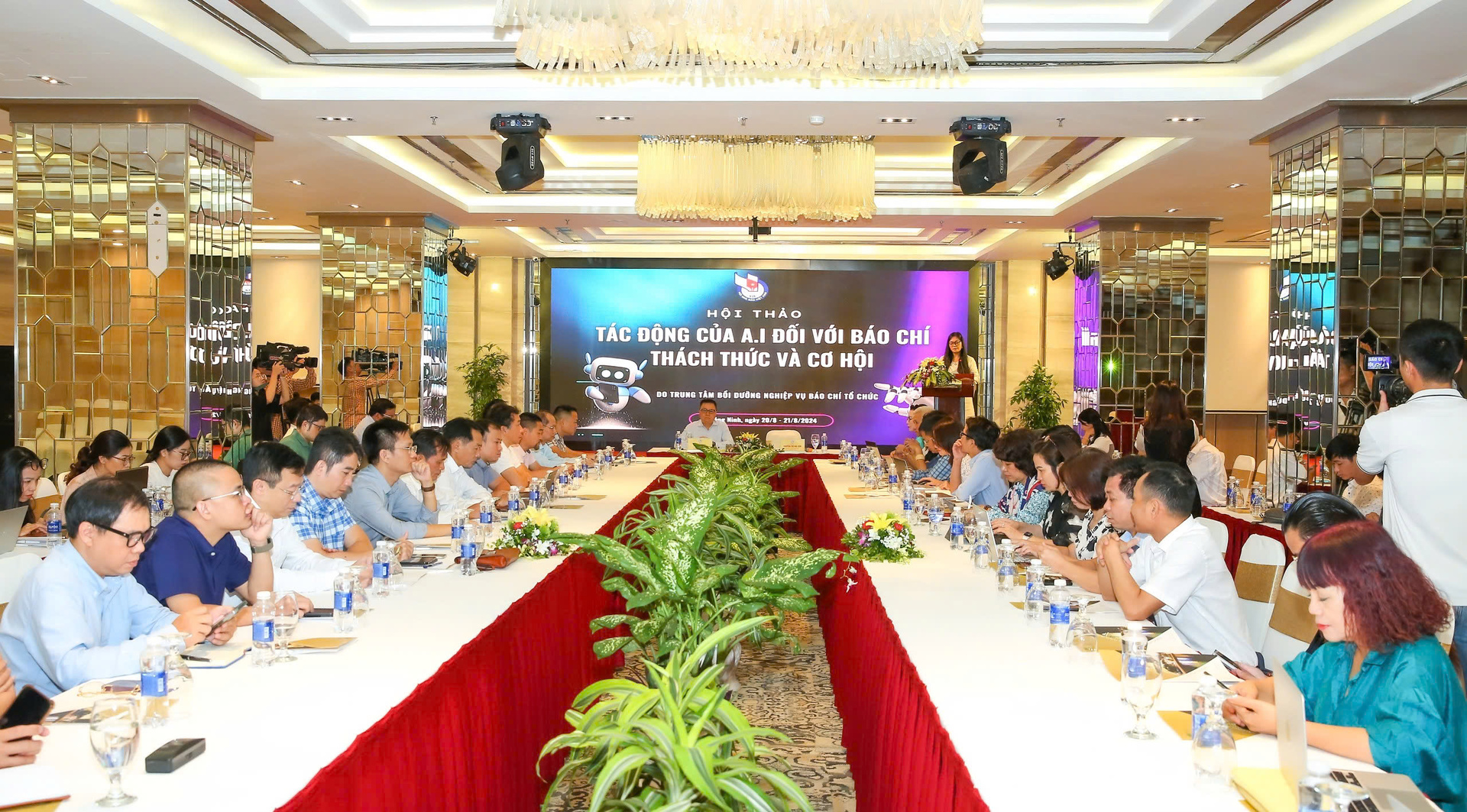
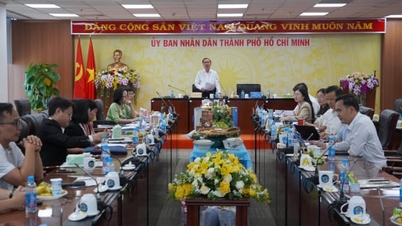
The seminar was chaired by Mr. Le Quoc Minh, Member of the Central Committee of the Communist Party of Vietnam, Editor-in-Chief of Nhan Dan Newspaper, Deputy Head of the Central Propaganda Department, and President of the Vietnam Journalists Association. Photo: Son Hai
Sharing this view, journalist Nguyen Phu Huan, an editor at the Voice of Vietnam Radio, said that in reality, journalism training institutions have not yet mastered AI technology and have not built a team of versatile journalists, leading to a shortage of necessary skills and knowledge in the digital age. And as AI becomes an indispensable part of journalism, the issue of training reporters in the new situation is becoming urgent if we do not want the position of journalism, which has existed for hundreds of years, to be shaken and the risk of job loss to threaten every journalist…
Besides the challenges at training institutions, journalist Phu Huan pointed out that the process of training and developing reporters through short-term courses also faces many difficulties. He believes that the Center for Journalism Professional Training under the Vietnam Journalists Association, or some media agencies, including local media agencies, have paid great attention to and proactively organized training courses for reporters and editors on the application of AI in journalistic activities.
For example, the Lam Dong Provincial Journalists Association, according to its 2024 plan, registered with the Center to organize approximately four training courses, with the main content focusing on the continued application of artificial intelligence in journalistic work. However, in practice, the training and professional development activities for journalists, stemming from the Association's work, are taking place on a small scale. Currently, nearly 25,000 journalists have been issued press cards, not including those working in journalism who have not yet been issued cards, while each class only has about 2-3 trainees. Furthermore, AI is a new issue requiring many skills, while the time allocated for training courses on this topic is usually short, consisting of only 3 to 4 sessions over two days.
Furthermore, the quality of the instructors for these training courses is not yet consistent in terms of professional competence, teaching experience, and the scientific and practical aspects of their lectures. This indicates that the training and development of journalists in this field is still in its early stages and requires continued attention, adjustment, and improvement.
What is the solution for training suitable human resources?
Discussing solutions, journalists all agreed that improving the quality of human resources is crucial. Therefore, journalist Vo Hung Thuat emphasized the requirement: “We must immediately change the content and methods of training so that in the near future, journalists will be equipped with the necessary skills. First and foremost is content creation skills. Journalists need to understand the principles of content creation to produce works and products suitable for different communication channels. Journalists need the ability to create unique, valuable, and distinctive content compared to content generated by AI. Next are digital skills, critical thinking skills, communication skills, teamwork skills, and business skills.”
Journalist Nguyen Thanh Tung - Head of Communications at Nguoi Lao Dong Newspaper (Ho Chi Minh City) - Visiting Lecturer at the Faculty of Journalism and Communication, University of Social Sciences and Humanities, Ho Chi Minh City, believes that the practical experience of newsrooms has provided a solution for training suitable human resources in the current context. Mr. Thanh Tung proposes that universities and journalism training centers should develop and update new content in their teaching for students on the application of AI technology in journalism.

Journalist Nguyen Thanh Tung - Head of the Communications Department of Nguoi Lao Dong Newspaper, speaks at the seminar. Photo: Son Hai
Specifically: Strengthening new content on journalistic ethics and standards when working with Artificial Intelligence (AI) technology. This means updating content to help learners understand the necessity of adhering to ethical rules when exploiting and using AI technology, while also grasping the principles and methods of applying them flexibly to specific situations that may arise in practice. In addition, it is also necessary to equip or update specialized knowledge on AI applications such as: SMAC converged journalism systems, algorithms and algorithm applications in journalism and media, Big Data technology, artificial intelligence technology, data analytics technology, virtual reality technology, augmented reality, etc.
Simultaneously, in coordination with media outlets and communication companies, we will guide internships and enhance practical exercises for students to create specific AI-based journalistic products, such as: applying the operating principles of artificial intelligence generation and prompt engineering techniques to effectively utilize AI tools to enhance image and video effects; using AI to create text-based news reports and podcasts; using AI and supporting tools to create short videos/clips from the field; and using AI to synthesize and analyze data to create sequences of events for news reports, infographics, charts, etc.
In parallel, Mr. Tung also suggested that the Center for Journalism Professional Training of the Vietnam Journalists Association and other relevant units should continue to develop and implement short-term training courses and programs that update practical and specific new technologies to cultivate and enhance the capacity of reporters in applying Artificial Intelligence in journalistic production, especially those in local newspapers and broadcasting stations that have fewer resources than larger centers in accessing AI.
It can be said that proposals for AI training always require coordination between the guidance of state agencies and the Vietnam Journalists Association; close cooperation and collaboration between journalism training institutions, schools, and employers, namely media organizations. This is a difficult problem and requires a long roadmap with many tasks to be done. However, in the short term, strengthening and innovating training content is necessary for journalists who want to use artificial intelligence to serve their work in the future, helping them proactively and quickly update new technologies in their professional activities…
May River
Source: https://www.congluan.vn/giai-bai-toan-nguon-luc-cho-ky-nguyen-ai-post308738.html


![[Photo] Prime Minister Pham Minh Chinh attends the Conference on the Implementation of Tasks for 2026 of the Industry and Trade Sector](/_next/image?url=https%3A%2F%2Fvphoto.vietnam.vn%2Fthumb%2F1200x675%2Fvietnam%2Fresource%2FIMAGE%2F2025%2F12%2F19%2F1766159500458_ndo_br_shared31-jpg.webp&w=3840&q=75)
























































































Comment (0)