

The reasons stem from declining birth rates, rising living costs, and population migration.
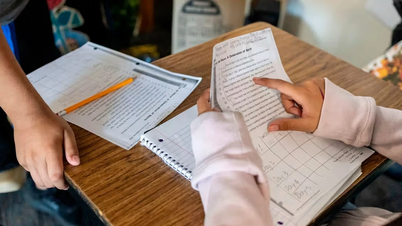
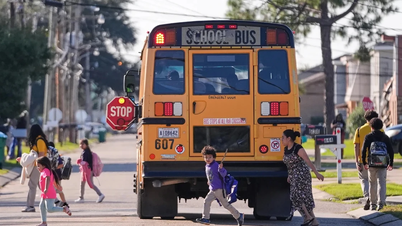
According to an analysis by the New York Times, the number of children in the United States is declining, leading to a silent crisis in the public education system. In 30 states across the country, the number of students from kindergarten to 12th grade has been steadily decreasing since the mid-2010s. This trend is not only evident in major cities like Los Angeles, Chicago, or New York, but is also spreading to suburbs and smaller school districts.
The decline in student numbers has direct financial consequences. In the U.S., public education budgets typically depend on the number of students enrolled. When student numbers decrease, school districts' revenue shrinks. Many institutions are forced to lay off staff, cut back on programs, or close schools.
According to experts, several factors contribute to this situation, including the increasingly high cost of housing and living in major cities. Additionally, stricter immigration policies in recent years have reduced the number of immigrant children. Many school districts previously relied heavily on this group of children.
However, the most fundamental cause remains the record-low birth rate in the United States. The birth rate peaked in 2007 but has since declined by 24%. This means fewer and fewer children are entering school age. The National Center for Education Statistics forecasts that this downward trend in enrollment will continue for many years to come.
Dr. Marguerite Roza, Director of the Edunomics Lab at Georgetown University, argues that the current situation is “just the tip of the iceberg.” Many school districts have begun to feel the financial pressure acutely.
In Portland, Oregon, public school enrollment has declined by 9% since 2014. While the district is working to attract students with early childhood education and literacy programs, officials acknowledge this is not a long-term solution. Portland currently faces a budget deficit of $50 million by 2027.
For public schools, the crisis is far from over. Even schools with few students must maintain a basic administrative and teaching staff, driving up costs per student. To save money, many schools are forced to cut back on electives, advanced classes, or extracurricular activities. This, in turn, encourages parents to transfer their children to other schools.
Closing schools is seen as the most cost-effective solution.
Gene Walker, chairman of the board of a public school in Pittsburgh, USA, shared: “Restructuring is necessary to focus resources on the remaining schools, giving students better access to arts, music , and foreign languages. While research shows that school closures can negatively impact students, many experts believe that transferring to higher-quality schools sometimes still offers long-term benefits.”
However, many experts oppose the plan. Some demographers hope that the birth rate in the US may recover in the future. However, even in the most optimistic scenario, school districts would still have to wait at least 10 to 15 years before seeing a noticeable change.
William H. Frey, a demographer at the Brookings Institute in the US, assessed: "Americans are leaving the high-cost coastal and Midwest states to move to the Southern and Western states, where housing prices are more affordable. Evidence of this is the decline in student numbers in affluent school districts with high-quality education, such as Palo Alto in California or Montclair in New Jersey."
Source: https://giaoducthoidai.vn/giao-duc-cong-lap-my-khung-hoang-thieu-hoc-sinh-post777321.html

![[Image] Close-up view of the interchange connecting the two expressways and Long Thanh Airport.](https://vphoto.vietnam.vn/thumb/1200x675/vietnam/resource/IMAGE/2026/05/25/1779703378210_ndo_br_z7863716673926-224453a31600126cce10622af6290afd-4549-jpg.webp)



![[Image] Hanoi's urban life under the challenge of a "scorching hot" environment](https://vphoto.vietnam.vn/thumb/1200x675/vietnam/resource/IMAGE/2026/05/25/1779706979265_nang-nong-t5-2026-minh-duy-7-4636-jpg.webp)



































































































Comment (0)