

Therefore, schools, families, and society need to find solutions to help children balance screen time and life, ensuring their health and academic performance.
Balance studying, resting, and eating.
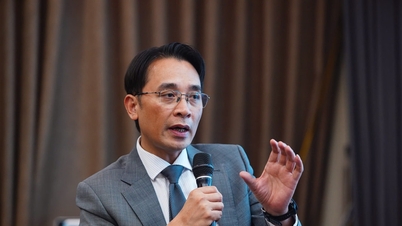
Mr. Pham Van Giao, Director of the Institute of Applied Psychological and Educational Sciences (Vietnam Association of Psychological and Educational Sciences), stated that the pressure of studying, exams, and excessive expectations for achievement are creating serious consequences, directly affecting both the mental and physical health of students.
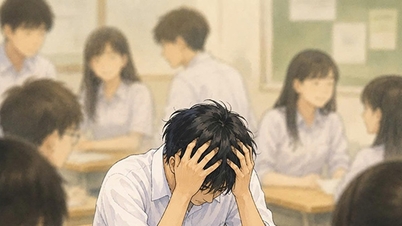
Psychologically, children who are frequently under high pressure are prone to academic burnout, exhibiting symptoms such as anxiety, fear of failure, or feelings of guilt for not meeting adult expectations. Physically, prolonged stress not only disrupts sleep, digestion, and weakens the immune system, but also negatively impacts brain development, particularly in areas related to memory and emotions.
"To reduce academic pressure while still ensuring the quality of education, I believe we need to shift from a rote learning mindset to a competency-based approach. This requires building flexible learning plans that balance studying, rest, and meals. At the same time, schools should encourage students to participate in international exchange programs, extracurricular activities, and spend time with their families to strengthen bonds and communication," Mr. Giao stated.
Nguyen Thien Phuoc, a 9th-grade student at Tan Hiep A2 Primary and Secondary School (Thanh Dong, An Giang ), said that the final year of secondary school brings a lot of pressure. Besides classroom learning, he has to complete many homework assignments, participate in regular tests, and prepare for important exams. Without proper time management, he and his classmates easily become stressed.
“I always try to study according to a clear schedule, avoiding piling up assignments right before exams. After each study session, I take time to rest, do some light exercise, or play with friends to relax my mind. When I feel too tired, I usually share it with my parents or teachers to get encouragement and guidance,” Thien Phuoc confided.
From a parent's perspective, Mr. Nguyen Duc Phu (Thanh Dong, An Giang) believes that compared to the past, the academic pressure on students today is quite high. Students not only learn classroom knowledge but also have to complete numerous assignments, tests, and exams continuously. In rural areas, despite limited resources, parents still hope their children will excel academically and have a better future.
“My family has decided to support our child rather than put pressure on him. We remind him to study regularly, but we don't focus on grades or comparing him to his friends. When his academic results aren't as good as we hoped, we choose to encourage him to try harder and learn from his mistakes for next time. Our philosophy is to help him understand the lessons and enjoy learning, rather than learning in fear,” Mr. Phu said.
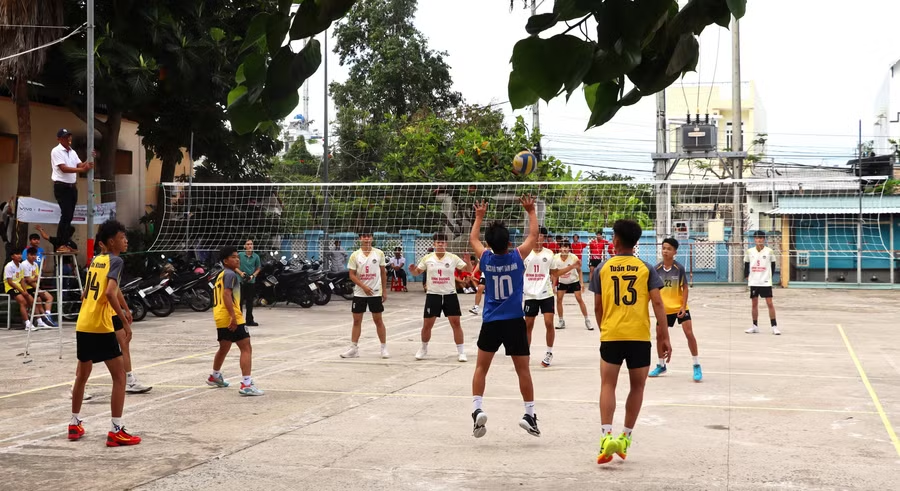 Students from the Binh Duong University branch in Ca Mau participate in sports activities to improve their health. Photo: QM
Every day at school is a happy day.
Gia Rai B Primary School (Gia Rai Ward, Ca Mau Province) is one of the schools recognized in the province for its effective implementation of the "Happy School" model. Principal Tran Van Truc stated that to achieve the criteria of a "Happy School," the first step is to change the perceptions and mindsets of administrators, teachers, parents, and students, aiming to create a friendly, healthy, green, clean, beautiful, and safe learning environment. The school adjusts its teaching methods to avoid putting pressure on students, ensuring that every day students come to school feeling happy and free from academic stress.
“I believe that building a friendly and happy learning environment is an effective solution to help students reduce academic pressure, while also allowing them to participate in many health-enhancing activities, improving their physical and mental well-being. Since implementing the Happy School model, Gia Rai B Primary School no longer experiences student dropouts or fights, and the rate of students suffering from depression and health problems due to academic pressure and low grades is low,” the school principal informed.
Sharing the same view, Mr. Vo Nhat Minh Tam - Principal of Gia Rai High School (Bac Lieu ward, Ca Mau province), believes that when students study in a positive environment, they will reduce pressure, increase self-confidence, and boost their motivation to learn.
“A happy school not only helps students reduce psychological pressure but also supports and creates conditions for them to maximize their potential, love, and passion for learning. It's a place free from school violence and unethical behavior, where students limit their use of phone screens for social media and games, and instead actively participate in cultural, artistic, and sports activities, as well as experiential learning… helping to improve their physical and mental health. With these benefits, Gia Rai High School has been actively building a happy school model,” Mr. Tam shared.
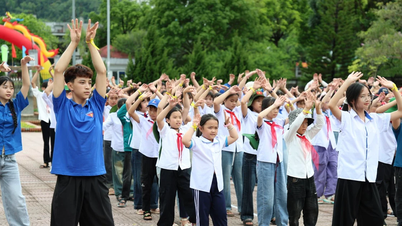
Along with promoting the implementation of the criteria of the Happy School model, many schools in Ca Mau province regularly organize cultural and artistic exchange activities, sports activities, experiential activities, field trips, and visits to historical sites to recall traditions... both inside and outside the school, creating conditions to help students reduce academic and exam pressure, and improve their physical and mental health.
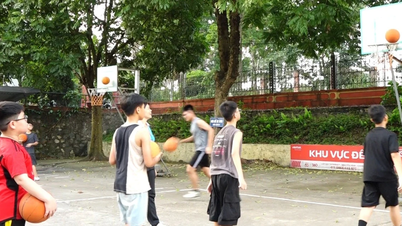
“We have established seven clubs in the school, including: traditional music and singing; arts and culture; life skills education; STEM; science and technology research… encouraging each student to participate in at least one club according to their interests. The clubs regularly meet for students to socialize, learn, and practice skills. In addition, the school has allocated an area on campus and invested in equipment for sports activities, helping students improve their physical fitness and reduce stress during their studies,” said Mr. Ngo Thanh Vu, Principal of Cai Nuoc High School (Ca Mau).
Use your phone at the right time.
For many, holding a phone is a habit, and for a significant number of students, a phone is an inseparable companion. In reality, many students are abusing their phones for gaming, browsing social media, chatting, and more. When convenience exceeds limits, the phone, once a helpful tool, becomes a factor seriously impacting students' academic performance and health. To help students balance screen time and real life, many schools in Ca Mau province have banned phone use not only during class but also during recess.
Stepping away from phone screens, recess time at Vo Van Kiet High School (Phuoc Long, Ca Mau) is filled with sports, arts, folk games, reading, and participation in life skills clubs. Similarly, recess time at Dam Doi High School (Dam Doi, Ca Mau) no longer sees students silently gathered around electronic screens. Instead, there is a lively atmosphere of group activities and folk games such as tug-of-war, jump rope, bamboo pole jumping, chess, etc., attracting a large number of students.
Quách Thanh Đạt, a student in class 11A6 at Dam Doi High School, shared: “Not using my phone makes recess very meaningful. Participating in sports and traditional games helps me improve my health and relax after stressful lessons, while also contributing to preserving traditional values in a modern school environment.”
Nguyen Ngoc Xuyen, a student in class 10A6 at Vo Van Kiet High School, added: “Previously, when the school allowed the use of mobile phones, during recess I would often stay in the classroom browsing the internet, watching YouTube, or chatting. Now, I go out to the playground to participate in sports activities and study with my friends. I feel that recess is more enjoyable, helps me develop more skills, and strengthens my friendships.”
Mr. Tran Quang Dien, Principal of Vo Van Kiet High School, said that banning the use of mobile phones in school is one of the school's solutions to help students maintain their physical and mental health, improve learning efficiency, and protect their healthy development.
“Before the ban on mobile phones, if there were any conflicts at school, students would text each other online to resolve their disputes after school. But with the ban on phones, school conflicts have been significantly reduced. Over the years, the school has not experienced any incidents of school violence, including conflicts on social media; the students are happier, more united, and more loving towards each other, and the number of students with visual impairments has also decreased significantly,” Mr. Dien informed.
“The implementation of Circular 18/2025 of the Ministry of Education and Training is an urgent requirement for schools today. Schools need to coordinate with the Department of Education and Training to assign dedicated staff to support and organize regular psychological counseling sessions for students, and cooperate with parents and local authorities in detecting, supporting, and intervening promptly in psychological and social issues. At the same time, the education sector needs to decisively integrate the Social-Emotional Education (SEL) program into the main curriculum in a systematic way, helping students build a sustainable psychological “immune system” to protect themselves against pressure and change.”
"At the same time, we should implement a roadmap to streamline the academic curriculum, enhance practical experience activities, fundamentally change assessment methods; gradually reduce reliance on exams with scores that are heavily influenced by luck and pressure, and instead use a diverse set of competency-based assessment indicators that recognize individual progress throughout the learning process...", proposed Mr. Pham Van Giao - Director of the Institute of Applied Psychological and Educational Sciences.
Source: https://giaoducthoidai.vn/giao-duc-suc-khoe-the-chat-tinh-than-thoi-dai-so-post777175.html



![[Image] Close-up view of the interchange connecting the two expressways and Long Thanh Airport.](https://vphoto.vietnam.vn/thumb/1200x675/vietnam/resource/IMAGE/2026/05/25/1779703378210_ndo_br_z7863716673926-224453a31600126cce10622af6290afd-4549-jpg.webp)










































































Comment (0)