According to its current administrative geography, Binh Thuan province is bordered to the northwest, west, and southwest by Lam Dong, Dong Nai, and Ba Ria - Vung Tau provinces. However, historically, this border region between Central Vietnam, the Southeast, and Southern Vietnam has undergone many changes and shifts due to the process of land reclamation, settlement, and the establishment of territorial sovereignty over different periods.
Following the trail of landmarks
During the 13th year of Minh Mạng's reign (1832), Bình Thuận prefecture was changed to Bình Thuận province. This included Tuy Định district, but during the 7th year of Tự Đức's reign (1854), it was changed to Tuy Lý district (still belonging to Hàm Thuận prefecture). Accordingly, this was the vast Tuy Lý district located southwest of present-day Bình Thuận, extending deep into Biên Hòa province at that time, bordering the provinces of Đồng Nai Thượng, Biên Hòa, and Bà Rịa. Notably, Tánh Linh district was established in the 13th year of Thành Thái's reign (1901), separated from the two communes of Cam Thang and Ngân Chử of Tuy Lý district, Hàm Thuận prefecture, to belong to Đồng Nai Thượng province, established in 1899 in the upper Đồng Nai River region (bordering Southern Vietnam). The remaining land of Tuy Lý district became Hàm Tân district. After the August Revolution of 1945, the provinces of Bình Thuận, Ninh Thuận, Lâm Viên, and Đồng Nai Thượng belonged to Zone 6 (out of 14 zones nationwide). Then, in 1948, the Zones 5 and 6 were merged to form the South Central Inter-zone. After 1956, under the Republic of Vietnam government, Binh Tuy province was established, comprising parts of Upper Dong Nai province, giving rise to three districts: Tanh Linh, Hoai Duc, and Ham Tan. Around the same time, Lam Vien/Da Lat province and a part of Upper Dong Nai were merged to form Tuyen Duc province. Upper Dong Nai province was renamed Lam Dong province.
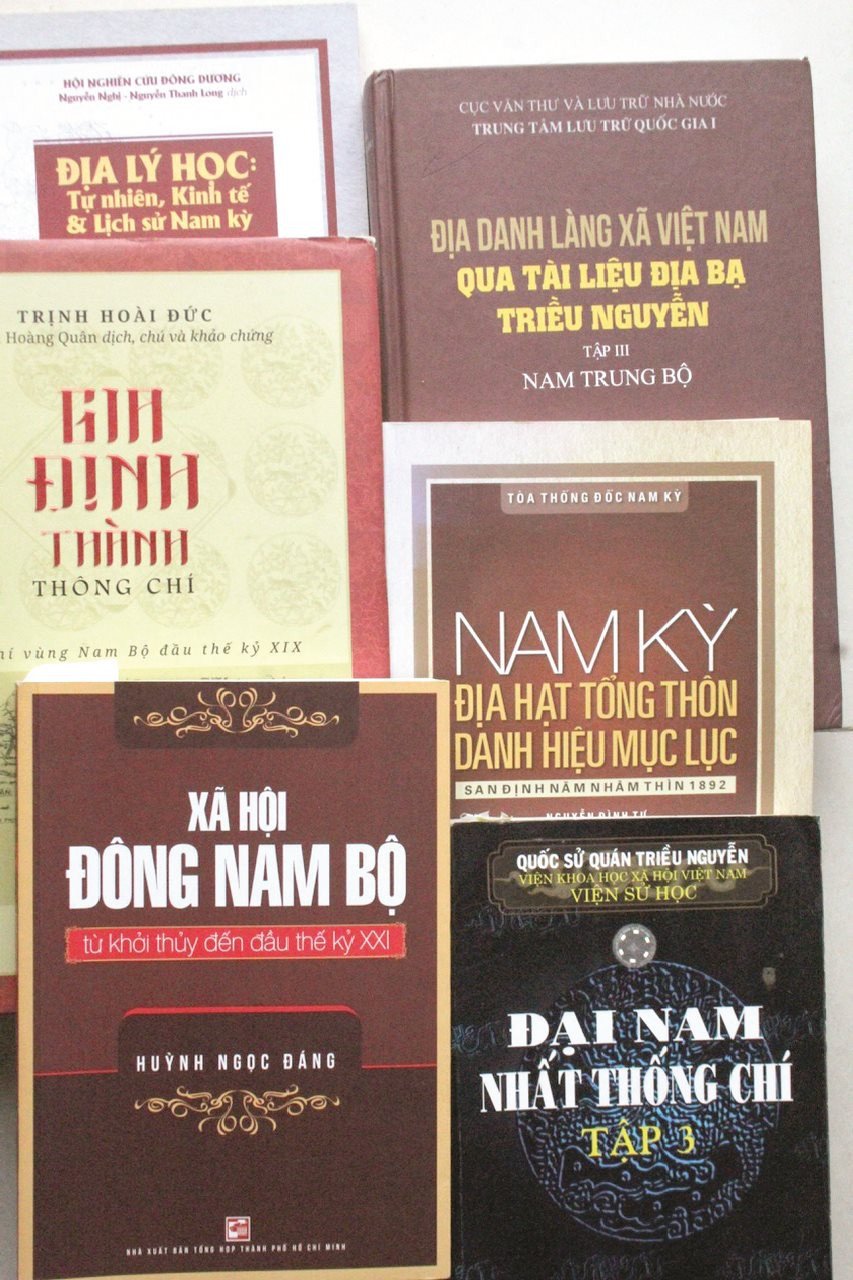
Many place names that appeared on French maps in the early 20th century no longer exist or have changed due to local pronunciation or naming according to the new administrative units of the contemporary government. However, based on many remaining place names currently belonging to Duc Linh and Tanh Linh districts (Binh Thuan province), it can be determined that these were villages and communes that previously belonged to Bien Hoa province or Dong Nai Thuong province. Within the Bien Hoa/Dong Nai administrative district, the administrative organization of the six southern provinces (1874) already had the names of the communes and villages of Dinh Quan/Dinh Quat, Tuc Trung (previously belonging to Dong Nai Thuong province), Cao Cang/Cao Cuong belonging to Binh Tuy commune, and the villages of Gia An, Tra Tan, Do Dat/Vo Dat belonging to Phuoc Thanh commune (on old Binh Thuan maps). The western part of the early 20th century, representing the Dong Nai river basin, recorded Binh Tuy commune. The book "Southern Region District and Villages (1892)", in the chapter Bien Hoa District, records Binh Tuy district and Phuoc Thanh district, in which the names of villages Cao Cang/Cao Cuong, Dinh Quan, Tuc Trung, Gia An, Tra Tan, Do Dat/Vo Dat, Do Mang (which is Vo Mang)... are two adjacent districts, and now some villages are in the border area or belong to Binh Thuan land(1).
In the memorial "Request for the Upper Region to Urgently Proceed with the Ceremony of the Ceremony" by the scholar Nguyen Thong, who served as the land surveyor of Binh Thuan province (Tu Duc 30th year - 1877), upon arriving in the southwestern region of Binh Thuan, there was mention of several place names that corresponded to the "wandering" place names in Bien Hoa and Dong Nai Thuong. "The scholar Nguyen Thong went down from the west of the La Ngu (La Nga) river to the northern bank through Bac Da (Bac Ruong), and the southern bank through Lac Da (Bien Lac) estuary. The lower side is the La Nga river. The upper side goes through Chu Lu, Ba Ke, Con Hien, Dai Dong to the Thang river, bordering Cao Cuong commune, Binh Tuy district in the other province" (2). It also mentions the place names Bac Da, which is Bac Ruong, Lac Da, which is Bien Lac... and Da An (Gia An) village of the upper people and Vo Xu book on the bank of the La Ngu (La Nga) river, which are communes belonging to Tanh Linh and Duc Linh today.



A cradle of a bygone era
During the Nguyen dynasty, significant efforts were focused on land reclamation, asserting the territorial integrity of the southeastern region. They not only penetrated deep into remote mountainous areas, but also advanced from the Dong Nai River upstream to the La Nga River, establishing villages, settlements, and integrating with the indigenous "mountain people" of the Chau Ma ethnic group. A considerable number followed the Ba Ca route along the main road to Cu Mi Ha/Binh Chau village (belonging to Nhon Xuong district, Ba Ria province) to join the forces of General Truong Dinh in the resistance against the French, establishing the Giao Loan base. The name Gia Loan is mentioned in detail in the book "Resistance Against Invasion - Vietnamese History" by Professor [Name of author]. Tran Van Giau: “Truong Dinh is dead. Quang Quyen, Truong Dinh's right-hand man, although talented in organization, lacked the prestige to lead; many local chieftains proclaimed themselves rulers, clashing with each other, vying for territory and influence. Quang Quyen could not control them, so he moved his base to Giao Loan to live with Phan Chinh (Phan Trung); many patriotic people in Dinh Tuong, Bien Hoa, and Gia Dinh gathered under Phan Chinh's banner in the Giao Loan base area, a remote mountainous region between Ba Ria and Binh Thuan (Quang Quyen is referred to as Truong Quyen in other books).”
There are also many historical records mentioning the Giao Loan base – a vast area with dense, secretive mountainous terrain, and especially a strategic location between the southernmost part of Central Vietnam and Southern Vietnam, directly under the territorial control and governing policies of the French and the Nguyen dynasty. Giao Loan was formed and became the starting point for disturbances against the enemy in the Ba Ria and Bien Hoa areas. The Giao Loan base established a system of distant defenses. The French repeatedly "captured the Giao Loan fort and then advanced to the Gia Lao fort (perhaps Gia Lao - Chua Chan mountain, author's note) and Gia Phu near the border with Binh Thuan province." This book records Nguyen Thong's observation: "Truong Dinh was a resourceful and adaptable man, with strict commands, admired by his generals and soldiers." Historian, Professor Tran Van Giau, noted: "It should be added that Truong Dinh was a man who, thanks to the people, maintained his loyalty to the country, persevered in the resistance with the people, defying the court's order to disband the army; even in death, his example always shines brightly."
Historically, after the Treaty of Nhâm Tuất in 1862, France planned to occupy the southeastern provinces, which would become French concessions (1861). Many Southern Vietnamese soldiers and civilians fled to Bình Thuận when Trương Định's resistance was suppressed. Phan Trung and Trương Quyền (Trương Định's son) retreated to establish a base in Giao Loan, a border area between Bình Thuận (Central Vietnam) and Biên Hòa/Đồng Nai (Southern Vietnam). Due to French pressure on the Huế court, in 1890, the territory of the indigenous people in Tánh Linh had to be "annexed into Biên Hòa" (excerpt from Đồng Nai Gazetteer), indicating that the Tánh Linh district harbored a potential "logistical" force in Phan Trung and Trương Quyền's strategy, posing a threat to France. Although the Huế court and France had signed a "peace and alliance" agreement, France acknowledged the sovereignty of the Vietnamese king over the territory from north to south of Bình Thuận. However, several conditions compelled the court not to "ignore" these ambush plans. The remnants of a pristine, rugged mountainous region, where the indigenous people of the Châu Mạ, K'ho, and Raglai lived sparsely in villages and hamlets, accustomed only to shifting cultivation on "mountain fields" for rice farming, are described by the land reclamation commissioner Nguyễn Thông: "La Ngư in the east begins from Ông Mountain, in the west to Kỳ Tôn Mountain (Cà Tong), in the north to the La Ngư riverbank, and in the south to Ông Mountain. Approximately 3,000 acres of land have been reclaimed" (excerpt from "Petition to reclaim plantations in the highlands - 1877"). Could this be what remains of the turbulent period in Southern Vietnam, when Phan Trung recruited 1,000 volunteers and migrants to support Trương Định's movement to build bases and stockpile military supplies to continue the resistance against the French?
Giao Loan - Rung La Base
Previously, under the Nguyen Dynasty (1802-1861), when Nguyen Anh recaptured Dong Nai - Gia Dinh, he foresaw the situation and secretly expanded the La Buong/Giao Loan region, encouraging forestry in the Chua Chan mountain area (Gia Lao - Gia Rai). The French authorities established Long Khanh district to manage ethnic minorities. In 1899, the Chua Chan mountain district (Bien Hoa province) was established, but later renamed Vo Dat district, with its capital in Gia Rai. Around the same time, the Governor-General of Indochina separated the upper Dong Nai region from Binh Thuan to establish the Upper Dong Nai province, with its capital in Di Linh. In 1912, the Vo Dat district (in Gia Rai) was abolished, and Xuan Loc district was established. During the French colonial period, the Chua Chan mountain peak, with an altitude of 847m, served as a forward outpost for the southernmost region of Vietnam and monitored the activity of the Giao Loan/Rung La area connecting the border areas of Binh Thuan, Ba Ria (3), Bien Hoa, Dong Nai Thuong, and Lam Dong provinces. The administrative boundaries between the former provinces and Binh Thuan and the adjacent provinces were based on natural factors, place names, and population, so they were always shifting, separating, and merging, not randomly, but stemming from the strategic calculations of each stage and process in the long history of the country. However, the southwestern part of Binh Thuan was quite distinct from the geography of Binh Tuy province of the Republic of Vietnam (1956-1975), similar to the cultural region of the Southeast, both in terms of natural geography and ecological environment…
The place name Giao Loan first appeared around the end of the 18th century. According to the Dong Nai Gazetteer, an event recorded states: “The commander of Thuan Thanh garrison, Nguyen Van Hao, and the chief governor, Nguyen Van Chan, submitted a petition saying that the 38 villages of Tra Nuong, belonging to the garrison, had previously been relocated to the three districts of Dong Mon, Hung Phuoc, and La Buong due to enemy attacks. Now that they had become their property, they requested to be registered under the Tran Bien garrison to pay taxes annually. Nguyen Anh approved this petition. In early 1791, the people of the Dong Mon district revolted, and Nguyen Anh ordered Tong Viet Phuoc to lead troops to Giao Loan to quell the rebellion.” The place name Rung La/Giao Loan has been mentioned since then and later came to be considered a large resistance base during the wars to defend the country.


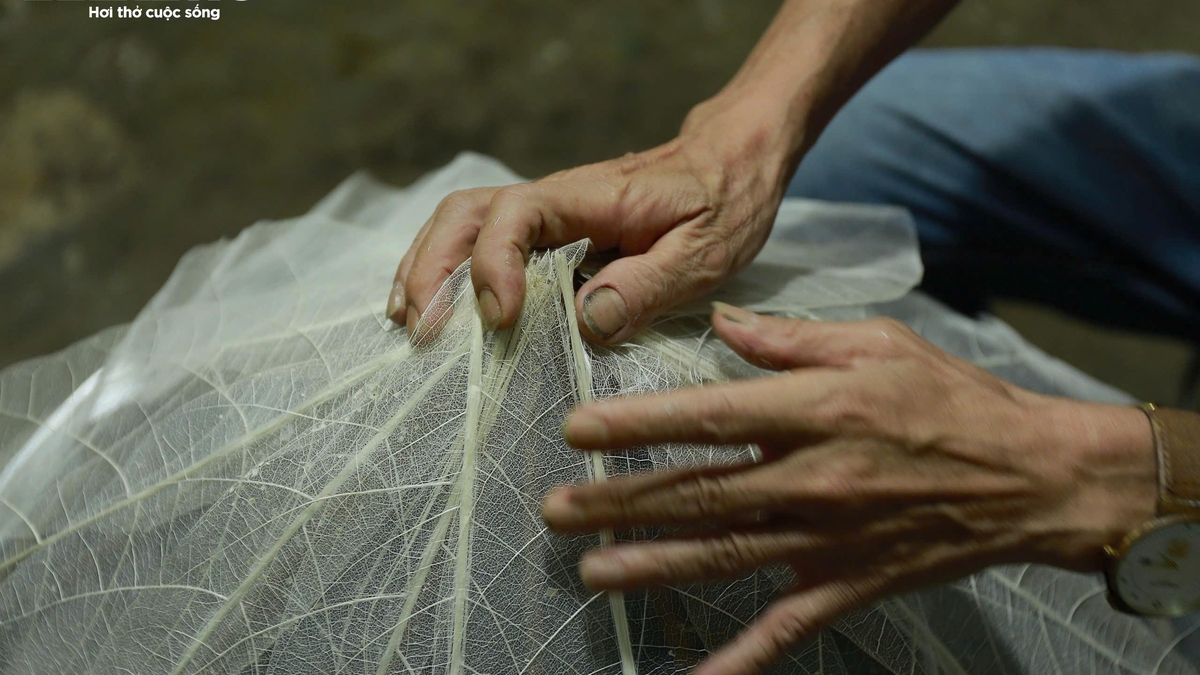
In the history of the resistance war, Giao Loan is associated with the symbol of the buong leaf tree, a land of heroic spirit, pride, but also harshness and mystery. Giao Loan/Buong Leaf Forest became an integral part of life in the swampy areas, stretching across a legendary border region. From the leaf sheaths and stems used to make everyday items for the local people and displaced populations, to the rudimentary weapons like bows and arrows and spiked traps used in defense against the enemy. The book "Gia Dinh Thanh Thong Chi" (Chronicle of Gia Dinh City) records the buong leaf tree in detail with some interesting characteristics. Its Chinese name, pronounced Boi Diep Giang, is actually called La Buon (Buong Leaf) because it originates from the name of the La Buon canal, but the 1964 maps of the Republic of Vietnam incorrectly recorded it as Buong.
For the Cham people, the palm leaf script is considered a miraculous cultural heritage. Before the advent of other writing instruments, including paper, palm leaves were used to write texts for religious ceremonies, customary laws, and history (palm leaf script/agal bac). It was truly skillful; using only a sharpened iron pen heated over a fire, they wrote on stacks of palm leaves, applying ink made from charcoal powder, with reverence from the monks and priests, and preserved them as sacred treasures until later times.
(1): Book “Southern Region District Villages” Ho Chi Minh City General Publishing House 2017. (2): Book “Nguyen Thong - The Man and His Works” - Ho Chi Minh City Publishing House - 1984. La Nga/La Nha/La Ngu River originates from Pho Chiem mountain in Thuan Thanh town and flows south. From Pho Chiem flowing north is called Da Duong River (Da Dung/Da Dang). Upper Dong Nai River (HVNTDDC /Hoang Viet Nhat Thong Dia Du Chi) - Vo Mang book borders Vo Dat village" - "Vo Xu borders Da An village". Ba Mountain (Lao Au). (3): In 1862, Ba Ria was upgraded to a province (DCDN).
Source
![[Photo] Prime Minister Le Minh Hung presides over the thematic session on promoting science and technology development and innovation.](https://vphoto.vietnam.vn/thumb/1200x675/vietnam/resource/IMAGE/2026/06/23/1782207872934_ndo_br_dsc-1724-jpg.webp)