

Every year in the third lunar month, the hearts of Vietnamese people seem to slow down a beat, turning towards Hung Temple, Nghia Linh Mountain, the Hung Kings, and a very deep starting point in the nation's memory. There, the most sacred thing is not just the ancient temples, the billowing incense smoke, or the long lines of pilgrims, but the feeling that each person suddenly feels they belong to a community larger than themselves. A community with a common ancestor, a common history, and a journey of nation-building and defense that has been written over thousands of years.
What makes the Hung Kings Commemoration Day special is that it's not just a festival. It's a living memory. A nation can become stronger through its economy , science and technology, and institutions, but to go the distance, it must also have memory, morality, and a spiritual thread connecting the past with the present.
The Ancestor Commemoration Day is one such thread. It reminds Vietnamese people that they are not isolated individuals in the present, but descendants of a lineage that has gone through countless upheavals to build this nation. Therefore, reverence for ancestors is not only a cultural gesture, but also an expression of national character.
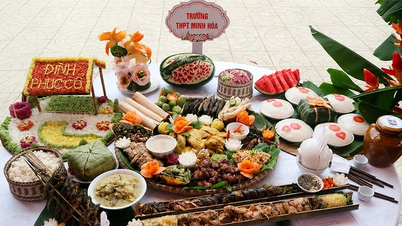
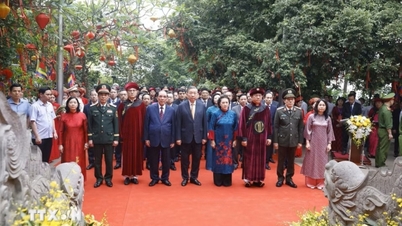
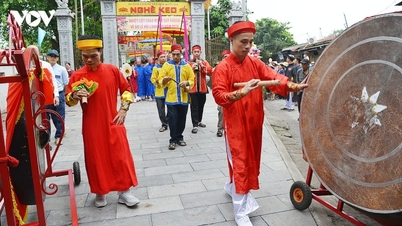
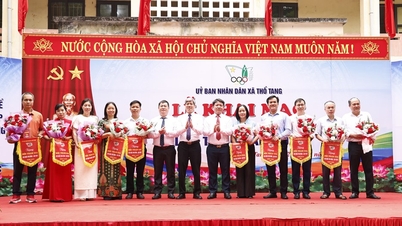
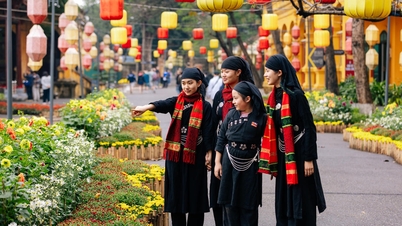
This year, the festival is organized with many new activities, imbued with the spirit of inheritance and continuity, from the incense offering ceremony to commemorate the Hung Kings, the commemoration of the National Ancestor Lac Long Quan, the incense offering to the Ancestral Mother Au Co, to the opening art program, the Ancestral Land Book Fair, folk culture activities, sports and tourism. These activities demonstrate a commendable effort to ensure that heritage is not only preserved in memorial spaces but also disseminated in contemporary life through forms that are more accessible to today's public.
However, what is more important is not the number of activities or the scale of the organization. What is important is what we learn about ourselves from this holiday. I always think that when standing before Hung Temple, Vietnamese people are not only thinking about the past. They are also asking themselves how they will live to be worthy of that past. Because history, if only to be proud of, is not enough. History only truly has meaning when it becomes the foundation for actions today.
Perhaps, in modern life, we need to reiterate this point even more. The pace of life today easily draws people into short-term goals. People are busy with work, with the pressures of making a living, with technological changes, and with competition in a world that is constantly changing. Amidst these changes, people may have more conveniences and opportunities, but they also risk becoming more detached from their roots, less connected to their memories, and shallower in their understanding of fundamental values.
And it is in this context that the Hung Kings Commemoration Day is not just a traditional ritual. It is a reminder: To go far, one must know where one comes from; to achieve sustainable development, one must have a sufficiently deep spiritual foundation. Culture is not merely an embellishment for development, but the foundation of development. Looking at the Hung Kings Commemoration Day from this perspective, we see even more clearly that this holiday belongs not only to the realm of belief or festival. It belongs to the building of the Vietnamese people. Because from our origins, people learn gratitude. From gratitude, people learn responsibility. And from responsibility, people can step into the future with a more mature mindset.
Resolution No. 80-NQ/TW of the Politburo on the development of Vietnamese culture clearly defines Vietnamese culture as the foundation, intrinsic strength, and driving force for national development and defense; it also emphasizes the need to develop culture and people as "an important intrinsic resource, a great driving force, a pillar, and a regulating system for the rapid and sustainable development of the country." Reading these lines during this year's Hung Kings Commemoration Day, we understand even more deeply the significance of returning to Hung Temple. Because our origins, ultimately, are also an important part of that intrinsic strength.
In other words, the Hung Kings Commemoration Day is not just a return to memory. It is also a way to nurture national strength. A nation is only truly strong when it knows how to cherish the values that define it. This is not complacency with the past, but a well-founded confidence to move into the future. We can learn from the world, we can modernize, we can innovate strongly, but it would be very dangerous if, in the process, people lost the connection to their ancestors, to their community, and to history.
Therefore, I have always believed that the Hung Kings Commemoration Day is a "soft school" but a very profound one for society. There, lessons are not taught through dogma. They are taught through experience. A child accompanying their parents to Hung Temple, seeing the silent crowds offering incense, listening to stories about the Hung Kings, feeling the reverent and sacred atmosphere of the festival, may not fully understand it at a young age. But those seeds will remain. Then, one day, when they grow up, that child will understand that they are not outside the history of this nation. They are inheritors.
And therefore, I also have a responsibility to continue this legacy. This is what is essential in the new era. We are talking a lot about innovation, digital transformation, science and technology, the knowledge economy, the cultural industry, and soft power. All of these are necessary. But behind them lies the fundamental question about people. Who will be the driving force behind these innovations? What kind of generation will build the future of the country? If that generation is only skilled but lacks cultural depth, community spirit, gratitude, and responsibility, then development will hardly be sustainable.
The Hung Kings Commemoration Day, viewed in this sense, does not turn people backward. On the contrary, it helps people move forward into the future with a more solid foundation. From gratitude for history, we understand the value of family better. From family, we understand the value of community better. From community, we understand why this nation needs to be loved, preserved, and nurtured not only with emotions but also with actions. Perhaps the most important thing to emphasize this year's Hung Kings Commemoration Day is the vitality of the principle of "Drinking water, remembering the source" in a modern society.
Today, Vietnamese people may live in large cities, work in digital environments, and communicate with the world through global platforms, but they still need spiritual anchors to avoid being swept away by the fast pace of the times. Hung Temple is one such anchor. It's not meant to hold people back from the past, but rather to teach them how to live more deeply in the present and be more responsible for the future.
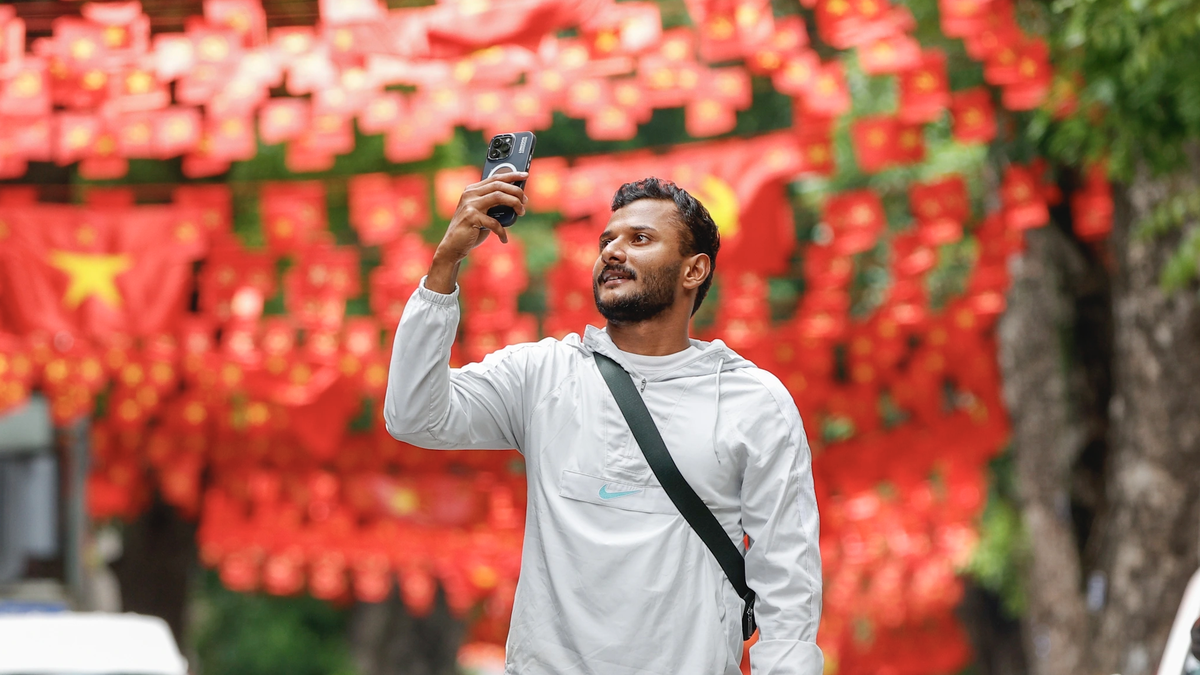
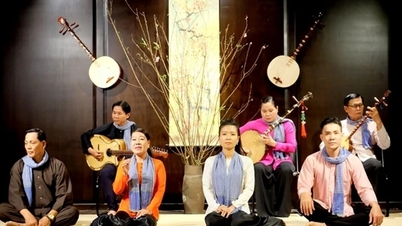
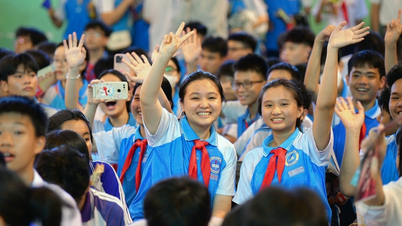
I often think about the image of young people today visiting Hung Temple. Some come as an experiential trip. Some come with friends and family. Some simply know it's a major national holiday. But then, amidst that space, the stone steps, the rows of trees, the processions, the folk melodies, the pages of books about the Ancestral Land, the stories of National Ancestor Lac Long Quan and Ancestral Mother Au Co, they might suddenly feel a sense of belonging to something greater. That feeling is precious. Because it is the beginning of civic consciousness. A good citizen is not just someone who obeys the law or is good at their job. A good citizen is also someone who understands that they are indebted to the past and therefore have a responsibility to the future.
Perhaps, among the many values that the Hung Kings Commemoration Day brings, the most enduring value lies in this. This holiday not only reminds us of our ancestors, but also reminds us that our country did not come into being naturally. The peace, independence, unity, and development we enjoy today are all built upon the contributions of countless generations.
Therefore, lighting an incense stick for the Hung Kings is not just a gesture of reverence. It is also a silent promise. A promise to live a more worthy life. A promise to preserve what our ancestors left behind. A promise not to become an outsider to the common destiny of the nation. And perhaps that is why the Hung Kings Commemoration Day always has a special power to move people. It doesn't just touch pride; it touches conscience. It makes people realize they need to live more decently, with more depth, and with more responsibility. In any era, these remain the fundamental qualities that build the resilience of a nation.
Looking out from Hung Temple, we see that the past is not distant at all. It lives on in the present, in the way we interact with history, with heritage, with family, with community, with the country. And if we know how to preserve, revive, and transform those values into the life energy of today, then each Hung Temple Commemoration Day will not only be a solemn occasion. It will be a season of remembrance, making this nation stronger from within, deeper in spirit, and more steadfast on the path to the future.
Source: https://baovanhoa.vn/chinh-polit/gio-to-va-suc-ben-cua-mot-dan-toc-223209.html




















































Comment (0)