

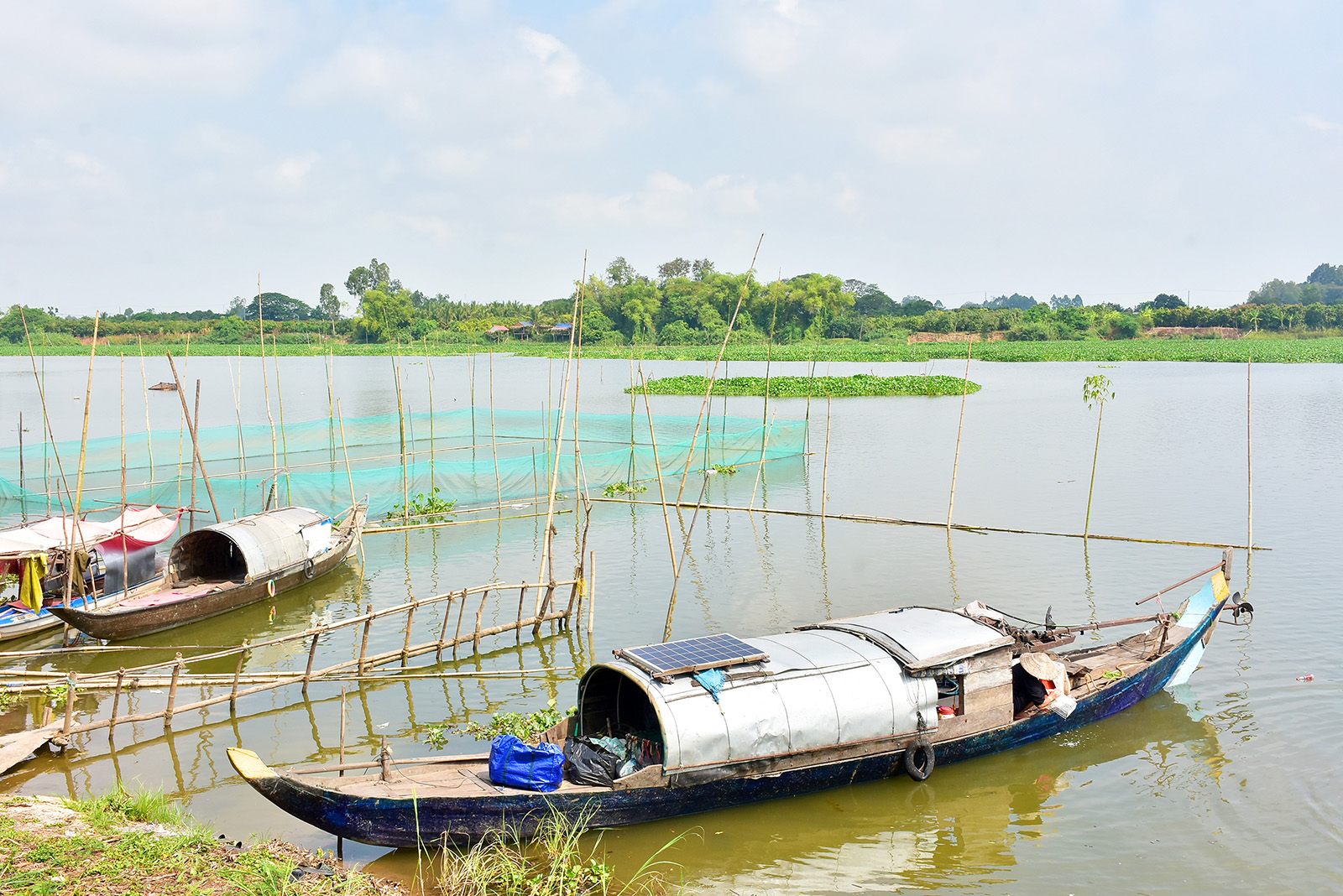
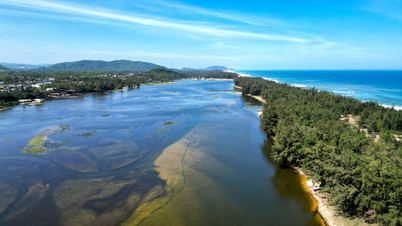
The serene beauty of Binh Thien Lake. Photo: THANH TIEN
The land holds people captive.
Returning to the upstream region in mid-April under the scorching sun, I followed Provincial Road 957 straight towards the border. Currently, farmers have finished harvesting the winter-spring rice crop, leaving only stubble in the fields. Plows and tillers are turning over the fields, preparing for the new planting season.
Mr. Nguyen Van Bay, a resident of Vinh Hau commune, honestly said: "This winter-spring crop, rice prices dropped, but luckily we had a good harvest. All things considered, I still have some money coming in, unlike those who rent land and end up empty-handed. People in this area either grow rice or do gardening; there's nothing else they can do. I'm tied to the fields all year round; no matter how hard it is, I can't leave them."
On Mr. Bay's sun-tanned face, there still shone a glimmer of hope for the new harvest season. Nearly 70 years old, he didn't want to leave this peaceful riverside land. "It's tough, but the land sustains me! I survived the bombings and shelling. Now that life has improved and everything is convenient, I just cling to this land to make a living!" Mr. Bay said with a chuckle.
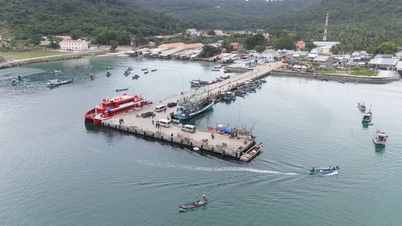
After bidding farewell to the simple, honest farmer, I continued along Provincial Road 957 to reach Bung Binh Thien. This "heavenly lake," located in Nhon Hoi commune, remains a pristine, crystal-clear blue. On the lake's shore, the fishing boats of the Cham people rest peacefully amidst the tranquil scenery. Meeting Mr. Mohamed Saled, I heard stories about the Cham people's livelihoods connected to this vast lake.
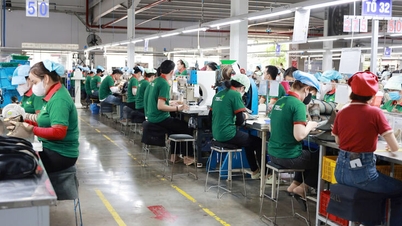
“The Cham people in Nhon Hoi have lived closely connected to Binh Thien Lake for generations. No matter where they go, they always return to this land. When I was young, I made a living by fishing and doing small-scale trading. My children have gone to work far from home, some have become factory workers, but they always return to this Cham village,” Mr. Saled shared.
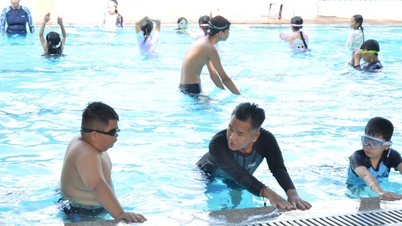
Looking out at the vast expanse of water, I saw several young boys splashing and playing in the clear blue water, their laughter disturbing the peaceful midday. For centuries, this lake has embraced the children of this land, allowing them to grow up and forge a deep connection to this upstream region.
“Life for the Cham people in Nhon Hoi is much better now than before. My grandchildren can go to school and find better jobs. Thanks to my children having stable jobs, my house is more spacious. The government has also invested in roads and schools, so we lack nothing,” Mr. Mohamed Saled said happily.
Human connection with the land
Deeply attached to their homeland, the people of this upstream region continue to work tirelessly day and night to develop this land. Vo Van Vu was born and raised in the border area of Khanh Binh commune and has loved his homeland through every book he's read. Like other farmers, Vu tried many farming models and chose to stick with the Keo mango tree for many years.
"The Keo mango tree provides a decent income for farmers in Khanh Binh. Although the market isn't yet stable, it has improved the lives of the people here, so everyone tries to hold onto their land and orchards," Mr. Vu said sincerely.
Leading me to visit his mango orchard, which was in the process of producing off-season fruit, Mr. Vu shared his dream of bringing Khanh Binh's Keo mangoes to the export market. "The land here is suitable for Keo mangoes, and I've mastered the cultivation techniques, so I must strive to export this fruit to improve the lives of farmers. To achieve this, farmers must work collectively and form production linkages to take Khanh Binh's Keo mangoes further," Mr. Vu explained.
Taking a stroll around the border region on a sweltering midday, the Khanh Binh border gate area remains bustling with vehicles. This serves as a driving force for the local area's future development of border trade . Furthermore, the local authorities are proposing to open the Khanh An sub-border gate and upgrade the Khanh Binh national border gate to an international border gate, creating new opportunities for the development of border trade, commerce, and services.
"When key transportation projects are implemented, Khanh Binh will become a strategic trade gateway for the province, effectively connecting with the Mekong Delta region and Cambodia," informed Doan Binh Lam, Secretary of the Party Committee and Chairman of the People's Council of Khanh Binh commune.
Beyond the bustling atmosphere of the Khánh Bình national border gate area, this border commune also possesses a peaceful beauty for travelers visiting Linh Ẩn Pagoda or enjoying the cool breezes at the confluence of the Mekong and Bình Di rivers, where the Hậu River begins to flow into Vietnam.
Standing beside milestone 246, one truly understands the exceptionally important strategic location and the preciousness of every inch of sacred national sovereignty . This explains why, through the years of war and the difficulties of the reconstruction period, the people in the upstream areas have remained attached to their land and homeland, working together to build a developed country as it is today.
THANH TIEN
Source: https://baoangiang.com.vn/giu-dat-giu-nghe-noi-dau-nguon-a483710.html

































































Comment (0)