

According to some documents, in February 1924, the Indochina Commercial, Agricultural and Financial Company (SICAF) issued shares under the name Indochina Tea Company (STI), promoting the establishment of the Bien Ho Tea Plantation; by 1925 it was permitted to reclaim land and in 1926 it was granted temporary land allocation.
Along with the establishment of the Bien Ho Tea Plantation came the process of recruiting plantation workers from Central Vietnam to the new land, creating the first residential area around the centuries-old pine trees, and gradually expanding to neighboring areas.
Nearly a century later, right in that same area, the family of Ms. Doan Thi Thuy (born in 1992, residing in Hamlet 6, Bien Ho Commune) quietly continues the tradition of making traditional tea with black and green tea products under the Phuoc Hy brand, made from young tea shoots from ancient tea gardens surrounding Buu Minh Pagoda and centuries-old pine trees.
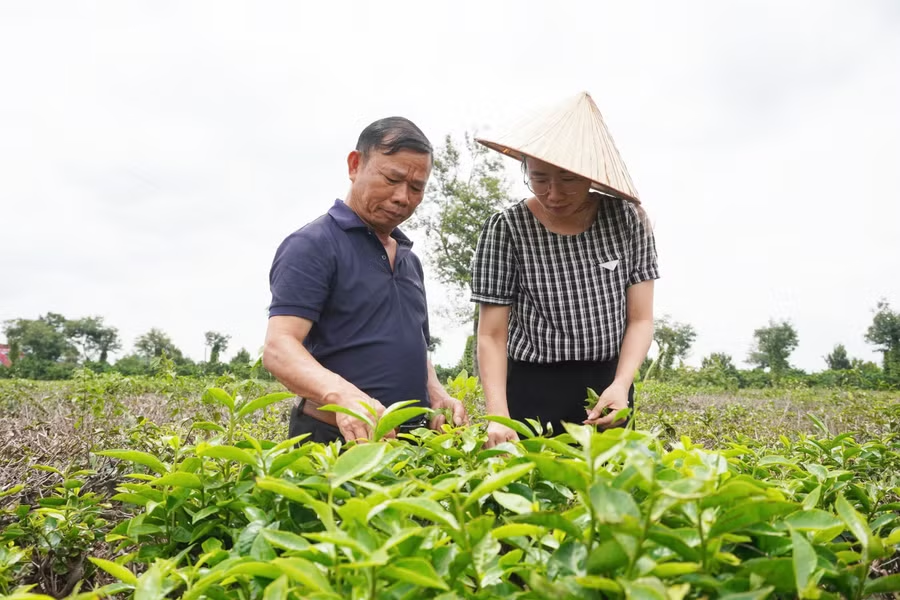
Mr. Doan Huu Bieu and his daughter Doan Thi Thuy in their family's tea garden. Photo: SC
“My father used to work as a worker at the Bien Ho Tea Factory. I was born and raised in a land closely associated with tea, so I want to create products that contribute to preserving and enhancing the value and beauty of the historical Bien Ho tea region. I also hope that tourists from near and far will visit the tea gardens, enjoy the taste of Bien Ho tea, and learn about this local specialty,” Thuy shared.
In 2024, Nghia Hung commune, Chu Pah district (formerly), still had over 220 hectares of tea plantations, mainly distributed in hamlets 1, 2, 4, 6, 7 and Ea Luh village. Thuy's family alone owned about 7 sao (approximately 0.7 hectares) of tea plantations located near Buu Minh pagoda.
Without prioritizing yield, her family cultivates their tea garden organically, using fertilizers made from composted vegetables and fruits. Each year, the tea garden yields about 10 tons of fresh tea.
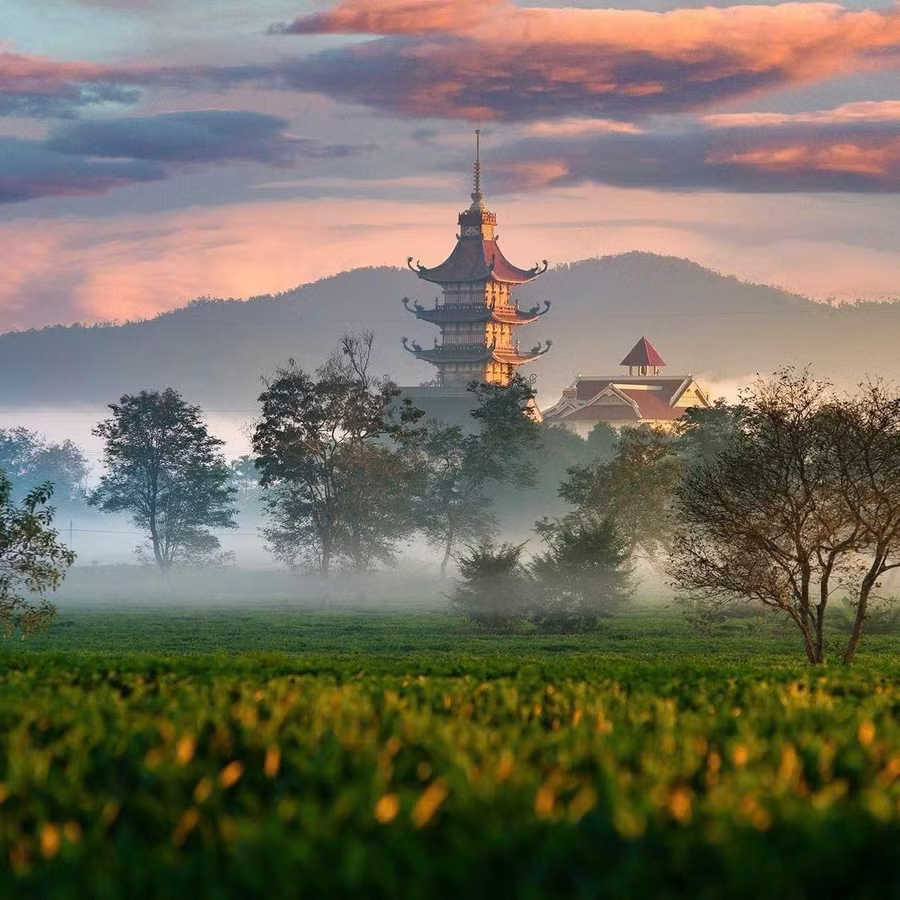
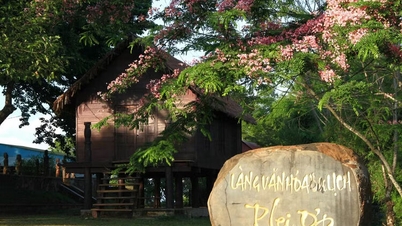
The beauty of the tea gardens around Buu Minh Pagoda. Photo: Hung Nguyen
Using readily available ingredients, in 2025, Thuy's family began producing black and green tea, primarily to serve customers at their family's coffee shop, while also promoting the unique flavor of Bien Ho tea to tourists visiting the century-old pine forest and Buu Minh Pagoda.
What's special is that behind those batches of tea lies not only the entrepreneurial story of young people, but also the continuation of the memories of a generation deeply connected to the tea plants of Bien Ho Lake.
Mr. Doan Huu Bieu (born in 1962, Thuy's father) worked as a factory worker at the Bien Ho Tea Factory for nearly 20 years. Originally from Thai Binh province, he moved to Gia Lai in 1985 and previously worked in the Tea Factory's Construction Management Board before transferring to the production department.
Recalling that time, he still clearly remembers the hardships of tea growers: "In the past, life was difficult, so tea growers had a very hard time. Even during storms, they had to go to the garden to harvest at the right time, because if they were even a little late, the A-grade tea buds would fall down to C-grade tea."
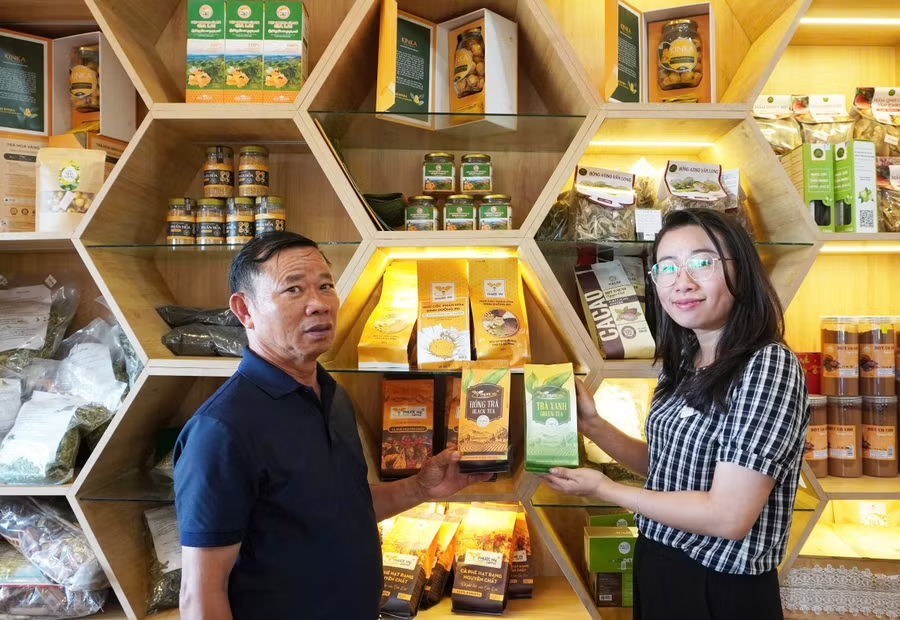
Mr. Doan Huu Bieu and his daughter Doan Thi Thuy work together to produce black tea and green tea products. Photo: SC
According to Mr. Biểu, his family's tea garden was planted before 1982, while many tea gardens surrounding the century-old pine trees date back to the French colonial era. Drawing on years of accumulated experience, Mr. Biểu and his children strictly adhere to every step, from harvesting fresh tea leaves, brewing, fermenting, to manually roasting the tea, creating black and green tea products with the distinctive flavors of the Biển Hồ tea region.
“When my children came up with the idea of making tea products, I immediately supported them because it's also my heartfelt wish for the land I've been connected to for the past 40 years. In the past, I worked as a tea worker, and now I'm working with my children to make tea and spread the flavor of this local specialty. That's also how my family maintains our connection with our second homeland,” Mr. Biểu said emotionally.
Source: https://baoangiang.com.vn/giu-huong-che-bien-ho-a486199.html























































Comment (0)