

Due to life circumstances, many grown-up children who have started their own families have to live far away from their elderly parents geographically. However, even in multi-generational families, there are gaps not in geography but in thinking and perception, gradually creating disagreements known as generational differences. This simmers, causing family bonds to gradually weaken.
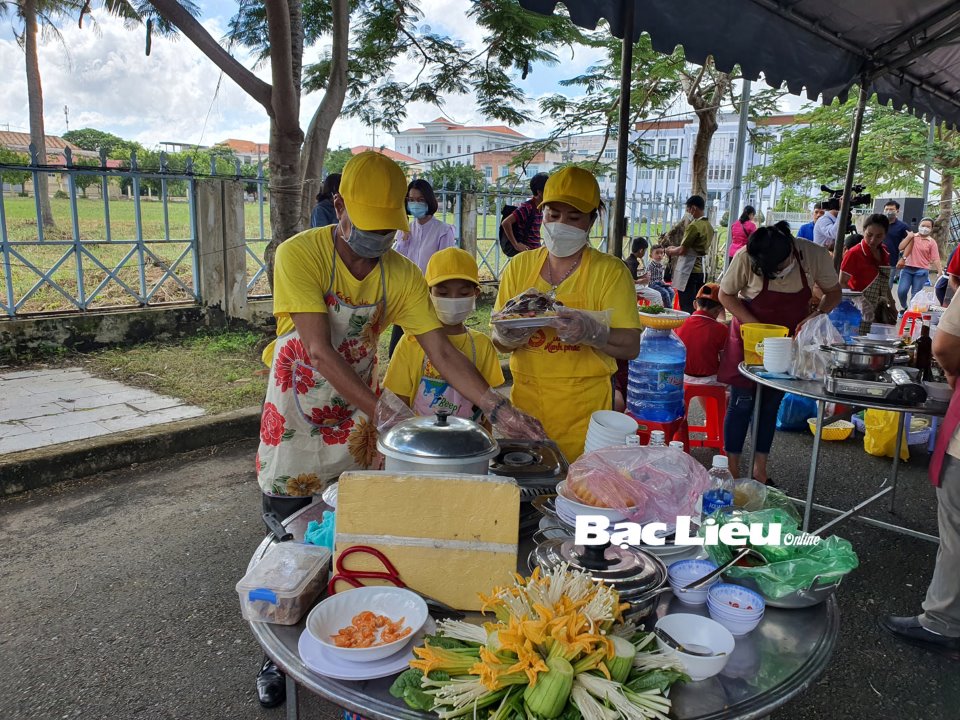
A family meal cooking competition was held at the 3rd Exemplary Family Festival of the Southwestern provinces and cities, organized in Bac Lieu .
Absent family meals
What is a family meal? The concept might seem simple—just a meal to satisfy hunger—but the essence of a family meal is not merely about the material aspects of rice, vegetables, fish, meat, sauces, salt, pickles, etc. A family meal also encompasses spiritual values, the values of the inherent cultural beauty of family affection contained within it.
Family meals are a place where a woman's domestic skills, meticulousness, and love for her family are evident. And if the kitchen is used by the husband and children, this shared effort transforms it into a warm and welcoming space. Family meals are also a place where lessons in manners and life experiences are passed down to children and grandchildren while they gather together...
Modern family living conditions are much better, and the days of simple meals with just shrimp heads and gourd intestines are almost over. However, finding a complete family meal with the husband and wife sharing and the children's laughter and chatter remains a challenge for many families, especially in urban areas. For those whose husbands and wives are civil servants, employees, or business owners, spending eight hours a day working, preparing delicious meals is truly a challenge. Even though modern housewives have access to convenient ready-made foods like canned goods, fish, meat, and vegetables, the short lunch breaks and late evenings mean meals are often prepared hastily, often exhausting, especially for those working alone in the kitchen. Thus, boxed meals, pre-cooked meals, and restaurant food are gradually replacing traditional family meals!
At regional family events or celebrations of Vietnamese Family Day (June 28th) in each locality, from the provincial to the district, town, and city levels, cooking competitions themed around family meals are always a top priority. The lavish family meals, featuring braised fish, sour soup, stir-fried dishes, etc., are visually appealing and perfectly represent a traditional family meal. The explanations are also compelling regarding the value of such a meal. However, the meal on the competition table and the meal in each family kitchen can be vastly different! Maintaining family meals presents numerous challenges: challenges to fully understand the value of family meals; challenges to the greater resilience and hard work of women who excel both professionally and at home; and challenges to the shared responsibility between husband and wife to reduce the amount of sweat and effort women put into cooking.
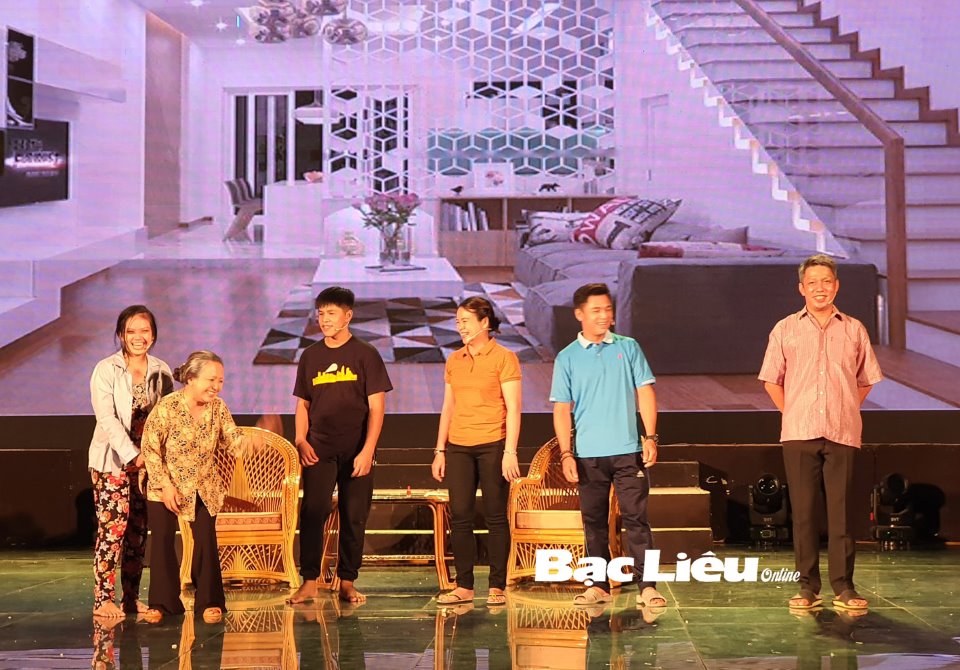
Conflicts within multi-generational families are often depicted in propaganda skits about family life. (Illustration: CT)
The disagreement is called "generational conflict".
Mr. and Mrs. NN (Ward 3, Bac Lieu City) decided to move out, even though Mr. NN is the only son and the last of his five children to live with his elderly parents, who had all moved out before him. The main reason was... their grandson! The grandparents raised the child in a traditional way, while the daughter-in-law raised him in a more scientific way, along with disagreements about daily routines and schedules. Gradually, the young couple felt the family atmosphere becoming "suffocating" if they had to live together. So they moved out, despite their siblings' attempts to dissuade them. Every day, the children bring delicious meals to their parents' house; when they are sick, the children visit; and at night, the elderly couple spends their time together. The real concern is who will take care of their parents when they become even older and weaker, and who will be willing to live with the other in loneliness when one of them reaches old age?
Another family, Mr. V. (Ward 1, Bac Lieu City), is the only son in a family of four children, but he also "didn't get along" living with his parents, so he moved out. Now both his father and mother are often ill, so the eldest daughter brought her father to her own home to care for him, while the mother lives alone in their old shared house. One day one child comes over, the next day another comes to take care of her in the house where she lives alone, even though she has more than 10 children and grandchildren.
Many nuclear families are formed as a result of the "three or four generations living together" structure, a characteristic feature of Vietnamese families in the past. It's easy to see that rifts in these multi-generational families largely stem from conflicts in thinking and perceptions among the generations living together. In many multi-generational families, grandmothers become "second mothers" to their grandchildren. However, behind the story of caring for children and grandchildren in multi-generational families lies a long story of disagreements. Living in a multi-generational family gives children the opportunity to interact and feel the love of all members. However, disagreements about child-rearing sometimes cause tension, especially between mother-in-law and daughter-in-law!
At that time, it requires effort from each family member, exchange and balance of opinions, sharing experiences in raising children from grandparents, and also the grandparents' willingness to adapt to modern parenting methods used by young parents. There's an old saying, "One old mother is worth three children," which might belittle the mother's position, but the main point is that the care and devotion of an elderly mother always provides a solid foundation for her children. Even as children grow up and become adults, the watchful eye and support of parents are never superfluous. The issue lies in the fact that each generation has different thoughts and perceptions, so compromise and effort to find common ground are essential. Above all, if there is enough love, that will achieve it. Despite differing opinions, ultimately, both grandparents and parents want what's best for their children and grandchildren.
The challenges facing modern families need to be clearly identified so that we can overcome them together. Both nuclear families and multi-generational families need sharing and empathy stemming from love and understanding to help each family truly become a warm and loving home.
CAM THUY
Source link
























































Comment (0)