

There were days when I returned late from visiting the local people, riding my motorbike alone along the desolate border road. On either side, there were only the shadows of mountains, the sound of the wind, and deep rocky ravines shrouded in cold mist. The headlights of my motorbike only briefly flickered on the mist-covered road before being quickly enveloped by the darkness of the mountains and forests. In that vast expanse, one suddenly felt strangely small.
Son Vi is the most remote commune in Tuyen Quang province, bordering the Vietnam-China border. The journey from the provincial center to Son Vi is over 350km, traversing winding mountain passes, towering jagged peaks, and villages hidden amidst the clouds. The deeper one travels, the more one appreciates the geographical isolation, the harsh climate, and the enduring beauty of life in this border region of the country.
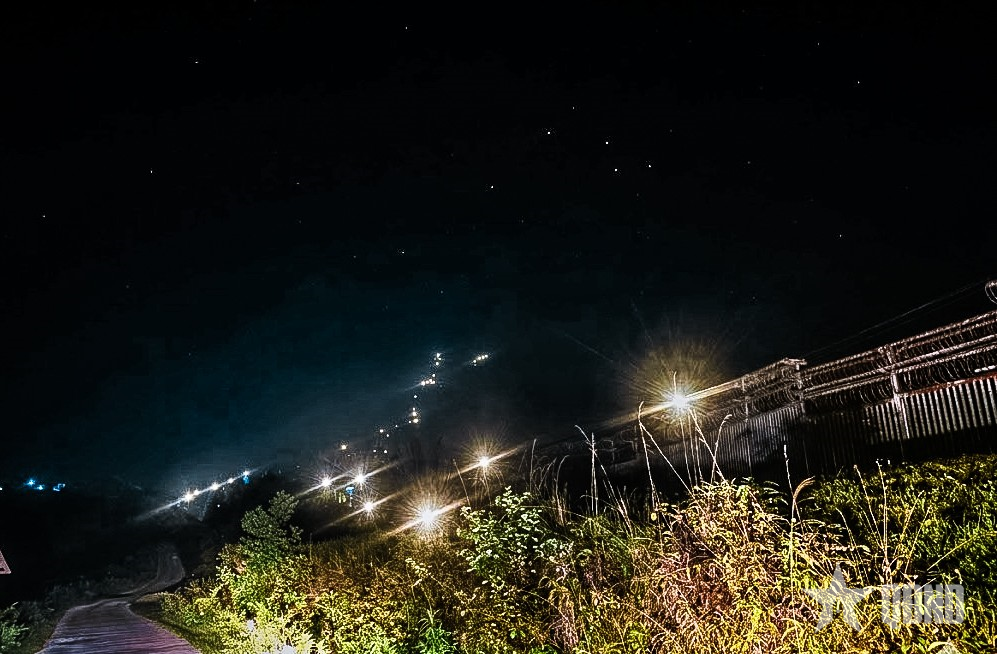 |
| After seven o'clock in the evening, the Son Vi border area was shrouded in vast darkness, with only the flickering lights along the border shining through the thin mist. |
I arrived to take up my job in Son Vi during the coldest days of winter. The wind from the mountain crevices howled across the jagged, cat-ear-shaped rocks, making the cold seep into my skin. In the first few days there, all I saw was a vast expanse of rocky mountains, a blanket of white mist covering the high slopes, and earthen houses nestled silently on the mountainside. Clothes washed and hung out to dry took a whole week to dry.
Initially, we temporarily worked in the building of the Xin Cai Border Guard Station. The small room was nestled in the cold, rocky mountains, with only the sound of wind whistling against the cliffs at night. Some nights, the power went out, plunging the entire area into darkness. The silence was so profound that we could clearly hear the barking of dogs echoing from some distant village.
 |
| Winter mornings in Son Vi are filled with white mist and a biting cold that penetrates the skin. |
Standing amidst that vast expanse, I truly understood the remoteness of the border region. But it was also during those days of bewilderment that I felt the warmth of human connection in this border area.
We always received care and encouragement from the commune leaders with questions like, "Are you getting used to the place?", "If you need anything, just let us know so we can help...". These simple questions in the middle of a border winter are sometimes enough to warm one's heart considerably.
Not only the local officials, but also the people here showed us a very special warmth and sincerity. I still remember Ms. Xuyen, a resident of the commune. Every time we met, she would smile kindly and ask, "Are you getting used to being here yet?" Occasionally, she would give me a few oranges, sometimes just a simple greeting after a day's work. These small gifts didn't have much material value, but in this remote mountainous area, they warmed the heart of someone far from home like me.
 |
| The road to Son Vi border commune winds through mountain passes, past towering peaks of jagged limestone mountains. |
Staying in the same building as the Xin Cai Border Guard Station, I had the opportunity to get closer to the lives of the soldiers on the front lines. Meals at the station were sometimes simple, but they were warmed by laughter and genuine care.
During those meals, I listened to the young border guards recount their days spent with their comrades, staying close to the villagers; during the day they would go down to the hamlets to gather information and help the people with various tasks, and at night they would quietly patrol the border and boundary markers. Their skin was tanned by the sun and wind of the border, but whenever their work was mentioned, they would just smile gently.
After living long enough amidst the clouds and mountains of Son Vi, I realized that behind the harsh appearance of the rocky mountains lay a great deal of tranquility.
Mornings in Son Vi often begin with fog. On some days, when you open the door, the entire mountain forest is shrouded in a thick white mist. Clouds blanket the mountainside, and the traditional houses of the local people peek out from the rocky slopes.
 |
| Officers and soldiers of the Sam Pun Border Gate Border Guard Station patrol the border line and border markers in the cold night air of the border region. |
Along the winding mountain paths, groups of children chatter excitedly as they head to school. Their small, colorful shirts stand out against the gray of the jagged rocks. Further up the slopes, Hmong women begin a new day of work amidst the cornfields clinging to the rocks.
Trips to the villages always leave me with many emotions. Once, returning late from a field trip, it suddenly started raining heavily in the middle of the border. My motorbike skidded on a muddy slope near the edge of a cliff. In that precarious moment amidst the thick fog, I suddenly saw the flashlight beam of a patrol team from the Sam Pun Border Gate Border Guard Post approaching in the distance.
A young soldier, while helping to support the motorbike, smiled and said, "This road is very dangerous at night in the rain, ma'am. Next time you're going late, remember to call your comrades to come along..."
In the cold, rainy night on the border, that saying stuck with me. Perhaps only in harsh places like Son Vi do people live close together through such simple acts of sharing.
While working here, I often accompanied commune officials and border guards down to the villages to patrol the border, check border markers, or engage in community outreach with the local people.
Once, I accompanied Comrade Nguyen Huy Sac, Secretary of the Party Committee of the commune, to inspect rural roads after several days of heavy rain. The winding dirt road along the mountainside had become muddy, with some sections where the wheels slid dangerously close to the edge of the cliff.
 |
| Comrade Nguyen Huy Sac (standing in the middle), Secretary of the Party Committee of Son Vi commune, Tuyen Quang province, inspects rural roads after heavy rain. |
Throughout the journey, the Party Secretary's greatest concern remained the road construction progress and the well-being of the local people. Stopping the car beside a section of embankment that had recently suffered a minor landslide, the Party Secretary turned to the village officials, carefully questioning each affected household, then slowly said: "No matter how difficult the road is, we must strive to finish it. With a road, the people will suffer less, and the children will be safer going to school…" That simple statement, amidst the vast expanse of rocky mountains, left a lasting impression on me.
Some days, even before the fog had completely lifted, the commune leaders would continue surveying potential tourist destinations. Amidst the towering mountains, stories about the livelihoods of the local people, about preserving the Phong Luu market, maintaining the Hmong flute music, and other traditional cultural aspects quietly unfolded along each path.
In that challenging place, I felt more acutely the responsibility of the border officials, the people who are silently keeping this land not only peaceful but also preserving the trust of the people in the far north.
 |
| The leaders of Son Vi commune surveyed potential tourist destinations in the area. |
In Son Vi, I also met teachers who traveled dozens of kilometers along mountain roads to get to class. Some schools were perched precariously on the side of rocky mountains, and during the rainy season, the roads were so slippery that motorbikes couldn't pass. Yet, the small classrooms in these remote villages still regularly echoed with the sounds of children reciting their lessons. Amidst the vast expanse of rocky mountains, the sound of their reading was surprisingly clear and peaceful.
 |
| The diverse cultural elements contribute to the unique vitality of the remote border region of Son Vi. |
Amidst the winding, rocky roads, the quiet presence of commune officials, border guards, and teachers stationed in remote villages is contributing daily to maintaining peace in the border region and strengthening the faith of the people in this far north.
Then, the highland markets also left me with many fond memories. From early morning, groups of people would make their way down the mountain slopes to the market. The vibrant flared skirts of the Hmong, Lo Lo, and Giay women stood out against the gray of the mountain rocks. The lively laughter and chatter in the small courtyard seemed to lessen the chill of the border region.
 |
The Son Vi border market is notable for the vibrant flared skirts worn by Mong, Lo Lo, and Giay women. |
There, I felt more deeply the simple beauty of life in the highlands. It wasn't hurried or noisy, but sincere and full of human warmth.
There were nights when, near dawn, I would still be sitting in front of my computer screen in my small room. Outside, the rain fell steadily on the tin roof, and in the distance, the mountains and forests were shrouded in darkness. At times like these, I felt more acutely the loneliness of youth on the border. But it was also this place that taught me to live more slowly, to appreciate the simple things more, and to cherish the silent sacrifices of those who are tirelessly safeguarding the peace of our nation's borders.
 |
| The border road winds through the slopes of Son Vi mountain – where each winding section reflects both the rhythm of local life and the journey of maintaining peace on the nation's border. |
There are places not just to pass through, but to remember.
For me, Son Vi is not just a border region at the northernmost point of the country. It is also a place where I have been and continue to be connected amidst mountain winds, fog, and winding roads in the far north.
Perhaps later, when I look back, what will remain is not just the gray of the mountain rocks or the cold of the highlands, but the small lights amidst the vast border forest – a peaceful light that silently accompanied me throughout my days in Son Vi border region.
Source: https://www.qdnd.vn/phong-su-dieu-tra/ky-su/giua-dai-ngan-bien-gioi-son-vi-1039910



























































Comment (0)