


Digital infrastructure is the infrastructure of the economy . Vietnam's digital infrastructure comprises four main components: telecommunications and Internet infrastructure; data infrastructure; physical-digital infrastructure; and digital utility and technology infrastructure, such as services.
Developing digital infrastructure is one of the three main pillars of the National Digital Transformation Program until 2025, with a vision to 2030. The government aims to build a synchronous and modern digital infrastructure system that meets the needs of the data explosion, ensures cybersecurity, and enhances national competitiveness.
Vietnam is currently focusing on expanding and upgrading its broadband infrastructure nationwide. Key areas such as major cities, high-tech zones, industrial parks, and government agencies are prioritized for investment. The national digital infrastructure development strategy aims to achieve the following goals by 2030: 100% of users will have access to fiber optic internet at speeds of 1Gb/s or higher; 99% of the population will have 5G mobile broadband coverage; and 6G mobile networks will be built, their capacity secured, and ready for trial deployment.
Mr. Vu Hoang Lien, Chairman of the Vietnam Internet Association, stated that digital infrastructure today plays a role similar to "electricity, roads, schools, and hospitals" in previous development stages, becoming the core foundation of the national productive forces. Compared to the region, Vietnam's digital infrastructure is currently at a fairly average level within ASEAN, with a relatively good foundation but still not among the leading groups.
According to him, to achieve a breakthrough, Vietnam needs to quickly address three major "bottlenecks." Firstly, the slow progress in 5G deployment is due to obstacles related to frequency allocation mechanisms and investment challenges. Secondly, there is a shortage of foundational infrastructure, especially hyperscale data centers and computing capacity for AI and cloud computing. Thirdly, there is a disparity in the quality and efficiency of infrastructure utilization, as applications for digital government, digital economy, and digital society are not uniform.
Drawing on the experiences of other countries, Mr. Lien emphasized that Vietnam needs to shift from a "universal infrastructure" mindset to focused investment in core infrastructure and the technology ecosystem. At the same time, it is necessary to improve mechanisms and policies to attract large investment resources, promote innovation, and effectively utilize data.
Besides investment and support from the State, private sector enterprises are also encouraged to participate in building digital infrastructure. Specifically, the Program to encourage private sector enterprises to participate in building telecommunications infrastructure and other types of infrastructure serving national digital transformation until 2030 aims to attract at least two leading global technology companies to invest in building and operating large data centers and artificial intelligence data centers in Vietnam by 2030; private sector enterprises to invest in and own at least four additional international submarine fiber optic cable routes; and the average revenue growth rate of private sector enterprises providing fixed broadband telecommunications services to reach approximately 10-12% per year…
Previously, Resolution 193 allowed for pilot programs with up to 100% foreign ownership, but stipulated that national defense, security, and sovereignty must be ensured in the field of low-orbit satellite telecommunications services. This was considered an important step to expand the scope for attracting investment, facilitate access to advanced technology, and promote the development of digital infrastructure in a modern and synchronized manner.
Source: https://daidoanket.vn/go-diem-nghen-ha-tang-so-de-but-pha.html



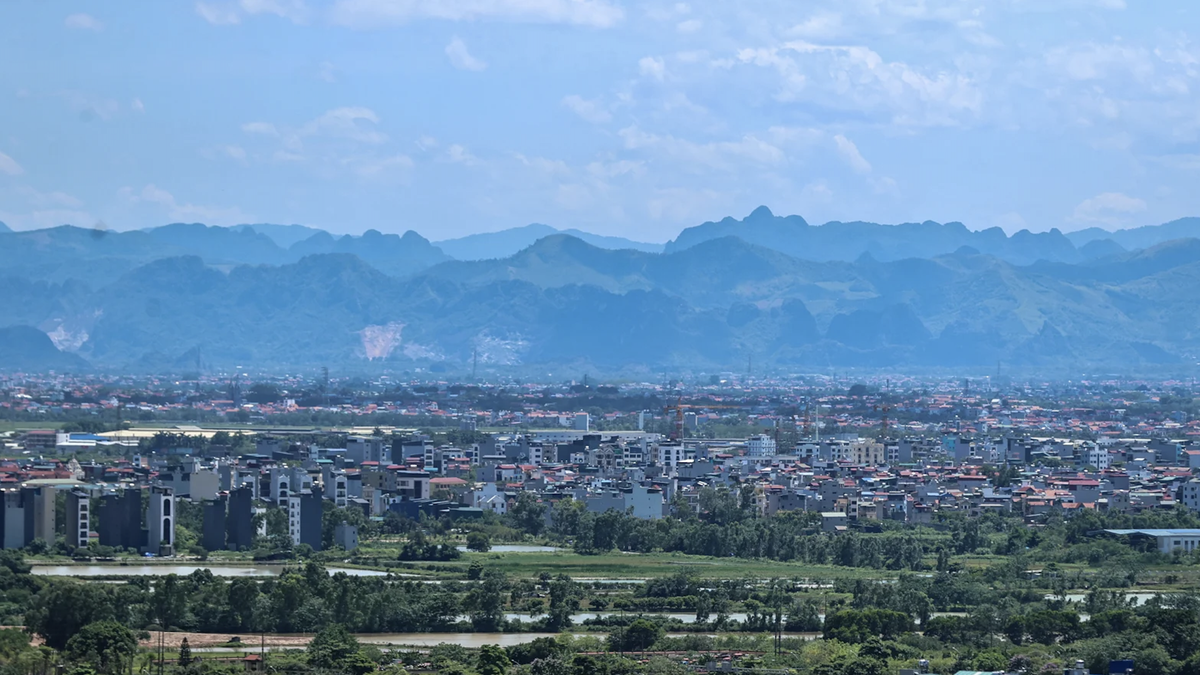
![[Photo] The heat at the fireworks display site on the opening night of the Da Nang International Fireworks Festival 2026](https://vphoto.vietnam.vn/thumb/1200x675/vietnam/resource/IMAGE/2026/05/27/1779889741485_ndo_br_z7872039145157-fecaba5112f39e8352544099d7ef4738-5140-jpg.webp)
![[Photo] The courage of new recruits of Brigade 144 on the training ground.](https://vphoto.vietnam.vn/thumb/1200x675/vietnam/resource/IMAGE/2026/05/27/1779881651341_anh-man-hinh-2026-05-27-luc-18-32-52.png)






































































![[Photo] The courage of new recruits of Brigade 144 on the training ground.](https://vphoto.vietnam.vn/thumb/402x226/vietnam/resource/IMAGE/2026/05/27/1779881651341_anh-man-hinh-2026-05-27-luc-18-32-52.png)
































Comment (0)